
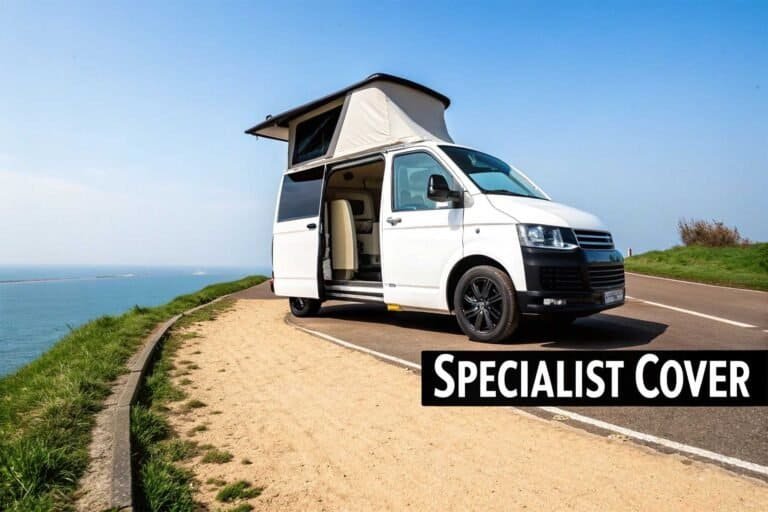
Let’s be blunt: putting standard van insurance on your campervan is a rookie mistake, and a potentially catastrophic one. It’s like insuring your house for the value of the bricks alone, completely ignoring the kitchen, the bathroom, and everything you own inside. It just doesn’t make sense.
This guide is here to walk you through the world of specialist campervan insurance, so you can make sure your pride and joy is properly protected.
Understanding campervan insurance comparison is essential for every campervan owner.
Why Specialist Campervan Insurance Is Non-Negotiable
A campervan is so much more than just a vehicle. It’s your holiday home, your adventure base, and for many of us, the result of countless weekends spent wrestling with insulation, wiring, and carpentry. Relying on a standard van policy is a gamble you really don’t want to take.
Insurers see a basic panel van and a fully converted camper as two completely different things, and rightly so. Standard policies are designed for commercial workhorses, not mobile homes. They have no concept of the unique features that make your van a camper.
This difference becomes painfully clear when you have to make a claim. A standard policy will likely value your van based on its life as a commercial vehicle, ignoring the thousands of pounds and hundreds of hours you’ve poured into the conversion.
Key Differences Between Van and Campervan Cover
The gap between a standard policy and specialist cover is massive. It really boils down to what each one is designed to do. Van insurance is for getting tools from A to B. Campervan insurance understands your vehicle is both a mode of transport and a place you live.
We’re going to break down exactly what to look for, helping you cut through the jargon and find a policy that actually fits your adventures without costing the earth.
A standard van policy might save you a few quid upfront, but it could cost you your entire investment if the worst happens. Specialist cover is the only way to protect the true, post-conversion value of your campervan.
Here’s a straightforward look at why a specialist policy is the only real option.
| Feature | Standard Van Insurance | Specialist Campervan Insurance |
|---|---|---|
| Vehicle Valuation | Market value of the base van only, ignoring the conversion. | Agreed value that includes the full cost of your build. |
| Contents Cover | Minimal or non-existent for personal items. | Higher limits for personal belongings, camping gear, and tech. |
| Modification Cover | Often invalidates the policy or requires special approval. | Specifically designed to cover conversions, awnings, and solar panels. |
| Usage | Typically limited to commercial use or social travel. | Covers leisure, holiday use, and sometimes full-time living. |
| European Travel | Basic, often limited to third-party liability for a short period. | Extended comprehensive cover for European trips (e.g., 90+ days). |
Right, let’s talk about the bit of paper that stands between you and a massive financial headache: your campervan insurance comparison policy. When you start shopping around for cover in the UK, you’ll be hit with a load of jargon. Getting your head around the different policy types is the first, and most important, step.
It’s the difference between being properly covered and finding out—after the worst has happened—that you’ve saved a few quid on a policy that won’t actually pay out what you need. Let’s break down what you’re actually buying.
The Three Core Levels of Cover
Just like with your car, campervan insurance is built on three basic tiers. But here’s the thing: your van is more than just a vehicle. It’s your holiday home, your adventure base, maybe even your actual home. The cheapest option is almost never the right one.
- Third Party Only (TPO): This is the absolute legal minimum. If you crash into someone, it’ll cover the damage to their car and any injuries to them. What it won’t cover is your own campervan. Not a scratch. For a vehicle you’ve potentially poured thousands of pounds into, this is a massive gamble.
- Third Party, Fire and Theft (TPFT): This is one step up. It gives you all the TPO cover, plus it’ll pay out if your beloved van is stolen or goes up in flames. It’s better, but you’re still on your own if you have an accident that’s your fault.
- Comprehensive: This is the full-fat, proper cover. It includes everything from TPFT but also covers damage to your own van, even if the accident was your fault. For an asset as valuable as a campervan, this is the only level I’d ever seriously recommend.
Here’s a tip you might not expect: comprehensive cover isn’t always the priciest. Insurers sometimes see drivers who opt for the bare minimum cover as higher risk, so their premiums can be surprisingly high. Always, always get a quote for all three.
Market Value vs. Agreed Value: The Most Important Choice You’ll Make
This is it. If you take one thing away from this guide, let it be this. Getting this part wrong can be a financially devastating mistake, especially if you’ve got a self-build, a classic, or a heavily modified van.
Market Value is how most standard vehicle insurance works. If your van is written off, the insurer pays out what they think it was worth on the open market a second before the incident. For a campervan, this is a disaster waiting to happen. Their valuation will be based on the base van’s age and mileage, completely ignoring the thousands of pounds and hundreds of hours you invested in the conversion.
Imagine getting a payout for a 10-year-old Ford Transit panel van, not the beautiful, insulated, fully-kitted-out home on wheels you spent a year creating. It happens.
Agreed Value, on the other hand, is a figure that you and the insurer agree on when you take out the policy. This value reflects the total worth of your campervan—the base vehicle plus the entire conversion.
For any self-build or bespoke conversion, an Agreed Value policy is non-negotiable. It’s the only way to guarantee that if the worst happens, you receive a payout that reflects the true replacement cost of your unique vehicle, not just the value of the empty van it once was.
Getting an agreed value policy isn’t automatic; you have to prove the van’s worth. You’ll need to provide some evidence, which usually includes:
- A detailed list of your conversion costs (this is why you keep every single receipt!).
- Plenty of photos showing the build process and the finished interior and exterior.
- Sometimes, an independent valuation or a habitation check certificate might be requested.
Yes, it’s a bit more admin upfront, but the peace of mind is priceless. It ensures your hard work and financial investment are properly protected. Without it, you’re just letting an assessor, who probably only sees a commercial vehicle, decide the value of your home on wheels.
Comparing Essential Coverage and Optional Add–Ons
Once you’ve decided on the basic level of insurance you need, the real work begins. This is where you dig into the details that separate a truly great policy from a cheap one that just ticks a box. Two policies might both be labelled ‘comprehensive’, but I guarantee you they can offer wildly different levels of real-world protection when things go wrong.
Don’t get caught out. A bargain-basement policy often looks cheap because it’s stripped out the stuff that actually protects your life on the road, like decent contents cover or breakdown assistance that can actually handle your van’s weight. Let’s break down the absolute non-negotiables you need to look for before you even think about getting quotes.
Sure, Third Party is the legal minimum, but let’s be honest—it’s useless for protecting your pride and joy. Only a Comprehensive policy covers your own vehicle if you’re at fault in an accident, which is absolutely vital for an asset as valuable as your campervan.
Contents Cover for Your Personal Belongings
Your van isn’t just a vehicle; it’s your home on wheels, packed with laptops, cameras, cooking gear, and clothes. Standard policies often throw in a token amount of contents cover—sometimes as low as £500—which is frankly a joke.
When you’re comparing, scrutinise the total sum insured for your stuff. A long-term traveller can easily have over £3,000 worth of gear inside. Just as important is the single-item limit. This is the maximum an insurer will pay for any one thing, and it’s often capped at a frustratingly low £250-£500. If you’ve got a pricey MacBook or camera, it probably needs to be listed separately to be fully covered.
A policy with a £1,000 contents limit might seem adequate for a weekend trip, but it offers a false sense of security for anyone planning longer tours. Always calculate the true replacement cost of your belongings and choose a policy that reflects it.
UK and European Breakdown Assistance
Breaking down is rubbish. Discovering your breakdown cover won’t touch a vehicle of your campervan’s size or weight is a whole other level of trip-ruining stress. That generic cover you get with your bank account? It often has limitations that make it useless for anything bigger than a car. A specialist policy add-on ensures the recovery service that turns up can actually handle your van.
Look deeper, too. Does the cover include onward travel and accommodation? If your van needs a major repair halfway through a trip, this benefit can be the difference between a ruined holiday and a minor inconvenience, covering a hire car or hotel costs.
European Travel and Trip Duration Limits
Most UK campervan policies will give you some European cover, but the quality and duration vary wildly. Many offer the bare minimum third-party cover for up to 90 days as standard. That’s great for the other driver, but it won’t pay a penny towards repairing your own van.
For proper peace of mind, you need your full comprehensive cover to extend to Europe. Specialist insurers are much better here, offering comprehensive protection for anything from 90 days to a full 365 days per year—essential for long-term adventurers. Always, always check which countries are included and the exact number of days you’re covered for.
Modifications and Conversions Coverage
This is, without a doubt, the most critical area for anyone with a self-built or modified van. To a standard car insurer, a pop-top roof, solar panel, or diesel heater is a terrifying, unacceptable risk. To a specialist insurer, it’s just another Tuesday.
You have to declare every single modification. When comparing policies, look for ones that explicitly state they cover conversions and all the attached gear like awnings and bike racks. An ‘agreed value’ policy is your best friend here, as it ensures the true value of all your hard work and expensive additions is recognised. Skimping on this can get your policy voided right when you need it most. Remember, protecting your investment requires both physical security measures and the right insurance; you can learn more about this in our guide to campervan security and safety.
When comparing standard versus specialist campervan policies, the differences in what’s covered—and for how much—become starkly clear. The table below highlights the typical gaps you’ll find and why a specialist policy is almost always the right call for a converted van.
Campervan Insurance Policy Feature Comparison
| Coverage Feature | Typical Standard Policy Limit | Specialist Policy Potential | Key Consideration for Owners |
|---|---|---|---|
| Contents Cover | £500 – £1,000 total | Up to £5,000+ total | Calculate the true value of your gear. A standard limit is rarely enough for a fully kitted-out van. |
| Single Item Limit | £250 – £500 | £500 – £1,500+ | Essential for covering laptops, expensive cameras, or sports equipment. You may need to specify high-value items. |
| Modifications | Often excluded or very limited | Fully covered on an agreed value basis | This is non-negotiable for DIY conversions. Undervaluing mods can void your entire policy in a claim. |
| European Cover | 30-90 days (Third Party Only) | 90-365 days (Fully Comprehensive) | Do you need cover for your own van in Europe, or just the legal minimum? Huge difference. |
| Breakdown Assistance | May exclude due to size/weight | Specialist cover for van dimensions | Check weight/height limits. Standard car breakdown cover often won’t be suitable for a campervan. |
| Awning / Gas Cover | Usually excluded | Included up to a specified limit | Awnings are expensive to replace. Gas systems need specific liability cover that specialists provide. |
| Personal Use Only | Strictly personal use | Options for business use/hire | If you work from your van or plan to rent it out, you need specific cover. Standard policies won’t touch this. |
This comparison isn’t about scaring you; it’s about making sure your insurance actually does its job. A specialist policy costs more because it covers more of the real-world risks we face. It’s an investment in protecting not just your vehicle, but your entire way of life on the road.
Understanding How Your Premium Is Calculated
Ever wonder why the quotes you get when comparing campervan insurance are all over the map? It’s not random. Insurers are essentially professional risk assessors, and they use a whole load of factors to figure out the likelihood of you making a claim. Each one of these variables nudges your final premium up or down.
Getting your head around what they’re looking at is the first step to actively bringing that cost down. At its core, it boils down to three things: you, your van, and how you use it. Let’s pull back the curtain on what’s really going on.
The Driver Profile
First up, you. You’re the biggest piece of the puzzle. Insurers will look at your personal details to build a picture of what kind of driver you are.
- Age and Experience: There’s no getting around this one. Younger drivers, especially those under 25, statistically have more accidents, and their premiums reflect that. It’s not personal, it’s just data.
- Driving History: A clean licence is your best friend here. Any points, convictions, or past claims (especially if you were at fault) will push your premium up for a good few years.
- No-Claims Bonus (NCB): This is your superpower for cutting costs. For every year you drive without making a claim, you earn a discount. Stick with it, and you can see your premium slashed by over 50% after five or more years.
Your Campervan’s Details
Next, they’ll scrutinise the van itself. It makes sense, really – the more valuable or powerful your camper is, the more it would cost them to repair or replace it.
- Make, Model, and Age: A brand-new £80,000 motorhome is naturally going to cost more to insure than a 15-year-old self-build. It’s a simple calculation of replacement cost.
- Value of Conversion: If you’ve done a self-build, the agreed value is a huge factor. This isn’t just about the parts; it includes all your hard work and modifications. A higher valuation means more financial risk for the insurer, and the premium will reflect that.
- Engine Size: A bigger, more powerful engine can sometimes be seen as a higher risk, potentially leading to a small bump in your premium.
If you want to do one thing to actively lower your premium, focus on security. Insurers love to see Thatcham-approved alarms, immobilisers, and trackers. Fitting one can often get you a discount of 5-15%. It’s a proactive step that shows them you’re serious about reducing the risk of theft, which is a massive concern for campervan owners.
Usage and Storage Factors
Finally, they look at the practicalities of how and where your van lives. A camper used for a few weekends a year is a much lower risk than one being used as a daily driver or for a six-month European tour.
- Annual Mileage: More time on the road means a higher statistical chance of an incident. Try to be realistic here. Insuring for 5,000 miles but actually driving 15,000 is a surefire way to have a claim denied.
- Overnight Storage: This is a big one. Where does your van sleep at night? A locked garage or a secure, gated driveway is the gold standard and will bring your premium down. Parking on the street is seen as the highest risk.
- Driving Laws and Compliance: Simply knowing and following the rules shows you’re a responsible owner. Staying on top of the latest UK driving laws for campervans isn’t just about avoiding tickets; it helps build a better risk profile with your insurer.
It’s also worth remembering that it’s not all about you. Wider economic forces are at play. You’ve probably noticed premiums going up across the board, and that’s largely down to inflation and the soaring cost of repairs. Since 2022, parts and labour costs have rocketed by over 33%, and insurers are passing that on. You can learn more about the reasons for rising premiums to help set some realistic expectations before you start your search.
A Practical Checklist for Comparing Insurance Quotes
Trying to compare campervan insurance in the UK can feel like wading through treacle. You’re bombarded with a dozen quotes, all shouting about being the “best deal,” but none of them seem to compare like-for-like. To get it right, you need a system.
My first time, I just jumped onto a comparison site. Big mistake. I ended up with a mess of quotes based on slightly different info, making a true comparison impossible. The key is getting all your ducks in a row before you even start looking. It’s the only way to ensure every quote is based on the same, accurate details.
Here’s the step-by-step process I’ve refined over the years to cut through the noise.
Step 1: Gather Your Essential Information
Before you even think about getting a quote, create one master document with every single detail an insurer will ask for. This stops you from making mistakes and saves a ton of time repeating yourself.
Vehicle Details:
- V5C Logbook: Get your registration number, make, model, and year of manufacture. Simple stuff.
- Conversion Details: If you’ve built it yourself, this part is critical. Make a detailed list of every single modification, from the pop-top to the solar panels. I mean everything. Receipts and photos of the build process are your best friends here.
- Agreed Value Calculation: Time for some maths. Calculate the total value of your van: Base Vehicle Cost + Total Conversion Cost (this includes all materials and a reasonable estimate for your labour). For a self-build, this number is non-negotiable.
- Security Features: Make a list of every security device you have. Be specific – Thatcham-approved alarms, immobilisers, trackers. It all helps.
Driver Details:
- Driving Licence Information: Have the details ready for every person you want to name on the policy.
- Claims and Convictions History: Be brutally honest about any incidents in the last five years. Trying to hide something will only come back to bite you.
- No-Claims Bonus (NCB) Proof: Dig out your certificate or renewal letter from your previous insurer. You’ll need it.
Step 2: Choose Your Comparison Method
You’ve got two main paths to take: online comparison sites or specialist brokers. Honestly, for a campervan, the smartest move is to use both. They do different jobs.
Comparison sites are quick and give you a broad sweep of the market. But they often get flustered by the unique nature of a self-converted van, spitting out generic quotes that don’t really fit.
Specialist brokers, on the other hand, get it. They understand the difference between a panel van and a home on wheels. You can give them your detailed conversion spreadsheet, and they’ll find an underwriter who will offer a proper, bespoke policy—especially for an agreed value. That human touch is priceless for anything non-standard.
Get your agreed value confirmed in writing before you hand over a single penny. A good broker will handle this, making sure the insurer formally recognises your van’s true worth, not just the value of the empty metal box it used to be.
Step 3: Scrutinise the Policy Documents
This is the most important step, and the one most people skip. A cheap quote is worthless if it’s riddled with exclusions that leave you high and dry. You have to look past the headline price and get into the nitty-gritty of the policy wording.
Check for Critical Exclusions:
- Full-Time Living: Most standard policies will flat-out refuse to cover you if the van is your main home. If you’re a full-timer, you need a specific policy that covers this. No ifs, no buts.
- Business Use: Do you send work emails or take calls from the van? Your standard ‘Social, Domestic & Pleasure’ cover won’t touch that. You must declare any business use.
- Hire and Reward: Thinking of renting your van out? You’ll need a specific Self-Drive Hire (SDH) policy. Your standard insurance becomes void the second a paying customer gets behind the wheel.
And don’t forget, proper maintenance is part of your side of the insurance bargain. Keeping up with checks is vital. Our guide on MOT and servicing for campervans has all the essential info you need to stay compliant and safe.
Step 4: Compare the Excess and Finalise
The policy excess is what you have to fork out in the event of a claim. You can often lower your premium by agreeing to a higher voluntary excess, but don’t get clever. Make sure it’s an amount you could actually afford to pay tomorrow without breaking a sweat.
Finally, lay your top three quotes out side-by-side and compare the total cost against what you’re actually getting. It’s not just about the premium. Check the contents limit, the breakdown cover terms, how long you’re covered in Europe, and—most importantly—whether the valuation is confirmed as Agreed Value or just market value.
This methodical approach is the only way to ensure you’re not just buying a piece of paper, but genuine peace of mind.
Campervan Insurance FAQs: The Awkward Questions Answered
Even after comparing policies, some questions always pop up. What about my self-build? Can I live in it full-time? Am I actually covered for that big trip to Europe? Let’s cut through the jargon and get you some straight answers.
How Do I Insure the Campervan I Built Myself?
Insuring a DIY conversion isn’t something you can just plug into a standard comparison site. Most big-name insurers will run a mile. You need to go to a specialist broker or a dedicated insurer who actually understands what a self-build campervan is.
Get organised before you even start looking for quotes. Insurers will want proof of what you’ve built and how much you’ve spent. This isn’t just red tape; it’s to make sure you get paid the right amount if the worst happens.
Have this stuff ready:
- Photos: Don’t just take pictures of the finished article. Document the whole build. Shots of the insulation, the wiring going in, the gas locker construction – it all proves you’ve done a proper job.
- Receipts: Keep a folder with every single receipt for timber, appliances, wiring, the lot. This is your evidence for the value you’ve added to the base van.
- Paperwork: Some insurers might ask for an independent engineer’s report or a habitation check certificate. This is to verify that your gas and electrics are safe and won’t turn your van into a fireball.
The most critical part of this is getting an ‘agreed value’ policy. This is a non-negotiable. You and the insurer agree on the van’s total worth—the base vehicle plus all your hard work and materials—right at the start.
Without an agreed value policy, a standard insurer will only pay out the market value of the empty panel van if it’s written off. That could mean losing thousands of pounds and every ounce of effort you poured into the conversion.
Can I Get Insurance If I Live in My Van Full-Time?
Yes, you can, but it’s a whole different ball game. Standard campervan policies are designed for holidays and weekend trips. They almost always have a clause that voids your cover if the van is your main or sole residence.
You have to be brutally honest with insurers from the outset. When you’re getting quotes, you must declare that you live in the van full-time. Hiding this fact is a guaranteed way to have your claim denied, leaving you with nothing. It’s called ‘non-disclosure’, and it’s serious.
Specialist brokers are your best bet. They have access to the handful of underwriters who are comfortable with the unique risks of full-time van life. Expect to pay more, because from an insurer’s perspective, the risk is higher. The van is used every single day, it’s parked in more varied (and sometimes less secure) locations, and it contains everything you own, which bumps up the potential contents claim.
Does My Campervan Insurance Cover Me for Driving in Europe?
Most UK policies will give you some European cover, but this is a massive area of difference between insurers. Don’t just tick the box and assume you’re sorted for a six-month tour of the continent.
A basic policy might only give you the absolute legal minimum third-party cover for 30 or 60 days. That means if you have a crash in France, they’ll pay for the other person’s car, but you’ll be paying to fix or recover your own van. It’s a recipe for disaster.
For a proper European road trip, you need your full comprehensive cover to travel with you. Good specialist policies will offer this as standard.
- 90 days is a common and decent level of cover.
- 180 days is available from better insurers for longer trips.
- Some will even offer up to a full 365 days of cover.
Before you book the ferry, read your policy documents. Check the exact number of days you’re covered for, which countries are included, and whether your breakdown assistance works abroad. Never assume—get it confirmed.
What Is the Average Cost of Campervan Insurance in the UK?
Trying to nail down an ‘average’ cost is like trying to nail jelly to a wall. It’s so specific to you and your van. That said, based on what we see in the community, most people are paying somewhere between £400 and £1,200 a year.
Some reports in late 2023 were quoting an average figure around £995, but take that with a huge pinch of salt.
The price range is massive for a reason. It all comes down to risk:
- A brand new, professionally converted campervan worth £70,000 is obviously going to cost more to insure than a £10,000 DIY build.
- A driver under 25 is going to get hit with a much higher premium than a 50-year-old with 20 years of no-claims bonus.
- Keeping the van on your secure driveway is a much lower risk than parking it on the street in a major city.
The only way to find out what you’ll pay is to gather all your details and spend an afternoon getting proper quotes from specialist brokers and direct insurers.
At The Feral Way, we focus on providing the real-world advice you need to build and live your van life dream. We cut through the fluff to give you practical guides, honest reviews, and tested tips for your UK adventures. Discover more at https://www.theferalway.com.