
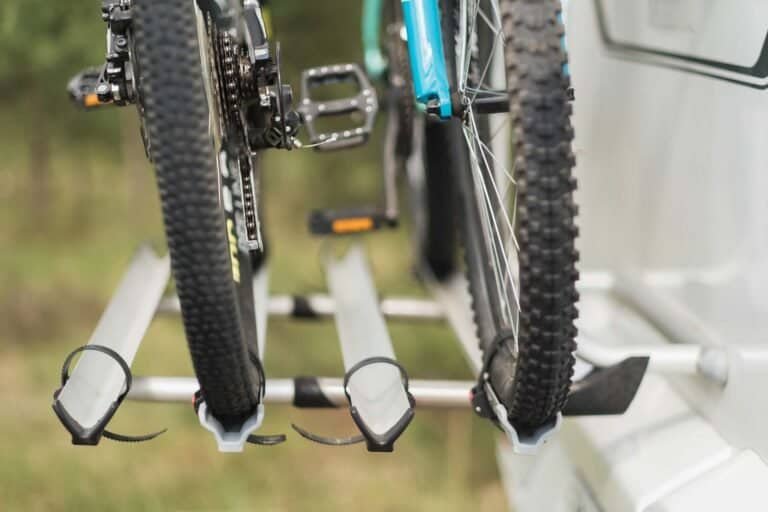
Picking the right bike rack for your campervan is less about finding the “best” one and more about finding the right one for your specific van, your bikes, and how you actually travel. It’s a decision that boils down to securely getting your bikes from A to B without making your van life a complete pain. This means taking a hard look at the main players – towbar, rear door, and roof-mounted racks – and weighing them up against your real-world needs. Understanding the options available, including the variety of Campervan Bike Racks, can make a significant difference.
Why Your Bike Rack Choice Matters So Much
Choosing a bike rack isn’t just about bolting a bit of metal to your van; it’s a decision that genuinely shapes your adventures. The right one slots so seamlessly into your setup you forget it’s there. The wrong one? It becomes a daily frustration. I’m talking about the kind of frustration that comes from not being able to open your back doors for that perfect view on a remote Scottish wild camp, or realising your van is now too long to navigate the tight lanes in Cornwall.
It’s a decision that affects everything from your fuel economy to how secure you feel leaving your bikes while you pop to the pub.
And it’s a decision more and more people are making. With campervan ownership in the UK jumping by 25% to over 450,000, the demand for good kit has exploded. The UK bicycle accessories market tells the story, with vehicle bike racks alone making up a market worth around £110 million in 2024. It’s not a niche accessory anymore; a recent survey found that a massive 55% of UK campervan buyers now see bike rack compatibility as a top priority. This piece of kit has become essential.
Matching the Rack to Your Van and Lifestyle
As you consider your choices, it’s essential to explore the different types of Campervan Bike Racks available that suit various van models and travel styles.
Before you even start browsing models online, you need to have an honest chat with yourself about your setup. There is no one-size-fits-all solution here. The needs of a full-time van lifer in a long-wheelbase Fiat Ducato are worlds away from a weekend warrior in a VW Transporter.
Get these three things clear in your head first:
Your Van’s Design: What have you actually got? Barn doors? A tailgate? A high roof? The physical shape of your van is the first big filter. A rack that works perfectly on a Sprinter might completely block the tailgate on a T6. This choice is also tied directly to your van’s interior; our guide on designing the perfect campervan layout can help you think about how what you stick on the outside affects life on the inside.
The Bikes You Carry: There’s a world of difference between a lightweight road bike and a pair of chunky e-bikes. E-bikes, often weighing over 25 kg each, instantly rule out a huge number of standard door-mounted or ladder racks simply because they can’t handle the weight.
Your Travel Style: Are you constantly on the move, needing quick and easy access to your back doors multiple times a day? Or do you tend to set up camp for a few days at a time where rear access is less of an issue? Your daily rhythm on the road will determine which compromises are acceptable and which will drive you mad.
A classic mistake is buying a rack that looks brilliant online without thinking through the day-to-day reality. I once saw a van owner who’d fitted a side-mounted ladder rack, only to find he couldn’t open his habitation door more than a few inches. A costly and deeply frustrating oversight.
The Four Main Types of Campervan Bike Rack
Your choice will almost certainly come down to one of these four categories. Each one has a clear set of pros and cons that suit different vans and different ways of travelling.
Towbar-Mounted Racks: These are the heavy lifters of the bike rack world, making them the go-to for anyone with e-bikes. By mounting directly to the chassis via the towbar, they offer incredible stability and a high weight capacity. Many of the best models can tilt or swing away, giving you access to your rear doors even with the bikes loaded on.
Rear Door-Mounted Racks: Hugely popular for panel vans like the Sprinter or Ducato, these racks clamp directly onto the rear doors. They sit higher up, which is great for keeping your lights and number plate visible, but they usually have lower weight limits and can stop you from opening the doors all the way.
Ladder-Mounted Racks: If your van already has a rear ladder for roof access, these can seem like a dead-simple solution. They’re really only suitable for lighter bikes and are generally less secure than other options. You absolutely have to check that your ladder is rated to carry the dynamic load of a bike bouncing around while you’re driving.
Roof-Mounted Racks: This is a brilliant option if you want to keep your rear doors completely clear. The big catch? Lifting bikes, especially heavy ones, onto the roof of a tall campervan is a real physical challenge. They also increase your van’s overall height, which can be a real headache when faced with car park height barriers.
Understanding these core differences is the first step to making a good decision. To get a better feel for the models and features out there, it’s worth exploring a comprehensive range of vehicle bicycle racks to see these styles in more detail and visualise how each one might work for you.
Campervan Bike Rack Types At a Glance
Feeling a bit overwhelmed by the options? Don’t worry. This table cuts through the noise and gives you a quick, at-a-glance comparison of the main types. Think of it as a cheat sheet to help you zero in on what will actually work for your van and your adventures.
| Rack Type | Best For | Typical Price Range | Key Advantage | Main Drawback |
|---|---|---|---|---|
| Towbar-Mounted | Heavy e-bikes, frequent rear door access | £250 – £700 | High weight capacity & stability | Can make the van significantly longer |
| Rear Door-Mounted | Panel vans (Sprinters, Ducatos), lighter bikes | £200 – £500 | Keeps number plate/lights visible | Restricts rear door opening |
| Ladder-Mounted | Vans with existing, heavy-duty ladders | £80 – £200 | Simple, uses existing hardware | Low weight limits & less secure |
| Roof-Mounted | Preserving rear access completely | £100 – £300+ | Unobstructed access to the back | Lifting bikes is physically demanding |
Ultimately, this table should help you narrow down your search. If you’re carrying e-bikes, your focus will likely be on the towbar options. If you’re in a smaller van and just need to carry a lightweight road bike, a door-mounted rack might be perfect. Use this as your starting point before diving into specific models.
How to Install Your Campervan Bike Rack
Fitting a new bike rack to your campervan can feel a bit daunting, I get it. The instructions look like they were written by a Swedish furniture designer on a bad day. But trust me, with a bit of prep and the right approach, it’s a job you can definitely tackle yourself. This isn’t about reciting the manual; it’s about the real-world steps for fitting the two most common types: towbar and rear door racks.
Getting this right the first time is more than just a matter of convenience. A poorly fitted rack is a disaster waiting to happen on the M6. It can damage your van, your bikes, or worse, become a serious hazard. So let’s do it properly.
Before you even think about picking up a spanner, there are a few checks you absolutely must do. Skip these, and you’re asking for trouble.
Pre-Installation Checks and Preparation
The whole installation hinges on your van being up to the job. If you’re fitting a towbar rack, have a good look at your chassis and the towbar mounting points. You’re checking for any serious rust or damage that could compromise its strength. If you see anything that makes you nervous, get it checked by a professional. It’s not worth the risk.
For a rear door-mounted rack, your focus is squarely on the doors. Give the hinges a proper inspection. Are there any signs of wear, stress cracks, or looseness? Remember, those hinges weren’t designed to carry the weight of two e-bikes bouncing down a bumpy B-road; they were designed to swing a door. They need to be in top condition.
My Top Tip: Before you start, grab a roll of low-tack masking tape or painter’s tape. Stick it on the paintwork anywhere the rack is going to make contact. It’s a simple trick that has saved my paint from countless accidental slips and scratches during fitting.
Once you’re happy the van is ready, it’s time to gather your tools. You don’t need a fully kitted-out workshop, but having the right gear makes everything go so much smoother. For a solid list of what you’ll need for this and other van projects, have a look at our guide on the essential tools and materials for campervan conversions.
Fitting a Towbar-Mounted Bike Rack
Honestly, towbar racks are usually the easiest to fit because you’re using a solid, pre-existing mounting point. The whole process is basically about clamping the rack’s coupling securely onto your towball.
First, give the towball a good clean. It needs to be completely free of grease, dirt, or road grime. A clean, dry surface is what gives the rack’s clamp the best possible grip.
Next, lift the rack and slot its coupling down over the towball. Most modern racks have a big lever that you push down firmly to clamp it into place. You’re listening for a solid ‘clunk’ and feeling for it to lock tight.
Now for the most important part: the wobble test. Grab the rack and give it a really firm shake—side to side, up and down. There should be almost no movement at all. If it feels loose or wobbly, release the clamp, consult the instructions for any tension adjustments, and try again.
A classic mistake is being too gentle with the locking lever. It should feel stiff and require a good bit of force to close. If it feels easy, the connection probably isn’t secure enough for the road.
Installing a Rear Door-Mounted Rack
Rear door racks demand a bit more care because you’re attaching them directly to your van’s bodywork. These usually work with a system of padded clamps that grip the top, bottom, or side edges of one of your rear doors.
Deciding on the right rack often boils down to a few key things about your specific setup, as this little guide shows.
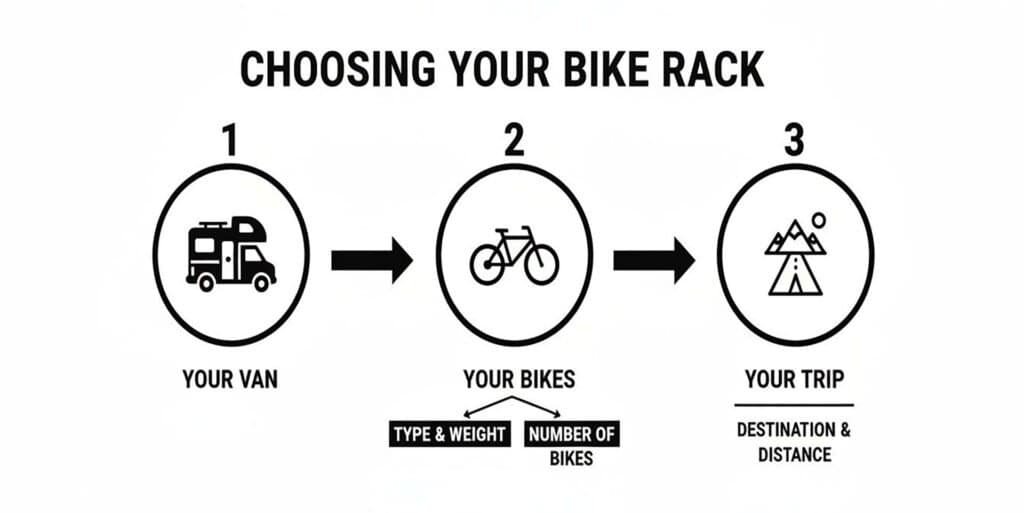
As you can see, the choice is tied directly to your van, your bikes, and the kind of trips you have planned.
Here are the key things to get right when fitting a door mount:
- Get a helper. Seriously. Trying to hold a heavy, awkward rack in place with one hand while tightening clamps with the other is a surefire way to scratch your paintwork. An extra pair of hands makes this job about ten times easier.
- Position the clamps carefully. Start with the top clamps, placing them over the edge of the door. Make sure the protective rubber pads are sitting flat against the paintwork. Don’t tighten them all the way just yet.
- Attach the lower supports. Now, position the bottom supports. Crucially, make sure they are resting on a strong, structural part of the door—not just on the thin sheet metal in the middle.
- Tighten things up evenly. This is key. Gradually tighten the top and bottom clamps, alternating between them. This distributes the pressure evenly and stops the rack from pulling to one side. If you just crank one side down first, you can warp the clamp or even damage your door.
- Check for obstructions. Before you do the final tightening, give everything a final check. Is the rack blocking your door handle, badges, or reversing camera? Also, be aware of rear-mounted spare wheels; they are a common reason a standard door rack won’t fit properly.
Once it’s all tightened down, give it another aggressive wobble test. The rack should feel like it’s a part of the door itself, with no creaking or slipping. A well-fitted door rack is incredibly secure, but a badly fitted one is a risk you just don’t want to take.
Getting to Grips with Weight Limits and Bike Security
Once your rack is bolted on, the real work begins: using it safely. It’s easy to get caught up in the excitement of hitting the road, but this is where you need to get serious about weight calculations and layering up your security. Getting this wrong isn’t just a minor hiccup; it can lead to some seriously expensive damage to your van, your bikes, or worse.
The explosion in e-bike popularity has completely changed the game here. Your old road bike might have weighed around 10 kg, but a modern e-bike can easily crush the scales at 25 kg or more. That extra bulk puts a huge amount of strain on the rack and its mounting points, making weight management more critical than ever. A huge part of this is understanding electric bike weight limits, because pushing past them can compromise both the rack itself and your van’s handling.
Calculating Your Total Load
Before you even think about loading up, you need to do some simple but absolutely essential maths. It’s not just about the weight of your bikes; it’s the combined weight of the bikes and the rack itself.
First, find the maximum load capacity for your rack – it should be clearly stamped on it or in the manual. Next, weigh your bikes. If you’ve got e-bikes, a great tip is to pop the batteries out before weighing them (and definitely before travelling) to shed a few kilos.
Here’s the simple formula:
Total Load = (Weight of Bike 1 + Weight of Bike 2) + Weight of the Rack
That final number absolutely must be less than your rack’s maximum capacity. But it also has to be within the limits of whatever it’s mounted to. For a towbar, that means checking your vehicle’s ‘nose weight’ limit. For a door-mounted rack, you’re respecting the hinges and the door panel itself, neither of which were ever designed to carry 50 kg of metal bouncing down a bumpy B-road.
I once saw a van with rear doors that just wouldn’t close properly. The owner had been carrying two heavy e-bikes on an underrated door rack for a year, and the cumulative stress had actually bent the door hinges. It was a costly and completely avoidable repair.
Keeping Your Bikes Secure on the Road
Let’s be blunt: your bikes are a massive target for thieves. The flimsy little lock that might come with your rack is often little more than a visual deterrent. The only way to get genuine peace of mind, whether you’re at a busy campsite or a remote wild camping spot, is to adopt a multi-layered security approach.
Effective security is all about making it as difficult and time-consuming as possible for a thief to get away with your pride and joy. Here are a few strategies that actually work:
- Use a Heavy-Duty D-Lock: Don’t mess about with cheap locks. Get a high-quality, Sold Secure rated D-lock and thread it through the frames of both bikes and a structural part of the rack itself. This physically anchors everything together.
- Add a Thick Cable or Chain: A D-lock is great for the frames, but what about the wheels? Loop a heavy-duty chain or a thick, armoured cable through the wheels and back to the D-lock. This stops thieves from just unbolting a wheel and making off with the rest of the bike.
- Consider a Motion-Sensor Alarm: These are brilliant. A small, battery-powered motion alarm attached to the bikes or the rack itself can be a powerful deterrent. The moment someone starts tampering with your setup, a loud siren goes off, drawing immediate attention.
Staying Legal on UK Roads
Enjoying the freedom of a campervan trip means not getting slapped with a fine for something daft. It’s easy to fit a bike rack and think you’re good to go, but a few simple oversights can land you with hefty fines and points on your licence. The main things to get right are visibility and making sure your bikes aren’t going anywhere.
The most common pitfall? Obscuring your number plate or rear lights. If your bikes or the rack itself even slightly cover them, you absolutely must use a lighting board. This isn’t a friendly suggestion; it’s a legal requirement to make sure other drivers can see your indicators, brake lights, and registration.
When a Lighting Board is Essential
A lighting board is just a separate panel that shows a legal number plate and copies your van’s rear lights. It plugs into your van’s electrics (usually via a towbar socket) and needs to be securely strapped to your bikes or the rack itself.
Picture this common scenario: you’ve mounted two chunky mountain bikes on a rear door rack. The wide handlebars and big tyres are completely blocking your van’s high-level brake light and partially hiding the number plate. Driving like that without a lighting board is illegal and you’re asking for a fine.
Key Takeaway: Stand about 20 metres behind your fully-loaded van. Can you clearly read every single character on your number plate and see all your lights without squinting? If not, you legally need a lighting board. Don’t guess – get a friend to follow you for a mile and check properly.
Getting one sorted is straightforward:
- Connection Type: Most use a standard 7-pin or 13-pin socket, which you’ll have if you’ve got a towbar fitted.
- Legal Number Plate: You’ll need a legally compliant number plate made for the board. You can order these from registered suppliers by showing your V5C logbook.
- Secure Attachment: Use proper bungee cords or strong straps to fix the board firmly. It can’t be allowed to swing about or fall off while you’re driving.
Understanding Overhangs and Unsafe Loads
Beyond just being seen, UK law is very strict about how your load is carried. An insecurely fastened bike could easily be classed as an unsafe load, putting you and everyone else on the road at risk.
This issue has really shaped the market recently. Rear-mounted racks saw a surge in popularity after a 2024 Department for Transport update stressed just how vital secure bike fixation is for avoiding £200 fines. On top of that, regulations under the Road Vehicles (Construction and Use) Act 1986 limit how far a rack can stick out. There’s an 80cm overhang limit, which has directly influenced how around 70% of modern racks are designed to stay compliant. This move was partly prompted by prosecution rates hitting 8,000 cases in 2023 for improper bike carriage. You can find more data on UK bicycle accessories market trends to see how the industry is evolving.
These rules are just one part of a much bigger set of regulations for campervans. To get the full picture, it’s well worth reading our complete guide on UK driving laws for campervans. A bit of time spent getting it right means you can focus on the adventure, not on legal headaches.
Budgeting for and Maintaining Your Bike Rack
A good campervan bike rack isn’t just another accessory; it’s a genuine investment in your freedom. It’s the bit of kit that unlocks new trails and cycling adventures right from your rolling home. But to make a smart investment, you need to look beyond the price tag on the box and understand the full cost. This means factoring in the initial purchase, potential fitting fees, and the ongoing costs of essential accessories and upkeep.
Thinking about the complete financial picture from the start saves you from nasty surprises down the line. It ensures you budget for a complete, safe, and long-lasting setup, rather than getting caught out by the hidden extras. A little bit of planning now pays off with years of hassle-free adventures.
The True Cost of Your Bike Rack Setup
The price of the rack itself is just the starting point. Depending on the type of rack you choose and the specifics of your van, the total cost can vary wildly. Let’s break down what you should realistically budget for.
- The Rack Itself: This is the biggest variable. A basic ladder-mounted rack might only set you back £80–£200. At the other end of the scale, a high-end, swing-away towbar rack designed for a couple of heavy e-bikes can easily cost £500–£700, or even more.
- Professional Fitting: If you’re not 100% confident with the installation—especially for a towbar model or a complex door mount—getting it fitted professionally is a wise move. Expect to pay anywhere from £75 to £200 for the peace of mind that it’s done right.
- Essential Accessories: Don’t forget the extras. A legally required lighting board with a number plate will cost around £50–£80. To secure your bikes properly, a high-quality, Sold Secure rated D-lock and cable will add another £60–£100 to the bill.
These add-ons aren’t optional luxuries; they’re fundamental parts of a safe, legal, and secure setup. Factoring them in from the beginning gives you a much more accurate picture of your total investment.
Budgeting for a rack is like buying a camera; the body is just the start. You still need the right lenses and a decent bag to make it truly useful. For your rack, the ‘lenses’ are the lighting board and good locks.
Your Seasonal Maintenance Checklist
Once your rack is fitted, a bit of regular care will protect your investment and make sure it stays safe for years to come. Corrosion and loose fittings are the biggest enemies of any campervan bike rack, but a simple seasonal check-up is all it takes to keep things in top condition.
This isn’t a massive chore. Just set aside 20 minutes before your first trip of the spring and another 20 before you put the van away for winter. Trust me, this simple habit can prevent a catastrophic failure on the motorway.
Pre-Season Inspection and Care
Before you head out on your first adventure of the year, it pays to run through this quick checklist. This is all about making sure nothing has seized up, cracked, or worked its way loose over the winter months.
- Check All Bolts and Fixings: Grab the correct spanner or Allen key and give every single bolt on the rack a check. You’re not trying to overtighten them, just ensuring they are snug and haven’t vibrated loose.
- Inspect Straps and Clamps: Look closely at any rubber or fabric straps for signs of perishing, cracking, or fraying. Pay special attention to the clamps that hold the bike frames, making sure the tightening mechanisms work smoothly and haven’t seized.
- Lubricate Moving Parts: Get some silicone lubricant (like GT85) and give a light spray to any hinges, locking mechanisms, or pivoting joints. This stops them from seizing and makes the rack much easier to use, especially on a cold morning.
- Test Electrical Connections: If you have a lighting board, plug it in and get a friend to help you test every light—indicators, brake lights, and sidelights. Corrosion on the pins is a really common problem; a quick scrub with a wire brush can solve most issues.
Post-Trip and Winter Storage Advice
What you do after a trip, especially one to the coast, is just as important. That salty sea air is incredibly corrosive to metal parts. Always give your rack a thorough rinse with fresh water after visiting the seaside to wash away any salt deposits.
When it comes to winter, if you can store your rack in a garage or shed, do it. Keeping it out of the harsh weather will drastically extend its life. If it has to stay on the van, it’s well worth investing in a protective cover to shield it from the worst of the rain and grime.
Your Bike Rack Questions, Answered
Navigating the world of campervan bike racks always throws up a few classic questions. Getting straight, real-world answers is the key to picking the right setup and not regretting it six months down the line. Here are the queries we hear most from van owners.
Can I Still Get Into the Back of My Van?
This is the big one. The number one question, every single time. And the answer depends entirely on the type of campervan bike rack you choose.
Standard rear door-mounted racks will almost always stop you from opening your doors fully. This can be a massive pain if you need daily access to your garage space for things like your electrical system, water tanks, or just grabbing your camping chairs.
This is where many modern towbar-mounted racks really shine. Look for models with swing-away or tilt-down features. A swing-away rack is the real game-changer; it pivots on a beefy hinge, moving the entire unit—bikes and all—completely clear of your doors. This gives you full, unobstructed access, which for many van lifers is non-negotiable.
How Much Will a Bike Rack Hammer My Fuel Economy?
Let’s be honest: adding anything to the outside of your van creates drag and will hit your fuel consumption. The real question is, how badly?
The impact varies based on a few things:
- Rack Type: A sleek, empty towbar rack will have a minimal effect. A big door-mounted rack carrying two bulky mountain bikes is going to act like a parachute.
- Your Bikes: Each bike you add increases the surface area catching the wind. The difference between carrying one lightweight road bike and two full-suspension mountain bikes is definitely noticeable at the pump.
- Your Speed: The effect of drag increases exponentially with speed. You’ll see a much bigger drop in MPG on long motorway slogs at 70 mph than you will pootling down winding A-roads.
As a general rule of thumb, expect a fuel economy decrease of anywhere from 5% to 15%. For a van that normally gets 30 MPG, this could mean dropping to around 27 MPG with a fully loaded rack. It’s a trade-off, but one that most of us find acceptable for the adventures it unlocks.
Do I Need to Tell My Insurance Company About My Rack?
This is a critical question that’s so often overlooked. The short answer is yes, you almost certainly should. A permanently fitted campervan bike rack is typically considered a vehicle modification by insurance companies in the UK.
Failing to declare a modification, however small, could give your insurer grounds to invalidate your policy if you need to make a claim. It’s a five-minute phone call that buys you essential peace of mind.
When you notify them, a couple of things might happen. Some insurers will just note the modification on your policy with no change to your premium. Others might slightly increase it to reflect the added value and potential repair costs.
It’s also vital to check if your bikes themselves are covered while on the rack. Your vehicle policy might cover the rack, but the bikes are often not included. You’ll likely need to add them to your home insurance policy under an ‘away from home’ clause or get specific bicycle insurance to make sure they’re protected against theft or damage while you’re on the road.