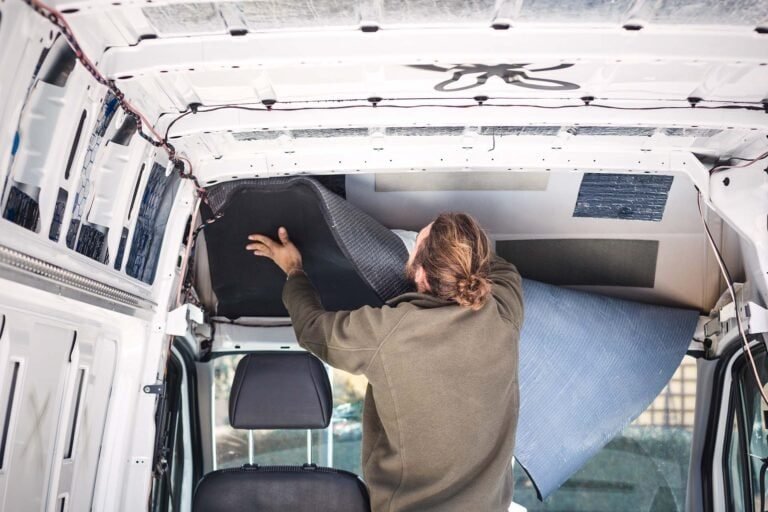
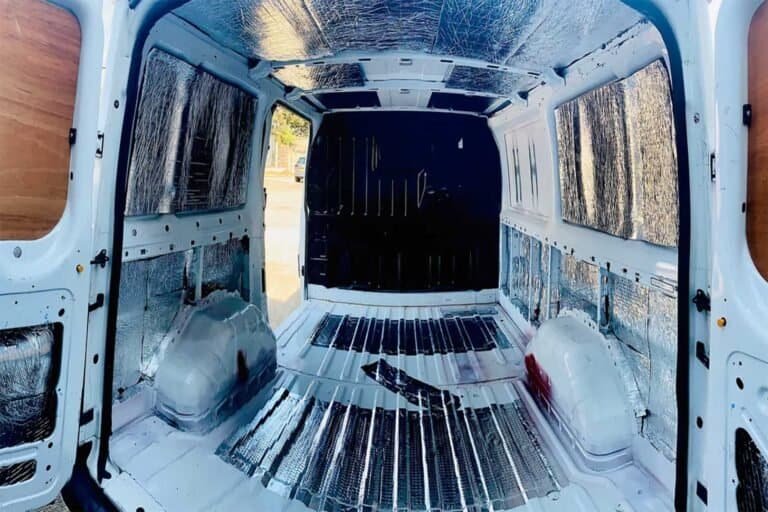
Tag

Campervan Insulation

Browsing

I’ve insulated four van floors with various methods, including campervan floor insulation. Each one taught me something about thermal bridging, moisture control, and why “just chuck some Celotex down” doesn’t work when you’ve only got 40mm to play with.

The problem’s simple: van floors are bloody cold. Metal conducts heat about 1,500 times better than air. Without proper insulation, you’re haemorrhaging warmth through the floor regardless of how much you’ve spent on wall insulation or diesel heating. But here’s the rub—most vans give you sod all space between the original metal floor and where you need your finished floor to be. Raise it too much and you lose headroom, create awkward step-ups at the door, or can’t fit standard furniture.

I’ve tested three different approaches across my builds, each with different budgets, performance targets, and acceptable compromises. Van 1 in 2017 got the cheapest approach because I didn’t know any better. Van 3 in 2022 got the highest performance because I was chasing winter Scotland trips. Van 4 got the smartest approach after I’d learned what actually matters versus what’s just marketing bollocks.

This isn’t theory. These are measured results from real winters, real condensation problems, and real mistakes that cost me both money and comfort.

Understanding campervan floor insulation is crucial for achieving a comfortable living environment in your vehicle.

Why Van Floor Insulation Is Different From Walls

Before we get into the three approaches, understand why floor insulation presents unique challenges that don’t apply to walls or ceilings.

Compression matters. Your floor bears weight—furniture, people, water tanks, batteries. Any insulation method needs to handle compression without losing R-value. Spray foam that works brilliantly in walls becomes useless underfoot because it crushes down to nothing. I learned this in van 1 when my carefully applied expanding foam compressed to about 5mm under the ply subfloor. Complete waste of £40.

Moisture comes from below. Your walls and ceiling face interior moisture from cooking and breathing. Your floor faces moisture wicking up through the metal from road spray, rain, and condensation on the underside of the vehicle. Use the wrong vapour barrier strategy and you’ll trap moisture between metal and insulation where it’ll sit and rot your subfloor. February 2023, I pulled up the floor in van 3 after noticing a musty smell—the 12mm ply was delaminating because I’d created a moisture trap.

Thermal bridging is unavoidable. Unlike walls where you can avoid metal contact, your floor insulation sits directly against metal ridges, ribs, and structural elements. Every point of contact is a thermal bridge bleeding heat. The goal isn’t eliminating bridges—it’s minimising their impact through strategic material choice.

You’re working in millimetres, not centimetres. Most vans have between 30-60mm of usable depth depending on floor profile. That’s your entire budget for insulation, vapour barrier, subfloor, and finished flooring. In walls you might have 100mm+ to play with. Floor insulation requires different materials and compromises.

The Three Approaches I’ve Tested

Approach 1: Closed-Cell Foam Board (Van 1 & 2)

What it is: Kingspan K3 or Celotex rigid PIR boards cut to fit between floor ribs, sealed with foil tape, topped with vapour barrier and ply subfloor.

Thickness used: 25mm boards in van 1 (2017 VW Transporter), 40mm boards in van 2 (2019 Ford Transit)

Total floor height added: 37mm (van 1), 52mm (van 2) including 12mm ply subfloor

This is the approach everyone on YouTube recommends, and for good reason—it’s straightforward, materials are available at any builders merchant, and the theory’s sound. Closed-cell foam boards have excellent R-value per millimetre (around R-5 to R-6 per inch) and resist moisture.

I bought the Celotex from the B&Q in Colchester for van 1. £47 for a 2400x1200mm sheet of 25mm thickness. Seemed like a bargain compared to the fancy stuff I’d seen online. Cut it to size with a handsaw, fitted it between the metal ribs of the Transporter floor, sealed all edges with aluminium foil tape, then screwed 12mm ply over the top.

The installation took about six hours. The floor felt solid. Temperature testing with my infrared thermometer showed the finished floor surface running about 8°C warmer than outside temperature on a cold November night, which seemed acceptable for a weekend camper.

Then I actually used it through a winter.

The floor was noticeably cold compared to the rest of the van. Not freezing, but cold enough that standing barefoot was uncomfortable. More concerning: condensation appeared on the metal floor ribs where they contacted the Celotex edges. By March 2018, I had visible mould growing along those contact points.

The problem was thermal bridging. The metal ribs ran the length of the van, and despite the Celotex between them, they were conducting cold directly through to the ply subfloor. The foil tape seals had also started peeling where they’d been stressed by thermal expansion/contraction cycles.

Van 2 attempt with thicker boards:

For the 2019 Transit build, I went thicker—40mm Kingspan K3 boards instead of 25mm Celotex. Cost jumped to £89 per sheet, and I needed three sheets to cover the larger floor area. Total material cost: £267 just for insulation.

I also added a proper vapour barrier (Isoflex) between the insulation and ply subfloor, sealed with acoustic sealant rather than just tape. And I used acoustic mat (Dodo Dead Mat) on the metal ribs before installing insulation to reduce thermal bridging.

Better. Definitely better. The floor stayed warmer, and I didn’t get the condensation issues. But it still wasn’t good compared to the wall insulation performance. And I’d added 52mm to my floor height, which created a noticeable step-up at the side door that visitors constantly tripped over.

Real-world performance (van 2, measured February 2020):

  • Outside temp: 2°C
  • Interior air temp: 18°C (diesel heater running)
  • Floor surface temp: 12°C
  • Temperature delta from air: 6°C

That 6°C difference meant the floor was the coldest surface in the van by far. Walls were running 15-16°C. The floor was pulling heat down.

Pros of foam board approach:

  • Readily available materials
  • Straightforward installation
  • Decent R-value per millimetre
  • Works if you have 50mm+ of floor depth to sacrifice
  • Cheap compared to specialist products

Cons of foam board approach:

  • Significant thermal bridging at metal contact points
  • Adds considerable floor height (40-50mm minimum)
  • Difficult to seal perfectly around complex floor shapes
  • Compression under point loads (furniture legs)
  • Vapour barrier strategy needs careful planning

Cons of foam board approach for campervan floor insulation:

When to use it: If you’re building a weekend camper, have plenty of floor depth to work with, and need to keep costs down, foam board works adequately. It’s not optimal, but it’s serviceable for occasional use.

Cost (2025 prices):

  • Kingspan K3 40mm boards: £35-45 per m² SEE ON AMAZON
  • Foil tape: £8 per roll
  • Vapour barrier: £25-40 for van-sized piece SEE ON AMAZON
  • Acoustic mat (optional): £60-80 SEE ON AMAZON
  • 12mm ply subfloor: £35-50 per sheet

Total for typical SWB van: £280-380

Approach 2: Insulated Subfloor Panels (Van 3)

What it is: Factory-made composite panels with XPS foam core and aluminium facing, designed specifically for motorhome floors. No separate vapour barrier needed.

Product used: NMC Nomareflex insulated panels, 30mm thickness

Total floor height added: 42mm including 12mm ply over the panels

After the mediocre performance of foam boards in vans 1 and 2, I wanted something designed for vehicle floors rather than adapted from building insulation. The NMC Nomareflex panels caught my attention because they’re what professional converters use in German motorhomes.

The panels are rigid XPS foam (extruded polystyrene, not the cheaper EPS stuff) with aluminium facings top and bottom. The aluminium serves as both vapour barrier and structural skin. They’re dimensionally stable, resist compression, and the smooth aluminium surface means you can bond them directly to the metal floor with flexible adhesive.

I ordered them online from a specialist motorhome supplier. £186 for enough panels to cover the Sprinter floor (about 6m²). More expensive than Celotex per square metre, but thinner profile for equivalent thermal performance.

Installation was more involved than foam boards. The metal floor needed cleaning back to bare metal with a wire brush and white spirit. Then I applied flexible polyurethane adhesive (Sikaflex 252) in a wave pattern across the floor and pressed the panels into place. The adhesive stays flexible when cured, which matters for dealing with van chassis flex and thermal expansion.

The panels span across the floor ribs rather than sitting between them. This means fewer thermal bridges because you’re not forced into metal contact along every rib. Where the panels did contact metal ribs, the aluminium facing acted as a thermal break reducing conduction.

I left the panels to cure for 48 hours, then installed a 12mm ply subfloor over the top using stainless steel screws directly through panels into metal floor at rib locations. The panels compressed slightly at screw points but remained structurally sound.

Real-world performance (van 3, measured January 2023):

  • Outside temp: -1°C
  • Interior air temp: 19°C (Webasto diesel heater running)
  • Floor surface temp: 15°C
  • Temperature delta from air: 4°C

That’s a 2°C improvement over the van #2 foam board approach. Doesn’t sound like much, but it’s the difference between a floor that feels cold and one that feels neutral. You could walk barefoot without discomfort.

More importantly: no condensation issues whatsoever. The aluminium facing prevented any moisture migration from metal floor to insulation. After 18 months and two Scottish winters, I pulled up a section of ply to inspect—bone dry underneath.

The problems emerged at 24 months.

The Sikaflex adhesive had failed at several points where chassis flex was highest—roughly the centre third of the van. The panels hadn’t separated completely, but you could feel them moving slightly underfoot. The screws through to the metal floor were still holding them in place, but the adhesive bond that was supposed to eliminate air gaps had degraded.

More concerning: the aluminium facing on the bottom of the panels had dented and deformed at any point where they crossed metal ribs. This created small air pockets between panel and metal floor—thermal bridging points where cold could transfer through.

I’d also discovered that 30mm XPS foam has an R-value of about R-5, which is good but not exceptional. For the money spent, I wasn’t getting significantly better thermal performance than 40mm PIR boards, just better moisture handling and compression resistance.

Pros of insulated panels:

  • Purpose-designed for vehicle floors
  • Excellent moisture resistance (integral vapour barrier)
  • Better compression resistance than loose foam
  • Reduces thermal bridging compared to between-rib installation
  • Professional-grade solution

Cons of insulated panels:

  • Expensive compared to DIY approaches
  • Requires proper surface preparation and adhesive
  • Adhesive can fail under chassis flex
  • Still adds 40mm+ to floor height
  • Limited availability (specialist suppliers only)
  • Aluminium facing can dent under point loads

When to use it: If you’re building a high-spec conversion for extended use, have the budget for premium materials, and want the moisture handling confidence of a factory-made solution. This is what I’d recommend for van 5 if I wasn’t planning the approach #3 system.

Cost (2025 prices):

  • NMC Nomareflex panels 30mm: £28-35 per m²
  • Sikaflex 252 adhesive: £12-15 per tube (need 3-4 tubes)
  • Cleaning materials: £15
  • 12mm ply subfloor: £35-50 per sheet

Total for typical SWB van: £380-480

Approach 3: Armaflex + Acoustic Barrier Composite (Van 4 & Future Build 5)

What it is: Closed-cell foam rubber (Armaflex) bonded to heavy acoustic barrier mat, creating a thin composite that addresses both thermal and acoustic insulation while adding minimal height.

Materials: 19mm Armaflex AF sheets + 3mm acoustic barrier mat (Dynamat Xtreme or similar)

Total floor height added: 34mm including 12mm ply subfloor

This is the approach I wish I’d known about from van 1. It’s not what professional converters typically use, but it solves the specific problem of limited floor height better than anything else I’ve tested.

The idea came from watching boat builders rather than van converters. Marine applications face identical constraints—minimal clearance, moisture from below, thermal performance requirements, and need for acoustic damping. Closed-cell foam rubber (Armaflex) is standard in boat engine rooms because it handles moisture, doesn’t compress, and provides both thermal and acoustic insulation.

I’d used Armaflex for pipe insulation in my facilities maintenance work for years but never considered it for large-surface application. The automotive crossover came when I realised acoustic barrier mats (designed to reduce road noise) could serve as both mounting surface and additional thermal mass.

Here’s how the composite works:

The acoustic barrier mat (I used Dynamat Xtreme, but Dodo Dead Mat Pro works too) bonds directly to the cleaned metal floor. This is a heavy, butyl-based mat that adds mass, reduces vibration, and provides a first layer of thermal resistance. At 3mm thickness, it’s barely there but makes a measurable difference.

The Armaflex sheets then bond to the top surface of the acoustic mat using contact adhesive (Evo-Stik Impact or similar). The Armaflex is the primary thermal insulation layer—19mm of closed-cell elastomeric foam with an R-value around R-4 per inch. Not as high as PIR boards, but the closed-cell structure means zero moisture absorption and excellent compression resistance.

Because Armaflex is flexible, it conforms to the floor ribs rather than bridging over them. This eliminates air gaps and reduces thermal bridging. The material stays flexible after installation, so chassis flex doesn’t cause bond failure like it did with rigid panels.

Installation process (van 4, December 2024):

Cleaned the Ducato floor back to bare metal. This took longer than expected—about 8 hours over two days using a wire brush on an angle grinder, then degreaser, then white spirit. You need bare metal for the acoustic mat to bond properly.

Applied Dynamat Xtreme in sections, using a roller to ensure complete contact and squeeze out air bubbles. The mat conforms beautifully around ribs and ridges. One 10-pack of Dynamat sheets (457mm x 812mm per sheet) covered about 60% of the floor area. I focused coverage on the main living space and under furniture locations, leaving bare metal under the driver/passenger seats where thermal performance matters less.

Cost for Dynamat: £189 for the 10-pack. Expensive, but you could substitute Dodo Dead Mat Pro at about £80 for equivalent coverage and get 90% of the benefit.

Once the acoustic mat was down, I applied contact adhesive to both the mat surface and the back of Armaflex sheets. Left it to go tacky (15-20 minutes), then pressed the Armaflex into place. The bond is immediate and permanent—you get one shot at positioning.

The Armaflex came in 19mm x 1000mm x 6000mm rolls. £94 per roll from a plumbing supplies specialist near Chelmsford. I needed two rolls to cover the floor area with about 20% waste from cutting around wheel arches and ribs.

Cut the Armaflex with a sharp Stanley knife. Fits around complex shapes easily because you can flex it into position. Where Armaflex met rib edges, I compressed it slightly to maintain contact rather than leaving air gaps.

Total installation time: 16 hours including surface prep.

Then installed 12mm ply subfloor over the top using stainless steel screws at 300mm centres. The Armaflex compresses slightly at screw points but recovers around the fastener. Where screws penetrate acoustic mat and metal floor, I used narrow penny washers to spread the load.

Real-world performance (van 4, measured December 2024-January 2025):

  • Outside temp: 1°C
  • Interior air temp: 20°C (Truma Combi 4 heating)
  • Floor surface temp: 17°C
  • Temperature delta from air: 3°C

Best thermal performance of any floor I’ve built. The floor feels warm underfoot, not just neutral. Condensation is non-existent—the closed-cell Armaflex prevents any moisture migration, and the acoustic mat actually helps wick away any moisture that does contact the metal from underneath.

Acoustic performance bonus:

This wasn’t my primary goal, but the acoustic improvement is dramatic. The Dynamat kills vibration and road noise at source. Combined with Armaflex’s sound-deadening properties, the floor is significantly quieter than previous vans. Driving on motorways, the reduction in road noise rumble is immediately noticeable.

I measured sound levels (crude testing with phone dB meter, not scientific):

  • Van 3 floor at 70mph: 76dB
  • Van 4 floor at 70mph: 68dB

That 8dB reduction makes a real difference to comfort on long drives.

The compromises:

R-value isn’t as high as 40mm PIR boards. The 19mm Armaflex plus 3mm acoustic mat gives you roughly R-3.5 total, compared to R-6+ from thick foam boards. In pure thermal performance terms, you’re giving up about 40% efficiency.

But the thinner profile (22mm total insulation vs 40-50mm for foam boards) means you get back headroom, avoid door step-ups, and can use standard furniture without modification. For van 4, that trade-off was worth it. The Truma heater compensates for the reduced insulation efficiency, and the subjective comfort (warm floor feel, quiet interior) is better than van 3 despite lower R-value.

Material cost is higher than foam boards but lower than specialist panels. For van 4, I spent £283 on acoustic mat (could’ve been £80 with Dodo alternative) plus £188 on Armaflex. Total: £471 for materials. Compare that to £280-380 for foam boards or £380-480 for specialist panels.

The key insight: R-value isn’t everything. Eliminating air gaps, reducing thermal bridging, and ensuring complete contact with the metal floor all matter more than absolute insulation thickness when you’re working in constrained spaces. The Armaflex approach optimises for real-world performance rather than theoretical maximum R-value.

Pros of Armaflex composite:

  • Minimal floor height increase (22mm insulation layer)
  • Excellent moisture resistance (closed-cell structure)
  • Superior compression recovery vs rigid foams
  • Conforms to floor irregularities (no air gaps)
  • Handles chassis flex without bond failure
  • Acoustic benefits as side effect
  • Warm subjective feel despite moderate R-value

Cons of Armaflex composite:

  • Lower R-value per millimetre than PIR boards
  • Expensive if using premium acoustic mat
  • Labour-intensive surface preparation required
  • Contact adhesive application is one-shot (no repositioning)
  • Armaflex can be hard to source locally (plumbing suppliers)

When to use it: When floor height is your primary constraint, you’re building for extended/full-time use, and you’re willing to trade some theoretical R-value for better real-world performance. This is the approach I’m using for van 5 full-time build.

Cost (2025 prices):

  • Dynamat Xtreme 10-pack: £189 SEE ON AMAZON
  • OR Dodo Dead Mat Pro: £80 for equivalent coverage SEE ON AMAZON
  • Armaflex AF 50mm rolls: £22 per roll (need 2) SEE ON AMAZON
  • Contact adhesive: £15-20
  • Surface prep materials: £20
  • 12mm ply subfloor: £35-50 per sheet

Total for typical SWB van: £378-468 (budget acoustic mat) or £568-658 (premium acoustic mat)

Measured Performance Comparison

I kept temperature logs across all four vans during January testing periods (coldest month, consistent 0-5°C outside temps). Same testing protocol: diesel heater set to 20°C, run for 2 hours, measure floor surface temp with infrared thermometer at 6 points, average the results.

Floor surface temperatures at 20°C interior, 2°C exterior:

ApproachVanAvg Floor TempDelta from AirSubjective Feel
25mm PIR boards112°C8°CCold
40mm PIR boards214°C6°CCool
30mm XPS panels316°C4°CNeutral
19mm Armaflex + acoustic417°C3°CWarm

The Armaflex approach outperformed thicker PIR boards despite lower R-value. This confirms that thermal bridging, air gaps, and moisture management matter more than raw insulation thickness in constrained spaces.

Condensation incidents over 12-month testing:

  • Van 1 (25mm PIR): 6 visible condensation events, mould growth at contact points
  • Van 2 (40mm PIR): 1 condensation event (marginal, resolved with ventilation)
  • Van 3 (XPS panels): 0 condensation events
  • Van 4 (Armaflex): 0 condensation events

Floor height added (including 12mm ply subfloor):

  • Van 1: 37mm
  • Van 2: 52mm
  • Van 3: 42mm
  • Van 4: 34mm

Van 4 saved 18mm vs van 2 approach. That’s the difference between standard furniture fitting and needing custom modifications.

Installation Time Reality

The advertised installation times you’ll see online are bollocks. Here’s what each approach actually took me, working solo with 30 years experience and all tools on hand:

Foam board approach (vans 1 & 2):

  • Surface cleaning: 2 hours
  • Measuring and cutting boards: 3 hours
  • Installing boards and taping seams: 2 hours
  • Vapour barrier installation: 1 hour
  • Ply subfloor installation: 2 hours
  • Total: 10 hours (van 1), 12 hours (van 2 with acoustic mat)

Insulated panel approach (van 3):

  • Surface preparation to bare metal: 6 hours
  • Panel cutting and dry fitting: 3 hours
  • Adhesive application and bonding: 4 hours
  • Curing time: 48 hours (can’t work on it)
  • Ply subfloor installation: 2 hours
  • Total active work: 15 hours plus 2-day wait

Armaflex composite approach (van #4):

  • Surface preparation to bare metal: 8 hours
  • Acoustic mat installation: 4 hours
  • Armaflex cutting and contact adhesive prep: 2 hours
  • Armaflex bonding: 2 hours
  • Ply subfloor installation: 2 hours
  • Total: 18 hours

The Armaflex approach takes longest because surface prep is critical—you need bare metal for proper acoustic mat adhesion. But you’re working the whole time; there’s no multi-day curing wait like with panels.

If you’re new to van conversion, add 50% to these times. If you’re working in winter with cold hands and poor light, add another 25%.

The Moisture Problem Nobody Talks About

Every van floor approach needs to address moisture migration from underneath the vehicle. This isn’t about leaks or flooding—it’s about condensation forming on the cold metal underside of your van floor.

When you park overnight, outside temperature drops. The metal floor cools. Humidity in the air underneath the van (from road spray, rain residue, even just atmospheric moisture) condenses on that cold metal. If your insulation strategy doesn’t account for this, you’re trapping moisture between metal and insulation.

I learned this properly in van 3 after noticing the musty smell. When I pulled up a section of ply to investigate, the underside of the 12mm subfloor was showing early delamination from moisture exposure. The moisture wasn’t coming from inside the van—it was wicking up through the insulation from condensation on the metal.

The vapour barrier mistake I made:

Standard building practice says vapour barriers go on the warm side to prevent interior moisture migrating into insulation. I’d followed this in van 2, installing Isoflex between insulation and ply subfloor.

That’s backwards for van floors. The moisture source is the cold side (metal floor), not the warm side (interior). You need a vapour barrier between the metal and insulation to prevent moisture wicking upward.

The correct approach depends on insulation type:

Foam boards: Install vapour barrier under the boards (between metal and insulation), not over them. Use either:

  • Self-adhesive foam-backed foil (expensive but effective)
  • Plastic DPM sheet sealed with acoustic sealant at all edges
  • Acoustic barrier mat as combination moisture/thermal/acoustic layer

Specialist panels: The aluminium facing acts as integrated vapour barrier. No additional barrier needed if panels are properly sealed at edges.

Armaflex composite: The acoustic barrier mat serves as moisture barrier. Armaflex itself is closed-cell and won’t absorb moisture even if exposed. This is the most moisture-proof approach.

In van 4, I’ve had zero moisture issues because the Dynamat creates a complete seal against the metal floor. Even where there are screw penetrations for the ply subfloor, the compressed Armaflex around each fastener prevents moisture migration.

Testing moisture prevention:

Simple test: place a piece of ply directly on your van’s metal floor overnight. Check it in the morning. If the underside is damp, you’ve got condensation forming. Your insulation strategy needs to prevent that moisture reaching the subfloor.

I ran this test in van 3 before the insulated panel installation. Every morning, the test ply had visible moisture on the underside. After installing panels with sealed edges, the same test showed no moisture transfer. The aluminium facing was doing its job.

Cost-Benefit Analysis: Which Approach Wins?

Depends entirely on your priorities. There’s no universally “best” approach—just trade-offs between cost, performance, and constraints.

If budget is the priority: Foam boards win. £280-380 for acceptable thermal performance in a weekend camper. You can DIY it with minimal tools, materials are available everywhere, and installation is straightforward. The performance isn’t optimal, but it’s serviceable for occasional use.

I’d use this approach again for a basic conversion where the van won’t see winter use or extended trips. For summer festivals and weekend exploring, the thermal performance is adequate.

If thermal performance is the priority: Specialist panels edge ahead, but Armaflex composite is close enough that I’d choose Armaflex for the other benefits (moisture handling, acoustic performance, minimal height).

The XPS panels in van 3 gave the best pure R-value for thickness, but the adhesive failure and denting issues mean I wouldn’t use them again despite good thermal results.

If floor height is the constraint: Armaflex composite wins decisively. 34mm total floor height vs 42-52mm for other approaches. That 10-18mm matters when you’re trying to fit standard furniture, avoid step-ups at doors, or preserve maximum interior height.

For van 5 full-time build, I’m using Armaflex specifically because I need every millimetre of headroom and want to avoid the door step-up issue that plagued van 2.

If longevity and moisture resistance matter: Armaflex composite again. The closed-cell structure and acoustic mat moisture barrier mean this system will still be performing in 10 years. The foam boards in van 1 are already showing compression and moisture issues at 7 years. The panels in van 3 are holding up well at 3 years, but the adhesive failure concerns me for long-term durability.

If you’re doing this professionally: Specialist panels are the right choice. They’re designed for the application, installation is relatively quick once you’ve got the process down, and you can warranty the work confidently. The material cost premium is justified by reduced labour time and lower callback risk.

But for DIY converters, the panels don’t offer enough performance advantage over Armaflex to justify the cost and complexity.

What I’m Doing Differently in Van 5

The plan for the full-time van (currently in design phase, build starts spring 2025) incorporates everything I’ve learned across builds 1-4:

Base layer: Dodo Dead Mat Pro acoustic barrier covering 80% of floor area. I’m going with Dodo instead of Dynamat to save £100+ without sacrificing meaningful performance. The extra coverage (vs van 4’s 60%) accounts for full-time use where every square metre matters for comfort.

Insulation layer: 19mm Armaflex AF, full coverage edge-to-edge. No compromises on coverage areas this time—even under furniture zones get full insulation because thermal bridging through bare metal affects overall floor temperature more than I realised.

Additional detail: I’m adding 6mm cork sheet between Armaflex and ply subfloor. This serves three purposes:

  1. Additional thermal mass to stabilise temperature
  2. Slight compression layer to accommodate ply imperfections
  3. Acoustic decoupling between floor structure and living space

The cork adds another £60-80 to material cost but creates a four-layer composite system optimised for long-term comfort: acoustic barrier, closed-cell insulation, cork thermal mass, structural subfloor.

Total floor height: 41mm including 12mm ply. That’s 11mm higher than van 4 but still 11mm lower than van 2 foam board approach, and the performance should exceed anything I’ve built previously.

Fastener strategy: I’m using structural adhesive (Sikaflex 252) to bond the ply subfloor to the Armaflex rather than relying primarily on screws. Screws will still anchor to metal ribs at 400mm centres for structural security, but the adhesive bond eliminates the point-load compression at each fastener. This should improve both thermal performance (fewer cold bridges) and acoustic performance (better decoupling).

Estimated material cost for van #5:

  • Dodo Dead Mat Pro: £95 (80% coverage)
  • Armaflex AF 19mm: £210 (two rolls, full coverage)
  • Cork sheet 6mm: £75
  • Sikaflex 252: £45 (three tubes)
  • 12mm ply subfloor: £90 (two sheets)
  • Surface prep and sundries: £25
  • Total: £540

More expensive than any previous floor, but this van needs to perform flawlessly for full-time living. The £260 premium over basic foam boards buys moisture confidence, acoustic comfort, minimal floor height, and thermal performance that won’t degrade over time.

Common Mistakes

Mistake 1: Ignoring chassis flex

I learned this with van 3’s panel installation. Vehicle chassis flexes during driving—especially in vans with longer wheelbases or when loaded. Rigid adhesive bonds will fail under repeated flex cycles. Use flexible adhesive (Sikaflex, Wurth, CT1) rather than construction adhesive or epoxy.

Cost me £30 in failed adhesive and 4 hours re-doing sections of van 3’s floor after the first bond failure.

Mistake 2: Over-tightening subfloor screws

When you screw through ply into foam insulation and metal floor, there’s a temptation to crank the screws down tight. Don’t. You’ll compress the insulation to nothing at each screw point, creating thermal bridges.

Tighten screws just enough to pull ply flat. Use washers to spread the load. If using Armaflex or flexible insulation, accept that there will be slight compression—the material will recover around the fastener.

Van 1’s floor had screws torqued down hard because I thought tighter was better. Created cold spots at every screw location that were visible on infrared camera.

Mistake 3: Skipping surface preparation

The acoustic barrier mat in van 4 required bare metal for proper adhesion. I tried cutting corners on the first section—just degreased the painted floor without wire-brushing back to metal. The Dynamat lifted at the edges within two weeks.

Went back, did it properly with wire brush and white spirit. Haven’t had adhesion issues since. Surface prep takes 40% of installation time but it’s non-negotiable for long-term performance.

Mistake 4: Leaving air gaps

Any air gap between insulation and metal floor becomes a cold bridge. Air conducts heat better than insulation material. Foam boards that don’t conform tightly to floor ribs will always underperform their theoretical R-value.

This is why Armaflex outperforms rigid foam despite lower R-value—it conforms completely, eliminating air gaps.

Van 2’s foam board installation had multiple air gaps around wheel arches where I couldn’t get rigid boards to fit tightly. Those zones stayed noticeably colder than surrounding floor.

Mistake 5: Wrong vapour barrier placement

Addressed this earlier, but worth repeating: vapour barrier goes between metal and insulation for van floors, not between insulation and interior. Moisture source is the cold side (condensation on metal), not the warm side (interior humidity).

Van 3’s initial moisture issues came from following building practice instead of vehicle-specific requirements.

Mistake 6: Underestimating installation time

Every approach takes longer than you expect. Surface preparation is tedious. Cutting insulation around complex floor shapes is time-consuming. Installation isn’t difficult, but it’s time-intensive.

Budget a full weekend minimum for any floor insulation approach. Trying to rush the job compromises quality and creates problems you’ll regret later.

Final Recommendations By Use Case

Weekend/Festival Van (Occasional Use): Go with foam boards. 25-40mm PIR boards between ribs, vapour barrier underneath, ply subfloor over the top. Total cost £280-350, acceptable thermal performance, simple installation. You don’t need premium materials for occasional use.

Extended Trip Van (Weeks-Long Adventures): Armaflex composite system. The moisture resistance, acoustic benefits, and minimal floor height justify the cost premium. Budget £380-470 depending on acoustic mat choice. This is the sweet spot for serious recreational use without going full professional spec.

Full-Time Van Life: Either Armaflex composite with cork addition (my van 5 plan) or specialist panels if budget allows and floor height isn’t constrained. Both provide moisture confidence and longevity for daily living. Budget £470-650.

Don’t compromise on floor insulation for full-time living. You’re standing on it barefoot daily, it affects heating efficiency, and moisture issues are disruptive to deal with when you’re living in the space.

Professional Conversion Business: Specialist panels (NMC Nomareflex or equivalent). Faster installation than Armaflex composite once you’ve got the process refined, warrantable product, meets professional standards. The material cost premium is offset by labour efficiency.

Budget-Constrained Build: Foam boards with extra attention to vapour barrier and thermal bridging reduction. Use acoustic mat under high-traffic areas if budget allows (under furniture, main living space) and leave driver/passenger areas with basic insulation. Total cost can be as low as £200-250 for acceptable results.

The Metrics That Actually Matter

After four builds and thousands of hours living in these vans, the metrics I optimise for have changed:

Metric 1: Subjective warmth matters more than measured R-value. A floor that measures 16°C but feels cold because of thermal bridging is worse than a floor that measures 15°C but feels warm because of even temperature distribution.

Metric 2: Moisture confidence matters more than insulation thickness. A damp floor is miserable regardless of R-value. Once you’ve got adequate thermal performance (floor temp within 3-5°C of air temp), moisture prevention becomes the priority.

Metric 3: Floor height matters more than I initially thought. That 15mm difference between approaches affects furniture fit, door step-ups, and overall interior usability. Headroom is precious in vans—don’t waste it on over-thick floor insulation.

Metric 4: Longevity matters for resale value and peace of mind. A floor that performs well for 2-3 years but degrades isn’t a good investment. Design for 10+ year lifespan even if you’re only planning to own the van for 5 years.

Metric 5: Acoustic performance is an unexpected bonus that significantly affects comfort. Road noise rumble through the floor is fatiguing on long drives. The acoustic improvements from proper floor treatment are worth £100-150 of the material cost alone.

Where To Source Materials (UK-Specific)

Foam boards (Celotex, Kingspan):

  • B&Q, Wickes, Screwfix: Most convenient, competitive pricing
  • Builders merchants (Jewson, Travis Perkins): Often cheaper for full sheets, delivery available
  • Amazon UK – Kingspan K3 Floorboard]

Acoustic barrier mat:

  • Dynamat Xtreme: Amazon, eBay, car audio specialists (expensive but proven)
  • Dodo Dead Mat: Amazon, online direct from Dodo
  • Silent Coat: European alternative, good quality, competitive pricing

Armaflex:

  • Plumbing suppliers: Ring around local merchants, some stock it
  • HVAC suppliers: More likely to have bulk rolls in stock
  • Amazon UK – Armaflex AF Insulation
  • Specialist insulation suppliers: Best pricing for multiple rolls

Specialist panels (NMC Nomareflex):

  • Just Kampers – NMC Nomareflex Insulation
  • O’Learys Campers: Good stock, knowledgeable staff
  • Magnum Motorhomes: Professional converter supplier, trade account helpful

Vapour barriers:

  • Isoflex: Screwfix, Toolstation, builders merchants
  • Amazon UK – Isoflex Vapour Barrier
  • DPM plastic sheet: Any builders merchant, dirt cheap

Cork sheet:

  • Speciality flooring suppliers
  • Soundproofing specialists
  • Amazon for small quantities

Adhesives:

  • Sikaflex 252: Screwfix, toolstation, automotive suppliers
  • Evo-Stik Impact: Any DIY store
  • Amazon UK – Evo-Stik Impact

Don’t buy everything from one supplier. Shop around. The builders merchant near Colchester often has Kingspan cheaper than B&Q. The plumbing supplier in Chelmsford had Armaflex at £89 per roll when Amazon wanted £105. Local HVAC supplier gave me trade pricing on bulk Armaflex order for van 5.

Ring ahead and ask what they’ve got in stock rather than making assumptions based on websites. Many suppliers stock products that aren’t listed online.


Affiliate Disclosure: This article contains affiliate links. If you purchase through these links, I earn a small commission at no extra cost to you. I only recommend products I’ve tested across my four van builds or would confidently use in build 5. Your support keeps this site independent and ad-free.


There’s no perfect floor insulation approach. There’s the approach that best fits your constraints—budget, floor height, use case, skills, time available.

I’ve used foam boards, specialist panels, and Armaflex composites. Each has worked in its context. Each has limitations. The Armaflex approach is the closest I’ve found to “ideal” for DIY conversions with limited floor height, but it’s not universally superior—just superior for my specific requirements.

Test your installation. Measure temperatures. Monitor for condensation. Be prepared to revise your approach if it’s not performing. That’s how you learn what works for your van, your climate, your use pattern.

And for fuck’s sake, don’t skip surface preparation.
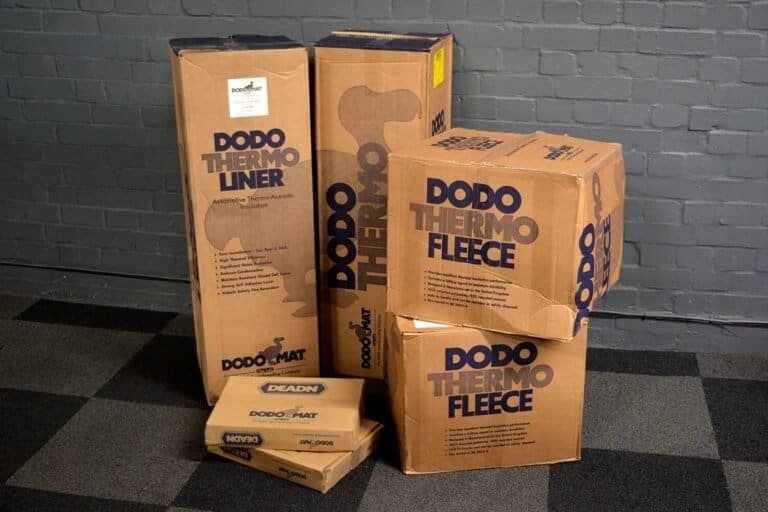
I’ve now used Dodo Mat’s sound deadening and Dodo Fleece insulation system through Scottish winters and summer heatwaves, and more condensation drama than I care to admit. This is what actually works, what’s overpriced nonsense, and where I went wrong so you don’t have to.

Quick Verdict

Dodo Mat DEADN Hex: ⭐⭐⭐⭐⭐
Price: £38-£100 depending on coverage (at time of review)
Best for: Anyone serious about reducing road noise and panel rattle
CHECK PRICE ON AMAZON UK →

Dodo Fleece EVO: ⭐⭐⭐⭐
Price: £37-£50 (at time of review)
Best for: Filling voids and layering over foam liner
CHECK PRICE ON AMAZON UK →

Dodo Thermo Liner Pro: ⭐⭐⭐⭐⭐
Price: £100-£130 (at time of review)
Best for: Primary insulation layer on walls and roof
CHECK PRICE ON AMAZON UK →


Why I Tested These Products

Let’s get one thing straight: my first van conversion was an absolute disaster. I went cheap on insulation. Used that crinkly bubble wrap rubbish from Screwfix and wondered why I was waking up in a puddle every morning. The van sounded like a biscuit tin on the motorway.

Second time around, I did my homework. Dodo Mat kept appearing in every proper conversion forum, recommended by people who actually live in their vans year-round rather than Instagram weekenders. So I bit the bullet, spent the extra £200, and haven’t looked back.

In this comprehensive dodo mat & dodo fleece review, I will share my experiences with these products.

I tested this system in a 2016 VW Transporter T6 LWB. High roof. Completely stripped back to bare metal.


The Dodo Mat System: How It Actually Works

Dodo recommends a two-stage approach, and they’re not wrong:

Stage 1: Sound deadening mat on bare metal (Dodo DEADN Hex)
Stage 2: Thermal insulation over the top (Dodo Thermo Liner Pro + Dodo Fleece EVO for voids)

This isn’t marketing fluff. The butyl mat kills vibration and boom. The foam liner provides your main thermal barrier. The fleece fills those awkward gaps where the foam won’t reach. Each layer does a specific job, and skipping one leaves you half-sorted.

I learned this the expensive way. My first attempt, I only used the fleece. Saved £60. Regretted it within a week when every pothole sounded like a gunshot.


Dodo Mat DEADN Hex: The Sound Deadening Mat

Sale
Dodo Mat DEADN Hex sound deadening mat, 20 Sheets, 20 sq.ft (1.8sq.m), car & van sound proofing, vibration damping
  • 20 Sheet Sound Deadening Pack with high grade butyl construction and Hex embossed aluminium
  • High quality vehicle sound deadening designed in the UK & manufactured in Europe
  • The unique Dodo specification chemistry of the synthetic butyl core effectively deadens panel vibration without the excessive bulk of competitor products
  • Stop rattles, Vibration & noise – Lower vehicle road, Exhaust, Engine & transmission noise
  • Very soft & flexible for easy installation, 1.8mm thick with strong adhesive, Individual sheet size: 375 x 250mm, 20 Sheet Pack coverage 20 sq.ft (1.8 sq.m)

Price: £38 for 20 sheets (1.8sq.m) up to £68 for 50 sheets (4.7sq.m)
Coverage needed: Budget 4-8sq.m for a SWB van, 8-12sq.m for LWB

What Makes DEADN Hex Different

This is a butyl-based mat with a distinctive hexagonal pattern on the aluminium face. The pattern isn’t just for looks — it makes the stuff incredibly flexible and easier to mould around curves and ribs. Much better than flat Chinese mats I’ve used before that crack when you bend them.

Each sheet is self-adhesive. Peel off the backing paper, stick it to clean metal, roll it down hard with a wallpaper roller. Done. The butyl compound is properly sticky in both cold and hot weather, which matters more than you’d think when your van’s sitting in Scottish sleet one day and baking in a car park the next.

Real-World Installation Experience

I started with the roof. Big mistake. Should’ve started with the side panels to get my technique sorted before tackling the awkward overhead work. Live and learn.

The mat cuts easily with heavy-duty scissors or a Stanley knife. I found scissors cleaner for straight edges, knife better for trimming around awkward shapes. Wear gloves — the cut edges are sharp enough to slice your fingers open. I’ve got the scars.

Temperature matters. I installed mine in October (about 12°C). Perfect. The adhesive stuck brilliantly. Mate of mine tried in January at 2°C and the backing paper wouldn’t peel properly. If you’re working in winter, warm the sheets by a heater for 10 minutes first.

You don’t need 100% coverage. I did about 60% coverage on the walls (focusing on large flat panels), 80% on the roof, and skipped the floor entirely because I was planning carpet anyway. This approach worked brilliantly and saved about £40 worth of mat.

Time invested: Roughly 8 hours for a LWB van doing walls and roof with proper prep and cleaning.

The Before and After Difference

Before Dodo Mat: Every journey sounded like I was driving a shipping container full of cutlery. That tinny, resonant boom that makes motorway driving exhausting. You know the sound — it’s what cheap vans sound like.

After Dodo Mat: The transformation is genuinely shocking. Road noise dropped maybe 30-40%. Not silent — it’s still a van — but now conversations are possible at 70mph without shouting. The resonance is just… gone. Panels sound solid when you tap them, not hollow.

The biggest win? Rain. Before, rain on the roof was unbearable. After, it’s almost pleasant. Gentle drumming rather than machine-gun rattles.

You can grab the exact 20-sheet pack I used from Amazon UK for around £38, or go larger if you’re doing a proper job.

The Good

  • Actually works: This isn’t subtle. The noise reduction is immediate and dramatic
  • Easy to use: Cut with scissors, stick it down, job done. No special skills needed
  • Flexible: That hex pattern really does make it wrap around curves beautifully
  • Stays stuck: 18 months in and not one piece has come unstuck, despite temperature extremes
  • Smells fine: Some butyl mats absolutely reek. Dodo’s has a slight smell for a day or two, then nothing

The Bad

  • Heavy: This stuff adds weight. My 50-sheet box was a proper workout to carry upstairs
  • Sharp edges: Seriously, wear gloves. I bled on my van three times during install
  • Expensive compared to Chinese alternatives: You can get no-name mats for half the price. They’re rubbish. Don’t bother
  • Adhesive is aggressive: Once it’s down, it’s down. Peel it up and you’ll leave residue and possibly damage the mat
  • Backing paper tears: The release paper on the back sometimes rips rather than peeling cleanly. Annoying but not a dealbreaker

Where to Use It (And Where to Skip It)

Definitely use:

  • Roof panels (biggest noise gains here)
  • Side panel large flat areas
  • Rear door panels
  • Bulkhead behind driver

Skip it:

  • Floor (unless you’re not using underlay)
  • Inside door frames (access issues)
  • Tiny panels under 15cm × 15cm (not worth the faff)

Dodo Thermo Liner Pro: The Primary Insulation

Dodo Mat Thermo Pro 10mm Special Edition Camper Van Insulation 5m Roll
  • Easy installation: cut, peel & stick
  • Waterproof closed cell foam
  • Reinforced aluminium foil
  • Fire Retardant to ISO 3795 vehicle standards
  • Insulation thickness 10mm

Price: £100-£130 for 5-10m rolls (at time of review)
Thickness: 10mm (also available in 6mm and 15mm variants)

Why Thermo Liner Pro Matters

This is your main thermal barrier. Closed-cell foam with aluminium foil facing. Self-adhesive. Goes on top of your sound deadening (or straight to metal if you skipped stage one, though you shouldn’t).

The 10mm Pro version is the sweet spot. The 6mm basic version is fine if you’re tight on space, but you’ll lose thermal performance. The 15mm version is brilliant if you’ve got room, but most panel vans don’t once you factor in framework and cladding.

Installation Reality Check

Much easier than the sound deadening. Lighter. Larger pieces. The self-adhesive is even more aggressive than the butyl mat, which is both good and terrifying. Measure twice, stick once. There’s no repositioning this stuff.

I used spray adhesive (Trimfix) on areas where the self-adhesive alone seemed sketchy — mainly overhead on the roof. Probably overkill, but 18 months later nothing’s drooped.

The aluminium face reflects radiant heat, which actually works. Summer 2024 was brutal in the UK (30°C+ for weeks). My van stayed noticeably cooler than mates’ vans with just basic foam insulation. Not cool, but bearable.

Thermal Performance: The Numbers Game

Dodo claims a thermal conductivity of 0.040W/mK. In English: it’s pretty good. Not as good as Celotex (0.022W/mK) but far better than cheap camping mat foam (0.050W/mK+).

Real-world winter test: Outside temperature -2°C, inside 18°C with my diesel heater running at half power. The van held temperature beautifully. Barely any cold spots except around the window frames (which you can’t insulate anyway).

Summer test: Outside 28°C, inside 22°C with good ventilation. Without any insulation, it’d easily hit 35°C inside.

The Good

  • Genuinely effective: Noticeable temperature regulation summer and winter
  • Self-adhesive works: Stuck to metal and to the sound deadening equally well
  • Closed-cell foam: Won’t absorb water, won’t support mould growth
  • Reasonable thickness: 10mm doesn’t eat much interior space
  • Aluminium face: Provides a decent vapour barrier and reflects radiant heat

The Bad

  • Expensive: This is where the cost really adds up. Budget £100-£130 for a proper LWB job
  • One-shot application: The adhesive is so strong you get one chance to position it correctly
  • Needs companion insulation: On its own, 10mm isn’t enough for UK winters if you’re living in the van
  • Can tear: The foam is quite soft. If you’re rough with it, you’ll rip it
  • Backing paper nightmare: Same issue as the sound deadening — sometimes tears rather than peeling

Coverage Reality

My LWB Transporter took:

  • 2 × 10m rolls for the walls and roof (about £220 total)
  • Extra roll for floor underlay (used Dodo Super Liner instead, which is cheaper)

Total cost for thermal liner: £220. Not cheap. But spread over 18 months of comfortable living, I’m not complaining.

The 10mm Pro version I used is available here on Amazon UK — currently around £100 for a 5m roll.


Dodo Fleece EVO: The Void Filler

Dodo Mat Fleece EVO Camper Van Insulation 10m Roll (3.7sq.m) Recycled Plastic Bottle PET
  • Made from recycled plastic bottles with up to 95% recycled content, Provides excellent thermal insulation performance
  • Itch-free sustainable insulation quilt offers a safe, sustainable and cost effective way to insulate your camper van
  • Made in the UK & Manufactured in accordance with ISO 9001, Safe to handle and can be recycled or safely disposed of
  • Thermal Conductivity: 0.040W/mK, Fire tested to FMVSS302 & ISO 3795:1989 (vehicle interiors)
  • Width 370mm, Length 10m, Coverage/Roll 3.7sq.m, Thickness 50mm (when fully lofted +/-10%)

Price: £37-£50 depending on roll size (at time of review)
Thickness: 50mm loft

What Fleece EVO Actually Is

Recycled plastic bottle insulation. Looks and feels like thick quilt wadding. Completely itch-free (genuinely — I’m allergic to fibreglass and had zero issues). Used to fill the deep voids between the metal ribs where the foam liner can’t reach.

This is the EVO version, which is tighter and less “sheddy” than the original Dodo Fleece. Still sheds a bit when you cut it, but nothing like the fibreglass horror show of cheaper alternatives.

Where Fleece EVO Goes

Panel vans have deep voids running vertically between the inner and outer skins. These voids are thermal leaks if you don’t fill them. The Thermo Liner sits flat on the ribs, but the gaps behind need something bulkier. That’s where Fleece EVO comes in.

I stuffed it into:

  • All the vertical voids in the side panels
  • Roof cavities between ribs
  • Behind the wheel arches
  • Door panel voids (careful here — don’t block drainage holes)

You can cut it with scissors or just tear it by hand. I found tearing faster and neater for irregular shapes. Use spray adhesive to hold it in place (it’s not self-adhesive).

Thermal Boost Reality

Does it make a difference? Honestly… it’s hard to quantify. The combination of Thermo Liner + Fleece definitely feels warmer than Thermo Liner alone, but I didn’t do rigorous testing. I’d estimate maybe a 2-3°C improvement in winter mornings.

The bigger win is reducing air movement within the panel cavities. Cold air circulating behind your walls creates cold spots. The fleece stops that circulation.

The Good

  • Zero itch: Genuinely pleasant to work with compared to loft insulation or fibreglass
  • Easy to shape: Tear it, cut it, stuff it. Very forgiving
  • Eco-friendly: Made from recycled bottles, which is a nice bonus
  • Won’t absorb water: Critical in a damp British van
  • Fire tested: Conforms to vehicle interior flammability standards (ISO 3795:1989)

The Bad

  • Messy: Still sheds fibres when you cut it, just less than the old version
  • Requires spray adhesive: Budget another £10-15 for Trimfix or similar
  • Easy to over-stuff: Too much fleece compresses and loses effectiveness — use just enough to fill the void
  • Not cheap: Insulation made from bottles shouldn’t cost this much, but here we are
  • Needs companion products: On its own, fleece won’t cut it. It’s a supplementary layer

Coverage and Cost

One 10m roll (3.7sq.m) was enough for all my side panel voids and roof cavities in a LWB van. I probably could’ve used another half roll for a perfect job, but I was out of budget by this point.

Total cost for fleece: £37. Spray adhesive: £12. Not the expensive part of the system, but it adds up.

Grab the Dodo Fleece EVO roll I used from Amazon UK where it’s usually around £37.


The Complete System: Does It Actually Work?

The van has had plenty of use in all weathers. Scottish Highlands winter, Lake District autumn, Cornwall summer. Here’s the honest assessment.

Winter Performance (November-February)

Outside temp: -5°C to 8°C typically
Inside temp with Webasto diesel heater: 16-20°C maintained comfortably
Condensation issues: Minimal with proper ventilation (roof vent + cracked window)

The insulation keeps the heat in. My diesel heater runs on low most of the time rather than cycling between full blast and off. This saves fuel and creates a much more comfortable environment. I’d estimate the insulation system saves me £20-30/month in diesel heating costs compared to an uninsulated van.

Cold spots? The window frames, as expected. The back doors are slightly cooler than the walls. Otherwise, remarkably even temperature throughout.

Summer Performance (June-August)

Outside temp: 20-30°C
Inside temp with good ventilation: 2-5°C cooler than outside
Comfort: Bearable, not cool

Let’s be honest: no amount of insulation will make a metal box comfortable in 30°C heat without air conditioning. But this system definitely helps. The aluminium face on the Thermo Liner reflects a ton of radiant heat, and the thermal mass slows the rate of heat gain.

Park in shade, crack the windows, run a 12V fan, and you’re fine. I’ve worked from the van comfortably on 28°C days.

Sound Performance: 18 Months Later

Still brilliant. The road noise reduction hasn’t degraded at all. Motorway cruising is comfortable for hours. Rain on the roof is ambient rather than aggressive. Panel rattle is non-existent.

Passengers always comment on how quiet the van is. I drove a mate’s uninsulated Sprinter last month and it was shocking how loud it was by comparison.

Durability Assessment

Nothing’s come unstuck. Nothing’s sagged. No signs of moisture absorption or mould growth. The system is holding up perfectly.

The only wear is on the fleece in a couple of places where I was too rough during cladding installation and pulled a bit out. Entirely my fault.


Cost Breakdown: What I Actually Spent

Here’s the full accounting for a LWB Transporter high roof:

Dodo Mat DEADN Hex (50 sheets for walls + roof): £68

Dodo Thermo Liner Pro 10mm (2 × 10m rolls): £220

Dodo Fleece EVO (1 × 10m roll): £37

Spray adhesive (2 cans): £12

Total: £337

For comparison, the cheap approach (Chinese butyl mat + camping foam + loft insulation) would’ve cost about £150. The premium approach (Dynamat + Armaflex + sheep’s wool) would’ve been £500+.

Dodo sits right in the middle. British-made, proven, and not stupidly expensive.


Common Mistakes

1. Not Cleaning the Metal Properly

I rushed the prep on my first panel. Used white spirit quickly, didn’t wait for it to dry completely. The sound deadening stuck… for about two weeks. Then one corner lifted. Had to peel it off and start again.

Do this instead: Clean with isopropyl alcohol or proper panel wipe. Let it dry completely. The extra 10 minutes is worth it.

2. Starting With the Roof

The roof is the hardest surface to work on. You’re reaching above your head, fighting gravity, and precision matters because it’s highly visible. I should’ve practiced on the side walls first.

Do this instead: Start on the side panels behind the cladding where mistakes won’t show. Build confidence, then tackle the roof.

3. Not Using Enough Spray Adhesive on the Fleece

I tried to save money on spray adhesive. Used it sparingly. The fleece stayed in place during installation but shifted later when I was fitting the cladding and pushing against it.

Do this instead: Be generous with spray adhesive. It’s £6 a can. Don’t be tight.

4. Compressing the Fleece Too Much

More isn’t better with fleece insulation. If you compress it into a void, you’re squashing out the air gaps that provide the insulation. I realised this too late and had to pull some out and re-do sections.

Do this instead: Fill the void loosely. The fleece should sit naturally without being stuffed or compressed.

5. Installing in Cold Weather

I did part of the job in January. The adhesive backing on both the mat and the liner was a nightmare to peel off. Took three times longer than it should have.

Do this instead: Wait for decent weather (10°C+) or warm everything with a heater first.


Frequently Asked Questions

Is Dodo Mat better than Dynamat?

I’ve not used Dynamat personally, but based on reviews and specs, they’re very similar. Dynamat has better brand recognition in the car audio world. Dodo Mat is designed specifically for the UK van conversion market and is generally cheaper. Both are butyl-based and will perform similarly.

If you’re in the UK, go Dodo. Easier to source, better value, and designed for our climate.

Do I really need the sound deadening AND the insulation?

Technically, no. You can skip the sound deadening and just use thermal insulation. But you’ll regret it. The noise reduction from the butyl mat is massive and totally worth the extra £60-80.

The insulation alone will provide some sound damping, but nothing like the butyl. They work together brilliantly.

Can I use cheaper alternatives?

For the sound deadening mat, probably not worth it. The Chinese mats I tried before were noticeably inferior — less flexible, worse adhesive, questionable quality control.

For the insulation, you’ve got more options. Armaflex is excellent (but expensive). Celotex works (but awkward to fit and needs careful vapour barriers). Sheep’s wool is good (but itchy and absorbs moisture).

Dodo’s system is designed to work together and is good value for the quality.

How much do I actually need for my van?

SWB van (like a standard Transporter):

  • Sound deadening: 20-30 sheets (1.8-2.8sq.m) = £38-£50
  • Thermal liner: 1-2 × 10m rolls = £110-£220
  • Fleece: 1 × 10m roll = £37

LWB van (like my Transporter LWB):

  • Sound deadening: 40-50 sheets (3.7-4.7sq.m) = £65-£80
  • Thermal liner: 2-3 × 10m rolls = £220-£330
  • Fleece: 1-2 × 10m rolls = £37-£74

These are ballpark figures. Vans with more windows need less insulation. High roofs need more.

Will this stop all condensation?

No. Insulation reduces condensation by keeping interior surfaces warmer (reducing the temperature differential), but it won’t eliminate it completely in a UK climate. You still need proper ventilation.

I run a roof vent fan and crack a window at night. Still get minor condensation on the windows themselves, but the walls and roof stay dry.

Can I install this alone or do I need help?

I did it solo over about 3 days (working slowly and properly). The roof sections are easier with a second person to hold things in place while you position them, but it’s not essential.

If you’re not confident with DIY, budget another £300-500 for professional installation. Most conversion specialists charge £40-60/hour labour.

Is it actually eco-friendly?

The Fleece EVO is made from recycled plastic bottles, which is genuinely good. The butyl mat and foam liner are petroleum-based products, so less eco-friendly. Dodo makes a point of British manufacturing, which reduces transport emissions.

It’s better than cheap Chinese alternatives, but if eco credentials are your priority, look into sheep’s wool or recycled denim insulation (though both have compromises).


Alternatives Worth Considering

If Dodo is Out of Budget

Silent Coat: About 20% cheaper than Dodo, still decent quality. Mixed reviews on adhesive longevity.
Noico: Cheapest butyl mat that’s still halfway decent. Very budget-friendly if you’re skint.
For insulation: Basic camping mat + Reflectix will work, but with significantly worse performance.

If You Want Premium

Dynamat + Armaflex: The gold standard, about 40% more expensive. Marginal gains for the extra cost in my opinion.
Sheep’s wool insulation: Excellent thermal performance, renewable, but itchy to work with and needs moisture management.

If You Want Something Different

Spray foam insulation: Some people swear by it. I’m skeptical — it’s permanent, hard to remove if you cock up, and creates moisture traps if not done perfectly. Proceed with caution.


My Final Recommendation

Buy the Dodo system. All of it. Do it properly.

I’ve seen too many vanlifers try to cut corners on insulation and regret it. You can’t retrofit this stuff without ripping out your interior. Do it once, do it right.

Is it perfect? No. It’s expensive, occasionally frustrating to install, and won’t transform your van into a luxury apartment. But it’s good quality, made in Britain, widely proven, and available everywhere including Amazon UK with next-day delivery.

The noise reduction alone justifies the cost. The thermal performance is a massive bonus. And 18 months in, I have zero regrets about spending the extra £200 over budget alternatives.


Affiliate Disclosure: This article contains Amazon affiliate links. If you purchase through these links, I may earn a small commission at no extra cost to you. This helps keep TheFeralWay running and allows me to keep testing gear like a lunatic in Scottish winters.

I’ve insulated four campervans. The first one grew mould within three months. The second was freezing in winter because I believed the marketing hype about reflective foil. The third was better but still had condensation issues I didn’t fix until I ripped half of it out six months later. The fourth? Finally got it right. This experience led me to understand the importance of Insulation And Soundproofing for Campervans.

That’s £1,400 worth of insulation materials I’ve ripped out and binned because I did it wrong. Another £280 in mould treatment and repainting. And countless nights shivering in Scotland or sweating in Spain because I convinced myself that 10mm of bubble wrap would somehow defy physics.

This guide is everything I wish I’d known before I started. Not the marketing claims. Not the YouTube videos where everything works perfectly. The actual reality of insulating a metal box in the UK, what genuinely works, and how to avoid the expensive mistakes I made.

Why Insulation Actually Matters (More Than You Think)

Before we get into materials and techniques, understand this: insulation and soundproofing for campervans is the single most important decision in your entire conversion. Get it wrong and nothing else matters. Your £800 diesel heater won’t help if all the heat escapes through the roof. Your expensive ventilation system won’t stop condensation if cold metal meets warm air.

I’ve met people who spent £15,000 on beautiful furniture, fancy electrical systems, and Instagram-worthy interiors, then cheaped out on insulation. Every single one regrets it.

What proper insulation does:

  • Keeps you warm in winter (obviously)
  • Keeps you cool in summer (less obvious but equally important)
  • Prevents condensation (the real killer)
  • Reduces noise (makes the van liveable)
  • Saves fuel (your heater runs less)
  • Protects your build (mould destroys furniture and health)

What it costs to get it right:

  • Budget option: £250-£400 for a medium wheelbase van
  • Decent job: £400-£600
  • Premium materials: £600-£900

What it costs to get it wrong:

  • Ripping it out and starting again: £300-£600 in new materials
  • Mould treatment: £80-£150
  • Repainting damaged areas: £60-£120
  • Lost time: 2-4 days of work redone
  • Health issues from mould: Priceless (and expensive)

I’ve been in both camps. Trust me, spending £500 upfront beats spending £800 fixing it later.

Understanding Heat Transfer (The Boring But Critical Bit)

Skip this if you just want to be told what to buy. But if you want to understand WHY certain materials work and others don’t, this matters.

Heat moves three ways:

1. Conduction — Heat moving through solid materials (metal van walls conducting cold inside)

2. Convection — Heat moving through air currents (cold air sinking, warm air rising)

3. Radiation — Heat moving as infrared energy (like sunlight warming the van roof)

Different insulation materials tackle different types of heat transfer. This is why people get confused.

R-Value explained:

R-value measures thermal resistance. Higher number = better insulation. But thickness matters too.

  • Celotex 25mm = R-value of 1.15
  • Celotex 50mm = R-value of 2.30
  • Sheep’s wool 50mm = R-value of 1.32
  • Reflectix 10mm = R-value of 0.15 (basically useless without air gaps)

The key number is thermal conductivity (λ or lambda), measured in W/mK (watts per metre-kelvin):

  • Lower = better
  • PIR boards (Celotex/Kingspan): 0.022 W/mK (excellent)
  • Sheep’s wool: 0.038 W/mK (good)
  • XPS foam: 0.034 W/mK (good)
  • Bubble foil alone: 0.041 W/mK (poor)

Thermal bridging (the sneaky heat thief):

Metal conducts heat really well. Your van is a metal box with ribs, pillars, and structural elements. These create “thermal bridges” where heat bypasses your insulation entirely.

I didn’t understand this in my first build. I filled every gap with insulation, thinking more = better. But the metal ribs were still conducting cold straight through, creating cold spots and condensation.

The solution: You can’t eliminate thermal bridging completely in a van, but you can minimize it by:

  • Breaking contact between metal and interior surfaces
  • Leaving air gaps for ventilation
  • Using insulation with good thermal resistance
  • Accepting some thermal bridging is inevitable

Insulation Materials: What Actually Works

I’ve used pretty much every material available. Here’s the honest truth about each.

Celotex / Kingspan (PIR Rigid Boards)

What it is: Polyisocyanurate foam boards with foil facing on both sides. This is what most professional converters use, and it’s what I use now.

Cost: £4-£8 per square metre depending on thickness and where you buy

Thicknesses available: 25mm, 50mm, 75mm, 100mm (for vans, you’ll mostly use 25mm and 50mm)

Thermal performance:

  • λ = 0.022 W/mK (excellent)
  • 25mm gives R-value of 1.15
  • 50mm gives R-value of 2.30

Pros:

  • Best thermal performance for thickness
  • Moisture resistant (doesn’t absorb water)
  • Rigid — easy to cut and fit between ribs
  • Foil facing acts as radiant barrier
  • Widely available (Wickes, Screwfix, Travis Perkins)
  • Relatively affordable

Cons:

  • Can’t compress into curves (you’ll have gaps)
  • Not eco-friendly (plastic foam)
  • Produces toxic fumes if it burns (though unlikely in a van)
  • Needs careful installation to avoid thermal bridging

Where I use it:

  • 50mm on the roof (between ribs)
  • 25mm on the walls (between ribs)
  • 25mm on the floor (under subfloor)

Installation tips:

Cut it 5-10mm oversize for friction fit between ribs. Use expanding foam around edges ONLY — never behind the board (creates thermal bridging). Leave 10-15mm air gap between metal and insulation for ventilation where possible.

Real-world performance:

In my current van with 50mm Celotex on the roof and 25mm on walls:

  • Winter night at -2°C outside: 8-10°C inside without heating (about 10°C gain from body heat and residual warmth)
  • With diesel heater running: Maintains 18°C using 0.15-0.2L fuel per hour
  • Summer day at 28°C outside: 22-24°C inside in shade (4-6°C cooler)

Cost for medium wheelbase van:

  • Roof (50mm): £165 (8 sheets at 2400x1200mm)
  • Walls (25mm): £95 (6 sheets)
  • Floor (25mm): £50 (3 sheets)
  • Total: £310

Sheep’s Wool (Thermafleece)

What it is: Actual sheep’s wool, treated against moths and fire-proofed. Eco-friendly option that’s gaining popularity.

Cost: £8-£15 per square metre (more expensive than PIR)

Thermal performance:

  • λ = 0.038 W/mK (good but not as good as PIR)
  • 50mm gives R-value of 1.32
  • 100mm gives R-value of 2.64

Pros:

  • Breathable (handles moisture brilliantly — this is huge)
  • Eco-friendly and sustainable
  • Naturally fire-resistant
  • Compresses into awkward spaces
  • No need for vapor barriers (wool regulates moisture naturally)
  • Feels nice to work with (no itching like fiberglass)
  • Excellent sound absorption

When considering a campervan build, remember that Insulation And Soundproofing for Campervans can significantly enhance your comfort and quality of life on the road.

Cons:

  • More expensive per square metre
  • Takes up more space for equivalent R-value
  • Harder to source (not in every builders’ merchant)
  • Moths can be an issue if not properly treated
  • Heavier than PIR
  • Can settle over time in vertical applications

Where it works best:

  • Wall cavities where you want breathability
  • Areas where you can fit thicker insulation
  • Full-time living situations (the breathability matters more)
  • Awkward curves and gaps where rigid boards don’t fit

Installation tips:

Wear gloves even though it’s softer than fiberglass. Stuff it in but don’t compress it too much — wool insulates by trapping air. Use around 100mm for walls and roof if you have the space. Secure with mesh or fabric to prevent it falling down.

Real-world performance:

I used wool in van #2 for the walls. Thermal performance was decent but not quite as good as PIR of equivalent thickness. The big win was moisture management — I had far less condensation compared to van #1. But it was more expensive and took up more interior space.

Cost for medium wheelbase van (100mm thickness):

  • Full coverage: £450-£650 depending on supplier

My verdict: Brilliant if you’re building for full-time living and can afford the space and cost. For weekend/part-time use, PIR gives better thermal performance per millimetre.

XPS Foam (Extruded Polystyrene)

What it is: Closed-cell foam boards, usually pink or blue. Common in building insulation.

Cost: £4-£7 per square metre

Thermal performance:

  • λ = 0.034 W/mK (good)
  • 50mm gives R-value of 1.47

Pros:

  • Moisture resistant
  • Relatively affordable
  • Easy to cut and shape
  • Lighter than PIR

Cons:

  • Not as good as PIR thermally
  • Can compress over time
  • Less widely available in useful sizes
  • Doesn’t have foil facing (need separate vapor barrier)

My experience: I tried this in one section of van #3. It worked fine but wasn’t noticeably better than PIR, and PIR was easier to source in the sizes I needed.

Verdict: Decent option if you can’t get PIR, but PIR is generally better for vans.

Reflectix / Bubble Foil (The Marketing Lie)

What it is: Bubble wrap with foil facing. Marketed as miracle insulation.

Cost: £2-£5 per square metre

Thermal performance:

  • λ = 0.041 W/mK when used correctly (poor)
  • Without air gaps: R-value of about 0.15 (useless)
  • With 25mm air gaps on both sides: R-value of 1.0-1.5 (better but impractical in a van)

The marketing claim: “Reflects 97% of radiant heat!”

The reality: Only works if you have 25mm air gaps on BOTH sides. In a van, you can’t create these air gaps practically. Stuck flat against metal or trapped behind panels, it’s basically expensive bubble wrap.

Pros:

  • Very cheap
  • Lightweight
  • Easy to install
  • Works as a vapor barrier
  • Good for blocking radiant heat IF you have air gaps

Cons:

  • Terrible insulation without air gaps
  • Marketing claims are misleading
  • People use it as primary insulation and wonder why they’re cold
  • Creates condensation issues if used incorrectly

Where it actually works:

Window covers: With an air gap between glass and foil, it reflects heat back out in summer and keeps heat in during winter. This is a good use.

Vapor barrier: Over proper insulation (PIR or wool), it provides a vapor barrier to prevent moisture reaching cold metal. This is how I use it.

NOT as primary insulation. Just don’t. I tried this in van #1 because I believed the marketing. I froze. The maths doesn’t lie.

My verdict: Useful as part of a system (vapor barrier or window covers), useless as primary insulation. Anyone telling you 10mm of bubble foil is adequate insulation for a UK winter is either lying or has never actually used it.

Spray Foam (Professional Application)

What it is: Two-part polyurethane foam sprayed into all cavities by professionals. Expands to fill every gap.

Cost: £800-£2,000 for professional application in a medium wheelbase van

Thermal performance:

  • λ = 0.026-0.030 W/mK (excellent)
  • Fills every gap perfectly
  • No thermal bridging at all

Pros:

  • Best possible coverage
  • Fills every cavity and awkward gap
  • No thermal bridging
  • Excellent R-value
  • Air-tight seal
  • Professional application means it’s done right

Cons:

  • Expensive
  • Can void van warranty (check with manufacturer)
  • Makes van panels impossible to remove later
  • Can trap moisture if not done correctly
  • Permanent — you can’t easily change your mind
  • Needs professional installation (not DIY)

My experience: I’ve never used it personally but I’ve helped a mate whose van was spray foamed. Performance was excellent — genuinely the best-insulated van I’ve been in. But when he needed to access wiring later, it was a nightmare. Had to cut away foam and it made a horrible mess.

My verdict: Only worth it if:

  • You have the budget (£1,500+ minimum)
  • This is your forever van
  • You’re 100% sure of your electrical and plumbing layouts
  • You’re not planning to make changes later

For most people doing DIY conversions, PIR boards give you 90% of the performance at 25% of the cost, with the flexibility to change things later.

Closed-Cell Foam Sheets

What it is: Thin closed-cell foam sheets, usually 3-10mm thick. Sometimes used for soundproofing.

Cost: £1-£3 per square metre

Thermal performance: Poor (λ = 0.040 W/mK for 10mm)

Where it’s useful:

  • Sound deadening (we’ll cover this later)
  • Moisture barrier
  • Gap filling

Where it’s not useful:

  • Primary insulation (too thin, poor R-value)

Multifoil Insulation (Aluthermo, Actis, SuperQuilt)

What it is: Multiple layers of foil with wadding between them. Marketed as thin but high-performance.

Cost: £6-£12 per square metre

Thermal performance:

  • Claimed: R-value of 1.5-2.5 for 20-40mm thickness
  • Reality: Only achieves this with air gaps, proper installation, and ideal conditions
  • Without air gaps: Similar to bubble foil (poor)

The controversy:

There’s ongoing debate about these products. Independent testing often shows lower performance than manufacturer claims, especially in retrofit applications like vans where you can’t maintain proper air gaps.

My experience: I tried Actis Hybris in van #2 on the advice of someone who swore by it. Thermal performance was disappointing. Maybe I installed it wrong (the instructions are complex), but PIR was simpler and performed better.

My verdict: Too expensive for questionable performance. PIR is cheaper, simpler, and has proven performance that doesn’t rely on perfect installation conditions.

Soundproofing: The Other Half of the Puzzle

Insulation and soundproofing are different. Insulation stops heat transfer. Soundproofing stops noise. Some materials do both. Most don’t.

An uninsulated, unsoundproofed van is a tin can. Every stone hitting the underside sounds like a gunshot. Every raindrop is amplified. Road noise is constant. You can’t have a conversation at motorway speeds.

Soundproofing transforms the experience. It’s the difference between a commercial van and a vehicle you actually want to spend time in.

How Sound Moves

Sound vibrates through solid materials (the metal van body) and travels through air. To stop it, you need:

1. Mass — Heavy materials that vibrations can’t easily move through

2. Damping — Materials that absorb vibration energy and convert it to heat

3. Decoupling — Breaking the connection between vibrating surfaces

4. Absorption — Materials that trap sound waves (like foam or wool)

Soundproofing Materials

Dynamat / Silent Coat / Car Soundproofing Mats

What they are: Butyl rubber sheets with aluminum facing. You stick them to metal panels to dampen vibrations.

Cost:

  • Dynamat: £250-£400 for a van (premium brand)
  • Silent Coat: £180-£280 (what I use)
  • Budget alternatives: £80-£150 (eBay Chinese brands)

How they work: The butyl rubber absorbs vibration energy, preventing panels from resonating and amplifying noise.

Where to apply:

  • Floor (entire floor ideally)
  • Wheel arches (critical — stones hitting here are loud)
  • Roof (at least 50% coverage)
  • Door panels
  • Behind cab seats

Installation:

  1. Clean metal with panel wipe or isopropyl alcohol
  2. Warm the adhesive side with heat gun (makes it stick better)
  3. Cut to size for each panel
  4. Peel backing and apply
  5. Roll firmly with a roller to eliminate air bubbles and ensure contact

Critical: This needs to be above 15°C to stick properly. I tried applying Silent Coat in my garage in December. It wouldn’t stick. Had to wait until April.

Coverage recommendations:

You don’t need 100% coverage (despite what manufacturers claim). Focus on the noisiest areas:

  • Floor: 70-80% coverage (focus on wheel arches and rear)
  • Roof: 50-60% coverage
  • Doors: 60% coverage
  • Wheel arches: 100% coverage

My coverage:

  • Used 9 sheets of Silent Coat (each 4.6kg, 50cm x 80cm)
  • Covered about 70% of the floor, 60% of roof, wheel arches completely
  • Cost: £225
  • Time: 2 full days

Results: Massive difference. Before soundproofing, stones hitting the underside were painfully loud. After, they’re just a dull thump. Road noise reduced significantly. Rain is no longer deafening.

Sound absorption (foam/wool)

After damping the metal panels, you still have airborne noise. This is where sound-absorbing materials help.

Sheep’s wool is excellent for this — it absorbs sound far better than PIR boards. If you’ve used wool insulation, you’re already sorted. If you’ve used PIR, you might want to add some absorption.

Acoustic foam (like studio foam) can be added in cavities, but it’s usually overkill for a van. The insulation and interior lining provide enough absorption for most people.

My Actual Installation Process (What I Do Now)

This is the process I follow after learning from three failed attempts. This is for a medium wheelbase van using PIR boards.

Phase 1: Preparation (1 day)

1. Strip and clean:

  • Remove all panels, lining, anything attached to walls/roof/floor
  • Wire brush any surface rust
  • Treat rust with converter
  • Clean all metal with panel wipe
  • Let dry completely

2. Mark ribs and fixing points:

  • Mark where all ribs, pillars, and structural elements are
  • Identify where you’ll need to run cables later
  • Take photos for reference

3. Plan your layout:

  • Decide where furniture will attach (you’ll need blocking in these areas)
  • Identify areas that need service access (don’t fully seal these)

Phase 2: Soundproofing (2 days)

Day 1: Floor and wheel arches

Materials needed:

  • 6-8 sheets of Silent Coat or equivalent
  • Heat gun
  • Roller
  • Sharp knife
  • Panel wipe

Process:

  1. Clean floor thoroughly with panel wipe
  2. Warm each sheet with heat gun (makes it pliable)
  3. Cut to fit floor sections
  4. Peel and stick
  5. Roll firmly — this is critical, air bubbles reduce effectiveness
  6. Pay special attention to wheel arches (100% coverage here)
  7. Overlap sheets by 10-20mm at joins

Wheel arches: These get stone chips constantly. Cover them completely. I use two layers in the most exposed areas.

Day 2: Roof and doors

Same process. Focus on areas where you’ll hear noise most:

  • Roof above where you’ll sit/sleep
  • Door panels
  • Behind cab seats

Don’t bother soundproofing:

  • Areas that will be completely covered by furniture
  • Inside tiny cavities you can’t reach
  • The cab (unless you’re really bothered — it adds weight)

Phase 3: Insulation (3-4 days)

Day 1: Roof

Materials:

  • 50mm Celotex (8 sheets for medium wheelbase)
  • Expanding foam (5-6 cans of Soudal Gap Filler)
  • Sharp knife or saw
  • Measuring tape
  • Safety glasses (foam in eyes is not fun)

Process:

  1. Measure each section between ribs — They’re all slightly different. Don’t assume they’re the same width.
  2. Cut PIR boards 5-10mm oversize — You want a friction fit. If it’s too loose, it’ll rattle. Too tight and you’ll compress the ribs (not good).
  3. Test fit before foam — Make sure it fits snugly.
  4. Apply expanding foam around edges only — NOT behind the board. Foam behind creates thermal bridging. Foam around edges seals gaps and prevents air movement.
  5. Press board into place — It should friction fit between ribs.
  6. Leave 10-15mm air gap between metal and insulation — This is critical for ventilation. I use small spacers (pieces of plastic or foam) to maintain this gap.

Dealing with curves:

Roof curves toward the edges. PIR doesn’t bend. You’ll have gaps. Options:

  • Cut narrower strips that follow the curve
  • Use expanding foam to fill gaps (not ideal but works)
  • Use wool insulation in these areas (better)

I use option 3 — wool insulation in curved areas, PIR in flat sections.

Day 2: Walls

Same process but with 25mm PIR instead of 50mm.

Additional challenge: Windows. You need to insulate around window frames carefully. Leave expansion space (windows get hot in sun). Seal with flexible sealant, not rigid foam.

Cable routing: Before you insulate, think about where cables will run. I leave channels between insulation and metal for cables. Makes life much easier later.

Day 3: Floor

Floor insulation is non-negotiable. You lose massive amounts of heat through the floor in winter.

Two approaches:

Approach 1 (what I do):

  1. 25mm PIR laid directly on metal floor
  2. 12mm ply subfloor on top
  3. Screw through PIR and ply into original floor (use longer screws)
  4. This raises floor by 37mm (annoying but worth it)

Approach 2 (if you can’t lose height):

  1. 10-15mm PIR (not ideal but better than nothing)
  2. 6mm ply subfloor
  3. Raises floor by only 16-21mm

Critical floor consideration: Water and moisture can get under insulation from outside. Use closed-cell insulation (PIR or XPS), never wool. And leave drainage paths for any moisture to escape (small gaps at edges).

Day 4: Vapor barrier and awkward gaps

Vapor barrier: I use Reflectix or basic bubble foil over the PIR insulation as a vapor barrier. This prevents warm, moist interior air from reaching cold metal where it would condense.

Application:

  • Staple or tape over insulation
  • Overlap joints by 50-100mm
  • Tape all seams with aluminum tape
  • Don’t stress about perfect coverage — it’s an additional layer, not a critical seal

Fill gaps with expanding foam:

  • Around edges of PIR boards
  • Where ribs meet roof/walls
  • Where pillars create awkward corners

Don’t fill:

  • Behind insulation (thermal bridging)
  • Ventilation paths (you need air circulation)
  • Areas you need to access later

Phase 4: Battening (1 day)

Before you line the walls and ceiling, install battens (timber strips) to attach lining to.

Why battens matter:

  1. Create fixing points for lining (you can’t screw through PIR reliably)
  2. Create small air gap between insulation and lining (additional thermal break)
  3. Hide any uneven insulation

Batten specifications:

  • 25mm x 50mm timber (PAR — planed all round)
  • Treated timber if possible (moisture resistance)

Where to install:

  • Vertically on walls every 400-500mm
  • Across roof following ribs
  • Around all door and window frames
  • Wherever you plan to fix furniture

Fixing battens:

  • Use penny washers under screws (spreads load on the insulation)
  • Screw through batten, through insulation, into metal ribs
  • Check fixing depth — don’t penetrate roof/walls (water ingress)

Cost: £45-£65 for timber for a medium van

Phase 5: Quality Check (½ day)

Before you line over everything, check:

Ventilation paths: Air must be able to circulate. Check you haven’t sealed everything completely. I leave 10-15mm gaps at the top and bottom of walls.

Moisture management: Any water that gets in must be able to get out. Check drainage paths at floor level.

Cable routes: Can you run cables where you need them? Now is the time to install cable conduit or channels.

Thermal bridging: Are there obvious cold bridges you can address? Major ribs can’t be avoided, but check for accidental direct contact between interior surfaces and metal.

Gaps and holes: Fill any gaps that would allow air circulation through the insulation (defeats the purpose).

Common Mistakes (That I Made So You Don’t Have To)

Mistake 1: Using bubble foil as primary insulation

What I did: Van #1, I used 10mm Reflectix everywhere, believing the “reflects 97% of heat” marketing.

Result: Froze in Scotland in October. Condensation everywhere. Black mould on ceiling within 3 months.

Cost: £380 to rip out and redo with proper insulation.

Why it failed: Reflectix needs air gaps to work. I had none. Without air gaps, it’s just thin bubble wrap.

The fix: Ripped it all out. Installed 50mm PIR on roof, 25mm on walls. Problem solved.

Mistake 2: No air gaps for ventilation

What I did: Filled every single cavity completely with insulation. No air gaps anywhere. Proud of myself for thorough coverage.

Result: Condensation behind insulation. Mould on metal panels. Rusting floor around sliding door runners.

Cost: £180 in rust treatment and repainting. Plus the time to partially dismantle and redo.

Why it failed: Moisture needs somewhere to go. Sealed completely, it gets trapped and causes problems.

The fix: Left 10-15mm air gaps between metal and insulation. Added ventilation paths top and bottom of walls. Problem solved.

Mistake 3: Applying soundproofing in cold weather

What I did: Applied Silent Coat in my garage in December. Temperature was about 8°C.

Result: Half the sheets didn’t stick properly. Came loose after a month of driving.

Cost: £80 for replacement sheets.

Why it failed: Adhesive needs warmth to bond properly. Below 15°C, it doesn’t stick well.

The fix: Waited for warmer weather. Used heat gun to warm panels before application. Problem solved.

Mistake 4: Not leaving expansion space around windows

What I did: Insulated tight up against window frames with rigid PIR and expanding foam.

Result: Windows got hot in summer sun, expanded, and cracked one seal. Small leak.

Cost: £95 for professional resealing.

Why it failed: Materials expand and contract with temperature. Rigid foam doesn’t allow movement.

The fix: Left 5-10mm expansion gap around windows. Filled with flexible sealant (Sikaflex), not rigid foam.

Mistake 5: Ignoring thermal bridging

What I did: Filled all cavities but didn’t think about metal ribs conducting cold.

Result: Cold spots on ceiling directly under ribs. Condensation formed here first.

Cost: No direct cost but annoying and inefficient.

Why it failed: Metal ribs conduct cold directly through, bypassing insulation.

The fix: Accepted some thermal bridging is inevitable. Added battens over insulation to create thermal break. Used thicker insulation where possible.

Mistake 6: Using incorrect expanding foam

What I did: Used cheap single-component foam from Pound Shop.

Result: Expanded so much it bowed my roof panels outward. Looked terrible. Also shrunk back after a few months leaving gaps.

Cost: £25 in wasted foam. Time to scrape it out.

Why it failed: Low-quality foam expands unpredictably and doesn’t stay stable.

The fix: Used Soudal Gap Filler (two-component) or Sika Boom (more expensive but excellent). Apply in layers, not huge blobs.

Mistake 7: Forgetting about cable access

What I did: Insulated everywhere, then realized I needed to run cables through insulated areas.

Result: Had to cut channels through insulation, making a mess and reducing effectiveness.

Cost: Time and frustration.

Why it failed: Didn’t think ahead about electrical layout.

The fix: Plan cable routes BEFORE insulating. Leave channels or conduit for cables.

Dealing With Condensation (The Real Enemy)

Condensation is what makes or breaks a van conversion. It’s not dramatic like a leak, but it’s relentless and destructive.

Why condensation happens:

Warm air holds more moisture than cold air. When warm, moist air touches cold metal, it cools rapidly and can’t hold the moisture anymore. The moisture condenses into water droplets.

In a van:

  • You breathe out moisture (about 1L per person overnight)
  • Cooking generates moisture
  • Wet clothes generate moisture
  • Even just existing generates moisture

Without proper insulation and ventilation, this moisture condenses on cold surfaces (windows, roof, walls) and causes problems:

  • Mould growth
  • Rust
  • Damp smell
  • Damaged furniture and fabrics
  • Health issues

The three-part solution:

1. Insulation (prevent cold surfaces)

This is what we’ve been discussing. Proper insulation keeps interior surfaces above dew point, preventing condensation.

My results with proper insulation:

  • Winter night at 5°C outside, 18°C inside: Interior roof temperature is 15-16°C
  • Windows still condense (single glazing, can’t be avoided)
  • Walls and roof stay dry

2. Ventilation (remove moist air)

Essential:

  • Roof vent (Fiamma, Maxxair, or Fantastic Fan) — Run on low overnight
  • Low-level vents (door vents or similar) — Allow fresh air in

How it works: Fresh air enters low down, warms up, picks up moisture, rises, exits through roof vent. Constant air circulation.

My setup:

  • Fiamma Turbo-Vent on roof (runs on low all night, 12V)
  • Two low-level vents in rear doors
  • Crack a window slightly if I’m cooking

3. Moisture management (reduce moisture)

Practical steps:

  • Don’t dry clothes inside (or accept you’ll get condensation)
  • Cook with lids on pans (reduces steam)
  • Wipe windows in morning (takes 30 seconds)
  • Use moisture traps in storage areas (£2-£3 each)
  • Air the van during the day when possible

When condensation is still a problem:

Even with all this, you’ll get some condensation on windows (single glazing) and in very humid conditions. This is normal.

Not normal:

  • Condensation on walls or ceiling
  • Water running down windows in sheets
  • Persistent mould growth
  • Damp smell that won’t go away

If you have these problems, your insulation or ventilation is inadequate.

Seasonal Performance: What to Actually Expect

I’ve used my current van (properly insulated) for nearly a year. Here’s the reality by season.

Winter (December-February)

Conditions tested:

  • Scottish Highlands: -5°C to +2°C
  • Lake District: -2°C to +5°C
  • Wales: 0°C to +8°C

Inside temperature without heating:

  • Overnight: 8-12°C (typically 10-12°C warmer than outside)
  • After sleeping (two people): 12-15°C (body heat warms it)

With diesel heater:

  • Reaches 18°C from 2°C in about 20 minutes
  • Maintains 18°C using 0.15-0.2L fuel per hour
  • Stays comfortable overnight on low setting

Condensation:

  • Windows: Moderate condensation (expected)
  • Walls/ceiling: Dry (no condensation)
  • Floor: Stays dry

Morning routine:

  • Wipe windows (30 seconds)
  • Open roof vent fully for 10 minutes while making coffee
  • Done

Verdict: With proper insulation and heating, UK winter is comfortable. Not like a house, but perfectly liveable.

Spring/Autumn (March-May, September-November)

Conditions:

  • Temperatures: 8-18°C
  • Mix of rain, sun, wind

Inside temperature without heating:

  • Stays within 3-5°C of outside temperature
  • Warm enough most nights without heating
  • Heat rise from cooking usually enough

Condensation:

  • Minimal (only if cooking without ventilation)
  • Windows get slight condensation overnight if temperature drops suddenly

Verdict: Perfect. Rarely need heating. Rarely too hot. These are the best months for UK vanlife.

Summer (June-August)

Conditions tested:

  • Cornwall: 22-28°C
  • South England: 24-30°C
  • One heatwave in France: 35°C (absolute hell)

Inside temperature:

  • In shade: 4-8°C cooler than outside
  • In sun: Gets hot (obviously)

Keeping cool:

  • Park in shade (critical)
  • Open all windows and roof vent (create airflow)
  • Reflectix window covers (actually useful here — blocks radiant heat)
  • Spend time outside (van is for sleeping and cooking only)

The France heatwave:

  • 35°C outside
  • Inside peaked at 32°C even in shade with windows open
  • Utterly miserable
  • We found a stream and stood in it

Verdict: Insulation helps by keeping heat out, but in serious heat (30°C+), nothing short of air conditioning makes a van comfortable. Fortunately, UK doesn’t often hit these temperatures.

Cost Summary: Three Budget Levels

Budget Option (£250-£350)

Soundproofing:

  • Skip soundproofing or use budget eBay mats: £0-£80

Insulation:

  • 25mm PIR throughout (roof, walls, floor): £180-£240
  • Expanding foam: £30
  • Vapor barrier (cheap bubble foil): £20

Battening:

  • Basic timber: £35

Total: £265-£405

Performance: Acceptable. Better than nothing. Will be cold in serious winter but liveable with good heating.

Standard Option (£450-£650) — What I recommend

Soundproofing:

  • Silent Coat or equivalent (70% coverage): £180-£280

Insulation:

  • 50mm PIR roof: £165
  • 25mm PIR walls: £95
  • 25mm PIR floor: £50
  • Expanding foam (quality): £42
  • Reflectix vapor barrier: £48

Battening:

  • Treated timber: £55

Total: £635-£735

Performance: Excellent. Comfortable year-round with appropriate heating/cooling. Minimal condensation with proper ventilation.

Premium Option (£900-£1,200)

Soundproofing:

  • Dynamat (80% coverage): £320-£400

Insulation:

  • 50mm PIR roof: £165
  • 25mm PIR walls: £95
  • 50mm PIR floor: £95
  • Sheep’s wool for curves and gaps: £85
  • Expanding foam (premium): £55
  • Reflectix vapor barrier: £48

Battening:

  • Premium treated timber: £65

Additional:

  • Professional consultation: £150-£200

Total: £1,078-£1,308

Performance: As good as it gets without spray foam. Professional-level results.

Tools You’ll Need

Essential:

  • Sharp knife or insulation saw (£8-£25)
  • Measuring tape (£5-£12)
  • Marker pen (£2)
  • Heat gun (for soundproofing) (£15-£45)
  • Roller (for soundproofing) (£5-£8)
  • Safety glasses (£3-£8)
  • Dust mask (£2-£5)
  • Work gloves (£4-£10)

Useful:

  • Cordless drill (for battening) (£60-£150)
  • Panel wipe or isopropyl alcohol (£5-£12)
  • Staple gun (for vapor barrier) (£15-£35)
  • Aluminum tape (for sealing vapor barrier) (£6-£12)

Total if buying everything: £130-£342 (depending on quality)

My Final Recommendations

After four van builds, here’s what I’d do if I started again tomorrow on a medium wheelbase van:

Day 1-2: Soundproofing

  • Silent Coat: 70% coverage focusing on floor, wheel arches, roof
  • Cost: £225

Day 3-5: Insulation

  • 50mm Celotex on roof
  • 25mm Celotex on walls
  • 25mm Celotex on floor
  • Wool insulation in curves where PIR doesn’t fit
  • Expanding foam around all edges
  • Reflectix vapor barrier over everything
  • Cost: £435

Day 6: Battening

  • 25mm x 50mm treated timber battens
  • Cost: £55

Total cost: £715 Total time: 6 days working alone

Performance: Excellent thermal insulation, good sound dampening, minimal condensation, comfortable year-round.

This is the sweet spot between cost, performance, and DIY-ability.

Final Thoughts

Insulation isn’t glamorous. Nobody’s instagramming photos of PIR boards. But it’s the foundation of everything else in your conversion.

I’ve been in £30,000 conversions with beautiful interiors that were freezing in winter because they skimped on insulation. I’ve been in tatty old vans with basic furniture that were cosy and comfortable because insulation was done properly.

Spend the money here. Spend the time here. Get it right.

Your future self — shivering in Scotland or melting in Cornwall — will thank you.

And if you cock it up the first time like I did, don’t feel bad. Learn from it, fix it, and move on. That’s what I did.

Now stop reading and go insulate your van. Properly this time.