
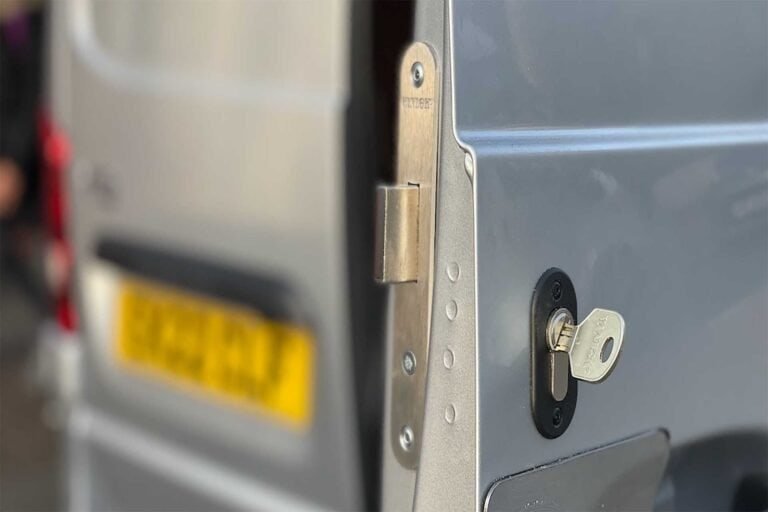
Upgrading your campervan door locks is one of the most fundamental things you can do to secure your rig. Factory-fitted locks? They’re often shockingly easy to get past. This isn’t just about adding a bit of extra security; it’s about protecting your home, your gear, and your peace of mind when you’re out on the road. Think of it as a critical investment against any opportunist looking for an easy score.
Why Your Factory Van Locks Are a Security Risk
Let’s be brutally honest: the standard locks that come on most panel vans are built for convenience and cost-effectiveness, not for high-level security. Manufacturers are churning out vehicles on a massive scale, and the locking mechanisms are often a known weak point for anyone who knows what they’re doing. A few simple tools and a bit of know-how can be enough to bypass them, turning your home-on-wheels into a prime target.
This isn’t just me being paranoid; the numbers back it up. The UK is in the middle of a van theft crisis, with over 11,000 vans stolen in a single year. That works out to around 31 vans disappearing every single day. This isn’t a static problem either—it represents a more than 25% increase in the last five years, highlighting just how urgent it is for van owners to take security seriously.
Common Vulnerabilities and Theft Methods
Thieves tend to rely on a few predictable tricks to get past standard van locks, which is exactly why a proper campervan door lock upgrade is so essential.
- Lock Picking: A lot of factory lock cylinders are surprisingly simple. Someone with basic skills and a cheap set of picks can often get through them without much fuss.
- Forced Entry: Sometimes brute force is all it takes. A crowbar or even a heavy-duty screwdriver can be enough to pry a door open or simply break the lock mechanism itself.
- The “Peel and Steal” Method: This nasty technique involves bending the top corner of a side or rear door just enough to get access to the internal locking rods, bypassing the lock entirely.
Getting to grips with the wider strategies detailed in a modern guide to prevent vehicle theft really helps you appreciate just how vulnerable those standard factory systems are.
A factory lock is a deterrent for the casual passer-by, but it’s little more than a minor inconvenience for a determined thief. Investing in an aftermarket lock changes the equation entirely, making your van a much harder and less appealing target.
Ultimately, relying solely on the locks your van came with is a massive gamble. By upgrading, you’re actively moving your campervan out of the “easy target” category. This is just one crucial piece of the puzzle, as we cover in our comprehensive guide to real campervan security and safety.
Right then, let’s get into the nitty-gritty of choosing a proper lock for your campervan. It’s easy to get bogged down in technical jargon and a million different options, but the truth is pretty simple: the best lock is the one that fits how you actually use your van.
There’s no one-size-fits-all answer here. The lock that a weekend warrior needs for a quiet campsite is completely different from what a full-time vanlifer needs when parked up in a city for a week.
Mechanical Locks: The Tried-and-Tested Workhorses
For a lot of us, mechanical locks are the default choice for one simple reason: they are brutally reliable. They don’t need power, they’re generally a doddle to install, and they provide a very real, physical barrier that you can see and feel. Peace of mind in a metal box, basically.
There are a few main types you’ll come across:
- Deadlocks: This is your classic, no-nonsense security lock. You turn a key, and a solid metal bolt shoots into the door frame. It can’t be opened from the inside or outside without that key, making it the top dog for overnight security or when you’re leaving the van for a long hike.
- Slamlocks: These are all about speed and convenience. Just like the name says, you slam the door shut, and it locks automatically. If you’re a courier or a tradesperson hopping in and out of the van all day, this is a game-changer. No more fumbling for keys every single time you stop.
- Hook Locks: Think of these as a deadlock on steroids. Instead of a straight bolt, a curved hook latches into a reinforced keep on the door frame. This design is much harder to pry or force apart, making it a seriously popular upgrade for sliding doors and rear barn doors, which are classic weak points.
Deciding between them really just comes down to your routine. A tradesperson will probably get more value from a slamlock, but if you’re parked up for the night in a remote spot, the reassuring clunk of a deadlock is what you want to hear.
Electronic and Smart Lock Systems
On the other side of the coin, you’ve got the electronic options. These offer keyless entry with fobs, keypads, or even apps on your phone. The convenience is hard to argue with, especially when you’re stumbling back to the van in the rain with armfuls of shopping.
But, they do bring a few new things to worry about. They need wiring into your van’s 12V electrical system, which definitely adds a layer of faff to the installation. You also have to think about what happens if your leisure battery dies. Most decent systems have a manual key override, but that’s a crucial detail you absolutely must check before you buy.
Ultimately, the choice between mechanical and electronic boils down to that classic vanlife triangle: convenience, budget, and how comfortable you are with a bit of wiring.
“A common mistake is choosing a lock based solely on price or features, without considering how you actually use your van. The best lock for you is one that seamlessly integrates into your daily routine while offering the right level of protection.”
This decision is more important than ever. With campervans becoming a bigger target for thieves, you can’t afford to be complacent. A recent poll of owners revealed that a shocking 25% have no alarm system at all, which is just asking for trouble. You can read up on more of these campervan security statistics to get a real sense of the risks.
Comparing Campervan Lock Types
With all that in mind, wading through the different aftermarket van locks can feel a bit overwhelming. This table breaks down the main players to help you figure out which one is the right fit for your security needs and your travel style.
| Lock Type | Primary Function | Best For | Pros | Cons |
|---|---|---|---|---|
| Deadlock | Manual high-security locking; separate from the van’s central locking. | Overnight security, long-term parking, high-value storage. | Extremely robust, purely mechanical (no power needed), highly resistant to attack. | Requires a separate key, must be manually locked/unlocked every time. |
| Slamlock | Automatically locks the door upon closing. | Couriers, tradespeople, anyone making frequent stops. | Incredible convenience and speed, ensures the van is never left unlocked by accident. | Can lock keys inside if you’re not careful, not ideal for “living” doors you use constantly. |
| Hook Lock | A deadlock variant with a curved bolt that hooks into the frame. | High-security for sliding and rear barn doors, preventing prying. | Superior resistance to being forced or peeled open. | Installation can be more complex than a standard deadlock. |
| Electronic/Smart Lock | Keyless entry via keypad, fob, or smartphone app. | Convenience, tech-savvy users, those who frequently have their hands full. | Keyless operation is very convenient, can sometimes be integrated with alarms. | Requires 12V power, more complex installation, potential electronic failure points. |
Each of these lock types has a place, and sometimes the best setup is actually a combination. For example, you might use the standard central locking for day-to-day use, but engage a beefy deadlock on the sliding door and a hook lock on the rear doors when you park up for the night in a questionable spot. It’s all about layering your security to make a thief’s life as difficult as possible.
Preparing for Your DIY Lock Installation
Let’s be honest, a successful campervan lock upgrade is 90% preparation and only 10% installation. The quickest way to a costly, ugly mess is to rush in with a drill and hope for the best. Before you even think about fitting your shiny new hardware, a proper pre-flight check of your tools, materials, and the van itself is non-negotiable.
Get the prep right, and what could be a stressful job becomes a satisfying one. You’ll sidestep common pitfalls, protect your van’s precious bodywork, and end up with a final result that’s secure, professional, and completely weatherproof.
Getting Your Tools and Materials Together
There’s nothing more frustrating than having to stop mid-job to rummage around the garage for a specific drill bit. Having everything you need within arm’s reach is key. You don’t need a pro workshop, but a few items are absolutely essential for a clean install.
Your basic toolkit should have:
- A Quality Drill: Your cordless drill is your best friend here. Make sure it’s fully charged.
- Metal Drill Bits: Don’t cheap out on these. A sharp set of high-speed steel (HSS) bits is crucial for cutting cleanly through your van’s metal panels without chewing them up.
- Hole Saw or Step Drill Bit: For the main opening where the lock barrel sits, you’ll almost certainly need a hole saw of the right diameter. Check your new lock’s instructions for the exact size needed.
- Measuring and Marking Tools: A tape measure, a sharp pencil or marker, a centre punch (this is vital for stopping the drill bit from wandering), and a straight edge. Accuracy is everything.
- Protective Gear: Safety glasses and gloves are a must. Metal shavings are razor-sharp and you don’t want them in your eyes or hands.
Beyond the cutting tools, you’ll need a few other bits to finish the job properly. Grab some masking tape to protect your paintwork from scratches, a file or deburring tool to smooth any sharp edges after drilling, and a small pot of rust-proofing primer for any exposed metal.
The most overlooked yet critical material is your sealant. Don’t just use any old silicone. A high-quality polyurethane sealant, something like Sikaflex 221, is what you need for a durable, waterproof seal. It prevents water getting in and causing rust down the line.
Playing Detective with Your Van Doors
Right, before you make a single mark, it’s time to do some detective work. Open the door you plan to work on and have a really good look at the internal structure. You’re searching for hidden obstacles that could completely derail your installation.
You absolutely need to find:
- Internal Bracing: Van doors aren’t just hollow shells; they have structural ribs and braces inside. Drilling through one of these can seriously weaken the door, so you have to position your lock to avoid them.
- Wiring Looms: Look for any cables running to central locking actuators, speakers, or electric window motors. Slicing through a wiring loom with a drill is a nightmare you really want to avoid.
- Window Mechanisms: If you’re working on a front door, be acutely aware of where the window glass drops down and where its regulator mechanism sits.
A great old-school trick is to tap the inside and outside of the door panel. You can often hear the change in sound from a hollow section to a solid, braced area. This simple trick helps you map out the “safe zones” for your lock, making sure your upgrade goes smoothly and securely.
Fitting Your New High-Security Lock
Alright, you’ve got the van prepped and your tools laid out. This is the moment where all that careful preparation pays off, turning a job that seems intimidating into something you can absolutely handle. Let’s walk through the fitting process, focusing on the small details that make the difference between a bodge job and a professional, secure, and weatherproof finish.
The most nerve-wracking part of any van build is taking a drill to pristine bodywork. So, measure twice, then measure again. Seriously. Use your template and a centre punch to make a tiny indent where you’ll drill. This one little tap is crucial – it stops the drill bit from “wandering” and scratching your paintwork to bits.
Start with a small pilot hole. From there, work your way up to the final size using progressively larger drill bits, or better yet, a step drill. This gives you far more control and a much cleaner hole than trying to brute-force a massive bit through in one go. If you’re using a hole saw for the main lock barrel, let the tool do the work and don’t force it.
Aligning and Securing the Lock
Once the holes are cut, it’s time to seat the lock mechanism. Before you even think about tightening screws, do a dry run. Pop the main body of the lock into the opening from inside the door and slide the exterior barrel in from the outside.
Check they meet up correctly and the whole thing sits flush against the metal. Don’t be surprised if you need to make a few tiny adjustments with a file to get it absolutely perfect. This is about precision, not speed.
With the main lock body loosely in place, you can line up the strike plate, or “keep” – the bit that fixes to the door frame and catches the bolt. Gently close the door and mark exactly where the lock bolt makes contact with the frame. This alignment is absolutely critical. Get it wrong, and your new lock will be a nightmare to use.
A poorly aligned strike plate is the number one cause of a stiff or jamming lock. Take your time to ensure the bolt can extend and retract without any resistance. The goal is a satisfying, solid “clunk” when you turn the key, not a grinding struggle.
The Finishing Touches That Matter Most
Drilling into your van’s bodywork exposes raw steel, which is basically an open invitation for rust to move in. This is a step heaps of online tutorials just gloss over, but it’s vital for the long-term health of your van.
- Deburr All Edges: Run a file or a deburring tool around every hole you’ve made. This gets rid of any sharp, hazardous metal swarf and creates a smooth surface for the sealant to grip.
- Apply Rust-Proofer: Grab a small brush and dab some metal primer or rust-proofing paint onto all the exposed metal edges. It seems like a tiny detail, but it protects your van from rotting from the inside out.
- Create a Waterproof Seal: Now for your high-quality polyurethane sealant. Squeeze a generous bead around the back of the lock’s exterior housing before you fit it for the final time.
Nailing this simple flow – from tools to template – is the foundation of a good installation.
As you tighten the final screws, the sealant should squeeze out slightly around the edges. This is what you want – it means you’ve created a perfect, watertight gasket that protects the lock mechanism and your door from water getting in. For a deeper look at the kit you need for this and other projects, check out our guide on the essential tools and materials for campervan conversions.
Once everything is tight and you’ve wiped away the excess sealant, you’re ready for the final checks.
Putting Your New Lock Through Its Paces
With the lock fitted and the sealant doing its thing, it’s time to make sure your hard work has paid off. A properly installed campervan lock shouldn’t just work; it should feel solid, smooth, and utterly reliable from the very first turn of the key. This isn’t just a quick check—it’s about fine-tuning the fit for years of trouble-free security.
Start by operating the lock slowly with the door wide open. Turn the key back and forth and feel for any grinding, stickiness, or stiffness in the cylinder itself. The movement should be clean and consistent. Easy enough.
Now, gently close the door and engage the lock. You’re listening for a satisfying, solid “clunk” as the bolt slides home into the strike plate. If you find yourself having to force the key, jiggle the door handle, or pull the door inwards to get it to lock, the alignment is slightly off.
It’s tempting to accept a “good enough” fit, but don’t. If the lock feels even a tiny bit stiff now, road vibrations, temperature changes, and general wear and tear will only make it worse. The bolt should engage without any resistance whatsoever.
If you do run into a problem, don’t panic. The fix is usually dead simple.
Troubleshooting Common Installation Hiccups
Nine times out of ten, any issues come down to tiny alignment problems between the lock bolt and the strike plate on the door frame. A stiff lock almost always means the bolt is rubbing on the edge of the keep.
- Stiff Operation or Grinding: This is the most common one. Loosen the screws on the strike plate just enough so you can move it. Nudge it up, down, left, or right by just a millimetre or two, then tighten and test again. Repeat this tiny adjustment until the bolt moves in and out like silk.
- Door Rattle When Locked: If you can shake the door and it rattles when locked, the strike plate is too far away from the door. The lock isn’t holding the door snugly against its rubber seals. Adjust the plate inwards, towards the inside of the van, for a tighter fit.
- Key Won’t Turn All The Way: This usually means the bolt is hitting the back of the strike plate recess or the door frame before it can fully extend. You might need to file the opening in the door frame a little deeper to give the bolt more room to travel.
A Simple Maintenance Routine for Lasting Security
Your new high-security lock is a mechanical bit of kit that has to live outside in the glorious British weather, so a tiny bit of care will keep it performing flawlessly for years. You don’t need much—just a quick check-up every six months or so.
Grab a can of graphite-based lock lubricant. It’s crucial you avoid wet oils like WD-40, as they attract dust and grime that will eventually gum up the mechanism. Give a short spray directly into the keyhole to keep the internal pins moving smoothly.
While you’re at it, check the tightness of all the fixing screws and have a quick look at the sealant around the lock’s housing for any cracks or signs of peeling. A quick touch-up with sealant can prevent water from sneaking in and causing rust and other problems down the line. This simple two-minute routine is the key to lasting peace of mind.
Layering Your Security Beyond Just the Lock
Fitting a high-security lock is a massive step forward, but if you stop there, you’re making a mistake. A truly secure campervan relies on multiple layers of defence. Think of your new lock as the strong front gate; you still need fences, alarms, and maybe a guard dog to create a complete system that makes thieves think twice and move on.
This layered approach is especially critical if you own certain vans. The Mercedes Sprinter and Ford Transit are consistently the most targeted vehicles for theft in the UK. Recent data is particularly stark for Transit owners: it’s now the number one target, with 5,906 stolen in just one year. That’s a staggering 52% of all van thefts in the country.
If you drive a Transit, you’re driving the van that thieves want the most. It’s not about fearmongering; it’s about being realistic and building your defences accordingly.
Building Your Security Ecosystem
A great lock makes forced entry difficult, but smart deterrents can make your van a less appealing target in the first place. Visual deterrents are your first line of defence. A simple, old-school steering wheel lock is still brutally effective precisely because it’s a clear, visible sign that your van isn’t an easy score.
Once you’ve got the visual side covered, think about adding these other layers:
- Audible Alarms: A loud alarm doesn’t just alert you; it draws unwanted attention, which is the very last thing a thief wants.
- GPS Trackers: If the worst happens, a well-hidden GPS tracker is your best shot at getting your van back. For more advanced protection, you could look into integrated car security systems that actively monitor your vehicle.
- Dash Cams with Parking Mode: Many modern dash cams now feature a “parking mode” that automatically records any impact or movement near your van, potentially capturing crucial evidence of a break-in attempt. We’ve reviewed some of the best front and rear dash cams for campervans in the UK that are perfect for this.
Don’t forget the final layer: your insurance provider. Always inform them of any security upgrades you’ve made. Declaring a professionally fitted high-security lock can sometimes lead to a small discount on your premium. More importantly, it ensures your policy remains valid.
Failing to declare modifications could give an insurer grounds to reject a claim if your van is stolen, leaving you with a massive financial headache and no van to show for it.
Got Questions About Van Security? We’ve Got Answers
Thinking about beefing up your van’s security always brings up a few questions. It’s a bit of a minefield, so let’s clear up some of the most common things we hear from fellow UK vanlifers.
What’s This Going to Cost Me?
The price of a door lock upgrade varies massively, really. It all depends on what you choose and whether you’re happy to get on the tools yourself.
If you’re fitting a good quality deadlock kit to a single door, you could be looking at anywhere from £50 to £100 for the parts.
Fancy getting a professional to do it? That’s when the costs climb. Expect to pay anywhere from £400 to over £800 for a specialist to fit high-security hook locks across multiple doors. Unsurprisingly, electronic systems and keypad locks will push you towards the top end of that bracket.
It feels like a lot of cash, but remember this is a one-off investment in protecting your pride and joy. When you weigh it against the cost and hassle of a break-in, a proper lock system is incredible value for the peace of mind it buys you.
Will Drilling Holes for a New Lock Void My Van’s Warranty?
This is a big one, and the answer isn’t a simple yes or no. Generally speaking, installing an aftermarket lock should not void your entire vehicle warranty.
What it could do, however, is affect the warranty on the specific part you’ve modified – so, the door panel you’ve drilled into or any related electronics.
Before you get the drill out, the smartest move is to have a quick read of your van manufacturer’s warranty terms. Even better, give a local dealership a call. A five-minute chat can clear up exactly where you stand on security modifications.
Are Slamlocks a Good Idea for a Campervan?
It really comes down to how you use your van. Slamlocks are brilliant if you’re in and out all day, like a delivery driver or a tradesperson. They lock the second the door closes, meaning you can never forget to secure it.
But that convenience is also their biggest risk. It is incredibly easy to shut the door and realise your keys are still sitting on the dashboard. One gust of wind and you’re locked out.
For that reason, most vanlifers prefer a manually operated deadlock on their main living area doors. It gives you that solid, overnight security without the heart-stopping risk of locking yourself out in the middle of nowhere.
At The Feral Way, we provide tested advice and real-world guides for UK van conversions and travel. Discover more no-nonsense tips for your build at https://www.theferalway.com.