
Tag

diy van conversion

Browsing

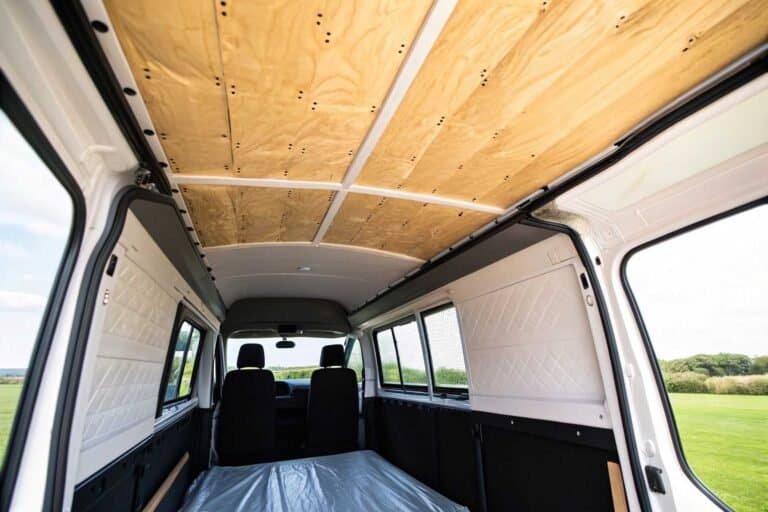
Your van conversion ceiling isn’t just there to look pretty. Think of it as a complete system that’s vital for insulation, moisture control, and even acoustics. Getting it right means layering your insulation, a vapour barrier, and your final lining material—whether that’s classic tongue and groove wood cladding or some lightweight plywood—to build a space that’s comfortable and built to last.

Why Your Van Ceiling Is More Than Just a Roof

Before you even think about cutting a single panel, it’s vital to understand what your van’s ceiling actually does. It’s so much more than a decorative cover; it’s a hard-working system that’s absolutely essential for managing condensation, holding onto heat on cold UK nights, and dampening the drone of road noise.

Get this part of the build wrong, and you’re signing up for a whole host of problems down the line, from persistent dampness and mould to a chilly, uncomfortable living area. A well-planned ceiling is your first line of defence against the elements and a cornerstone of a successful conversion.

The Three Core Components of a Van Ceiling

Your ceiling is really a three-layer sandwich, and each layer has a critical job to do. Skimp on any one of them, and you risk undermining the whole setup.

  • Insulation: This is your thermal barrier. It’s what keeps your van warm in the winter and helps it stay cool in the summer by slowing down heat transfer through that big metal roof.
  • Vapour Barrier: In the UK’s damp climate, this is completely non-negotiable. This impermeable sheet stops the warm, moist air from inside your van (created by breathing, cooking, and just existing) from hitting the cold metal roof and turning into condensation.
  • Final Lining: This is the bit you see. Whether you go for wood cladding, plywood, or carpet, its main job is to provide a clean, durable finish and protect the crucial layers underneath.

A classic rookie mistake is getting fixated on the final look of the van conversion ceiling lining while completely underestimating what’s going on behind the scenes. A gorgeous wooden ceiling will be ruined in months by mould and damp if the insulation and vapour barrier aren’t installed properly.

Key Decisions to Make Upfront

A bit of planning here will save you a world of pain later. Before you even click ‘buy’ on any materials, you need to think about how all these elements are going to work together. Map out exactly where your lights, fan, and any wiring will run, because all that has to be sorted before the insulation and lining go up.

You also need to think about weight. A heavy ceiling can eat into your van’s payload and hurt your fuel efficiency. Lightweight materials like thin pine cladding or 6mm plywood are often a much smarter choice than heavier, bulkier alternatives. Every decision you make at this stage will directly impact the comfort, longevity, and safety of your home on wheels.

Choosing the Right Materials for Your Van Ceiling

Picking the materials for your van’s ceiling feels like a huge decision, and in many ways, it is. What you choose will define the look and feel of your space, but it also has a massive impact on the weight, build complexity, and overall cost. It’s easy to get swept up in the classic, rustic vision of tongue and groove cladding, but it’s vital to think about the practical side of things before you commit.

Your final van conversion ceiling lining is just the pretty top layer. Beneath it, the insulation and vapour barrier are doing the real hard work, keeping you warm and dry. Your choice of lining has to work with these crucial layers, not against them.

The Unseen Heroes: What Lies Beneath

Before we get to the fun part, let’s talk about the two most important layers hidden behind your ceiling panels. Getting these right is absolutely non-negotiable for a comfortable, long-lasting van, especially here in the damp UK.

  • Insulation: This is your main defence against the cold. Common choices range from rigid PIR boards like Celotex to recycled plastic bottle wool. PIR boards are brilliant for thermal resistance, but cutting them to fit perfectly around the van’s curved ribs can be a nightmare, often leaving air gaps where condensation loves to form.
  • Vapour Barrier: This is a non-negotiable membrane that sits between your insulation and the final lining. Its job is simple: stop the warm, moist air from inside your van from hitting the cold metal roof. If it does, you get condensation, which leads to soggy insulation, mould, and eventually, rust. Game over.

A massive mistake I see all the time is people assuming foil-backed insulation board is a vapour barrier. The foil itself is, but the dozens of joins between the boards are not. You still have to meticulously tape every single seam with foil tape to create a completely sealed barrier. Don’t skip this.

For a much deeper dive into the science of insulating your van properly, our guide on insulation and soundproofing for campervans is essential reading.

The Main Event: Popular Choices for Your Final Ceiling Lining

Now for the visible bit. This material will have the single biggest impact on your van’s interior vibe. But you have to weigh up the aesthetics against practical things like weight, flexibility, and how much of a headache it is to install.

A heavy ceiling doesn’t just eat into your precious payload; it can also slightly raise the van’s centre of gravity. Trust me, trying to wrestle a rigid material onto a curved roof is a skill that requires a lot of patience and precision.

Let’s break down the most popular options.

Tongue and Groove Wood Cladding

This is the quintessential “vanlife” look, isn’t it? Thin planks of pine or cedar slot together to create that warm, cosy cabin feel. It’s popular for a reason—it looks absolutely fantastic and it’s incredibly durable.

But, and it’s a big but, it’s also the heaviest and most time-consuming option by a country mile. Every single plank needs cutting to size and fixing to battens on the ceiling. It’s a slow, repetitive job. The wood also adds a significant amount of weight compared to other materials, which is a key thing to watch.

Lightweight Plywood Panels

Plywood is a fantastic middle ground. Using 6mm sheets gives you a clean, modern look that can be painted, stained, or just left natural for a minimalist, Scandi vibe. Because you can cover large areas with single sheets, installation is much, much faster than fiddling with individual planks.

The real challenge with plywood is getting it to follow the curve of the van’s roof. This usually means either creating a “kerf bend” (a series of parallel cuts on the back that allow it to flex) or carefully tensioning the panel into place. It takes some careful measuring and a steady hand with a jigsaw to get a professional finish.

Flexible Carpet Lining

For first-timers or anyone looking for the quickest, most forgiving option, flexible carpet lining is the undisputed champion. It’s a thin, four-way stretch carpet that you simply glue straight onto your vapour barrier or a thin plywood sub-layer.

Its biggest selling point is how effortlessly it moulds to every curve and contour of the ceiling, hiding any imperfections underneath. It also adds an extra bit of sound deadening and insulation. The trade-off is a less “premium” look compared to wood, and it can be a bit harder to keep clean in the long run.

Van Ceiling Lining Material Comparison

To make the decision a bit easier, I’ve put together a simple comparison table. The costs are ballpark figures for the UK market and will obviously vary depending on your supplier and the quality of the material.

MaterialProsConsTypical UK Cost (per sq m)Best For
Pine T&G CladdingBeautiful, rustic aesthetic; very durable and easy to repair individual planks.Heavy; time-consuming to install; can be difficult to fit on curved ceilings.£15 – £25Builders prioritising a classic “cabin” look with a generous payload allowance.
Lightweight PlywoodClean, modern look; faster installation than cladding; can be painted or stained.Can be tricky to bend to the roof’s curve; requires precise measurements and cuts.£12 – £20DIYers seeking a customisable, modern finish who are confident with a jigsaw.
Carpet LiningEasiest and fastest to install; very forgiving on curves and imperfections; adds sound dampening.Less durable than wood; can be harder to clean; offers a more functional than decorative look.£8 – £15First-time builders, solo converters, or anyone looking for a quick and effective solution.

Ultimately, the best van conversion ceiling lining for you comes down to your budget, your DIY confidence, and the overall vision you have for your rolling home. Take your time, weigh up the practicals alongside the aesthetics, and make a choice you’ll be happy with for many adventures to come.

Getting Your Tools and Prep Right for a Flawless Finish

The difference between a professional-looking van conversion ceiling lining and a shoddy one is all in the prep. Honestly, it’s the work you do before the first panel even goes up that dictates the final result. Trying to cut corners here is a classic false economy; you’ll pay for it later with rattles, rust, and a whole lot of regret. Getting this stage right is about patience and planning.

The good news? You don’t need a pro workshop full of expensive gear. A handful of decent tools will see you through the whole ceiling job, from framing out to the final screw. Think of them as a one-time investment that’ll be invaluable for the rest of your van build.

For a full rundown of everything you might need for the entire conversion, our guide to essential tools and materials for campervan conversions is a brilliant place to start.

The Core Tool Checklist

Don’t get bogged down by those endless lists you see online. There are a few core tools that will handle 90% of the work. Spend your money on good versions of these, and you’ll be set.

  • Jigsaw with a fresh blade: This is your best friend for cutting panels to shape. It’s absolutely essential for tackling the weird curves of a van and for cutting clean holes for lights and fans. A sharp, fine-toothed blade is key to avoiding splintered edges.
  • Drill/Driver Combo: You are going to be drilling pilot holes and driving hundreds of screws. A reliable cordless model with a good battery life is non-negotiable.
  • Rivet Nut Tool: This thing is a total game-changer. It lets you install threaded inserts straight into the van’s metal ribs, giving you strong, reliable mounting points for your ceiling battens. No more faffing about trying to get a nut on the other side of the metal.
  • Tape Measure and a Long Straight Edge: “Measure twice, cut once” isn’t just a cliche; it’s the law in van building. Being accurate here will save you a world of frustration and wasted materials.

Here’s a tip I learned the hard way: sort your wiring plan before anything else. Meticulously map out where every light, switch, and fan will go. Run the cables, secure them tight so they can’t rattle, and take photos so you remember exactly where they are when it’s time to drill holes later.

Prepping the Bare Metal Roof

Before you even think about putting up battens, that bare metal roof needs some love. This is your one and only chance to get it right. Trust me, any moisture you trap behind your beautiful new ceiling will lead to rust, and fast.

Start by giving the entire surface a thorough clean with a degreaser. This gets rid of any factory oils or grime. Once it’s bone dry, inspect every inch for surface rust. If you find any spots, treat them with a rust converter and then slap on a coat of protective metal paint for good measure. It feels like a tedious job, but it’s the best insurance policy you can get against future corrosion.

Building a Solid Foundation with Battens

Your fancy ceiling panels can’t just be glued to the roof. They need a solid subframe—or “battens”—to fix into. These are just simple lengths of timber, typically around 25mm x 38mm, that you secure to the metal ribs of the van. They create a flat, secure grid to attach your lining to.

This is where that rivet nut tool earns its keep. By installing rivet nuts into the van’s structural ribs, you create strong, permanent anchor points for your battens. For a secure and lasting installation of your ceiling materials, it’s vital to choose the correct fasteners; you can refer to this guide on choosing the best screws for woodworking.

Running battens both lengthwise and widthwise creates a really robust frame that stops your ceiling from sagging or flexing as you drive. This structure is also what you’ll use to secure any overhead cabinets later on. Taking the time now to build a square and level subframe will make fitting the final lining panels infinitely easier.

Getting Your Van Ceiling Installed From Start to Finish

Right, with the prep work out of the way and your materials piled up, it’s time for the main event: getting that van conversion ceiling lining up. This is the bit where your van stops looking like a metal box and starts feeling like a proper home. It’s a job that mixes a bit of everything—insulation, sealing, tricky cuts, and finishing—and while it demands a bit of patience, the result is massively rewarding. I’ll walk you through the whole hands-on process, packed with real-world advice to help you sidestep the common mistakes.

This initial prep work—cleaning the bare metal, running your wiring, and getting a solid wooden frame in place—is the bedrock for everything else. Get this right, and the rest is plain sailing.

This little flow chart nails the first three non-negotiable steps of the job. It’s all about starting your ceiling build on a solid and safe foundation.

Mastering Insulation and the Vapour Barrier

First up, let’s deal with the unseen heroes of your ceiling. Fitting your insulation is basically a game of Tetris, especially if you’re using rigid boards like PIR. The absolute goal here is 100% coverage. You want zero air gaps between the insulation and the van’s cold metal skin.

For straight sections, the “cut and snap” method is your friend. Score the board deep with a Stanley knife, then snap it clean over a straight edge. But vans are curvy beasts. For the awkward shapes around roof ribs, make cardboard templates first. Trace the curve, cut the template, check the fit, and then use it to mark up your insulation board for a precise cut with a jigsaw or serrated knife.

Don’t just cram insulation offcuts into small gaps. Grab a can of low-expansion foam filler and carefully seal any awkward little voids. This gives you a continuous thermal break and stops cold spots where condensation loves to form.

Once the insulation is wedged in snugly, it’s time for what I think is the most critical step for any UK van build: the vapour barrier. This is your final line of defence against damp. Roll out your barrier material, making sure you overlap any seams by at least 100mm.

The real secret to success here is the tape. Don’t cheap out. Get some high-quality aluminium foil tape and go to town sealing every single join, seam, and edge. Meticulously seal around any cables poking through for your lights. Be obsessive about this. A tiny pinhole is all it takes for moisture to sneak through and slowly ruin all your hard work.

Fitting Your Final Ceiling Lining

With the crucial underlayers sorted, you can finally move on to the pretty bit—your actual ceiling lining. Whether you’re wrestling with massive plywood sheets or slotting in individual tongue and groove planks, the principles of measuring, cutting, and fitting are the same.

Scribing Panels for a Perfect Fit

Vans are full of curves, so you can forget measuring a simple rectangle and expecting it to fit. The technique you need to learn is scribing. This is how you get those pro-looking, tight fits. Hold your panel roughly in place, then use a compass or a scribing tool to trace the exact contour of the van wall onto the panel.

Set your compass to the width of the biggest gap between your panel and the van wall. Then, run one point of the compass along the van’s wall while the other point draws a perfectly parallel line onto your board. Cut along this scribed line, and you’ll have a piece that slots in beautifully. It takes a bit of practice, but honestly, it’s a total game-changer.

Managing Long Cladding Planks

If you’re installing tongue and groove cladding, especially on your own, trying to handle long, bendy planks can be a right faff. Don’t even try to fix the whole length at once.

  • Start in the middle: Get the centre of your first plank fixed to the central roof batten. This gives you a solid anchor point.
  • Work outwards: Gently bend the plank to follow the roof’s curve, fixing it to the next batten out on one side, then the other.
  • Stagger your joints: To avoid a boring, uniform look, cut your planks to different lengths. Staggering the joints across the ceiling looks far more natural and actually adds a bit of structural strength.

Cutting Holes for Lights and Fans

Drilling into your beautiful new ceiling can feel pretty nerve-racking. The key is taking your time and using the right tool for the job. For your typical circular downlights or puck lights, a hole saw attachment for your drill is essential. It gives you a perfectly clean, round cut every single time.

For a bigger, square opening like a MaxxAir fan, the process is a bit different.

  1. Measure and Mark: Double-check your measurements from inside the van. Then triple-check them. Drill a small pilot hole through each corner of your marked square from the inside out.
  2. Connect the Dots: Hop on the roof and use a straight edge to draw lines connecting your pilot holes. Now you have your exact cutting guide on the outside.
  3. Cut with a Jigsaw: With a fresh metal-cutting blade in your jigsaw, carefully cut along the lines. It’s a good idea to have a helper inside to catch the cutout piece so it doesn’t drop on your head.

Finishing Touches and Electrical Installation

The final details are what take a build from good to great. You’re almost guaranteed to have small gaps where your ceiling meets the walls, especially in a curvy van. Don’t stress about them; just hide them! A bit of flexible decorative trim, some lightweight angle moulding, or even a neatly applied bead of sealant can cover these gaps and create a crisp, clean edge.

This is also the moment to get your electrics finalised. Pull the cables you ran earlier through the holes you’ve cut and connect your lights, switches, and fan. Make sure all your connections are rock solid. I swear by Wago clips or proper crimp terminals for a vibration-proof finish that won’t let you down on a bumpy road.

It’s absolutely vital that your wiring is correctly sized and fused for whatever you’re running. If you’re building a full electrical system from scratch, you need to understand how all the pieces fit together. For a deep dive, our complete guide to campervan electrical systems explained covers everything you need to know to build a safe and reliable setup.

With the lights on and the trim in place, stand back and have a look. You’ve just installed a complete ceiling system that’s going to keep you warm, dry, and comfortable on all your adventures. It’s a massive milestone in any van conversion and one to be seriously proud of.

Troubleshooting Common Van Ceiling Problems

Even with the best-laid plans, every van build hits a few snags. Your ceiling is no exception, and problems can surface during the build or months down the line. The good news is, most issues are surprisingly easy to fix without having to rip everything apart.

Don’t panic if you spot an issue. A bit of patience and some detective work is usually all it takes to get things sorted.

Hunting Down Leaks and Condensation

That heart-sinking moment when you spot a drip is a rite of passage for many van builders. But before you start blaming your new fan, you need to work out if you’re dealing with a leak or with condensation. They’re two very different beasts.

  • Leaks: These are usually the obvious culprit. They’re caused by a failed seal around a roof fan, a solar panel bracket, or a roof rack bolt. You’ll typically only see them after heavy rain, and they often leave a tell-tale water trail or a distinct stain. The fix involves biting the bullet, removing the item, cleaning off every last scrap of old sealant, and reinstalling it with a generous bead of a quality flexible sealant like Sikaflex 522. Don’t skimp here.
  • Condensation: This one is much sneakier. If you’re finding damp patches on cold mornings, even when it hasn’t rained, condensation is the likely cause. It happens when there’s a small breach in your vapour barrier, letting the warm, moist air from inside the van hit the cold metal of the roof. Finding the pinhole can feel impossible, but common culprits are untaped seams or tiny gaps around the cables for your lights.

If you’re fighting condensation but can’t find the source, a small, rechargeable dehumidifier can be a lifesaver. It won’t fix the root cause, but it’ll manage the symptoms by pulling moisture out of the air, helping to prevent mould while you continue your investigation.

Silencing Squeaks and Rattles

There is nothing more maddening than a mysterious rattle that starts up the second you hit 50 mph. Nine times out of ten, these noises are caused by something vibrating against the van’s metal shell or another component.

Your timber battens are a prime suspect. If a batten isn’t screwed down tightly enough against a roof rib, it can vibrate and create a surprisingly loud noise. Another common offender is wiring that wasn’t properly secured. A loose cable gently slapping against the inside of a ceiling panel can sound like the van is falling apart.

To fix it, you might have to carefully remove a panel to get access, then add some foam tape between surfaces or use cable ties to secure anything that’s loose. It’s a bit of a faff, but the blissful silence on your next drive will be worth it.

General Ceiling Maintenance and Care

Keeping your ceiling looking good is pretty straightforward. Your approach will depend entirely on what material you’ve used.

MaterialCleaning MethodAnnual Check
Wood CladdingA lightly dampened microfibre cloth is usually all you need. For stubborn marks, use a highly diluted, pH-neutral wood cleaner. Just be careful not to soak the wood.Keep an eye out for any planks that may have shrunk or warped with temperature changes. A quick re-coat of oil or varnish every couple of years will keep it looking fresh and protected.
PlywoodIf you’ve painted it, just treat it like any painted wall in your house. A simple wipe-down is perfect. For natural or stained finishes, be gentle and avoid any harsh chemicals.Look for any signs of water staining, paying close attention to the edges where the ceiling meets the walls. This is where problems often show up first.
Carpet LiningA stiff brush and a good vacuum cleaner will handle most dust and dirt. For spills, blot them immediately and use a dedicated carpet or upholstery cleaner. Always test it on a hidden spot first!Check that the adhesive is still holding strong, especially in the corners and around any curves where the material is under the most tension.

Your Van Ceiling Questions Answered

Right, let’s get into the nitty-gritty. These are the questions that crop up time and time again when you’re staring at a bare metal roof, wondering where to even begin. Here are some straight, no-nonsense answers based on years of doing this stuff for real.

How Much Weight Can a Van Roof Support?

For most panel vans, the roof can easily handle the weight of your insulation, vapour barrier, and some lightweight cladding like pine or 6mm plywood. The real question isn’t what it can support, but what it should. You need to be ruthless about keeping weight down.

Heavy materials chew through your payload capacity and can mess with how your van handles on the road. A typical ceiling, done properly with lightweight timber battens, insulation, and cladding, will come in somewhere between 20-35kg. That’s a perfectly manageable weight for most vans.

The golden rule is this: every kilo you add to the ceiling is a kilo you can’t carry in water, gear, or people. Always go for the lightest materials that will do the job properly for your van conversion ceiling lining.

Do I Absolutely Need a Vapour Barrier in the UK?

Yes. One hundred percent. Don’t even think about skipping it. A vapour barrier is completely non-negotiable for any van conversion in the UK. Our damp, cool climate is the perfect storm for condensation.

Think about it – you’re inside, breathing, cooking, maybe drying a damp coat. All that warm, moist air wants to escape, and its first target is the cold metal skin of your van’s roof. The vapour barrier’s job is to stop it dead in its tracks. Without one, that moisture hits the metal, condenses into water, soaks your insulation, and starts a slow, silent campaign of mould and rust.

What Is the Easiest Ceiling Lining for a Beginner?

Hands down, flexible carpet lining is the most forgiving and easiest material for a first-timer. Vans are full of awkward curves and lumpy bits, and this stuff just stretches right over them. It’s brilliant.

You don’t need a massive workshop full of tools, either—just a can of high-temperature spray adhesive and a sharp Stanley knife. The soft texture is also fantastic for hiding any minor imperfections in the surface underneath. Plywood is the next step up in difficulty, but if you’re aiming for a wooden finish, tongue and groove cladding will test your patience the most, demanding real precision.


At The Feral Way, we provide tested, no-nonsense guides for real-world van conversions. Find more practical build advice and travel tips on our site.

Proper campervan blackout curtains are a non-negotiable bit of kit. They’re what properly transform your van from just a vehicle into a comfortable, private home on wheels. I’m talking total light control for better sleep, proper thermal insulation for unpredictable UK weather, and that crucial privacy you need for both wild camping and sneaky urban stays. Getting this one DIY project right dramatically improves your quality of life on the road. In this guide, we will explore everything you need to know about DIY Campervan Blackout Curtains.

Why Blackout Curtains Are a Van Life Game Changer

So many people building a van see curtains as a final decorative touch, something to chuck in at the end. In reality, they’re a fundamental part of a functional conversion. They solve a bunch of practical problems that are unique to living in a tiny space, especially here in the UK where the conditions can turn on a sixpence.

Think of them less as accessories and more as a core part of your van’s climate control and security system.

The most obvious win is getting your van completely dark. During those long UK summer days, the sun can set as late as 10 PM and be back up before 5 AM. Without decent blackout curtains, that extended daylight will absolutely wreck your sleep cycle, leaving you knackered before the day’s adventure has even started.

Beyond Just Blocking Light

While getting the van pitch-black is their main job, the benefits go much, much further. High-quality campervan blackout curtains provide a surprising amount of thermal insulation. This is a massive deal for a few key reasons:

  • Winter Warmth: On a cold night, they trap a huge amount of precious heat inside your van. This means less strain on your heater, which saves your battery or fuel.
  • Summer Cooling: On those rare hot, sunny days, they reflect the sun’s rays, helping to stop the inside of your van turning into a metal oven.
  • Reduced Condensation: By creating a thermal barrier between the cold window pane and the warm interior air, they can seriously help minimise condensation build-up – a constant battle in van life.

This multi-functionality is why they work so well alongside the other core parts of your van build. To really get your head around how temperature control works in a van, check out our deep-dive guide on Insulation and soundproofing for campervans.

Privacy and Stealth for True Freedom

Another huge advantage is privacy. It’s a game-changer. Whether you’re parked up at a busy campsite or trying to be discreet in a town centre, curtains are your first line of defence against prying eyes. They let you live comfortably in your space without feeling like you’re in a goldfish bowl, turning your van into a proper private sanctuary.

This is especially vital for stealth camping, where drawing any attention to your vehicle is the absolute last thing you want.

The ability to completely block all light from escaping your van at night is non-negotiable for successful stealth camping. It’s what separates a peaceful night’s rest from a potential knock on the window.

The popularity of van life is absolutely surging. For 2025, an estimated 10.4 million Brits are planning camping and caravanning holidays, a massive increase from previous years. This boom just highlights why optimising your setup with gear like proper blackout curtains is so important for comfort and privacy in what are becoming increasingly popular spots.

Selecting the Right Materials for Your Curtains

Getting your materials right is where your campervan blackout curtains go from being a decent idea to a genuinely game-changing part of your build. The secret isn’t just one fabric, but a clever combination of layers, each doing a specific job.

Think of it like dressing for a hike in the Peak District; you need layers for comfort, protection, and performance. Your curtains will be a three-part sandwich: an interior fabric for looks, a blackout layer for darkness, and a thermal layer for insulation. Get this combination right, and you’ll have curtains that are durable, effective, and perfectly suited to the demands of UK van life.

The Three Essential Fabric Layers

Let’s break down what each layer actually does. Understanding their roles will help you make much smarter choices when you’re staring at a wall of fabric rolls or scrolling endlessly online.

  • The Interior-Facing Fabric: This is the layer you’ll see from inside your van. Its main job is to look good and match your interior. You have a lot of freedom here, but it’s wise to choose something durable and relatively easy to clean. Cotton, linen blends, or hard-wearing upholstery fabrics are all excellent choices.
  • The Blackout Layer: This is the workhorse. Its sole purpose is to block 100% of incoming light. Standard “dimout” fabrics won’t cut it here; you need a dedicated blackout lining, which is usually a thick, tightly woven fabric with a special coating on one side.
  • The Thermal Layer: Facing the window, this layer is crucial for temperature control. It reflects heat out in the summer and traps warmth in during the winter. This seemingly simple layer makes a huge difference to your comfort and can even help reduce condensation.

Choosing Your Blackout and Thermal Materials

The interior fabric is a matter of personal taste, but the blackout and thermal layers are all about technical performance. These are the two you really need to get right.

For the blackout layer, look specifically for a three-pass blackout lining. This type has three layers of coating applied, making it completely opaque and far more durable than the cheaper one-pass versions. You can find this in most fabric shops or online. It’s a bit stiff to work with, but the results are absolutely worth the effort.

A common mistake is using a dark-coloured fabric and hoping it will be enough. True blackout performance comes from a dedicated lining designed to block light, not from the colour of the fabric itself.

When it comes to the thermal layer, you have a few solid options:

  • Thermal Fleece: A simple, cost-effective choice. It traps a layer of air, providing surprisingly good insulation for the price.
  • Reflectix-style Insulation: This is the bubble-wrap-like material with a foil coating. It offers excellent thermal reflection and it’s lightweight, but it can be a bit crinkly and noisy.
  • Specialised Thermal Linings: These are fabrics designed specifically for curtains, often with a silver or white reflective coating. They offer a great balance of performance and a less ‘industrial’ look. One popular option is thermal insulated shade fabric, which often combines multiple layers into one, simplifying the whole process.

A great real-world combination is a tough cotton canvas for the interior, a three-pass blackout lining stitched to it, and a layer of thermal fleece as the final backing. This creates a thick, insulated curtain that hangs well and does its job perfectly.

Here’s a quick breakdown to help you weigh up the pros and cons of each layer.

Campervan Curtain Fabric Comparison

Fabric LayerRecommended MaterialProsConsAverage Cost (per metre)
Interior FabricCotton Canvas / Upholstery FabricHuge choice of colours/patterns, durable, easy to work with.Can be heavy, may need pre-washing to prevent shrinking.£8 – £20
Blackout LayerThree-Pass Blackout Lining100% light blocking, adds weight and structure, improves insulation slightly.Can be stiff to sew, limited colour options (usually white/cream).£7 – £15
Thermal LayerThermal FleeceInexpensive, good insulation, soft, drapes well.Less effective at reflecting heat than foil-based options.£5 – £10
Thermal LayerReflectix / Foil Bubble WrapExcellent heat reflection (summer & winter), very lightweight.Crinkly/noisy, can be awkward to sew, industrial look.£4 – £8

Choosing the right combination from this table really depends on your priorities – whether that’s budget, ease of making, or maximum thermal performance.

Sourcing Your Materials in the UK

Finding these materials in the UK is pretty straightforward. Your local fabric or haberdashery shop is a great place to start, especially for the interior fabric and blackout lining, as you can actually feel the quality.

For more specialised items like Reflectix, DIY superstores like B&Q or Screwfix are your best bet.

Don’t overlook online suppliers either. Websites dedicated to upholstery or curtain-making often have a wider selection and can be more cost-effective, especially when you’re buying several metres. Just be sure to order samples first to check the colour and quality before you commit to buying the full amount. By carefully selecting each layer, you’ll end up with curtains that aren’t just stylish, but an essential piece of functional kit for your van.

How to Measure and Pattern Your Van Windows

Getting the measurements right is where you win or lose the battle against those infuriating slivers of light. A few millimetres off might not sound like much, but it’s the difference between a pitch-black van and one that lets in just enough light to wake you up at 5 am.

Unlike house windows, van windows are rarely perfect squares. They’ve got frustrating curves, weird angles, and rubber seals that get in the way. You can’t just buy a standard size; precision here is everything. Don’t worry, though—it’s a straightforward process once you break it down.

Gathering Your Patterning Tools

Before you start, get your toolkit ready. Having everything to hand makes the process smoother and far more accurate. You don’t need anything fancy.

  • Large Sheets of Cardboard: Old delivery boxes are perfect. You need pieces big enough to cover each window completely.
  • A Good Marker Pen: A permanent marker like a Sharpie works best.
  • A Tape Measure: Essential for checking your work and adding seam allowances later.
  • Sturdy Scissors or a Craft Knife: Something that can cut through cardboard cleanly.
  • Masking Tape: Really useful for holding the cardboard in place while you trace.

Creating Your Window Template

The goal here is simple: create a perfect cardboard replica of each window. This template will be your master pattern for cutting all three layers of fabric, so take your time and aim for accuracy.

Start by cutting a piece of cardboard that’s a bit bigger than the window you’re working on. Use a few bits of masking tape to hold it against the window frame from the inside.

Now, press the cardboard firmly against the window. You should be able to feel the hard metal edge of the window opening through the cardboard. With your marker, carefully trace this edge. For most vans, the easiest way to get an accurate line is to trace the boundary where the metal bodywork meets the window’s rubber seal. This ensures your final curtain will cover the entire glass pane and tuck neatly against the frame.

Once you’ve traced the shape, take the cardboard down and carefully cut along your marked line.

Pro Tip: Before you do anything else, hold your new template up inside the window frame to double-check the fit. It should sit snugly with no major gaps. It’s far easier to trim a bit more cardboard off or make a new template than it is to recut expensive fabric.

Adding the Crucial Seam Allowance

Your cardboard template is the exact size of the window opening, but your fabric needs to be slightly larger. This extra material, called the seam allowance, is for when you sew the layers together.

A standard seam allowance for a project like this is 1.5cm (about 5/8 of an inch).

The easiest way to add this is to lay your cardboard template on your fabric and trace around it with a fabric marker. Then, using your tape measure, draw a second line 1.5cm outside of that first line. This outer line is your new cutting line. Do this for every piece of fabric you cut.

This little bit of extra material ensures that after sewing, your finished curtains will be the perfect size to fit the window snugly.

The interior fabric, blackout lining, and thermal barrier—needs to be cut using your enlarged pattern to ensure they all line up perfectly when you sew them together.

Finally, remember to label each template clearly (e.g., “Sliding Door Window,” “Rear Right”) and mark which side faces outwards. This simple step prevents a world of confusion later, especially if your windows are similar but not identical. Getting this process right can even influence your build from the start, helping you choose the best campervan windows for easy curtain fitting down the line.

Right, you’ve got your fabric layers all cut out and ready to go. Now for the fun bit: turning those flat pieces of material into actual, functional campervan curtains. This is where it all comes together.

And don’t worry if you’ve never touched a sewing machine in your life. There are some brilliant no-sew methods that give a solid, durable finish that’s more than up to the rigours of van life. We’ll walk through both ways of doing it.

The Traditional Sewing Method

If you’ve got a sewing machine, stitching the layers together is hands-down the most durable, long-lasting option. The process is pretty straightforward. You’re basically making a three-layer fabric sandwich and sewing around the edges.

First, lay your thermal fabric down on a flat surface, reflective side facing up. On top of that, place your blackout lining. Finally, add your interior-facing fabric, but make sure the ‘pretty’ side is facing down. When you look at your stack, you should be seeing the back of your interior fabric.

Pin all three layers together around the entire edge. Chuck a pin in every few inches to stop anything shifting about while you work. It’s a good idea to use a heavy-duty needle in your machine for this, as you’ll be punching through some fairly thick material.

Stitch all the way around the edge, but leave a gap of about 15-20cm along one of the straightest sides. Don’t forget to backstitch at the start and finish to lock your seam in place.

Once that’s done, snip the corners off to reduce any bulk. Then, carefully turn the whole thing right-side-out through the gap you left. It’s a bit like turning a massive pillowcase inside out. Poke the corners out so they’re nice and crisp, give it a good iron, and then topstitch all the way around the edge. This gives it a really neat, professional finish and cleverly sews up your turning gap at the same time.

No-Sew Alternatives for a Stitch-Free Finish

No sewing machine? No problem at all. There are a few really solid alternatives that don’t require a single stitch. These are perfect if you want a simpler approach or just don’t have the gear.

One of the most reliable options is iron-on hemming tape, which you might also see called fusible bonding web. It’s fantastic stuff that creates a seriously strong bond when you hit it with the heat from an iron.

To use it, you’ll still layer your fabrics exactly as described above, but you’ll work section by section.

  1. Place a strip of the hemming tape between the fabric layers, right near the edge.
  2. Press down firmly with a hot iron for the recommended time (but always check your fabric’s heat settings first!).
  3. Work your way around the entire curtain like this, still leaving that gap to turn it right-side-out.
  4. After you’ve turned it, use another little piece of hemming tape inside the gap to seal it shut.

Another great no-sew method is a strong fabric adhesive. You need to look for a glue that’s specifically designed for heavy-duty fabrics. Just apply a thin, even bead of glue between the layers near the edge, press it all down firmly, and then let it cure completely.

Whichever no-sew method you go for, the key is to let the bond fully cure before you start handling the curtains or trying to fit them. A bit of patience here will pay off with much better durability down the road.

This DIY approach is a smart way to manage costs, which is more important than ever. The Nohma Van Conversion Survey highlighted that base vehicle prices for UK self-builders have shot up by 76% in just four years. While essentials like electrics and insulation are top priorities, over 85% of builders also focus on comfort features like good sleeping quarters where effective blackout curtains are crucial for privacy and rest. You can learn more about the rising costs and priorities in UK van conversions.

Comparing the Methods: Durability and Finish

So, which one should you choose? It really comes down to your skills, the tools you have, and what you’re prioritising.

Assembly MethodDurabilityFinish QualityTools Required
Sewing MachineExcellent. Stitches provide the strongest, most flexible bond that will last for years.Professional. A sewn seam and topstitching give the cleanest, most durable edge.Sewing machine, heavy-duty needles, thread, pins.
Iron-On TapeGood. Creates a strong, reliable bond but can become less effective with repeated washing.Very Good. The bond is flat and almost invisible, creating a neat finish.Iron, ironing board, hemming tape.
Fabric GlueFair to Good. Strength depends heavily on the quality of the glue and proper application.Good. Can sometimes leave a slightly stiffer edge compared to other methods.High-quality fabric adhesive.

Ultimately, a sewn curtain will always be the most robust option. However, for a campervan where curtains aren’t going in the wash as often as your ones at home, a well-executed no-sew method using quality products is more than up to the task.

If you’re building out your toolkit for this and other van projects, have a look at our guide on the essential tools and materials for campervan conversions.

Getting Your Curtains Up: Installation for a Perfect Light-Proof Seal

You’ve done the hard graft of measuring, cutting, and stitching your curtains together. Now for the moment of truth: getting them hung. How you mount your campervan blackout curtains is just as critical as the fabric you chose. A sloppy installation with gaps will let light bleed in, completely defeating the point of the whole project.

The aim here is a complete, gap-free seal around every single window. Let’s get into the best ways to achieve that perfect pitch-black finish, from clever magnetic tricks to more traditional tracks, so you get the total darkness you’re after.

The Magic of Magnets

For most panel vans with steel bodies, magnets are the undisputed champion. They’re ridiculously easy, involve zero drilling, and create an incredibly tight seal against the metal window surrounds. If you want a clean, damage-free installation, this is it.

You’ve got two main ways to go about it:

  • Sew-in Magnets: This is my top recommendation for a slick, professional finish. You simply sew small but mighty neodymium magnets into the hem of your curtains. Spacing them every 10-15cm around the entire edge creates a continuous magnetic pull that just snaps the curtain securely to the van’s bodywork.
  • External Magnets: Don’t fancy sewing them in? You can glue strong magnets to the curtain edges instead. Another option is using a separate set of magnets to clamp the curtain fabric to the van wall from the outside. It’s a bit less elegant but still gets the job done.

The real beauty of magnets is just how practical they are. You can pull the curtains down in a heartbeat for driving and then snap them straight back up when you park for the night. No fuss.

Traditional Curtain Tracks and Rods

If you prefer a more conventional look, or if your van has plastic window surrounds where magnets are useless, curtain tracks or rods are a solid choice. This method gives you that smooth gliding action, which is brilliant for bigger windows or the cab divider curtain.

You’ll need to get the drill out for this one, screwing the tracks into the van’s structure above and sometimes below the window. Flexible curtain track is especially handy for navigating the awkward curves you find in most vans.

While this method is rock solid, getting a complete light seal can be a bit more of a challenge. The curtains naturally hang slightly away from the wall, which can let light creep in around the edges. A good workaround is to combine the track system with a few strategically placed Velcro tabs or magnets along the sides to pin everything down.

Velcro: The Versatile, No-Drill Fix

Good old hook-and-loop fastener, or Velcro, is another cracking no-drill option. It’s cheap, you can get it anywhere, and it’ll stick to pretty much any surface you throw at it – metal, plastic, wood, or carpet lining.

For the best results, shell out for the industrial-strength, self-adhesive stuff. Stick the rough ‘hook’ side to the van around the window frame and then sew the soft ‘loop’ side onto the curtain’s perimeter. Trust me, you have to sew the strip to the fabric; the adhesive on its own just won’t stand up to the constant pulling and tugging.

Velcro creates a fantastic light seal, but it can be a bit noisy to rip off in a quiet van. It’s an ideal choice for smaller, fixed windows that you don’t need to open up very often.

Our Two Cents: Whichever way you go, the ultimate goal is to kill every single gap. Even a pinprick of light can feel like a searchlight in a truly dark van, so pay forensic attention to the sides and bottom edges of your curtains.

For us vanlifers, poor window insulation can crank up heating needs by 25% in a chilly British winter. A proper set of thermal blackout curtains slashes that energy drain, saving precious leisure battery power for your essentials. This is a big deal when you think about the millions of UK campers on the road, many in vans where battery anxiety is real. You can find out more about the rise of premium upgrades in the UK camping market.

Comparing Your Mounting Options

Choosing the right method really comes down to your van’s construction, your budget, and how you’ll be using the curtains day-to-day. This table breaks down the main differences to help you figure out what’s best for your build.

Mounting Options for Campervan Curtains

A comparison of different installation methods to help you choose the best fit for your van.

Mounting MethodBest ForInstallation DifficultyLight Seal EffectivenessCost
Sew-in MagnetsSteel panel vans for a perfect, seamless seal.Medium (requires sewing)Excellent££
Curtain Track/RodLarger windows, cab dividers, non-metal frames.High (requires drilling)Good (may need side seals)£££
VelcroAll surfaces, especially plastic or wood trims.LowExcellent£

Ultimately, the best installation is the one that gives you a total blackout with the least amount of faff. For most DIY van builds, sewing neodymium magnets into the curtain edges is the most effective and user-friendly solution, turning your van into a perfectly dark and private sanctuary for the night.

Common Questions About Campervan Curtains

Building a van is one thing; living in it is another. After countless hours on the road and a few builds under our belts, we’ve found the same questions about curtains crop up again and again. Here are the straight answers to the things you’re probably wondering about.

Are Thermal Curtains Really Necessary in the UK?

One hundred percent, yes. Don’t think of them as a winter-only thing. The UK throws damp air and surprisingly cool summer nights at you, especially if you’re anywhere near Scotland or the Welsh mountains. A thermal layer is your first line of defence.

In winter, the difference is huge. It traps heat inside, meaning your diesel heater runs less and you save a surprising amount of battery power. But in summer, it’s just as crucial. It reflects the sun’s heat, stopping your van from turning into a greenhouse on a rare sunny day. They’re an essential bit of kit, not an optional extra.

A common mistake is thinking thermal layers are only for keeping warm. They’re just as effective at keeping your van cool by reflecting solar heat away from the windows – the biggest source of heat gain in summer.

How Do I Manage Condensation Behind My Curtains?

Ah, condensation. The relentless enemy of every van lifer in Britain. A good set of thermal curtains creates a temperature difference that can actually make it worse, so you need a solid plan to stop mould before it starts.

It’s a three-pronged attack:

  • Ventilation is everything. You need moving air. That means cracking a window or, even better, running your roof fan on a low setting. This is your number one weapon against moisture.
  • Choose the right fabric. The layer of your curtain facing the window should be moisture-resistant or even waterproof. This stops the curtain from getting soaked and becoming a breeding ground for mould and mildew.
  • Make it a daily habit. Every morning, pull the curtains completely away from the glass for at least an hour. Let the windows and the back of the curtains air out properly. It makes a massive difference.

What Is the Best Solution for Cab and Windscreen Windows?

Your cab windows – the windscreen and two side doors – are a different beast. They’re huge, awkwardly shaped, and the plastic surrounds make traditional curtain rails a real pain.

Honestly, the most effective solution by a country mile is a set of custom-fit insulated window covers. Forget trying to hang curtains here. These are more like insulated panels, usually made from a sandwich of Reflectix-style insulation between two layers of tough fabric.

They’re cut to the exact shape of the glass and held in place with strong neodymium magnets sewn into the edges or by just being tucked tightly into the window seals. The blackout and thermal performance is far superior to any hanging curtain. Plus, they’re quick to put up, take down, and they store flat, which is a huge win for saving space.


At The Feral Way, we focus on practical, road-tested advice to help you build a van that truly works. Find more no-nonsense guides and real-world tips at https://www.theferalway.com.