
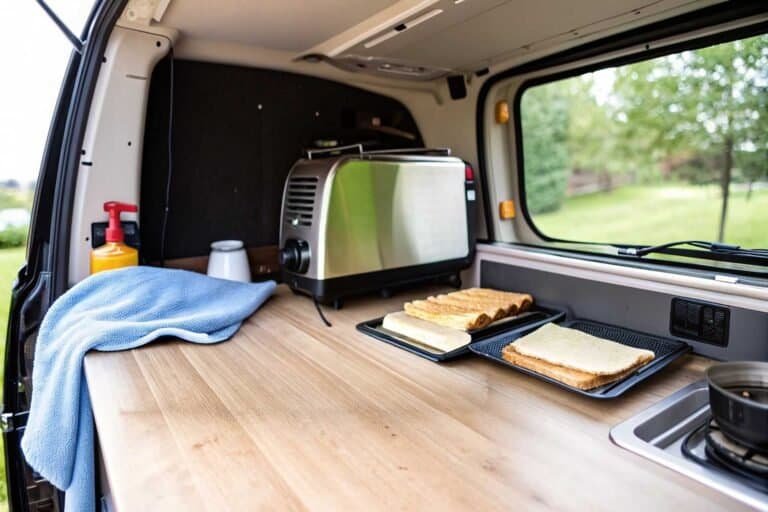
Right then. Let’s talk about one of the most underrated bits of kit in a campervan: the humble toaster. It sounds trivial, but waking up to the smell of proper toast on a damp, grey morning somewhere in the Peak District is one of those simple pleasures that makes van life brilliant.
For years, I’ve seen people get bogged down in the technicals – wattage, inverters, battery drain, gas safety. They either spend a fortune on a setup that kills their leisure battery in ten minutes flat, or they give up and settle for grim, soggy bread warmed over a pan.
This guide is the conversation I wish I’d had when I first started. No fluff, no jargon. Just straight-talking, practical advice from someone who’s tried (and failed with) pretty much every method of making toast on four wheels. We’ll get into what actually works in a real-world UK campervan.
Why Is a Toaster Such a Big Deal?
Modern van conversions aren’t just about escaping; they’re about creating a tiny home on wheels. And nothing says ‘home’ quite like proper kitchen gear. Upgrading the galley is almost always the top priority for self-builders who want their setup to feel less like roughing it and more like a cosy, mobile cottage.
This isn’t just a feeling, either. UK van conversion surveys consistently show that kitchen appliances are a huge focus. Over 80% of builders plan for a proper hob, oven, or some form of electric cooking. Many admit to installing an inverter specifically so they can “run normal kitchen gear.” You can dive deeper into these van conversion trends and see the full report here.
We’re going to cover everything you actually need to know to get that perfect slice, every time.
- 12V vs. 230V: The Great Power Debate. We’ll break down what your van can realistically handle.
- Choosing Your Weapon: Electric, 12V, and gas hob toasters – the pros and cons of each.
- Using It Safely. How to manage heat and ventilation without setting your van on fire.
- The No-Toaster-Toaster. Clever ways to get great results without any special equipment at all.
By the end of this, you’ll know exactly which option is right for your van, your budget, and your travel style. Let’s get that kettle on.
Decoding Your Van’s Electrical System for a Toaster
Before you even think about buying a camping toaster, we need to have a serious chat about power. Honestly, this is the single most important part of the puzzle, and it’s where most people go wrong. Getting it wrong doesn’t just mean sad, floppy bread; it can lead to a dead leisure battery, blown fuses, or even damaged kit when you’re miles from the nearest help.
Think of your van’s 12V leisure battery as a finite water tank. Every appliance you run is like opening a tap. A low-power device, like an LED light, is a slow drip. A high-power appliance like a toaster? That’s like opening a fire hose. It drains your resources incredibly fast.
The Two Worlds of Van Power: 12V vs 230V
Your campervan basically has two distinct electrical personalities. Getting your head around the difference is absolutely crucial for making your breakfast dreams a reality.
12V DC (Direct Current): This is your van’s native language. It’s the low-voltage power that comes directly from your leisure battery, perfect for running efficient gear like your lights, water pump, and USB chargers.
230V AC (Alternating Current): This is the power you have at home, the stuff that comes out of a standard three-pin UK plug socket. To get this in your van, you need a box of tricks called an inverter, which converts the 12V DC from your battery into 230V AC.
This conversion process isn’t magic; you always lose a bit of energy as heat. This means running a 230V toaster through an inverter actually uses more of your battery’s precious juice than the toaster’s wattage rating suggests.
The Brutal Reality of Toaster Wattage
A typical household toaster might be rated at 800W. That doesn’t sound like a massive number, but in the 12V world, it’s a colossal power draw. Let’s do some quick back-of-a-napkin maths to see the real impact.
To figure out the current draw in amps (the rate power is yanked from your battery), you divide the wattage by the voltage. For a 230V, 800W toaster running through an inverter, the calculation is a bit of a shocker. The inverter has to pull a huge number of amps from the 12V battery just to create that 230V power.
An 800W toaster will demand roughly 67 amps from your 12V battery every second it’s running (800 watts ÷ 12 volts = 66.7 amps). This doesn’t even account for the inefficiency of the inverter, which could easily push the real-world draw closer to 75 amps.
A single five-minute toast cycle could suck over 6 Amp-hours (Ah) from your battery. For a standard 100Ah lead-acid battery, where you can only safely use about 50% of the capacity, that one round of toast just used up more than 12% of your entire usable power. Gone. For two slices of bread.
To make an informed decision, you need a solid grasp of your system. For a deep dive into setting up your power correctly, our complete walkthrough on how campervan electrical systems are explained is essential reading. It’s also worth understanding different battery technologies like LiFePO4 versus traditional lead-acid, as they handle these high draws very differently.
As you can see, balancing your power system, staying safe in a small space, and choosing the right gear are all tangled up together.
Here’s a quick comparison to put the power demands into perspective.
12V vs 230V Toaster Power Impact on Your Campervan
This table breaks down the real electrical implications of each toaster type on a typical campervan leisure battery setup.
| Feature | 12V DC Toaster (Direct) | 230V AC Toaster (via Inverter) |
|---|---|---|
| Typical Power Draw | 400W – 600W | 700W – 900W |
| Current from Battery | 33 – 50 Amps | 60 – 80+ Amps (including inverter inefficiency) |
| System Complexity | Simpler. Plugs directly into a high-power 12V socket. | More complex. Needs a powerful (and expensive) pure sine wave inverter. |
| Efficiency | More efficient. No conversion loss. | Less efficient. Power is lost converting 12V DC to 230V AC. |
| Impact on Battery | High, but manageable with a healthy system. | Brutal. Can significantly drain a smaller battery bank in one use. |
| Required Wiring | Very thick, correctly fused wiring is critical. | Needs thick cables to the inverter and proper fusing for both systems. |
The takeaway is simple: both options are hungry for power, but a 230V toaster is on another level entirely.
So, before you commit to an electric camping toaster, you have to be brutally honest with yourself about your van’s electrical setup. Can your battery bank really handle that kind of current draw? Is your inverter powerful enough to manage the load without tripping? Is your wiring thick enough to handle the amps safely without getting hot? Answering these questions first will save you a world of frustration on the road.
Choosing the Right Camping Toaster for Your Van
Alright, we’ve waded through the electrical theory. Now for the fun bit: choosing the actual gear. Picking the right camping toaster UK vanlifers swear by isn’t about grabbing the first one you see. It’s about matching the tool to your van’s power system and how you travel. Get it wrong, and you’re looking at frustration, wasted cash, and worst of all, depressingly untoasted bread.
The world of campervan kit is booming. With over 750,000 touring caravans and motorhomes knocking about the UK, what was once niche equipment is now mainstream. This means you’ve got more choice than ever, but it really boils down to three main types of toaster.
Low-Wattage 230V Electric Toasters
This is your go-to if you’ve invested in a solid inverter and a decent leisure battery bank. These aren’t your kitchen toaster from home; they’re specifically built for travel and typically pull between 600-800 watts.
That lower power draw is much kinder to your electrical system than a domestic 1200W beast. You’ll still need a quality pure sine wave inverter (rated higher than the toaster’s wattage, of course), but they’re the closest you’ll get to a ‘normal’ toast experience on four wheels.
- Best For: Vanlifers with a proper electrical system (think 100Ah+ lithium battery and a 1000W+ inverter).
- Pros: Makes conventional, evenly browned toast. It’s quick and simple to use.
- Cons: Useless without a robust and expensive power setup. Still a hefty power drain.
Dedicated 12V Plug-In Toasters
On paper, a 12V toaster sounds like the perfect answer. Plugs straight into your 12V socket, no inverter needed. Simple, right? Unfortunately, the reality is often a massive letdown.
To get hot enough on just 12 volts, these things have to pull an enormous amount of current—often 15-20 amps. Your standard cigarette lighter socket is usually only fused for 10-15 amps. The result? Blown fuses or, far worse, dangerously hot wiring. They’re also notoriously slow, often baking the bread into a dry, sad rusk rather than actually toasting it.
Real-World Verdict: While a few people with heavy-duty, dedicated wiring might get them to work, 12V toasters are a bad idea for most van builds. The crazy high current draw and dismal performance make them a genuinely unreliable choice.
Classic Gas Hob Toasters
This is the off-grid hero. For any van with a gas hob, this is the most dependable option out there. These simple metal contraptions sit right on your gas burner, using the flame to toast your bread. They use zero electricity, making them perfect for wild campers or anyone running a minimalist electrical system.
You’ll usually see two types: the pyramid-style frame that props slices up at an angle, and the simple flat mesh grill. Both demand your full attention to avoid creating charcoal, but once you get the knack, they make fantastic toast. They’re also incredibly cheap, weigh next to nothing, and take up hardly any space.
- Best For: Absolutely everyone. From the weekend warrior to the full-time off-gridder.
- Pros: Zero electricity needed, cheap as chips, compact, and ridiculously reliable.
- Cons: Requires you to actually pay attention; can be slower than an electric model.
Ultimately, the best camping toaster for your UK trips comes down to what you’ve got in your van. If you’ve spent a fortune on your power system, a low-wattage 230V model offers pure convenience. For everyone else, the simple, foolproof gas hob toaster is a champion that will never, ever let you down.
And if you’re thinking about taking your van cooking to the next level, you might want to check out our ultimate guide to portable camping ovens, which gets into options way beyond just toast.
Installing and Using Your Toaster Safely in a Small Space
Let’s be blunt: in a campervan, safety isn’t a suggestion, it’s the only rule that matters. An open flame or a red-hot heating element in a tiny, enclosed space demands your full attention. Getting this wrong has serious consequences, so let’s walk through how to use any camping toaster without turning your home on wheels into a charcoal briquette.
Whether you’ve got a fancy electric model or a classic gas hob toaster, the core principles are exactly the same. It all boils down to managing heat, getting some air moving, and making sure your gear is properly secured.
Managing Heat and Ventilation
Any toaster chucks out a surprising amount of heat. In a van, that heat has nowhere to go unless you give it an escape route. Ventilation isn’t negotiable, especially if you’re using a gas hob toaster which produces combustion nasties like carbon monoxide.
Always have a window cracked or your roof vent open when using any gas appliance. This creates a bit of airflow, whisking away fumes and stopping intense heat from building up in one spot.
Safety First: A carbon monoxide detector is not an optional extra in a campervan; it’s a life-saving necessity. Make sure you have a working, tested alarm installed, particularly if you cook with gas. Its small cost is nothing compared to the safety it provides.
For electric models, the worry is more about radiant heat. Don’t shove your toaster into a tight, unventilated corner. Stick it on an open bit of worktop where the heat can rise and spread out naturally.
Location and Surfaces
Where you put your toaster is just as important as how you ventilate the space. Your worktop has to be able to take the heat without scorching, melting, or bursting into flames.
- Heat-Resistant Surfaces: A stainless steel or tiled splashback behind your cooking area is perfect. These materials won’t be damaged by the radiant heat.
- Clear the Area: Make sure the space above and around the toaster is completely clear. Tea towels, kitchen roll, and curtains need to be kept well away.
- Stable Footing: Always place the toaster on a flat, level surface where it won’t wobble or tip over. This is especially true for those top-heavy hob toasters.
Remember, a safe electrical system is the foundation for all of this. If you have any doubts about your van’s wiring, it’s vital to get it right. Our guide on installing a campervan consumer unit according to UK regulations is essential reading for a safe setup.
Secure It for Travel
The final piece of the safety puzzle is what happens when you’re driving. A loose toaster becomes a dangerous projectile during a sudden stop or a sharp turn. It needs to be properly stowed before you move.
Give your toaster a dedicated home in a cupboard or drawer. Use bungee cords, non-slip matting, or custom-built dividers to stop it from sliding about. This simple habit protects your gear and yourselves, ensuring your van stays a safe home, whether you’re parked up or on the move.
Right, so what if you’ve looked at your battery bank, done the maths, and realised a proper electric toaster is just not on the cards? Or maybe you’re a minimalist at heart and the thought of another single-use gadget makes you shudder.
Good news. You absolutely do not need a dedicated camping toaster to get a perfect slice. Van life is all about being resourceful, and a cracking breakfast is still yours for the taking with the gear you already have.
These are the tried-and-tested methods that work in any van, no matter how simple your electrical setup is. It turns out great toast is more about technique than technology. All you need is a flame and a bit of attention.
The Frying Pan Method
This is the simplest, most accessible way to get the job done. Just a dry frying pan on your gas hob. Honestly, this technique gives you incredible control over the colour and crunch, turning a basic bit of kit into a surprisingly effective toaster. It’s a game-changer if you’re running a simple gas setup.
- Heat Your Pan: Stick a dry, clean frying pan over a low-to-medium flame. No oil, no butter, nothing.
- Bread In: Once the pan feels warm, lay your slice of bread flat in the middle.
- Pay Attention: This is an active job. After about 60 seconds, have a peek at the underside. You’re looking for that perfect golden-brown.
- Flip and Repeat: Once one side is done, flip it and toast the other. Keep a close eye on it—the second side always seems to toast faster.
For an even crispier result, you can press the bread down lightly with a spatula. This just makes sure you get maximum contact with the hot surface of the pan.
A Couple of Gadgets That Actually Help
If you want to upgrade your pan-toasting game without committing to a full-blown appliance, a couple of clever, cheap bits of kit can make a real difference. They’re small, weigh nothing, and obviously need no power.
- Reusable Toaster Bags: These are brilliant. You just slip a slice of bread into one of these non-stick bags and pop the whole thing in your dry frying pan. It stops any burning, contains all the crumbs, and gives you a really even toast with less mess.
- Van Grill or Oven: If your campervan was blessed with a built-in grill, this is your best friend. It’s basically the same as the one you’d have at home. Stick your bread on the rack, fire up the grill, and watch it like a hawk. They’re often much faster than the hob, so don’t wander off to make a brew.
Remember, the key to any of these methods is being present. Van life cooking is a hands-on affair. Unlike a pop-up toaster that works on a timer, you are the timer. Embrace the process, and you’ll be rewarded with a far superior slice.
The Campfire Grill
For those moments when you’re parked up at a proper campsite that allows fires, making toast over an open flame is an unbeatable experience. It’s not just breakfast; it’s an event.
Simply place your bread on a clean grill grate over hot embers (not roaring flames) and let the radiant heat work its magic. The smoky flavour it picks up is something no electric toaster can ever replicate.
But, and this is critical, you have to be responsible. In the UK, wild camping almost never permits open fires because of the massive risk of damaging the countryside. Always follow the local rules, use designated fire pits where they’re provided, and practice strict leave-no-trace principles. This classic method is a real treat, but it has to be done safely and legally.
Right, let’s talk about keeping your toaster from becoming a crumb-filled, spark-spitting liability. Your camping toaster isn’t just another gadget rattling around in a drawer; it’s a critical bit of kit for a decent breakfast on the road. And like any tool you actually rely on, it needs a bit of looking after to stop it from letting you down.
A few simple habits will keep it working reliably and, more importantly, safely. This isn’t about stripping it down with a screwdriver every weekend. It’s about quick, consistent checks that stop small annoyances from turning into big problems when you’re parked up miles from anywhere.
Routine Maintenance for Longevity
Keeping your toaster in top nick is dead simple. The most critical job, especially for any electric model, is dealing with crumbs. A build-up isn’t just messy; it’s a genuine fire risk. Those little bits of bread get bone dry and can easily ignite when they touch the hot elements.
- Empty the Crumb Tray: Every few uses, once the toaster is completely cool and unplugged, slide out the crumb tray. Tip it in the bin, give it a quick wipe, and pop it back in. This takes about ten seconds and is the single most important thing you can do to prevent a fire.
- Inspect Electrical Connections: For 12V models or 230V units plugged into an inverter, your connections are everything. Give the plugs a regular check to make sure they’re secure. Eyeball the wiring leading to your sockets or inverter – you’re looking for any cracks, frayed bits, or signs of overheating (like discoloured plastic). A loose connection can cause power drops or, worse, a dangerous electrical fault.
- Clean Gas Hob Toasters: These are mechanically simpler but still need a bit of TLC. Let it cool down completely after you’ve used it, then just brush off any burnt-on bits. Storing it clean stops rust from setting in and makes sure your next slice doesn’t taste of last week’s burnt offerings.
A well-maintained camping toaster is a safe toaster. Taking 30 seconds to clear the crumb tray or check a plug isn’t a chore; it’s an essential part of your van life safety routine, just like checking your gas bottle or smoke alarm.
Solving Common Campervan Toaster Problems
Even with the best maintenance, things can go sideways on the road. Knowing how to diagnose the usual suspects will save you a world of frustration and a potentially toast-less morning. Here’s a rundown of the most common issues UK vanlifers run into.
1. The Toaster Keeps Tripping My Inverter
This is almost always a power problem. Your inverter has a safety cut-out for a reason – to protect itself and your batteries from being cooked.
- The Cause: Your toaster is trying to pull more watts than your inverter can continuously supply. An 800W toaster on a 700W inverter will trip it instantly, every time. The other classic cause is your battery voltage sagging under the heavy load, which triggers the inverter’s low-voltage protection.
- The Fix: First, make sure your leisure battery is properly charged. If the problem continues, you’ve got two choices: get a lower-wattage toaster or upgrade to a more powerful inverter. It’s also worth checking that all your battery connections are clean and tight to reduce any voltage drop.
2. Toasting Is Incredibly Slow or Uneven
This one can hit both electric and gas toasters, but the reasons are completely different.
- Electric Models: Slow toasting is the classic sign of a low leisure battery. As the battery drains, the voltage drops, and the heating elements just can’t get properly hot. Get your batteries charged up, and you should see performance snap right back to normal.
- Gas Hob Models: Uneven browning is usually down to an inconsistent flame. Check you’ve got plenty of gas left in the bottle and adjust the burner until you have a steady, even flame across the base. You might also just need to get into the habit of rotating the bread halfway through to get that perfect, even colour.
Knowing these simple fixes means you can solve most issues on the spot, ensuring your camping toaster UK adventures are never ruined by a breakfast breakdown.
Right then. We’ve been through the electrical minefield of 230V toasters and praised the simple genius of the gas hob versions. But I know you’ve still got those specific, niggling questions buzzing around your head.
Think of this as the rapid-fire round. Let’s get these common queries sorted with some straight, no-nonsense answers from someone who’s actually tried this stuff in a van.
Can I Just Bung My Normal Household Toaster in the Van?
Yes, but hold on a minute. This is strictly for the big-league electrical setups. Your standard toaster from Argos or John Lewis is a power-hungry beast, pulling a massive 800-1200W. To even think about running one, your van needs some serious electrical muscle.
You absolutely must have:
- A proper pure sine wave inverter that can handle that load without breaking a sweat. I wouldn’t touch anything less than a 1500W model for this job; you need that safety margin.
- A chunky leisure battery bank that won’t keel over from the massive current draw. Realistically, we’re talking about a lithium (LiFePO4) setup of 200Ah or more.
Even if you’ve got the right kit, it will absolutely hammer your batteries. Making two slices of toast could drain more power than charging your laptop for a full day. This is only a sensible option for vans with hefty charging systems – think a big solar array or a beefy battery-to-battery (B2B) charger – to claw that power back quickly. For most of us, it’s just not a practical way to live.
What’s the Best Low-Wattage Toaster for a UK Campervan?
While I don’t get into specific brand recommendations, the sweet spot for a 230V electric toaster is one rated between 600-800W. You’ll often see these advertised as ‘eco’, ‘caravan’, or ‘camping’ models. They strike a great balance, getting the bread properly toasted without putting a terrifying strain on your inverter and batteries like their domestic cousins do.
Crucial Tip: Always make sure your inverter’s continuous power rating is at least 20-30% higher than your toaster’s wattage. For a 700W toaster, a 1000W inverter is a smart, safe choice. But for genuine low-power peace of mind, the humble gas hob toaster is still the undisputed champion. It uses zero electricity, and you can’t argue with that.
Are Those 12V Toasters Any Good?
Honestly? Their terrible reputation is well-earned. A 12V toaster that plugs straight into a cigarette lighter socket seems like the perfect, simple solution, but the reality is a massive letdown.
To get hot enough to even attempt toasting, they have to pull a ridiculously high current – often 15-20 amps. Your van’s standard 12V socket is probably only fused for 10 amps. The result? Constantly blowing fuses and a lot of frustration. Their performance is famously slow and awful, often leaving you with bread that’s been baked into a dry, warm cracker rather than properly toasted.
They’re really only useful for the odd occasion in a vehicle that’s been specifically rewired with heavy-duty cabling for a high-power 12V socket. For pretty much every van build out there, a low-wattage 230V toaster running off a decent inverter is a far, far better and more reliable choice.
Why Does My Toaster Keep Tripping the Inverter?
If your inverter cuts out the second you flick the toaster on, it’s actually doing its job and saving your system from damage. This almost always happens for one of two reasons.
- Overload: The toaster is simply demanding more power than the inverter can safely provide. Trying to run a 900W toaster on an 800W inverter is a guaranteed way to make it trip instantly.
- Low Voltage: Under the immense strain of the toaster, your leisure battery’s voltage is plummeting. The inverter sees this dangerous voltage drop and triggers its built-in low-voltage protection to stop you from killing your battery.
The first fix is simple: make sure your batteries are fully charged and healthy. If it’s still happening, you need to be honest with yourself and check that your inverter is rated significantly higher than your toaster.
At The Feral Way, we provide real-world guides and tested advice to help you build a reliable campervan for UK adventures. Explore our resources to get your project on the road. Find out more at https://www.theferalway.com.