
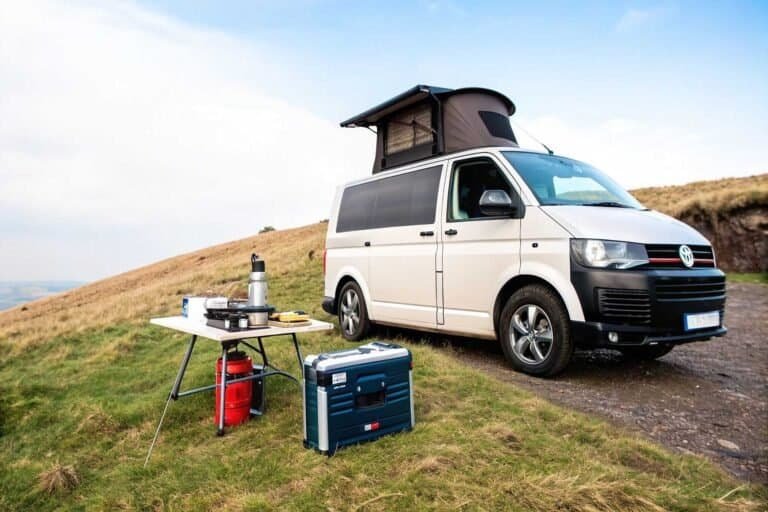
A portable camping grill is an essential bit of kit for any UK vanlifer. It’s the difference between another meal of pasta and the glorious, smoky satisfaction of a proper BBQ. But choosing the right one means wading through a sea of options, balancing weight, fuel type, and precious storage space against how you actually cook and travel.
Choosing Your Ideal Vanlife Grill
Let’s be honest, forget the picture-perfect vanlife photos for a second. The reality of grilling in a UK van often involves cooking sausages in a windy lay-by near the Brecon Beacons, wondering if the rain will hold off. Picking the right grill isn’t about chasing that Instagram fantasy; it’s about making a solid, practical choice for real-world adventures.
At its core, your decision boils down to three main contenders: gas, charcoal, or electric. Each comes with its own set of trade-offs, and what works for one vanlifer might be a total disaster for another.
The Three Main Contenders
Think of this choice like picking the right tool for a job. Gas is your reliable power tool—push-button convenience, fast, and gets the job done with zero fuss. Charcoal is the traditional hand tool; it takes more time, skill, and patience, but the results have an authentic flavour that many believe is the entire point. Then you have electric, the clean, modern option, but it’s only useful if your van’s power system is seriously up to the task.
There is no single “best” grill. It all comes down to what you value most on the road:
- Convenience Seekers: Gas grills are your best friend. They offer instant heat and pinpoint temperature control, perfect for whipping up a quick meal after a long day of driving.
- Flavour Purists: For you, it has to be charcoal. Nothing else delivers that authentic, smoky barbeque taste and the ritual that goes with it.
- Off-Grid Tech Enthusiasts: If you’ve invested in a hefty solar and battery setup, an electric grill integrates seamlessly, giving you a fuel-free way to cook.
Understanding the Market and Materials
The demand for compact cooking gear is absolutely booming. A big part of that growth is driven by the vanlife movement, pushing manufacturers to innovate with clever designs like foldable legs and integrated fuel storage.
This growth means we’re seeing better materials, too. While most grills are made of steel, every gram counts in a van. For those obsessed with shedding weight from their entire cooking setup, looking into options like titanium camping cookware can offer some great ideas for reducing your overall load.
The goal isn’t just to buy a grill. It’s to find a cooking system that slots perfectly into your limited space and unique travel style, whether you’re a weekend wanderer or a full-time road dog. This guide is here to help you find that perfect match.
Gas vs Charcoal vs Electric: The Great Grill Debate
Choosing a fuel type for your van’s grill is a bit like picking an engine. Do you go for the dependable, no-nonsense efficiency of a diesel? Maybe the classic, hands-on experience of a vintage petrol engine? Or perhaps the clean, quiet power of an electric motor? Each choice has its die-hard fans and some very real limitations when you’re living on the road.
Let’s get past the shiny marketing and dive into what it’s actually like to use gas, charcoal, and electric grills in the wild.
H3: Gas Grills: The Convenient Workhorse
For sheer convenience, gas is king. There’s no argument. With a gas-powered portable grill, you get instant, controllable heat with the twist of a knob. Forget waiting for coals to get hot or trying to manage a fire; you can go from parked up to cooking in minutes. After a long day’s drive through the Cairngorms, that’s a massive win.
Here in the UK, you’ll mainly be dealing with two types of gas canisters for portable models:
- Propane: This is your cold-weather friend. It vaporises all the way down to -42°C, making it the reliable choice for year-round UK travel. You’ll usually find it in larger, refillable cylinders.
- Butane: Works a treat in summer but really starts to struggle below 0°C. It often comes in smaller, disposable canisters that are a doddle to pack.
The biggest headache with gas is simply managing the fuel. Running out halfway through cooking a steak is a vanlife rite of passage you’ll want to skip. While those small canisters are easy enough to store, finding a replacement – especially for a specific brand in a remote corner of Wales or Scotland – can be a proper pain. My advice? Always carry a spare.
H3: Charcoal Grills: The Flavour Purist’s Choice
For a lot of us, the whole point of a barbecue is that authentic, smoky flavour that only charcoal can deliver. A charcoal grill gives you this in spades, turning a simple meal into an experience that feels deeply connected to the outdoors. It’s a ritual, and a delicious one at that.
But that authenticity comes with some hefty practical drawbacks for vanlife. First up, the mess. Charcoal is dusty, and figuring out what to do with hot, greasy ashes at a wild camping spot demands a solid “Leave No Trace” plan. You’ll absolutely need a metal bucket or a fireproof bag to pack out the cooled ash safely.
Then there’s the bulk. A bag of briquettes or lumpwood charcoal takes up a surprising amount of precious cupboard space. And finally, the fire risk is a massive concern. Many wild camping areas, and even some campsites, have strict rules against open fires, especially during dry spells. A charcoal grill often falls under that banner.
H3: Electric Grills: The Modern Off-Grid Solution
An electric grill offers the cleanest, simplest cooking experience of the lot. No fuel to buy, no open flames to worry about, and no messy cleanup of ash or grease flare-ups. It sounds perfect, right? Well, its viability hinges entirely on one thing: your van’s electrical system.
Let’s be clear: an electric grill is a power-hungry beast. A typical 1500W grill chugging away for just 20 minutes will gobble up around 500Wh of battery capacity. This means you need a seriously capable setup to handle it:
- A hefty inverter: You’ll need a pure sine wave inverter rated for at least 2000W to handle the grill’s power draw without tripping out.
- Serious battery capacity: A small leisure battery won’t cut it. We’re talking a substantial lithium battery bank (200Ah or more) to avoid completely draining your power.
- A robust charging system: A solid solar panel array is pretty much essential to put that energy back, especially if you plan on grilling regularly.
And if you’re looking for a different take on cooking that also relies on your fuel source but gives you baking and roasting abilities, check out our deep dive on your ultimate guide to portable camping ovens.
The decision between gas, charcoal, and electric isn’t just about how you like your burgers cooked. It’s a strategic choice that ripples through your van’s storage, power management, and even where you can safely and responsibly set up for the night.
H3: In-Depth Comparison of Vanlife Grill Fuel Types
To really get to the heart of it, let’s break down how these fuel types stack up in the real world of vanlife. This isn’t just about flavour; it’s about the practicalities of storage, cost, and what it’s like to use them day in, day out.
| Feature | Gas (Propane/Butane) | Charcoal (Briquettes/Lumpwood) | Electric (Mains/Inverter) |
|---|---|---|---|
| Startup Time | Instant (1-2 minutes) | Slow (15-25 minutes) | Fast (3-5 minutes) |
| Temperature Control | Excellent (Precise knob control) | Poor (Requires skill/vent management) | Excellent (Thermostatic control) |
| Flavour Profile | Clean, minimal added flavour | Rich, smoky, the classic BBQ taste | Clean, similar to an indoor grill |
| Convenience | Very High. Twist knob, cook, turn off. | Low. Messy, long heat-up/cool-down. | Highest. Plug in, cook, wipe clean. |
| Fuel Storage | Moderate. Canisters can be bulky. | Bulky & Messy. Bags take up space. | None. Uses your van’s battery bank. |
| Running Cost | Moderate. Canister swaps add up. | Low. A bag of charcoal is cheap. | Very Low (if using solar). |
| Wild Camping Suitability | Good. Low fire risk, widely accepted. | Poor. Often banned due to fire risk. | Excellent. No flames, silent operation. |
| Cleanup | Easy. Grates need cleaning, no ash. | Difficult. Ash disposal is a major hassle. | Very Easy. Often non-stick surfaces. |
| Initial Cost (Grill) | £50 – £200 | £30 – £150 | £70 – £250 (plus £1000s for power setup) |
| Best For… | The all-rounder who values speed and ease. | The purist who prioritises flavour over all else. | The tech-heavy van with a powerful electrical system. |
Ultimately, the right fuel comes down to your personal vanlife style. Gas offers the best balance for most people, but if you have a monster electrical system, the sheer simplicity of an electric grill is hard to beat. And for those special occasions, nothing quite matches the ritual and flavour of charcoal.
While you’re weighing up gas, charcoal, and electric, don’t completely overlook pellet grills. They offer a unique smoky flavour by burning compressed wood pellets. For a deep dive into how they work, check out The Ultimate Pellet BBQ Grill Guide. It’s another interesting option that blends the flavour of a wood fire with the convenience of an automated system.
How to Pack and Store Your Grill on the Road
Even the most brilliant portable grill can quickly turn into a greasy, rattling nightmare if you haven’t figured out how to live with it. In a campervan, smart packing isn’t just about being tidy; it’s essential for a peaceful life on the road.
Before you even think about clicking “buy,” grab a tape measure. The difference between a grill that slots perfectly into your van’s garage and one that becomes a permanent trip hazard is often just a few centimetres. You need to think about the real dimensions, not just the polished marketing photos.
Sizing Up Your Space
Every van layout is a unique puzzle, so the first step is to find a dedicated spot for your grill. Will it live in an under-seat compartment, a slide-out drawer, or a purpose-built locker? Meticulously measure the height, width, and depth of that space.
And don’t forget, you need to account for more than just the grill itself. You’ll also need room for its fuel—be it a gas canister or a bag of charcoal—and all the essential tools like tongs, a scraper, and a cleaning brush. Once you have those numbers, compare them against the packed-down dimensions of any grill you’re considering.
Trust me, a grill that’s a tight squeeze is a grill you’ll eventually stop using. Prioritise a model that fits comfortably with a bit of wiggle room. It makes getting it out and, more importantly, putting it away so much easier.
Securing the Load for Winding Roads
The last thing you want to hear while navigating a tight corner on a single-track road in the Peak District is your grill sliding around in the back. An unsecured metal box isn’t just noisy; it’s a genuine safety risk that can damage your van’s interior or itself.
Fortunately, locking it down is pretty straightforward:
- Heavy-Duty Carry Bags: Many grills come with their own bag, but they’re often flimsy. Look for aftermarket padded bags for some proper protection against bumps and scrapes.
- Bungee Cords and Straps: Sometimes the simplest method is the best. Use bungee cords or cam buckle straps to lash the grill to fixed anchor points in your van.
- Custom Mounts: For a more permanent solution, you can build custom brackets or a dedicated slide-out tray. This not only keeps the grill secure but makes accessing it a breeze.
Your goal is simple: make the grill a silent, motionless passenger. A well-secured grill is a safe grill, ensuring it arrives at your destination ready for action, not in pieces.
Tackling the Post-Cook Mess
Here’s the real challenge of vanlife grilling: what on earth do you do with a warm, greasy grill when it’s time to hit the road? You can’t just leave it on the pavement to cool for hours, and you certainly don’t want old cooking smells wafting through your living space.
This is where having a system comes in. First, get your low-water cleaning routine dialled in. Scrape the grates while they’re still warm to get the worst of the grime off. A quick wipe-down with a designated cloth and a small spray bottle of diluted, eco-friendly cleaner is often all you need.
Next, you need a storage solution that contains both the mess and the smell. A heavy-duty, zip-up carry bag is your first line of defence. For an extra layer of protection, especially for charcoal grills which can hold onto smells, think about putting the bagged grill inside a ventilated plastic storage box. This combo traps any residual grease and allows a bit of air to circulate, stopping those stale smells from building up in your van.
Grilling Safely and Responsibly in the UK
Cooking up a storm on a portable grill is one of the best parts of vanlife. But getting it wrong doesn’t just mean a burnt sausage. It can mean a scorched patch of irreplaceable nature, a damaged van, or something far, far worse.
Think of grilling safety like your pre-drive checks. It’s a quick, non-negotiable routine that you do every single time, so every cookout is memorable for the right reasons. Rushing this bit is how disasters happen.
Fire Safety Essentials
Your first and only priority is fire prevention. It doesn’t matter how small your grill is; it’s a box of intense, concentrated heat and it demands respect.
Always, always set up your grill on a flat, level, and non-flammable surface. A patch of gravel, a paving slab, or bare earth is perfect. Never, ever put it on dry grass, especially in summer. Places like the New Forest or the Cairngorms can go up like a tinderbox from a single stray ember.
Give yourself some space. A good rule of thumb is to keep the grill at least three metres away from your van, your awning, any tents, trees, or low-hanging branches. This buffer zone stops heat from melting your gear and gives you room to react if things get lively.
Never leave a lit grill unattended. Even for a second. A sudden gust of wind can come out of nowhere, turning a controlled cook into a serious hazard. Stay with your grill from the moment it’s lit until it’s stone cold.
The Golden Rule of Ventilation
When that classic British drizzle starts, it’s tempting to pull the grill under your awning. That’s usually fine if the awning is fully open and air is circulating freely. But there is one rule you can never, ever break: never use a gas or charcoal grill inside your van.
Burning fuel—whether it’s gas, charcoal, or wood pellets—produces carbon monoxide (CO). This is the silent killer. It’s colourless, it’s odourless, and in a sealed box like a van, CO levels can become lethal in minutes. Your van’s CO detector is a last line of defence, not an invitation to take risks.
- Gas and Charcoal Grills: These are for outdoor use only. Full stop. The risk of CO poisoning is just too high to mess with.
- Electric Grills: The only type that’s safe to use indoors, and even then, you need proper ventilation running (like a roof fan and a cracked window) to get rid of the cooking fumes.
Leave No Trace Ethics
Being a responsible vanlifer means leaving a spot better than you found it. It’s the core of the “Leave No Trace” ethos and it’s what keeps our wild places beautiful and accessible. Your grill etiquette is a huge part of this.
Before you even think about lighting up, you need to know the local rules. Fire regulations change dramatically depending on where you are and what time of year it is. A remote spot in the Scottish Highlands has different rules to a popular lay-by in a National Park. For a proper breakdown, our guide to wild camping Scotland rules has the specific info you need.
Disposing of your waste properly is absolutely critical.
- Ash Disposal: For charcoal grills, the ash has to be completely, totally cold before you do anything with it. The best way is to douse it with water, stir it, and then pack it out in a metal tin or a dedicated fireproof bag. Never just dump hot or even warm ashes on the ground.
- Food Scraps: Pack out every last scrap. Leaving bits of food behind attracts wildlife, gets them used to humans, and causes problems for them and the next person who camps there.
- Fuel Canisters: Empty gas canisters don’t belong in the wild. Take them with you to a proper recycling point, usually found at household waste recycling centres or larger official campsites.
How you behave reflects on all of us. By grilling safely and cleaning up meticulously, you’re being a good steward for the outdoors, making sure these incredible places stay pristine and open for everyone to enjoy.
Keeping Your Grill Maintained and Road-Ready
Life on the road is tough on your gear. The constant vibration from rattling down B-roads, the persistent damp of a UK morning, and getting packed and unpacked all the time really takes its toll. Your portable camping grill is no exception, and a bit of preventative care will make sure it fires up reliably every time you fancy a barbie.
Think of grill maintenance like checking your van’s oil and tyres. It’s a simple, regular habit that stops major breakdowns from ruining a trip. A consistent routine keeps rust at bay, stops grease building up into a fire hazard, and makes sure your investment lasts for many seasons of adventure.
Your Regular Cleaning Routine
The best time to clean your grill is right after you’ve finished cooking, while it’s still a bit warm. This is when food residue and grease come off easily with minimal water—a precious resource for any vanlifer.
- Scrape the Grates: Get a stiff wire brush and give the cooking grates a good scrub to get rid of any stuck-on food.
- Wipe Down Surfaces: Use a damp cloth with a tiny bit of eco-friendly, biodegradable soap to wipe down the inside and outside of the grill.
- Empty the Grease Trap: Always, always empty and clean the grease collector. You do not want that stuff spilling in your van during transit. Trust me.
This quick, five-minute routine after each cookout is what stops grime from becoming a baked-on, permanent feature of your grill.
Following this clean, inspect, and store process religiously after every use is the secret to a portable grill that won’t let you down.
Pre-Trip and Deep-Clean Inspections
Before you head out on a trip, and at least a couple of times a year, it’s worth giving your portable camping grill a more thorough once-over. This is where you can catch small issues before they become trip-ruining problems.
For gas grills, the most critical check is for fuel leaks. The soapy water trick is an oldie but a goodie: just apply a solution of soapy water to the gas hose and all its connections. If you see bubbles forming when the gas is on, you’ve got a leak that needs sorting immediately.
A pre-trip inspection isn’t just about cleaning; it’s a crucial safety check. A cracked gas hose or a frayed electrical cord is a serious hazard that’s easy to spot and fix before you hit the road.
For electric models, give the power cord and plug a proper visual inspection for any signs of fraying or damage. These grills can be a significant load on your van’s electrical system, so making sure the connections are sound is vital. Understanding the limits of your power setup is key; for more on that, you can find detailed guides about the best campervan batteries and inverter setup to make sure you’ve got enough juice.
When it’s time to put the grill away for the off-season, give it a proper deep clean. Disassemble what you can, soak the grates, and scrub every corner to get rid of all traces of grease and carbon. The most important step? Make sure it’s 100% dry before storing it somewhere cool and dry, otherwise, you’ll be greeting a rusty mess in the spring.
Right, Let’s Nail Down Your Perfect Vanlife Grill
Choosing a portable grill can feel like a massive decision. Get it right, and you’ve got a trusty companion for countless road trip meals. Get it wrong, and you’re stuck with a bulky, frustrating lump of metal you resent having to store.
This isn’t about picking the fanciest model. It’s about being brutally honest with yourself about your van, your travel style, and how you actually cook. Run through these questions before you part with any cash, and you’ll end up with a grill that genuinely fits your life on the road.
Space and Storage: The Brutal Reality
First things first: where is this thing actually going to live? In a van, space is everything, and every single centimetre is precious.
- How much room can I realistically give up? Forget the brochure photos for a second. Get out your tape measure and check the actual spot you plan to store it—whether that’s in the garage, a locker under the bed, or a slide-out drawer. Compare that to the grill’s packed-down dimensions.
- Where will the fuel and tools go? It’s not just the grill. You need a secure, rattle-free home for a gas canister, a bag of charcoal, or your tongs and spatula. Factor that space in, too.
- What’s my weight limit? Think about lugging it out after a long drive or a hike. A heavy grill becomes a real pain to get in and out of the van day after day. Be honest about what you’re willing to lift repeatedly.
Power and Fuel: The On-the-Road Logistics
Your fuel choice dictates your daily routine far more than you might think. This is less about smoky flavour and more about the practical reality of keeping the thing running when you’re parked up in the middle of nowhere.
Your grill is just another system in your van that needs managing. A grill with no fuel is just dead weight, so your ability to find more on the road is as important as the grill itself.
- Is my van’s electrical system genuinely up for an electric grill? This is a hard yes or no. If you don’t have a hefty inverter (we’re talking 2000W minimum) and a big lithium battery bank to back it up, just take electric off the table now.
- How easily can I resupply my fuel? Is it easy to grab replacement gas canisters in the Scottish Highlands? Are you happy to dedicate precious, dry space to a bulky bag of charcoal?
- What’s my plan for storing fuel safely? Propane really needs a proper gas locker. Charcoal has to be kept bone dry, or it’s useless. Think it through.
Cooking and Cleaning: Your Tolerance for Faff
Finally, be real about how you cook and, more importantly, how much you can be bothered to clean up afterwards.
- Do I value speed over flavour? If you want to be cooking two minutes after pulling up, you need gas or electric. If that authentic, smoky barbecue flavour is the whole reason you’re doing this, then it has to be charcoal.
- What’s my tolerance for mess and maintenance? Charcoal is messy. You’ve got ash to deal with. Gas is cleaner to cook with but has more parts that might need maintaining down the line. Electric is by far the easiest to just wipe down and put away.
Common Questions We Get Asked About Vanlife Grills
When you’re out there on the road, trying to figure out the best way to cook up a decent meal, the same practical questions always pop up. Here are the most common ones we hear from fellow UK vanlifers, with some straight-talking answers based on what actually works.
What’s the Best Portable Grill for High Winds?
High wind is the eternal enemy of the campsite cook, especially if you’re parked up on the coast or halfway up a mountain in Scotland. Let’s be honest, that’s most of the UK.
Gas grills with proper built-in windshields and decent burners are your best bet. Their enclosed designs do a decent job of protecting the flame, giving you a fighting chance at consistent heat.
Charcoal grills, on the other hand, are a nightmare in the wind. A strong gust can either snuff out your coals completely or, worse, whip them into a dangerously hot frenzy. It’s a battle you’ll rarely win.
Can I Use My Grill Under an Awning?
You can, but you need to be smart about it. Firing up a gas or electric grill under an awning is generally okay, but only if the awning is fully open with loads of airflow. Never, ever use any kind of grill in a fully enclosed ‘safari room’ style awning or, god forbid, a tent.
And it should go without saying, but I’ll say it anyway: never use a charcoal or gas grill inside your van. The risk of carbon monoxide poisoning is incredibly high and genuinely fatal. Don’t be a statistic.
Safety First: A working carbon monoxide detector in your van is essential, but think of it as a last line of defence, not a permission slip to get careless. Proper ventilation isn’t a suggestion; it’s non-negotiable when you’re cooking with fuel.
How Do I Get Rid of Used Gas Canisters?
Getting rid of empty gas canisters the right way is a core part of being a responsible vanlifer. Most household waste recycling centres (the local tip) have a specific section for them. Some of the bigger campsites and outdoor shops like Go Outdoors also run recycling schemes.
Whatever you do, never try to puncture a canister yourself, and never just leave them at a wild camping spot. That’s just not on. Pack it out with you and find a proper disposal point.
Is an Electric Grill a Realistic Option for Vanlife?
An electric grill can be an absolute dream – clean, convenient, and no faffing with fuel. But (and it’s a big but), it’s only a realistic option if your van’s electrical system is an absolute beast.
To run a typical 1500W electric grill, you’re not just plugging it in and hoping for the best. You’ll need a seriously robust setup:
- A pure sine wave inverter of at least 2000W.
- A hefty lithium battery bank, ideally 200Ah or more.
- A reliable way to pump that power back in, like a decent-sized solar array.
Without that kind of electrical muscle, an electric grill will drain your batteries in the blink of an eye, leaving you with a half-cooked sausage and no lights. It’s a great goal for a future system upgrade, but it requires a serious upfront investment.
At The Feral Way, we provide road-tested advice to help you build a van that works for you. From detailed electrical guides to practical gear reviews, find the no-nonsense information you need at The Feral Way.