
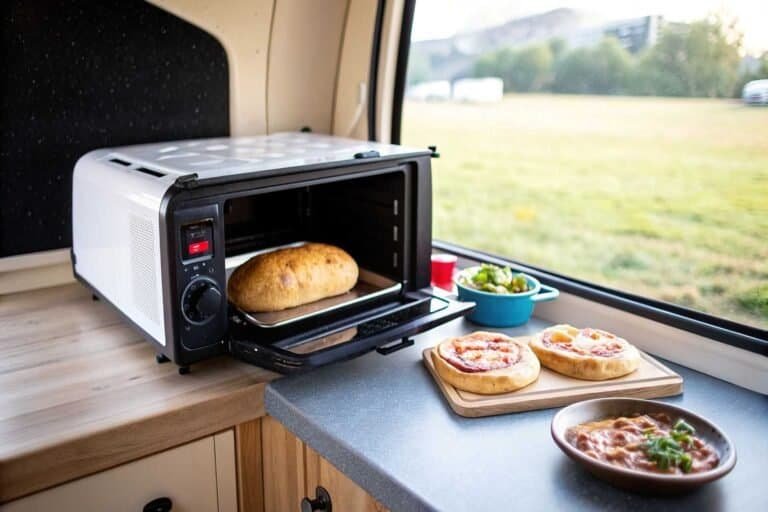
Let’s be honest, a portable camping oven is the bit of kit that properly turns a campervan from a glorified tent on wheels into a genuine home. It’s the difference between merely surviving on the road and actually living well. This isn’t just about baking sourdough in the Highlands (though you absolutely can); it’s about the freedom to cook real food, far from the nearest kitchen. Investing in Portable Camping Ovens can elevate your cooking experience significantly.
Why a Portable Oven Is a Van Life Game Changer
Picture this: you’ve just finished a brutal hike along the Pembrokeshire coast. It’s blowing a gale outside, but inside your van, the smell of a properly roasted chicken is filling the air. That’s the reality an oven gives you. A double hob is brilliant for a quick fry-up or boiling pasta, but an oven completely changes your relationship with food on the road.
Suddenly, your van isn’t just a place to sleep; it’s a self-sufficient mobile kitchen. This isn’t just about comfort, either. It’s about practicality, health, and your wallet. Living off service station sandwiches or pub dinners gets old (and expensive) fast. An oven smashes that cycle, giving you the power to cook diverse, healthy, and cheap meals wherever you’ve parked up for the night.
More Than Just a Luxury
I’ve seen it countless times. People start their van build thinking an oven is an optional extra, a bit of a indulgence. Six months later, it’s the piece of equipment they can’t live without. Having the ability to cook a proper meal—just like you would at home—brings a sense of normality and well-being that’s absolutely vital for long-term travel.
Think about what it really adds to your day-to-day life:
- A Better Diet: You’re no longer stuck with fried food and one-pot pasta. Roasting a tray of vegetables, baking a piece of fish, or even making a shepherd’s pie becomes a simple weeknight option. Your body will thank you for it.
- Serious Cost Savings: The price of daily café lunches and pub dinners is genuinely shocking when you add it up. An oven lets you hit the supermarkets, batch cook for the week ahead, and slash your food budget.
- Real Culinary Freedom: Fancy a pizza? Craving a hot croissant with your morning coffee? Want to bake a cake for a mate’s birthday on the road? All of it is suddenly on the menu. This is what makes van life feel less like “camping” and more like actual living.
A portable oven isn’t just another appliance; it’s a statement of self-sufficiency. It says you’re serious about living well on the road, not just making do. It empowers you to eat properly, explore further, and not compromise on your health or your budget.
The Heart of Your Mobile Home
When it comes down to it, adding a portable camping oven is about improving your quality of life. It’s the difference between just getting by and truly thriving. On a miserable, rainy afternoon in the Lake District, the warmth and smell of something baking can be a massive morale boost.
As you plan your van build, don’t think of the oven as just another gadget to squeeze in. Think of it as the heart of your new home on wheels.
Choosing Your Fuel Source: The Four Main Oven Types
Picking the right fuel for your portable camping oven is probably the most important decision you’ll make. This isn’t just about what cooks the best pizza; it’s about what genuinely works with your van’s setup, your travel style, and the kind of adventures you have planned. This choice ripples through everything – from the complexity and cost of your build to where you can cook and how self-sufficient you can truly be.
Let’s break down the four main contenders you’ll see on the UK van life scene: dependable gas, power-hungry electric, rustic wood-burning, and the ultra-compact canister-fuelled models. Each has some serious selling points, but also some significant drawbacks you need to weigh up before you part with your cash.
To help you decide which fuel is right for you, let’s put them head-to-head.
Portable Camping Oven Fuel Type Comparison for UK Vanlife
This table cuts straight to the chase, comparing the four main oven types on the factors that actually matter when you’re living, working, and cooking in a van in the UK.
| Fuel Type | Pros | Cons | Best For | Typical UK Cost |
|---|---|---|---|---|
| Gas (LPG) | Instant, controllable heat; mimics a home oven; fuel is widely available (Calor, Flogas). | Requires certified installation; takes up space for gas locker; ventilation is critical. | Full-timers and long-term travellers who want a reliable, home-style cooking experience. | £250 – £600+ |
| Electric | Simple to use (plug & play); no combustion fumes indoors; very portable countertop models. | Huge power draw (10-25 amps for 12V); needs a massive battery bank and solar setup or mains hook-up. | Vanlifers with monster electrical systems or those who mostly stay on campsites with hook-ups. | £80 – £250 |
| Wood | Zero fuel cost (forage for twigs); amazing flavour; completely off-grid. | Outdoor use only; produces smoke (not stealthy); requires constant fire management. | Off-grid purists, pizza lovers, and those who spend most of their time in remote, rural spots. | £150 – £400 |
| Canister | Extremely lightweight and portable; simple to operate; smallest footprint. | Fuel canisters are expensive and don’t last long; not sustainable for regular cooking; creates waste. | Weekend warriors, festival-goers, or as a backup for very occasional use. | £50 – £120 |
As you can see, there’s no single “best” option. The right choice is the one that fits your van, your budget, and your travel plans. Now, let’s dig into the details of each.
Gas Ovens: The Van Life Standard
Gas, usually LPG (Liquefied Petroleum Gas), is the undisputed champion of the campervan kitchen, and for good reason. It gives you instant, controllable heat that feels just like cooking at home, making it incredibly reliable for everything from baking bread to getting a Sunday roast on the go.
These ovens connect to refillable gas bottles (like Calor or Flogas), which you can find at petrol stations, campsites, and hardware stores all over the UK and Europe. That availability makes them a perfect fit for long-term travellers who need a fuel source they can depend on, wherever they end up.
A gas oven offers convenience and cooking control that’s hard to beat. It’s the closest you’ll get to a home kitchen experience, providing consistent heat that doesn’t care what your battery levels are or what the weather’s doing.
The main drawback? The installation. A built-in gas oven isn’t a casual weekend job. It needs careful planning for ventilation and, crucially, a certified gas installation to be safe and insurable. This adds a layer of cost and complexity to your van build that you need to factor in from the start.
Electric Ovens: Power and Portability
Electric ovens are a tempting, gas-free alternative. You can find everything from small 12V models that run straight from your leisure batteries to more powerful 240V units that need a mains hook-up or a chunky inverter. Their biggest appeal is simplicity—no gas lines, no combustion fumes, just plug it in and you’re away.
But that convenience comes at a steep electrical price. A typical 12V oven can pull a massive 10-25 amps, which is a punishing drain on most leisure battery systems. Unless you have an epic solar setup (we’re talking 300W or more) and a hefty battery bank (200Ah minimum), using one for more than a few minutes can cripple your power supply. For a real-world look at a popular countertop model, check out this unbiased review of a Nutrichef Halogen Oven Countertop Air Fryer to see if it suits your setup.
Wood-Burning Ovens: The Off-Grid Dream
For the ultimate in off-grid cool and self-sufficiency, nothing beats a wood-burning oven. These models, often designed for slinging pizzas but capable of much more, run on scavenged twigs, branches, or wood pellets. That means zero fuel costs and the undeniable romance of cooking over a real fire.
The biggest downside is practicality. They produce smoke, have to be used outdoors, and are completely unsuitable for stealth camping in towns or cities. They also demand more of your attention during cooking to manage the fire and keep the temperature steady.
Canister Ovens: The Ultra-Light Option
Finally, we have the ovens designed to run on the same small, disposable gas canisters you’d use for a backpacking stove. These are by far the most portable and lightweight options out there, making them a great choice for weekend trips or for vans with seriously limited space.
Their major weakness is fuel consumption and cost. Those little canisters just don’t last long when powering an oven, and buying replacements all the time gets expensive and inconvenient for anything more than a short holiday. They’re a brilliant starting point, but they aren’t a sustainable solution for full-time van life.
Choosing a portable camping oven for your van isn’t like grabbing one for a weekend camping trip. This is a totally different ball game.
Your van is its own little ecosystem, with real-world limits on space, weight, and power. Get this decision wrong, and you’re stuck with an expensive, oversized paperweight that either doesn’t fit, kills your batteries, or worse, puts your safety at risk.
You need to think like a van builder, not just a camper. Every single thing you bring on board has to earn its keep. This goes double for an appliance that brings heat and fuel into a small, moving space. Let’s break down the five most important things you need to get right, looking at them through the lens of real-life van scenarios.
Size and Weight: The Payload Puzzle
Every van has a Maximum Authorised Mass (MAM), and trust me, it’s shockingly easy to go over it. An oven might seem like a small thing, but its weight, added to everything else, stacks up fast. A chunky, steel-cased gas oven can weigh over 25kg, which is a serious bite out of your payload.
Think of it this way: a standard Ford Transit Custom has a payload of around 1,000kg. Sounds like a lot, right? But once you’ve built in your insulation, cladding, bed, water tanks, and that heavy leisure battery system, your available payload is a shadow of its former self. Choosing a lighter oven—maybe a 10-15kg model—could be the difference that lets you bring that extra case of beer or your climbing gear.
Before you even think about clicking “buy,” get out the tape measure.
- Measure your spot: Check the height, width, and depth, but then add at least 5-10cm of clearance on all sides. That’s not optional; it’s essential for ventilation and stopping things from getting dangerously hot.
- Check the door swing: Can you actually open the oven door fully without it smacking into your bed or a bench? It’s a simple check that’s surprisingly easy to forget.
- Plan for the extras: Where will your baking trays and racks live when you’re bouncing down a B-road? They need a secure, rattle-free home.
Fuel and Power Consumption
Your oven’s appetite for fuel or electricity has a direct impact on how long you can stay off-grid. A gas oven sipping from a 6kg propane bottle can keep you cooking for weeks, giving you incredible freedom. On the flip side, a 12V electric oven pulling 15 amps could flatten a 100Ah leisure battery in just a couple of hours if you’re not actively making power.
This choice is fundamental. It’s tied directly to your van’s entire electrical philosophy. An electric model only makes sense if you’ve already gone all-in on a massive solar and battery setup. For most UK van builds, especially if you love wild camping, a gas portable camping oven gives you a much more practical and reliable balance of power to performance.
Ventilation and Safety
This is the one area where you absolutely cannot cut corners. Sticking any fuel-burning appliance inside a sealed metal box creates a real risk of carbon monoxide (CO) buildup. Proper ventilation isn’t just a good idea; it’s a life-saving necessity.
A gas oven must be installed with a dedicated flue or positioned where you can guarantee brilliant airflow by opening a window and a roof vent every single time. It’s also critical to have a working CO alarm, and to know where to place it. For this reason, many vanlifers go for countertop ovens—you can just use them near the open sliding door for maximum safety. The sheer convenience of a microwave is tempting, but it just can’t offer the same cooking versatility as a proper oven; our guide on campervan microwaves dives deeper into that alternative.
Mounting and Durability
Your van is a moving vehicle, and let’s be honest, UK roads are not always the smoothest. An oven that isn’t bolted down properly can become a seriously dangerous projectile during a sudden stop or on a bumpy track.
A secure mounting system isn’t just about stopping rattles; it’s about ensuring fuel lines don’t get stressed and the oven itself doesn’t shift, creating a fire hazard. Look for models with built-in mounting points or plan to build a sturdy, custom housing.
The oven also needs to be tough enough to handle constant vibration. You’re looking for robust construction, secure latches, and as few rattling parts as possible. The popularity of portable camping ovens in the UK exploded after the lockdowns, with outdoor activity participation jumping 12% nationally. The amateur segment dominates global sales, but in the UK, it’s even higher at 65%, as budget-conscious travellers favour robust models that can handle the realities of the road.
Safe Installation and Maintenance in Your Campervan
Let’s be blunt: fitting a heat-producing appliance into a small, moving vehicle filled with wood and fabric is serious business. Safety isn’t just a priority; it’s the only priority. A poorly installed portable oven is a massive fire and carbon monoxide risk, but with a bit of careful planning and the right knowledge, you can build a mobile kitchen that’s both brilliant and completely safe.
This isn’t about just ticking boxes. It’s about genuinely understanding what keeps you safe on the road. From managing scorching heat to making sure gas lines are bombproof, every step is crucial. Get this right from day one, and you’ll have the peace of mind to focus on the joy of cooking, not worrying about what could go wrong.
Creating a Safe Cooking Zone
The first rule of oven club is to respect the heat. These things get incredibly hot, and the surfaces around them need to be protected from that constant radiant heat to stop them scorching or, worst-case scenario, catching fire. It’s all about creating a buffer zone with non-combustible materials.
Think of it as building a little fireproof cocoon for your oven. This is absolutely not the place to cut corners.
- Heat Shielding: Use proper fire-resistant materials on the walls and countertop around the oven. Things like cement board, sheet metal (aluminium or steel), or even ceramic tiles work a treat. This creates a solid barrier between the hot oven and your van’s timber structure.
- Air Gaps: An air gap is your best friend for getting rid of heat. Always leave a space of at least 5-10cm between the oven and any surrounding surfaces, and that includes the heat shielding itself. This gap lets air circulate and carry that intense heat away safely.
Ensuring Proper Ventilation
Any appliance that burns fuel—whether it’s gas or wood—sucks in oxygen and pumps out waste gases. One of those gases is the silent killer: carbon monoxide (CO). Proper ventilation isn’t a “nice-to-have”; it’s non-negotiable for flushing those gases out and pulling fresh air in.
Your van is a tiny, enclosed space. Without a clear path for gases to escape, a portable oven can quickly turn a cosy night into a life-threatening situation. Always prioritise airflow over everything else.
To get this right, you need a two-pronged attack. First, install a reliable carbon monoxide alarm near where you sleep. Second, get into a solid routine: every single time you cook, open a window and a roof vent to create a cross-breeze. This simple habit is one of the most important safety procedures you can follow.
Secure Mounting for a Life on the Road
Your van is going to rattle down country lanes and brake suddenly in traffic. An unsecured oven can easily become a hot, heavy projectile. You absolutely have to fasten your appliance down properly to stop it from shifting, which could strain gas or electrical lines and create a serious hazard.
Use heavy-duty brackets and bolts to fix the oven to a solid part of your van’s structure, like the floor or a reinforced cabinet. Check it’s level and make sure all connections have enough slack to absorb vibrations without being pulled tight.
Regular Maintenance Checks
Routine maintenance is how you catch small issues before they become massive problems. I’d recommend creating a simple checklist to run through before each big trip. This little investment of time is crucial for long-term safety.
Your Pre-Trip Safety Checklist:
- Gas Leak Test (LPG Ovens): Mix a bit of washing-up liquid with water in a cup. With the gas on, use a small brush to dab the soapy water onto all your gas connections and fittings. If you see bubbles forming, you have a leak that needs sorting immediately. Turn the gas off and fix it.
- Inspect Fuel Lines: Have a good look at all gas hoses for any signs of cracking, brittleness, or abrasion. If they look worn out, replace them. Don’t risk it.
- Check Electrical Connections (12V Ovens): Make sure all wiring is secure, properly insulated, and shows no signs of melting or scorching. For those with bigger electrical systems, knowing how much power your oven draws is key. You can learn more about sizing your leisure battery to ensure your setup can handle the load without melting.
- Test Your Alarms: Press the test button on your smoke and carbon monoxide alarms. Make sure they beep loudly and have fresh batteries.
Right then, your portable oven is in, the gas is hooked up, and you’ve done all the sensible safety checks. Now for the good bit: turning your van into a roving bakery, pizzeria, and Sunday roast kitchen. This is your ticket to a world of cooking that a simple two-burner hob just can’t touch, transforming every meal into a proper highlight of the trip.
Honestly, it’s about more than just food. It’s about comfort, saving a bit of cash, and making your van feel like an actual home. You can finally stop relying on endless tins of soup or forking out for expensive pub lunches. With an oven, you can bake fresh bread for breakfast, roast a tray of veg for a healthy dinner, or even knock out a batch of warm cookies after a long, muddy hike. It’s a game-changer.
Simple One-Pan Van Life Roasts
The classic one-pan roast feels like it was invented for van life. It keeps the washing-up to a minimum and fills your tiny home with incredible smells. The real trick is just managing your timings and chucking everything into a single roasting tin.
Start by tossing some chopped root veg—potatoes, carrots, parsnips—in a bit of oil and seasoning. They need the longest, so get them in the oven first. After about 20-25 minutes, add your protein. Chicken thighs, sausages, or a block of seasoned tofu all work brilliantly. Roast it all together until everything’s cooked through and smelling amazing.
The Joy of Freshly Baked Goods
Waking up to the smell of fresh baking is one of the ultimate van life luxuries. It’s a simple pleasure that makes any roadside stop feel a bit special.
- Simple Bread Loaves: You don’t need a fancy bread maker. A basic no-knead dough can be mixed the night before and baked first thing for proper fresh bread with your morning brew.
- Morning Pastries: Shop-bought puff pastry is your best friend here. Use it to make quick croissants, cinnamon swirls, or little fruit tarts for a dead-easy treat.
- Campsite Cookies: A pre-made cookie dough mix means you’re only 15 minutes away from warm, gooey cookies whenever the mood strikes.
An oven turns your van into a self-sufficient haven. It allows you to create nutritious, affordable, and deeply satisfying meals, proving that life on the road doesn’t mean compromising on good food.
Campsite Pizzas Made Easy
Making pizza in your van oven is a rite of passage for any van owner. It’s a great social meal, it’s fun, and it’s far easier than you might think. While those fancy outdoor pizza ovens are fantastic, a standard gas oven can still produce excellent results.
Use pre-made pizza bases to save yourself the faff and the space. Get your oven as hot as it will go, lash on some tomato puree, mozzarella, and your favourite toppings, and bake until the cheese is bubbling and the crust is crisp. It’s the perfect meal for sharing with mates at a campsite. For a bit more inspiration, have a look at our guide to simple recipes that actually work on the road.
The UK’s camping market, which includes these essential bits of kit, is absolutely thriving. Camping participation shot up by over 20% between 2020 and 2023, with over 4.5 million of us now regularly getting outdoors. For van dwellers, a portable oven isn’t just a gadget; it’s a crucial tool for the self-sufficiency you need for proper wild camping.
Right then. Let’s talk about the less glamorous side of cooking up a storm in your van: staying on the right side of the law and not being a nuisance. Cooking a great meal is one thing, but doing it responsibly is what protects the beautiful UK landscapes we all want to explore.
Wild camping sits in a bit of a legal grey area across much of the UK. The freedom we have is fragile, and it relies on every single one of us acting like a custodian of the countryside. It’s all about embracing that ‘Leave No Trace’ philosophy, which boils down to two things when you’re cooking: fire risk and discretion.
Let’s be honest, in England and Wales, wild camping without the landowner’s permission is technically trespassing. The last thing you want to do is draw attention to yourself with open flames or the smell of sizzling bacon wafting across the valley. Scotland’s access rights are more relaxed, but their fire safety rules are incredibly strict, especially during a dry spell.
Getting to Grips with Fire Rules and Local Bylaws
The rules around cooking outdoors can change dramatically from one car park to the next. National Parks, like the Peak District and Dartmoor, often have their own specific bylaws that can ban open fires and even barbecues during high-risk periods. Before you even think about lighting anything, your first job is to check the local authority or National Park website. Seriously, just do it.
Here’s the golden rule: your cooking should never, ever leave a mark. A portable gas oven used discreetly inside your van is almost always your safest and most respectful bet. That brilliant wood-burning oven? It needs to be used with extreme caution, well away from dry grass and trees, and never where local rules forbid it.
The Whole Gas Safe Certificate Thing
Now, if your van has a fixed gas installation—I’m talking about properly plumbed-in copper pipes running from a gas locker to your oven or hob—you’re stepping into a different league of rules.
For your own personal use, a Gas Safe certificate isn’t a legal requirement. But for your own safety and peace of mind, getting the system checked and signed off by a Gas Safe registered engineer is one of the smartest things you can do.
This certificate goes from “highly recommended” to “absolutely essential” in two key situations:
- Selling Your Van: A valid gas safety certificate is a massive selling point. It screams “this was done properly” to potential buyers and can genuinely increase the value of your van. It removes a huge chunk of doubt for them.
- Renting Out Your Van: The moment you rent your campervan out, you legally become a landlord. That means you are required by law to have an annual Gas Safety Certificate to ensure your renters are safe. No certificate, no rental—it’s that simple.
At the end of the day, using your camping oven responsibly just comes down to a bit of common sense and respect. Understand the local rules, keep a low profile, and you can cook with confidence, knowing you’re helping to keep the wild places we love open and welcoming for everyone.
Your Portable Camping Oven Questions Answered
When you’re elbows-deep in a van build, the questions come thick and fast. Once you get to the kitchen, we see the same queries about ovens pop up time and time again. Let’s get them sorted with some straight, no-nonsense answers from someone who’s been there.
Getting these details right from the start can be the difference between a mobile kitchen that just works and one that’s a constant source of frustration.
Is a Double Hob Enough, or Do I Really Need an Oven?
A hob is non-negotiable. You need it for a morning brew, a quick pasta dish, or frying up some bacon. But an oven? That’s what turns your van from a weekend camper into a proper home on wheels. It opens up a whole new world of cooking: baking fresh bread, roasting vegetables, even making a proper Sunday roast.
Honestly, it completely changes how you eat on the road, making it healthier, cheaper, and a hell of a lot more interesting.
For short trips, you’ll be fine with just a hob. But if you’re planning on spending any serious amount of time in your van, a portable camping oven is a genuine game-changer. The improvement to your quality of life is massive.
What Are the Main Safety Checks for a Gas Oven?
Safety first, always. Before any big trip, do a quick soapy water test on all your gas connections. Just mix a bit of washing-up liquid with water and dab it on every joint. If you see bubbles forming, you’ve got a leak that needs fixing immediately. Don’t mess about with gas.
Next, check your carbon monoxide alarm. Make sure the batteries are fresh and the test button works. And the most important rule of all: always cook with a window or roof vent cracked open. It’s a tiny space, and that ventilation is crucial to stop any fumes from building up.
Look, your oven is a tool for freedom, not a source of anxiety. Get into the habit of these simple checks. It takes two minutes and gives you total peace of mind, letting you cook with confidence knowing your setup is safe.
How Much Power Does a 12V Oven Actually Use?
A 12V electric oven is an absolute beast when it comes to power. We’re talking a draw of between 10 to 25 amps while it’s running. To put that in perspective, using a 15-amp oven for just 30 minutes will suck around 7.5 Amp-hours (Ah) straight out of your leisure battery.
This makes them a realistic option only for vans with seriously beefy electrical systems—think 200Ah of lithium batteries as a bare minimum, a big solar array on the roof, and a DC-to-DC charger to top up while you drive.
For the vast majority of UK van builds, a gas oven is a far more practical and energy-efficient choice for cooking when you’re off-grid.
At The Feral Way, we provide honest, real-world advice to help you build a campervan that works for you. Explore more of our guides and build resources at https://www.theferalway.com.