
Tag

van life essentials

Browsing

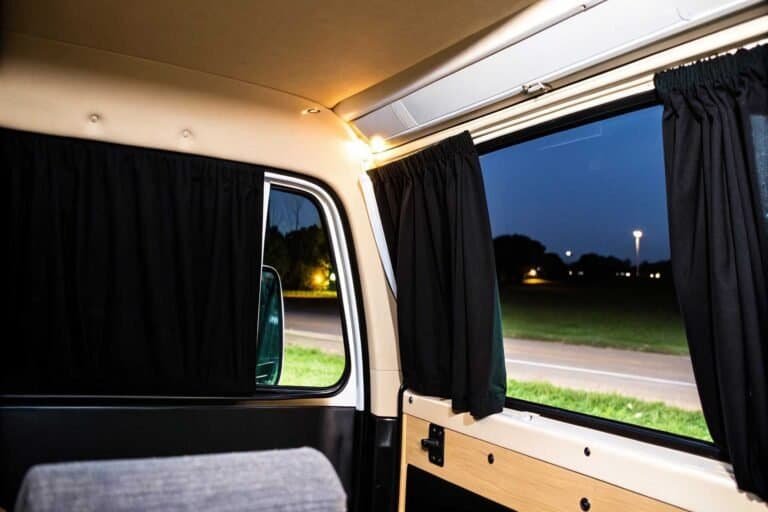
Proper campervan blackout curtains are a non-negotiable bit of kit. They’re what properly transform your van from just a vehicle into a comfortable, private home on wheels. I’m talking total light control for better sleep, proper thermal insulation for unpredictable UK weather, and that crucial privacy you need for both wild camping and sneaky urban stays. Getting this one DIY project right dramatically improves your quality of life on the road. In this guide, we will explore everything you need to know about DIY Campervan Blackout Curtains.

Why Blackout Curtains Are a Van Life Game Changer

So many people building a van see curtains as a final decorative touch, something to chuck in at the end. In reality, they’re a fundamental part of a functional conversion. They solve a bunch of practical problems that are unique to living in a tiny space, especially here in the UK where the conditions can turn on a sixpence.

Think of them less as accessories and more as a core part of your van’s climate control and security system.

The most obvious win is getting your van completely dark. During those long UK summer days, the sun can set as late as 10 PM and be back up before 5 AM. Without decent blackout curtains, that extended daylight will absolutely wreck your sleep cycle, leaving you knackered before the day’s adventure has even started.

Beyond Just Blocking Light

While getting the van pitch-black is their main job, the benefits go much, much further. High-quality campervan blackout curtains provide a surprising amount of thermal insulation. This is a massive deal for a few key reasons:

  • Winter Warmth: On a cold night, they trap a huge amount of precious heat inside your van. This means less strain on your heater, which saves your battery or fuel.
  • Summer Cooling: On those rare hot, sunny days, they reflect the sun’s rays, helping to stop the inside of your van turning into a metal oven.
  • Reduced Condensation: By creating a thermal barrier between the cold window pane and the warm interior air, they can seriously help minimise condensation build-up – a constant battle in van life.

This multi-functionality is why they work so well alongside the other core parts of your van build. To really get your head around how temperature control works in a van, check out our deep-dive guide on Insulation and soundproofing for campervans.

Privacy and Stealth for True Freedom

Another huge advantage is privacy. It’s a game-changer. Whether you’re parked up at a busy campsite or trying to be discreet in a town centre, curtains are your first line of defence against prying eyes. They let you live comfortably in your space without feeling like you’re in a goldfish bowl, turning your van into a proper private sanctuary.

This is especially vital for stealth camping, where drawing any attention to your vehicle is the absolute last thing you want.

The ability to completely block all light from escaping your van at night is non-negotiable for successful stealth camping. It’s what separates a peaceful night’s rest from a potential knock on the window.

The popularity of van life is absolutely surging. For 2025, an estimated 10.4 million Brits are planning camping and caravanning holidays, a massive increase from previous years. This boom just highlights why optimising your setup with gear like proper blackout curtains is so important for comfort and privacy in what are becoming increasingly popular spots.

Selecting the Right Materials for Your Curtains

Getting your materials right is where your campervan blackout curtains go from being a decent idea to a genuinely game-changing part of your build. The secret isn’t just one fabric, but a clever combination of layers, each doing a specific job.

Think of it like dressing for a hike in the Peak District; you need layers for comfort, protection, and performance. Your curtains will be a three-part sandwich: an interior fabric for looks, a blackout layer for darkness, and a thermal layer for insulation. Get this combination right, and you’ll have curtains that are durable, effective, and perfectly suited to the demands of UK van life.

The Three Essential Fabric Layers

Let’s break down what each layer actually does. Understanding their roles will help you make much smarter choices when you’re staring at a wall of fabric rolls or scrolling endlessly online.

  • The Interior-Facing Fabric: This is the layer you’ll see from inside your van. Its main job is to look good and match your interior. You have a lot of freedom here, but it’s wise to choose something durable and relatively easy to clean. Cotton, linen blends, or hard-wearing upholstery fabrics are all excellent choices.
  • The Blackout Layer: This is the workhorse. Its sole purpose is to block 100% of incoming light. Standard “dimout” fabrics won’t cut it here; you need a dedicated blackout lining, which is usually a thick, tightly woven fabric with a special coating on one side.
  • The Thermal Layer: Facing the window, this layer is crucial for temperature control. It reflects heat out in the summer and traps warmth in during the winter. This seemingly simple layer makes a huge difference to your comfort and can even help reduce condensation.

Choosing Your Blackout and Thermal Materials

The interior fabric is a matter of personal taste, but the blackout and thermal layers are all about technical performance. These are the two you really need to get right.

For the blackout layer, look specifically for a three-pass blackout lining. This type has three layers of coating applied, making it completely opaque and far more durable than the cheaper one-pass versions. You can find this in most fabric shops or online. It’s a bit stiff to work with, but the results are absolutely worth the effort.

A common mistake is using a dark-coloured fabric and hoping it will be enough. True blackout performance comes from a dedicated lining designed to block light, not from the colour of the fabric itself.

When it comes to the thermal layer, you have a few solid options:

  • Thermal Fleece: A simple, cost-effective choice. It traps a layer of air, providing surprisingly good insulation for the price.
  • Reflectix-style Insulation: This is the bubble-wrap-like material with a foil coating. It offers excellent thermal reflection and it’s lightweight, but it can be a bit crinkly and noisy.
  • Specialised Thermal Linings: These are fabrics designed specifically for curtains, often with a silver or white reflective coating. They offer a great balance of performance and a less ‘industrial’ look. One popular option is thermal insulated shade fabric, which often combines multiple layers into one, simplifying the whole process.

A great real-world combination is a tough cotton canvas for the interior, a three-pass blackout lining stitched to it, and a layer of thermal fleece as the final backing. This creates a thick, insulated curtain that hangs well and does its job perfectly.

Here’s a quick breakdown to help you weigh up the pros and cons of each layer.

Campervan Curtain Fabric Comparison

Fabric LayerRecommended MaterialProsConsAverage Cost (per metre)
Interior FabricCotton Canvas / Upholstery FabricHuge choice of colours/patterns, durable, easy to work with.Can be heavy, may need pre-washing to prevent shrinking.£8 – £20
Blackout LayerThree-Pass Blackout Lining100% light blocking, adds weight and structure, improves insulation slightly.Can be stiff to sew, limited colour options (usually white/cream).£7 – £15
Thermal LayerThermal FleeceInexpensive, good insulation, soft, drapes well.Less effective at reflecting heat than foil-based options.£5 – £10
Thermal LayerReflectix / Foil Bubble WrapExcellent heat reflection (summer & winter), very lightweight.Crinkly/noisy, can be awkward to sew, industrial look.£4 – £8

Choosing the right combination from this table really depends on your priorities – whether that’s budget, ease of making, or maximum thermal performance.

Sourcing Your Materials in the UK

Finding these materials in the UK is pretty straightforward. Your local fabric or haberdashery shop is a great place to start, especially for the interior fabric and blackout lining, as you can actually feel the quality.

For more specialised items like Reflectix, DIY superstores like B&Q or Screwfix are your best bet.

Don’t overlook online suppliers either. Websites dedicated to upholstery or curtain-making often have a wider selection and can be more cost-effective, especially when you’re buying several metres. Just be sure to order samples first to check the colour and quality before you commit to buying the full amount. By carefully selecting each layer, you’ll end up with curtains that aren’t just stylish, but an essential piece of functional kit for your van.

How to Measure and Pattern Your Van Windows

Getting the measurements right is where you win or lose the battle against those infuriating slivers of light. A few millimetres off might not sound like much, but it’s the difference between a pitch-black van and one that lets in just enough light to wake you up at 5 am.

Unlike house windows, van windows are rarely perfect squares. They’ve got frustrating curves, weird angles, and rubber seals that get in the way. You can’t just buy a standard size; precision here is everything. Don’t worry, though—it’s a straightforward process once you break it down.

Gathering Your Patterning Tools

Before you start, get your toolkit ready. Having everything to hand makes the process smoother and far more accurate. You don’t need anything fancy.

  • Large Sheets of Cardboard: Old delivery boxes are perfect. You need pieces big enough to cover each window completely.
  • A Good Marker Pen: A permanent marker like a Sharpie works best.
  • A Tape Measure: Essential for checking your work and adding seam allowances later.
  • Sturdy Scissors or a Craft Knife: Something that can cut through cardboard cleanly.
  • Masking Tape: Really useful for holding the cardboard in place while you trace.

Creating Your Window Template

The goal here is simple: create a perfect cardboard replica of each window. This template will be your master pattern for cutting all three layers of fabric, so take your time and aim for accuracy.

Start by cutting a piece of cardboard that’s a bit bigger than the window you’re working on. Use a few bits of masking tape to hold it against the window frame from the inside.

Now, press the cardboard firmly against the window. You should be able to feel the hard metal edge of the window opening through the cardboard. With your marker, carefully trace this edge. For most vans, the easiest way to get an accurate line is to trace the boundary where the metal bodywork meets the window’s rubber seal. This ensures your final curtain will cover the entire glass pane and tuck neatly against the frame.

Once you’ve traced the shape, take the cardboard down and carefully cut along your marked line.

Pro Tip: Before you do anything else, hold your new template up inside the window frame to double-check the fit. It should sit snugly with no major gaps. It’s far easier to trim a bit more cardboard off or make a new template than it is to recut expensive fabric.

Adding the Crucial Seam Allowance

Your cardboard template is the exact size of the window opening, but your fabric needs to be slightly larger. This extra material, called the seam allowance, is for when you sew the layers together.

A standard seam allowance for a project like this is 1.5cm (about 5/8 of an inch).

The easiest way to add this is to lay your cardboard template on your fabric and trace around it with a fabric marker. Then, using your tape measure, draw a second line 1.5cm outside of that first line. This outer line is your new cutting line. Do this for every piece of fabric you cut.

This little bit of extra material ensures that after sewing, your finished curtains will be the perfect size to fit the window snugly.

The interior fabric, blackout lining, and thermal barrier—needs to be cut using your enlarged pattern to ensure they all line up perfectly when you sew them together.

Finally, remember to label each template clearly (e.g., “Sliding Door Window,” “Rear Right”) and mark which side faces outwards. This simple step prevents a world of confusion later, especially if your windows are similar but not identical. Getting this process right can even influence your build from the start, helping you choose the best campervan windows for easy curtain fitting down the line.

Right, you’ve got your fabric layers all cut out and ready to go. Now for the fun bit: turning those flat pieces of material into actual, functional campervan curtains. This is where it all comes together.

And don’t worry if you’ve never touched a sewing machine in your life. There are some brilliant no-sew methods that give a solid, durable finish that’s more than up to the rigours of van life. We’ll walk through both ways of doing it.

The Traditional Sewing Method

If you’ve got a sewing machine, stitching the layers together is hands-down the most durable, long-lasting option. The process is pretty straightforward. You’re basically making a three-layer fabric sandwich and sewing around the edges.

First, lay your thermal fabric down on a flat surface, reflective side facing up. On top of that, place your blackout lining. Finally, add your interior-facing fabric, but make sure the ‘pretty’ side is facing down. When you look at your stack, you should be seeing the back of your interior fabric.

Pin all three layers together around the entire edge. Chuck a pin in every few inches to stop anything shifting about while you work. It’s a good idea to use a heavy-duty needle in your machine for this, as you’ll be punching through some fairly thick material.

Stitch all the way around the edge, but leave a gap of about 15-20cm along one of the straightest sides. Don’t forget to backstitch at the start and finish to lock your seam in place.

Once that’s done, snip the corners off to reduce any bulk. Then, carefully turn the whole thing right-side-out through the gap you left. It’s a bit like turning a massive pillowcase inside out. Poke the corners out so they’re nice and crisp, give it a good iron, and then topstitch all the way around the edge. This gives it a really neat, professional finish and cleverly sews up your turning gap at the same time.

No-Sew Alternatives for a Stitch-Free Finish

No sewing machine? No problem at all. There are a few really solid alternatives that don’t require a single stitch. These are perfect if you want a simpler approach or just don’t have the gear.

One of the most reliable options is iron-on hemming tape, which you might also see called fusible bonding web. It’s fantastic stuff that creates a seriously strong bond when you hit it with the heat from an iron.

To use it, you’ll still layer your fabrics exactly as described above, but you’ll work section by section.

  1. Place a strip of the hemming tape between the fabric layers, right near the edge.
  2. Press down firmly with a hot iron for the recommended time (but always check your fabric’s heat settings first!).
  3. Work your way around the entire curtain like this, still leaving that gap to turn it right-side-out.
  4. After you’ve turned it, use another little piece of hemming tape inside the gap to seal it shut.

Another great no-sew method is a strong fabric adhesive. You need to look for a glue that’s specifically designed for heavy-duty fabrics. Just apply a thin, even bead of glue between the layers near the edge, press it all down firmly, and then let it cure completely.

Whichever no-sew method you go for, the key is to let the bond fully cure before you start handling the curtains or trying to fit them. A bit of patience here will pay off with much better durability down the road.

This DIY approach is a smart way to manage costs, which is more important than ever. The Nohma Van Conversion Survey highlighted that base vehicle prices for UK self-builders have shot up by 76% in just four years. While essentials like electrics and insulation are top priorities, over 85% of builders also focus on comfort features like good sleeping quarters where effective blackout curtains are crucial for privacy and rest. You can learn more about the rising costs and priorities in UK van conversions.

Comparing the Methods: Durability and Finish

So, which one should you choose? It really comes down to your skills, the tools you have, and what you’re prioritising.

Assembly MethodDurabilityFinish QualityTools Required
Sewing MachineExcellent. Stitches provide the strongest, most flexible bond that will last for years.Professional. A sewn seam and topstitching give the cleanest, most durable edge.Sewing machine, heavy-duty needles, thread, pins.
Iron-On TapeGood. Creates a strong, reliable bond but can become less effective with repeated washing.Very Good. The bond is flat and almost invisible, creating a neat finish.Iron, ironing board, hemming tape.
Fabric GlueFair to Good. Strength depends heavily on the quality of the glue and proper application.Good. Can sometimes leave a slightly stiffer edge compared to other methods.High-quality fabric adhesive.

Ultimately, a sewn curtain will always be the most robust option. However, for a campervan where curtains aren’t going in the wash as often as your ones at home, a well-executed no-sew method using quality products is more than up to the task.

If you’re building out your toolkit for this and other van projects, have a look at our guide on the essential tools and materials for campervan conversions.

Getting Your Curtains Up: Installation for a Perfect Light-Proof Seal

You’ve done the hard graft of measuring, cutting, and stitching your curtains together. Now for the moment of truth: getting them hung. How you mount your campervan blackout curtains is just as critical as the fabric you chose. A sloppy installation with gaps will let light bleed in, completely defeating the point of the whole project.

The aim here is a complete, gap-free seal around every single window. Let’s get into the best ways to achieve that perfect pitch-black finish, from clever magnetic tricks to more traditional tracks, so you get the total darkness you’re after.

The Magic of Magnets

For most panel vans with steel bodies, magnets are the undisputed champion. They’re ridiculously easy, involve zero drilling, and create an incredibly tight seal against the metal window surrounds. If you want a clean, damage-free installation, this is it.

You’ve got two main ways to go about it:

  • Sew-in Magnets: This is my top recommendation for a slick, professional finish. You simply sew small but mighty neodymium magnets into the hem of your curtains. Spacing them every 10-15cm around the entire edge creates a continuous magnetic pull that just snaps the curtain securely to the van’s bodywork.
  • External Magnets: Don’t fancy sewing them in? You can glue strong magnets to the curtain edges instead. Another option is using a separate set of magnets to clamp the curtain fabric to the van wall from the outside. It’s a bit less elegant but still gets the job done.

The real beauty of magnets is just how practical they are. You can pull the curtains down in a heartbeat for driving and then snap them straight back up when you park for the night. No fuss.

Traditional Curtain Tracks and Rods

If you prefer a more conventional look, or if your van has plastic window surrounds where magnets are useless, curtain tracks or rods are a solid choice. This method gives you that smooth gliding action, which is brilliant for bigger windows or the cab divider curtain.

You’ll need to get the drill out for this one, screwing the tracks into the van’s structure above and sometimes below the window. Flexible curtain track is especially handy for navigating the awkward curves you find in most vans.

While this method is rock solid, getting a complete light seal can be a bit more of a challenge. The curtains naturally hang slightly away from the wall, which can let light creep in around the edges. A good workaround is to combine the track system with a few strategically placed Velcro tabs or magnets along the sides to pin everything down.

Velcro: The Versatile, No-Drill Fix

Good old hook-and-loop fastener, or Velcro, is another cracking no-drill option. It’s cheap, you can get it anywhere, and it’ll stick to pretty much any surface you throw at it – metal, plastic, wood, or carpet lining.

For the best results, shell out for the industrial-strength, self-adhesive stuff. Stick the rough ‘hook’ side to the van around the window frame and then sew the soft ‘loop’ side onto the curtain’s perimeter. Trust me, you have to sew the strip to the fabric; the adhesive on its own just won’t stand up to the constant pulling and tugging.

Velcro creates a fantastic light seal, but it can be a bit noisy to rip off in a quiet van. It’s an ideal choice for smaller, fixed windows that you don’t need to open up very often.

Our Two Cents: Whichever way you go, the ultimate goal is to kill every single gap. Even a pinprick of light can feel like a searchlight in a truly dark van, so pay forensic attention to the sides and bottom edges of your curtains.

For us vanlifers, poor window insulation can crank up heating needs by 25% in a chilly British winter. A proper set of thermal blackout curtains slashes that energy drain, saving precious leisure battery power for your essentials. This is a big deal when you think about the millions of UK campers on the road, many in vans where battery anxiety is real. You can find out more about the rise of premium upgrades in the UK camping market.

Comparing Your Mounting Options

Choosing the right method really comes down to your van’s construction, your budget, and how you’ll be using the curtains day-to-day. This table breaks down the main differences to help you figure out what’s best for your build.

Mounting Options for Campervan Curtains

A comparison of different installation methods to help you choose the best fit for your van.

Mounting MethodBest ForInstallation DifficultyLight Seal EffectivenessCost
Sew-in MagnetsSteel panel vans for a perfect, seamless seal.Medium (requires sewing)Excellent££
Curtain Track/RodLarger windows, cab dividers, non-metal frames.High (requires drilling)Good (may need side seals)£££
VelcroAll surfaces, especially plastic or wood trims.LowExcellent£

Ultimately, the best installation is the one that gives you a total blackout with the least amount of faff. For most DIY van builds, sewing neodymium magnets into the curtain edges is the most effective and user-friendly solution, turning your van into a perfectly dark and private sanctuary for the night.

Common Questions About Campervan Curtains

Building a van is one thing; living in it is another. After countless hours on the road and a few builds under our belts, we’ve found the same questions about curtains crop up again and again. Here are the straight answers to the things you’re probably wondering about.

Are Thermal Curtains Really Necessary in the UK?

One hundred percent, yes. Don’t think of them as a winter-only thing. The UK throws damp air and surprisingly cool summer nights at you, especially if you’re anywhere near Scotland or the Welsh mountains. A thermal layer is your first line of defence.

In winter, the difference is huge. It traps heat inside, meaning your diesel heater runs less and you save a surprising amount of battery power. But in summer, it’s just as crucial. It reflects the sun’s heat, stopping your van from turning into a greenhouse on a rare sunny day. They’re an essential bit of kit, not an optional extra.

A common mistake is thinking thermal layers are only for keeping warm. They’re just as effective at keeping your van cool by reflecting solar heat away from the windows – the biggest source of heat gain in summer.

How Do I Manage Condensation Behind My Curtains?

Ah, condensation. The relentless enemy of every van lifer in Britain. A good set of thermal curtains creates a temperature difference that can actually make it worse, so you need a solid plan to stop mould before it starts.

It’s a three-pronged attack:

  • Ventilation is everything. You need moving air. That means cracking a window or, even better, running your roof fan on a low setting. This is your number one weapon against moisture.
  • Choose the right fabric. The layer of your curtain facing the window should be moisture-resistant or even waterproof. This stops the curtain from getting soaked and becoming a breeding ground for mould and mildew.
  • Make it a daily habit. Every morning, pull the curtains completely away from the glass for at least an hour. Let the windows and the back of the curtains air out properly. It makes a massive difference.

What Is the Best Solution for Cab and Windscreen Windows?

Your cab windows – the windscreen and two side doors – are a different beast. They’re huge, awkwardly shaped, and the plastic surrounds make traditional curtain rails a real pain.

Honestly, the most effective solution by a country mile is a set of custom-fit insulated window covers. Forget trying to hang curtains here. These are more like insulated panels, usually made from a sandwich of Reflectix-style insulation between two layers of tough fabric.

They’re cut to the exact shape of the glass and held in place with strong neodymium magnets sewn into the edges or by just being tucked tightly into the window seals. The blackout and thermal performance is far superior to any hanging curtain. Plus, they’re quick to put up, take down, and they store flat, which is a huge win for saving space.


At The Feral Way, we focus on practical, road-tested advice to help you build a van that truly works. Find more no-nonsense guides and real-world tips at https://www.theferalway.com.
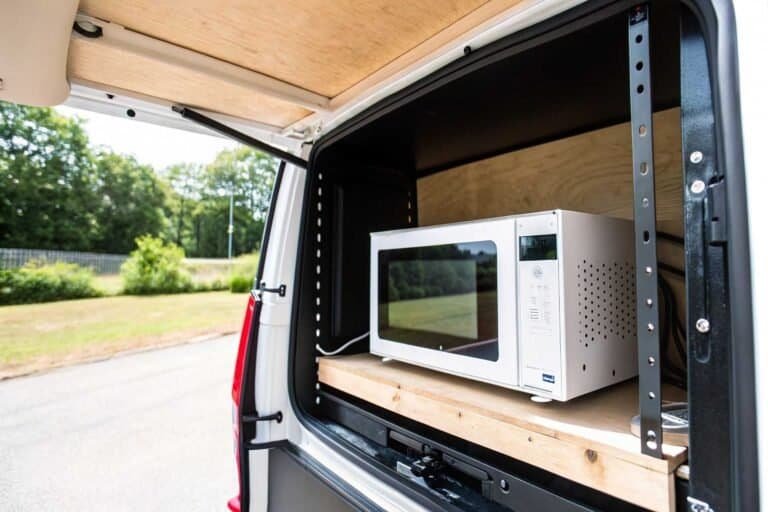
Thinking about putting a microwave in your campervan? It’s one of those additions that can feel like a total game-changer, especially for whipping up quick meals. But—and it’s a big but—it only works if you’ve got the power to back it up.

For most of us travelling in the UK, this boils down to two options: either you’re the type to stick to campsites and use their shore power, or you’re ready to get serious and build a hefty off-grid electrical system. We’re talking a powerful inverter and a big bank of lithium batteries. The convenience is real, but so is the massive power draw.

Is a Campervan Microwave Right for Your Build?

Deciding to install a microwave is a classic battle between pure convenience and sheer complexity.

On one hand, the thought of reheating last night’s chilli in 90 seconds after a long, wet day of driving is incredible. On the other, it’s easily one of the most power-hungry appliances you can possibly add to your van.

So, the real question isn’t just if you should get one. It’s how on earth you plan to power it. Your answer will shape your entire electrical system and, honestly, your whole style of travel.

Microwave Power Options at a Glance

To cut through the noise, here’s a quick look at how you’ll be powering a microwave on the road. Each method suits a different type of vanlifer, so be honest about which one you are.

Power MethodBest ForProsCons
Campsite Shore PowerWeekend warriors & campsite regulars.Simple, cheap, no complex electrics needed.Completely reliant on campsites; no off-grid use.
Inverter & Battery BankFull-timers & dedicated wild campers.True off-grid freedom; use it anywhere.Very expensive, complex installation, heavy.
12V MicrowaveNiche users with specific needs.Runs directly from leisure battery.Rare, expensive, often underpowered, still drains battery fast.

Ultimately, for most people, the choice is between relying on campsites or going all-in on an off-grid setup. Let’s dig into what that actually means.

The Two Main Power Scenarios

For UK vanlifers, your choice really comes down to two paths. The first, and by far the simplest, is just relying on campsite shore power. If you know you’ll be staying at established sites with 230V electric hook-ups most of the time, running a standard domestic microwave is dead easy. No complex off-grid gear needed.

The second path is for the off-gridders. This means building a really robust electrical system capable of handling huge electrical loads. To run a typical 700-800W microwave away from a campsite hook-up, you’re going to need:

  • A high-capacity leisure battery bank. We’re talking 200Ah or more of lithium (LiFePO4) as a realistic minimum.
  • A powerful pure sine wave inverter. Don’t even think about anything less than 1500W.
  • A solid way to recharge those batteries, like a big solar array or a battery-to-battery charger for when you’re driving.

The real challenge of an off-grid campervan microwave isn’t the appliance itself. It’s the massive electrical infrastructure you have to build just to support its brief but intense power draw. This is a system-level decision, not just an appliance choice.

Evaluating Your Travel Style

Before you commit, have an honest chat with yourself about how you actually travel.

Are you a weekend warrior who sticks to well-equipped holiday parks? A shore-power setup will serve you perfectly and won’t break the bank. Or are you planning long stints wild camping in the Scottish Highlands, miles from anywhere? If that’s the case, the big investment in a powerful off-grid system might be worth it.

Think about real-world situations. A microwave is a lifesaver on a rainy travel day when you can’t be bothered setting up the gas stove. It’s perfect for making a quick bowl of porridge before a hike. But, if you’re someone who loves cooking fresh meals from scratch and enjoys the ritual of using a gas hob, a microwave might just become an expensive, oversized bread bin that’s sucking your precious power for no good reason.

The goal here is to match the appliance to your actual needs, not just the romantic idea of instant convenience.

Right then, let’s talk microwaves. Putting one in a house is easy. You find one you like, plug it into the wall, job done. Shoving one into a campervan, however, opens up a whole new can of worms. It’s not just about zapping your leftovers; it’s about finding an appliance tough enough for life on the road that won’t murder your van’s precious electrical system.

The very first decision you need to make is about power. Now, you might hear whispers of incredibly rare and eye-wateringly expensive 12V microwaves. Honestly, forget them. For 99% of us in the UK, the choice is a standard 230V domestic microwave. This immediately links your microwave plans to your power setup. You’re either running it off a campsite hook-up or, for off-grid freedom, you’ll need a chunky inverter and a healthy battery bank to back it up.

Power Wattage: Less Is More

When it comes to campervan appliances, our usual home-kitchen logic gets flipped on its head. More power is not better. A higher wattage microwave cooks faster, sure, but it puts a massive strain on your electrical system. That 900W or 1000W beast in your kitchen would be a system-killer in a van.

Instead, you want to be looking for models in the 700W to 800W range. This lower power draw is much kinder to your leisure batteries and inverter. It drastically reduces the risk of tripping your whole system, while still being perfectly capable of heating a meal. A quick but important tip: the power rating on the box is its output (cooking power). The actual input power it consumes will be higher. Always check the appliance’s data plate for the real number.

Honestly, choosing a lower-wattage microwave is one of the smartest moves you can make. It’s the difference between a system that just works and one that’s constantly on the brink of collapse, especially when you’re off-grid and every single amp matters.

As you can see, it’s all about finding that sweet spot between power draw, physical size, and the type of controls that can handle life on the move.

Size, Weight, and Keeping It Cool

Next up are the physical realities. Your van kitchen has a fixed amount of space, so get the tape measure out. This is a non-negotiable step before you even dream of hitting the “buy now” button.

  • External Dimensions: Measure the cabinet or shelf where it’s going to live. And I mean meticulously. Don’t just measure for the microwave itself; you have to leave room for ventilation. You’ll need a gap of at least 5-10 cm around the sides, top, and back to stop it from overheating.
  • Internal Capacity: For most van conversions, around 20 litres is the sweet spot. That’s big enough for a normal dinner plate but small enough that it doesn’t swallow your entire kitchen.
  • Weight: Every single kilogram counts in a van build. Most of these compact microwaves weigh between 10-12 kg. That’s a manageable weight, but it’s something you absolutely must account for in your vehicle’s overall payload calculations.

Dials vs. Digital: Durability on the Road

Finally, you need to think about how the microwave will handle the rattles and bumps of van life. A campervan is a pretty harsh environment, and delicate electronics are often the first things to give up.

This is where simple trumps sophisticated, every single time. Look for a microwave with good, old-fashioned manual dial controls for power and time. They are far more durable than a model with a sensitive digital touchpad and a dozen fancy pre-programmed functions. The mechanical nature of dials means there’s just less to go wrong when you’re bouncing down a bumpy track in the Peak District. Plus, they’re much easier to use with wet or cold hands.

Choosing a campervan microwave is a balancing act. You’re hunting for a low-wattage, compact, and tough little unit that does what you need without overwhelming your power system or gobbling up space. Get these practical things right, and you’ll have a genuinely useful tool rather than a constant source of frustration.

Calculating Your Power Needs for an Off-Grid Microwave

Alright, this is where your dream of instant off-grid porridge meets the cold, hard reality of electrical engineering. You can’t just plug a standard 230V microwave into your 12V system and hope for the best. It takes a serious, well-planned electrical setup to handle the brief but absolutely colossal power demand.

Let’s break down the maths with a real-world example so you can see exactly what you’re getting into. Honestly, understanding these numbers is the single most important step in deciding if a campervan microwave is genuinely feasible for your adventures.

The Shocking Reality of 12V Current Draw

Those numbers on the front of a microwave? They’re deceptive. An “800W” label refers to its cooking power (the output), not how much electricity it actually consumes (the input). Because of inefficiencies, the actual input wattage is always higher—think around 1200W for a typical 800W model.

This is where Ohm’s Law delivers a bit of a wake-up call. To figure out what that 1200W demand looks like to your 12V leisure batteries, we use a simple formula:

Watts / Volts = Amps

For our 1200W microwave, the sum is 1200W / 12V = 100 amps. That is a gigantic amount of current to pull from a leisure battery, even if it’s just for a few minutes. To put that in perspective, a typical 12V campervan fridge might only draw 3-4 amps.

Don’t underestimate this figure. A 100-amp draw will instantly overwhelm a small or poorly specified electrical system. This isn’t a ‘nice-to-have’ calculation; it’s the fundamental reason you need a powerful and often expensive setup to run a microwave off-grid.

Sizing Your Inverter: Continuous vs Peak Power

The inverter is the heart of your off-grid 230V system, taking 12V DC power from your batteries and flipping it into 230V AC for your appliances. For a power-hungry beast like a microwave, you need to look closely at two key ratings.

  • Continuous Power: This is the maximum wattage the inverter can supply consistently. It absolutely must be higher than your microwave’s actual input wattage. For a 1200W appliance, a 1500W continuous rating is the bare minimum.
  • Peak (or Surge) Power: When they first kick on, microwaves have a massive initial power spike that can be double the continuous draw. Your inverter needs a peak rating high enough to handle this, otherwise it will just shut down to protect itself. A 1500W inverter will often have a 3000W peak rating, which is what you’re looking for.

Choosing an undersized inverter is a classic, costly mistake. If you try to run a 1200W microwave on a 1000W inverter, it simply won’t work. The inverter will trip immediately, leaving you with cold soup and a lot of frustration. A 2000W pure sine wave inverter is an even safer, more robust choice that gives you plenty of headroom.

Why Your Battery Bank is Crucial

That huge 100-amp draw has to come from somewhere, and that somewhere is your leisure battery bank. A standard 100Ah lead-acid battery is completely unsuitable for this job. You can only safely drain a lead-acid battery to about 50% of its capacity, giving you just 50Ah of usable power. Attempting to pull 100 amps from it would cause a massive voltage drop and likely destroy the battery.

This is exactly why Lithium Iron Phosphate (LiFePO4) batteries have become the go-to for any serious off-grid power system. They can handle incredibly high discharge rates and can be safely drained much deeper, often down to 80-90% of their capacity.

So, what size do you actually need? For that 100-amp draw, a 200Ah LiFePO4 battery is a realistic starting point. This ensures the battery’s built-in management system (BMS) can handle the current and that you have enough capacity to run the microwave without completely crippling your power supply for the rest of the day.

To figure out the right battery size for your entire setup, not just the microwave, check out our detailed guide on What size leisure battery do i need.

To pull it all together, here’s a look at the minimum electrical system you’d need to reliably run a standard 800W microwave off-grid. This isn’t about being flashy; it’s about being safe and functional.

Sample Inverter and Battery Sizing for an 800W Microwave

ComponentMinimum SpecificationReasoning
Microwave700-800W (approx. 1200W input)A manageable power draw that balances performance and electrical strain.
Inverter1500W-2000W Pure Sine WaveSafely handles the continuous load and the massive initial startup surge.
Battery Bank200Ah LiFePO4Provides enough usable capacity and can sustain the high 100A current draw without damage.
WiringHeavy Gauge (e.g., 35mm² or larger)Absolutely essential to safely carry the high current between the battery and inverter without overheating.

In short, powering a microwave off-grid isn’t just about buying the appliance itself. It’s about designing and investing in an entire electrical system built specifically to handle its demanding nature.

Getting Your Microwave Installed Safely and Securely

Right, you’ve picked your microwave and figured out the power system. Now for the bit that really matters in a moving vehicle: physically getting it mounted in your van.

This isn’t just about making things look tidy. A loose 10 kg microwave can become a lethal projectile in a sudden stop or a sharp turn. The goal here is to build a housing so solid it feels like part of the van’s structure, not just something you’ve plonked on a shelf.

We need to create a dedicated cabinet or reinforced shelf designed to withstand the constant vibrations and forces of life on the road.

Building a Bombproof Housing

Simply placing your microwave on a shelf and hoping for the best is a genuine recipe for disaster. You need a secure, custom-built enclosure.

Start by framing out a sturdy box from quality plywood—at least 12mm is a good starting point, though I’d go for 15mm if you have it. This housing needs to be screwed firmly into the van’s structural ribs or a solid part of your existing cabinetry. Whatever you do, don’t rely on just a few screws into thin wall panels; they will rip out.

To hold the microwave itself in place, you’ve got a few options, and I recommend using more than one:

  • Batten Straps: Once the microwave is in, secure wooden battens across the top, screwing them into the sides of the cabinet. This stops it from jumping upwards on bumpy roads.
  • Metal Brackets: Use strong L-brackets inside the cabinet. Screw them into both the cabinet wall and, if possible and safe, the microwave’s casing itself.
  • Non-Slip Matting: Line the base of the cabinet with high-friction rubber matting to stop it from sliding about.

The aim is to make the appliance completely immovable in all directions: up, down, forwards, backwards, and sideways. Give it a good shove when you’re done. If it moves, it’s not secure enough.

Ensuring Proper Ventilation

Overheating is a serious fire risk in a tight space like a campervan. Microwaves kick out a lot of heat and need clear airflow to get rid of it safely. Ignoring the manufacturer’s ventilation requirements is not an option.

As a general rule, you must leave a clear air gap of at least 5-10 cm around the back, sides, and top of the unit. You can achieve this by drilling ventilation holes or installing small grilles in the cabinet walls, allowing cool air to be drawn in and hot air to escape. Never, ever block the appliance’s own vents.

Building a secure cabinet is half the battle; ensuring it breathes is the other. Proper ventilation is non-negotiable for preventing overheating and ensuring the longevity and safety of your campervan microwave setup.

Nailing the Electrical Wiring

The wiring for your microwave’s inverter is one of the most critical—and dangerous if done wrong—parts of the installation. We’ve talked about the massive current draw, and using undersized cables here is an absolute fire hazard. They will overheat, melt, and potentially burn your van down.

You must use heavy-gauge cable between your leisure battery and your inverter. For a 1500-2000W inverter, you’re often looking at 35mm² or even 50mm² cable, especially if the run is more than a metre or two. It’s absolutely vital to keep the cable run as short as you possibly can to minimise voltage drop and improve efficiency. Our guide to installing a 12V and 240V campervan system covers this topic in much more detail if you need a deeper dive.

Crucially, you must install appropriate circuit protection. This means putting a correctly sized fuse or circuit breaker on the positive cable, as close to the battery as possible. This device is your system’s lifeline. To make sure you pick the right components, it’s worth spending some time understanding overcurrent protection devices and how they protect your entire electrical system from dangerous short circuits or overloads.

Right then, let’s talk about the easiest way to get a microwave humming away in your campervan. It’s the method that avoids multi-thousand-pound electrical installs and a world of technical headaches.

Forget the off-grid dream for a moment. The simplest, cheapest, and most straightforward route is to lean on the UK’s brilliant campsite infrastructure and use shore power.

This approach completely changes the game. Instead of designing a complex off-grid system powerful enough to handle a microwave, you just use a standard domestic one. All your van needs is a basic 230V electrical system: a consumer unit, a few properly wired sockets, and an external hook-up point to plug into the campsite’s post.

The good news is that the UK is perfectly set up for this. Campsites with electric hook-ups are absolutely everywhere, from the Cornish coast to the Scottish Highlands. For weekend trips, week-long holidays, or even longer tours where you’re moving between sites every few days, this is an incredibly reliable way to travel.

How Shore Power Makes Everything Simple

Connecting to shore power, or a ‘mains hook-up’ as it’s often called, is like plugging your van directly into the national grid. You get a steady, reliable supply of 230V AC power, which is exactly what your household microwave is designed for.

This tactic has some massive advantages:

  • No Inverter Needed: You can completely skip the powerful, expensive pure sine wave inverter needed to run a microwave off your batteries.
  • No Battery Drain: The microwave pulls its power directly from the campsite, leaving your leisure batteries completely untouched. This means you don’t need a huge, costly lithium battery bank.
  • Seriously Cost-Effective: A simple hook-up system costs a fraction of a full off-grid power setup capable of handling a microwave.
  • Simplicity and Reliability: It’s a proven, dead-simple system. You plug in your hook-up lead, flip a switch in your van, and you have power. It just works. Every time.

This method lets you enjoy the convenience of quick meals without the hefty financial investment and technical complexity that an off-grid system demands. Honestly, it perfectly suits the way a huge number of UK van owners actually travel.

Shore power is the ultimate shortcut to microwave convenience in a campervan. It leverages the UK’s fantastic campsite network, saving you thousands of pounds and a world of electrical headaches.

The Reality of UK Van Travel

The sheer number of electric hook-ups has a massive influence on how UK campervans are built and used. Many of us find we rarely need to be fully self-sufficient for more than a day or two, which can make a full-blown off-grid microwave setup a completely unnecessary expense.

This practical approach is why most popular compact microwaves for vans are in the 700–800W bracket. They’re powerful enough for proper cooking but don’t overload a standard campsite supply. It’s also why so many UK converters and buyer’s guides focus on having a solid hook-up system rather than a massive battery bank. For more insights on the UK’s robust touring vehicle market, the National Caravan Council provides some great data at thencc.org.uk.

Before you commit to a multi-thousand-pound electrical system, be realistic about your plans. If you see yourself spending most of your nights at sites with amenities, a simple and affordable shore power setup is without a doubt the smartest choice for your campervan microwave.

Weighing the True Cost Against the Alternatives

The convenience of a microwave is tempting, but it’s a luxury that comes at a price far beyond the £70 appliance you stick in the cupboard. The real cost depends entirely on which power route you go down: the simple, budget-friendly shore power setup, or the complex and eye-wateringly expensive off-grid system.

The financial difference between these two paths isn’t a small gap. It’s a chasm.

Let’s put some real numbers on it. A basic shore-power-only installation, with an external hook-up point and a consumer unit, might set you back a couple of hundred quid if you’re handy with the tools. Add the cost of a compact 700W microwave, and you’re all in for a very manageable sum. This is the practical, no-nonsense choice for campsite regulars.

The Off-Grid Investment

The alternative—powering that same microwave from your batteries—is a completely different financial league. This isn’t a small upgrade; it’s a fundamental redesign of your electrical system.

You’ll need a high-capacity lithium battery bank (at least 200Ah), a powerful pure sine wave inverter (think 1,500–2,000W), and probably upgraded solar or a better B2B charger to keep it all topped up. This system can easily add several thousand pounds to your build. That’s a huge investment, especially when you see industry commentary highlighting that buyer priorities in 2025 are leaning towards budget-conscious choices and practical upgrades.

The big question is this: is 90 seconds of convenience worth a multi-thousand-pound electrical system? For a handful of vanlifers, the answer is a definite yes. For most of us, simpler, cheaper, and more versatile cooking alternatives make far more sense.

Practical Low-Power Alternatives

Before you commit to the cost and complexity of a campervan microwave, it’s worth looking at the fantastic ways you can heat food that are much kinder to your budget and batteries. Honestly, these options align perfectly with a more traditional (and, dare I say, rewarding) vanlife cooking experience.

  • Omnia Oven: This ingenious stovetop oven sits right on your gas hob and can bake, roast, and reheat almost anything you’d put in a conventional oven. It uses a tiny bit of gas and is a cult classic for a reason.
  • 12V Travel Cookers: Gadgets like slow cookers or lunchbox heaters plug directly into a 12V socket. Sure, they take longer, but their power draw is absolutely tiny and easily managed by even a modest solar setup.
  • Thermal Cookers: These non-electric “haybox” cookers are brilliant. You bring your food to a boil on the hob, then pop the pot into the insulated container where it continues to cook for hours using zero energy. Perfect for stews and curries.

Ultimately, the decision comes down to your priorities. If your travel style and budget can handle the electrical demands, a microwave offers unmatched speed. For most people, though, the charm and efficiency of these alternatives, combined with some thoughtful van life meal planning, provide all the cooking capability you’ll ever need on the road.

Microwave FAQs: Your Questions Answered

Right, let’s get into the questions I hear all the time. No fluff, just the straight answers you need when you’re trying to figure this all out.

So, Can I Just Bung a Normal Household Microwave in My Van?

Yes, you absolutely can. In fact, it’s what most of us do. But—and this is a big but—you can’t just plug it in and hope for the best unless you’re hooked up to campsite mains.

For this to work off-grid, your van’s electrical system needs to be properly beefy. We’re not talking about a basic weekend setup here. You’ll need a serious battery bank, realistically 200Ah of lithium as a bare minimum, and a high-quality pure sine wave inverter that can handle at least 1500W. Anything less and you’re just going to be tripping your system every time you try to heat up some soup.

What Size Inverter Do I Actually Need for an 800W Microwave?

This is where a lot of people get it wrong. You see “800W” on the microwave and think an 800W or 1000W inverter will do the job. It won’t.

For an 800W microwave, you need a pure sine wave inverter with a continuous rating of at least 1500W. This might seem like massive overkill, but it’s essential. Microwaves have a huge start-up surge—a split-second power demand that can be almost double their running wattage. A smaller inverter will see that surge, panic, and immediately shut down. A 2000W model is an even safer bet, giving you plenty of headroom to handle that initial kick without breaking a sweat.

Don’t just match your inverter to the microwave’s running power. You have to account for the massive initial power surge. A 1500W-2000W unit is the only reliable choice if you want your microwave to actually work off-grid.

Are 12V Microwaves a Better Bet Then?

Honestly? No. While you can find dedicated 12V microwaves, they’re generally not a smart choice for most UK vanlifers.

For a start, they’re incredibly hard to get hold of, cost a fortune compared to a standard 230V model from Argos, and are often disappointingly underpowered.

But the real killer is the current they draw. They might be “12V,” but they pull a monstrous amount of amps—often 60-70 amps—directly from your leisure batteries. That kind of current puts an immense strain on your entire 12V system. For the vast majority of builds, sticking with a standard, affordable 230V microwave powered by an efficient inverter is the more reliable, cost-effective, and sensible way to go.


At The Feral Way, we provide tested, real-world advice to help you build a campervan that truly works for your UK adventures. For more no-nonsense guides on van conversions and life on the road, explore our resources at https://www.theferalway.com.

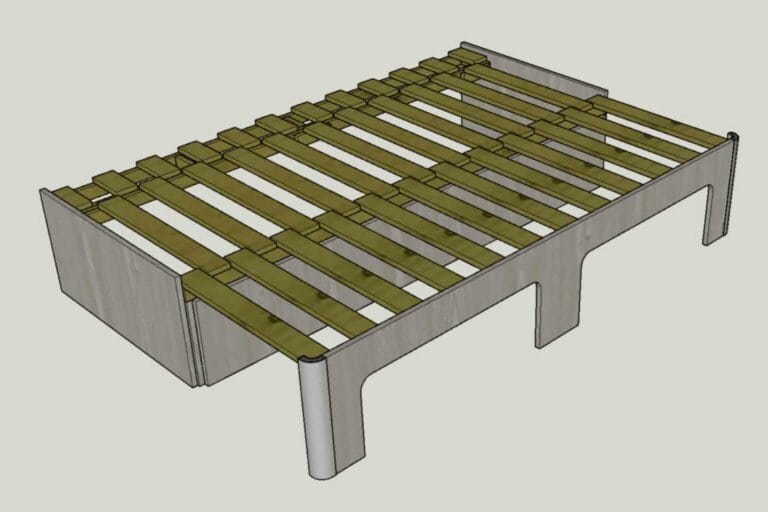
Your van conversion bed frame isn’t just a place to sleep—it’s the absolute cornerstone of your entire layout. It dictates your storage, defines your living space, and ultimately determines how comfortable you are on the road. Think of it as the architectural heart of your mobile home. This guide will walk you through the process of Building Your Van Conversion Bed Frame.

Designing a Bed Frame for Your UK Van Layout

Before you even think about cutting a single piece of timber, you need a solid plan. This is the stage where you save yourself from future headaches and the pain of a costly rebuild. The decision you make on your bed frame will ripple through every other choice, from where the kitchen unit goes to how much gear you can actually bring with you. Don’t rush this part.

The UK camping scene is absolutely booming, with experts forecasting a 9% value growth by 2026. With over 8.4 million vehicles expected to hit campsites this year, smart, functional campervan setups are in high demand. It’s no surprise that in a recent survey, 52% of UK van owners said their bed platform was the number one factor for overall satisfaction. A massive 78% of them opted for multi-use designs that create 200-300 litres of crucial under-bed storage—a must for packing everything you need for a proper UK road trip.

Measure Twice, Build Once

First things first: your van is not a perfect rectangle. It’s full of curved walls, intrusive wheel wells, and structural ribs that you have to account for. Grab your tape measure and a notepad, and get ready to know the back of your van intimately.

  • Width: Measure the width at several different heights—right at the floor, about midway up, and then again near the ceiling. That narrowest point is what will limit the maximum width of any fixed frame.
  • Length: You need to decide if you’ll sleep across the van (east-west) or along its length (north-south). This usually comes down to your height and your van. A wide-body van like a Ford Transit gives you options a VW Caddy simply can’t.
  • Height: What are you planning to store underneath? If you’ve got mountain bikes, surfboards, or climbing gear, your bed platform needs to be high enough to create a functional ‘garage’ space.

Your bed height is a classic trade-off. Go high, and you get masses of garage storage, but you sacrifice headroom for sitting up in bed. Go low, and the sleeping area feels much more spacious, but you drastically cut down on what you can fit underneath.

Fixed vs. Convertible: A Core Decision

The biggest fork in the road is choosing between a permanent, fixed bed and a convertible design that cleverly transforms into seating. There’s no single right answer here—only what’s right for your travel style. If you’re wrestling with this, our guide on designing the perfect campervan layout is a great place to start.

A fixed platform bed is all about simplicity and huge storage potential. After a long day of hiking, it’s always ready for you to crash, and the garage space it creates is second to none. The downside? It permanently takes up a huge chunk of your van’s footprint, leaving you with less room for a dedicated living area.

On the other hand, a convertible sofa-bed is the undisputed champion of smaller vans. It gives you a wonderfully versatile daytime space for working, eating, or just chilling out. The trade-off is the daily ritual of making and unmaking your bed, not to mention a more complex build. Be honest with yourself about your priorities: do you crave maximum storage, or is a flexible living space more important? Your answer will shape your entire build.

Choosing the Right Materials and Tools for Your Build

Picking the right materials for your bed frame is one of those make-or-break decisions in a van build. It’s a careful balancing act between weight, durability, and of course, your budget. This isn’t just about grabbing some timber from B&Q; you’re building a foundation that has to handle the constant vibration of UK roads and fend off our notoriously damp climate.

Every kilogram counts when it comes to your van’s payload, so lightweight yet strong materials are your best friend. While cheap plywood looks tempting on the shelf, it often lacks the guts for a really solid bed frame that will last for years of adventures.

There’s no getting around it—van conversion costs in the UK have gone through the roof. The price of a base van alone has shot up by a staggering 76%, blowing general inflation out of the water. Your bed frame can easily eat up 15-20% of your entire self-build budget, which could mean splashing out £1,500-£3,000 for a proper setup in a popular van like a Transit or Vivaro. Ditching the expensive pre-made kits and building your own can save you a good 30%, especially if you make smart choices like using 18mm birch ply with quality hardware.

Selecting Your Core Frame Materials

When it comes down to it, you’re looking at two main contenders for your bed frame: traditional timber or a more modern aluminium profile system. Each has its own pros and cons, and the best choice really depends on your priorities, skills, and how you plan to use the van.

Timber Framing

Timber is the classic, go-to choice for a reason. It’s affordable, forgiving for first-time builders, and you can work it with a pretty standard set of tools.

  • Best Wood Choice: Don’t just grab any old batten. Look specifically for C24 graded structural timber, usually sold as 2×2 or 2x3s. This grade is a guarantee of strength, and it’s kiln-dried, which seriously reduces the chance of it warping once it’s in your van.
  • Platform Material: 18mm Birch Plywood is the undisputed champion here. It’s incredibly strong, holds screws like a bulldog, and is miles more stable than cheaper spruce or pine ply. If you’re building in an area that might get damp, splashing out on marine-grade plywood is a smart move to avoid long-term delamination and mould issues.

Aluminium Profile Framing

Often called 80/20 or T-slot aluminium, this stuff is basically a grown-up’s Meccano set. It’s a lot lighter than timber and completely immune to moisture, which is a huge plus in the UK.

  • Key Benefit: The real magic is its high strength-to-weight ratio. You can create designs that span the entire width of the van without needing any central support legs, which totally opens up your ‘garage’ space underneath.
  • Consideration: It’s not cheap. The material itself costs more, and you’ll need a whole system of specific connectors and bolts, which all adds up. There’s a bit of a learning curve, but the results can be fantastic. Understanding different van racking metal solutions can give you some great ideas for building something seriously robust.

Choosing the right material is a big decision that impacts everything from your van’s weight to how you’ll build the rest of your layout.


Bed Frame Material Comparison for UK Van Builds

Here’s a quick rundown of the common materials, comparing them on the key factors for a UK van build.

MaterialTypical Cost (per 8×4 sheet/metre)Weight ImpactDurability & Moisture ResistanceBest Use Case
C24 Structural Timber£3-£5 per metreModerate-HighGood, but needs sealing/treatingBudget-friendly, classic fixed frames. Great for beginners.
Birch Plywood (18mm)£70-£120 per sheetModerateExcellent strength, fairly moisture-resistantThe go-to for strong, stable bed platforms and furniture.
Marine Plywood£100-£160 per sheetModerateExceptional. Resists delamination and rot.Areas with high moisture risk or for ultimate peace of mind.
Aluminium Profile£15-£30 per metreLowExcellent. Won’t rust or warp.Lightweight builds where maximising garage space is critical.

Ultimately, a lot of builders end up using a combination—a timber frame for its ease of use and an 18mm birch ply top for its unbeatable strength.


Essential Tools for the Job

You don’t need a fully kitted-out workshop to build a great bed frame, but a few key tools will make your life a hundred times easier and give you a much cleaner result.

The Must-Haves

  1. A Good Jigsaw: Absolutely vital for cutting curves to fit around your van’s wheel wells or scribing panels perfectly to those wonky van walls.
  2. Cordless Drill/Driver: You will drill hundreds of pilot holes and drive even more screws. A decent combi drill is a non-negotiable part of your toolkit.
  3. Tape Measure & Carpenter’s Square: Accuracy is everything. The old “measure twice, cut once” mantra is a lifesaver for a reason.
  4. A Set of Clamps: They’re like having an extra pair of hands, holding everything steady while you screw it all together.

The Nice-to-Haves

  • Pocket Hole Jig: This little gadget is a game-changer for creating super strong, hidden joints without needing any fancy joinery skills. Perfect for building sturdy frames quickly.
  • Circular Saw or Track Saw: If you want perfectly straight, clean cuts on your big plywood sheets, this is the tool for the job.
  • Router: Great for finishing touches, like rounding over the sharp edges of your plywood platform for a professional, splinter-free feel.

Pro Tip: Don’t skimp on the hardware! If your design includes folding or convertible sections, invest in heavy-duty hinges and proper latches that won’t rattle loose. For any lift-up panels to access storage, gas struts are a brilliant addition—they’ll hold the bed platform up for you, saving your back and your head. For a more detailed look, check out our guide on the essential tools and materials for campervan conversions.

How to Build Three Popular Van Bed Designs

Right, let’s get to the fun part—the bit where sawdust flies and your van conversion bed frame actually starts to look like something. I’m going to walk you through three of the most popular and practical bed designs I’ve seen and built in UK vans. The focus here is on methods that you can tackle yourself without needing a pro workshop.

Before you even think about picking up a saw, remember this: preparation is everything.

Honestly, getting this sorted first will save you so many headaches and frustrating trips back to the hardware shop.

Building a Fixed Platform Bed

The fixed platform bed is a true workhorse. It’s solid, straightforward to build, and gives you that massive ‘garage’ space underneath. It’s perfect for stashing bikes, climbing gear, or whatever else your adventures demand. This design is an absolute classic for medium-to-large vans like the Ford Transit or Vauxhall Movano.

First up, you’ll build the main support legs. I use C24 graded 2×3 timber for this. You’re basically creating two chunky rectangular frames that will sit over your wheel wells—these will take most of the weight. You can join them with simple butt joints and long wood screws, but if you have a pocket hole jig, use it. It creates incredibly strong, hidden joints that look much cleaner.

Next, you need to connect those two leg frames with horizontal support beams. These are what your plywood platform will actually sit on. For a standard double bed, three or four beams spaced out evenly should do the trick. Get them fixed securely to your leg frames, making sure everything is square and level. Don’t forget to measure the van’s internal width at your chosen bed height to get these cross-members spot-on.

With the frame sorted, it’s time for the platform. A sheet of 18mm birch plywood is my go-to for its strength-to-weight ratio.

  • Measure and Cut: Carefully measure the top of your frame and cut the plywood to size. You’ll almost certainly need a jigsaw to scribe the edges to fit the curved van walls or go around the rear pillars.
  • Ventilation: This is non-negotiable, especially with the UK’s damp climate. Drill a series of large holes (around 50mm) across the entire plywood sheet. This allows air to circulate under the mattress and stops mould from setting in.
  • Secure the Platform: Lay the plywood on top and screw it down every 20-30cm. This final step ties the whole structure together, making it rock solid.

The last thing to do is bolt the entire bed frame to the van’s structural metal ribs. Use high-tensile bolts with large washers or proper backing plates to spread the load. Whatever you do, don’t just screw it into the van’s thin plywood lining!

Assembling a Convertible Sofa Bed

For smaller vans like the Ford Transit Custom or a VW Transporter, a sofa-bed is a game-changer. You get a proper seating area for daytime chilling and a full-size bed at night, all without sacrificing your entire living space.

The heart of this design is usually two static bench seats facing each other. In the middle, you’ll have a removable table that drops down to form the central part of the bed. Start by building the frames for these two benches using 2×2 timber. They’re essentially just strong boxes.

Pay close attention to the height of the benches. They need to be comfortable for sitting (around 45cm high including your cushions is a good starting point) but also perfectly level with the ledges that will support the bed. On the inside face of each bench, fix a sturdy timber ledge. This is what the table and extra slats will rest on when you’re in bed mode.

A common mistake is over-complicating the mechanism. The simplest designs are often the most reliable. A basic drop-down table and a couple of loose slats is a bomb-proof system that’s easy to use day in, day out.

Now, make the panel that serves as both your tabletop and the middle bed base. A piece of 18mm plywood is perfect for this. It will rest on those ledges you’ve just installed. For its life as a table, a single, removable leg works a treat.

To complete the full bed platform, you’ll need a few extra slats, also cut from 18mm plywood, to fill the gaps between the tabletop and the benches. When it’s bedtime, you just pop the table leg off, drop the tabletop onto the ledges, and slot in the extra slats. Your mattress, which is usually three or four custom-cut foam cushions, is then rearranged to create a flat sleeping surface. Easy.

Creating a Versatile Modular Bed System

A modular or removable bed system offers incredible flexibility. This approach is brilliant if your van has to be a workhorse during the week and an adventure wagon on the weekend. The whole bed can be put in or taken out in just a few minutes.

This design is often made up of three or more interlocking boxes or frames. Each module needs to be strong enough on its own but light enough for one person to lift. I build these with 18mm birch plywood, using pocket hole screws and wood glue to make them as rigid as possible.

The magic of this system is in how the pieces fit together. A popular way to do it is with three large boxes:

  1. Box One & Two: These sit on either side of the van, often fitting neatly over the wheel wells. Add hinged lids, and they instantly become handy storage benches.
  2. Box Three: This central box is built to slot perfectly between the first two. It locks them in place and creates a large, flat platform for your mattress.

To make the setup even more secure, I like to use furniture connector bolts or over-centre latches to physically clamp the modules together once they’re inside the van. This completely stops any squeaking or shifting when you’re on the move.

The real beauty here is adaptability. You can take out the middle section to create a U-shaped seating area, or just pull all the modules out to get your full cargo space back. And it’s a popular choice for good reason. In 2025, it’s estimated that 10.4 million people in the UK are planning camping holidays—a huge 73% jump from the previous year. For these builds, the bed frame is the heart of the home. At The Feral Way, we’ve tested fixed frames in VW vans that easily support 150kg of sleepers plus 50kg of gear, all while being MOT-compliant. You can find out more about the surge in UK camping holidays and what it means for van builds. This modular approach is a fantastic way to meet the varied demands of modern van life.

Integrating Smart Storage and Utilities

Your van conversion bed frame is so much more than a place to sleep—it’s the functional core of your entire build. A truly clever design weaves in storage and utilities right from the start, transforming a simple platform into the hardest-working feature in your van. This is where you claw back lost space and make your small home incredibly liveable.

Thinking about these integrations before you even cut the first piece of wood is absolutely crucial. Trust me, trying to retrofit drawers or run wiring into a finished frame is a nightmare of awkward angles and pure frustration. Planning now means you can build a bed that isn’t just a frame, but a fully integrated command centre for your living space.

Building In Practical Storage Solutions

The space under your bed is prime real estate. Leaving it as one giant, open cavern is a missed opportunity that almost always descends into a chaotic mess of gear. A little bit of structure goes a very long way in making this area genuinely useful.

One of the best upgrades you can make is building a full-length pull-out drawer system. Just imagine sliding out a massive drawer from the rear doors, giving you instant access to your camping chairs, tools, or cooking kit without ever having to crawl inside.

To pull this off properly, you’ll need:

  • Heavy-Duty Drawer Runners: Don’t skimp here. Look for runners rated for at least 100kg, and ideally, find ones that lock when fully open and closed. This stops them from sliding about on hills.
  • A Solid Drawer Box: Build the drawer itself from sturdy 12mm or 18mm plywood. You want it to be robust enough to handle the weight of your gear and the abuse of being pulled in and out repeatedly.

A simple but effective technique is to partition your garage space. A fixed plywood divider can create a dedicated spot for your electrical system, keeping it safely separated from wet, muddy outdoor equipment.

Optimising every inch of your van is the name of the game, and integrating storage directly into your bed frame is a winning strategy. This guide on bed frame with storage solutions has some fantastic principles that you can easily adapt for a van build, showing how thoughtful design can truly maximise your space.

Planning for Utilities and Comfort

Beyond just stashing your gear, your bed frame is the perfect place to neatly integrate essential utilities. This keeps them tucked out of sight but easily accessible, creating a clean and functional living environment. Thinking ahead about your wiring and ducting is key.

Before you screw down the final plywood platform, run the necessary wiring for any electrical bits you want in your sleeping area. This is by far the easiest time to route cables neatly and safely.

Consider adding a few of these features:

  • 12V USB Ports: Installing these right by the bed for charging phones and devices overnight is a small touch that makes a massive difference to daily life.
  • Reading Lights: A couple of low-wattage, adjustable LED reading lights can make your sleeping area feel much more like a proper bedroom.
  • Heating Ducts: If you’re fitting a diesel heater, route one of the hot air ducts to vent near the bed. This is an absolute game-changer on cold, damp UK mornings, creating a warm and cosy sleeping pod.

The Critical Role of Mattress Ventilation

Finally, let’s talk about a non-negotiable step for any UK van build: mattress ventilation. The combination of our damp climate and the moisture your body releases overnight creates the perfect breeding ground for mould and mildew right under your mattress.

Ignoring this will lead to a musty-smelling van and can completely ruin an expensive mattress. Luckily, the fix is simple.

  • Drill Ventilation Holes: Grab a hole saw and drill a pattern of large (50mm or 2-inch) holes across your entire plywood bed platform. This lets air circulate freely underneath.
  • Use Slats: Alternatively, you can build a slatted base, just like a bed at home, which provides brilliant airflow.
  • Consider a Ventilation Mat: For ultimate peace of mind, an under-mattress ventilation mat creates an air gap that physically separates the mattress from the platform, guaranteeing moisture can escape.

By integrating these smart storage and utility features, you elevate your bed frame from simple furniture to a masterful piece of campervan engineering. It becomes the strong, silent hub that makes your van a truly comfortable and practical home on wheels.

Getting Your Frame Secured and Picking a Mattress

You’ve put in the hard work and built a solid, well-crafted bed frame. But all that effort is for nothing until it’s properly anchored to the van itself. This isn’t just about stopping an irritating squeak; it’s a non-negotiable safety step for roadworthiness and getting through your MOT.

Simply screwing your frame into the plywood floor is a massive mistake. It offers zero real security if you have to slam on the brakes.

To get this right, you have to fix your frame directly to the van’s structural metal. That means anchoring into the chassis or the vertical metal ribs that make up the van’s skeleton. This creates a solid connection that can handle the powerful forces of a moving vehicle, keeping your heavy bed—and everything under it—exactly where it’s supposed to be.

Anchoring Your Frame to the Van

The aim here is to create a rock-solid, metal-to-metal connection. How you do it will vary a bit depending on your van and frame design, but the principles are always the same.

  • Rivnuts (or Plusnuts): These are a bit of genius. They let you create a threaded hole in thin sheet metal. You drill a hole into a structural rib, pop in the rivnut with a special tool, and you’ve got a strong, permanent point to bolt into. They’re perfect for securing bed frames to the van walls.
  • High-Tensile Bolts: For the absolute strongest connection, you can’t beat drilling straight through the van floor and bolting directly into the chassis. Just be sure to use large spreader plates or washers on the underside to distribute the load and stop the bolt from ever pulling through the metal.

A critical pro tip: Use nyloc nuts or a thread-locking compound like Loctite on every single bolt. The constant vibration of the road is surprisingly effective at working standard nuts loose over time. The last thing you want is your bed frame slowly disassembling itself as you’re cruising down the M6.

Choosing Your Perfect Mattress

With your frame locked firmly in place, it’s time for the final, crucial piece of the puzzle: the mattress. This choice has a huge impact on your comfort, your available headroom, and even the moisture levels inside your van. There’s no single “best” answer, so you’ll need to weigh up the options.

Foam Types Explained
Most van mattresses are foam, but it’s a surprisingly complex world.

  • High-Density Polyfoam: This is a fantastic, budget-friendly choice that’s often used as a firm base layer. It gives you excellent support but can feel a bit too hard on its own.
  • Memory Foam: Famous for that “sinking in” feeling, a memory foam topper adds a real layer of luxury. The only downside is that it can trap body heat, which is something to think about in a small, insulated space.
  • Latex Foam: Natural latex is incredibly durable, breathable, and hypoallergenic. It’s brilliant, but it’s also the priciest option by a fair margin.

From my experience, a great combination is a firm, high-density foam base (10-12cm) topped with a softer layer of memory foam (3-5cm) for that touch of comfort. If you want to dive deeper into all the pros and cons, our detailed guide will help you find the best campervan mattress for your specific setup.

Plenty of UK companies offer cut-to-size foam services, which is a lifesaver for getting a mattress that perfectly fits the odd shapes and sizes of a van.

One final thought: if you’re making cushions for a convertible sofa-bed, go for a firmer grade of foam. This way, they hold their shape for sitting but are still comfy enough for a good night’s sleep. And always get a durable, breathable, and removable cover—it’s essential for keeping things fresh on the road.

Got Questions About Your Van Bed? We’ve Got Answers.

No matter how solid your plans are, you’ll always hit a few head-scratchers during a build. Let’s run through some of the most common questions we get asked about building a van bed frame. Getting these details sorted is often the difference between a comfortable, practical setup and one that drives you mad on the road.

We’ll cover the little things that are easy to miss until you’re halfway through a pile of sawdust, giving you clear answers to get your build finished without a hitch.

How High Should I Build My Bed Frame?

Honestly, there’s no magic number here. The perfect bed height is all about striking a balance between under-bed storage space and having enough headroom to sit up comfortably. It really comes down to what you prioritise.

A good way to figure this out is to put your mattress on the van floor and have a sit. Get someone to measure from the floor to the top of your head, then add a couple of inches so you’re not scalping yourself on the ceiling. That measurement is your minimum height for a comfortable seated position.

But, if you’re planning to haul bulky gear like mountain bikes or big storage totes, their size dictates your bed height. Simple as that.

My two cents: Always measure your biggest bit of kit first. If your bike needs 80cm of clearance to slide underneath, that’s your starting point. Design the bed around your gear, not the other way around.

What’s the Best Wood to Use for a Campervan Bed?

For the bed platform itself, you can’t beat 18mm birch plywood. It’s the go-to for a reason, especially with the damp UK climate. Its layered construction is incredibly strong, holds screws like a champ, and won’t warp and twist like cheaper ply will after a few chilly nights.

When it comes to the structural frame, you’ll want to look for C24 graded timber. It’s usually sold as 2x2s or 2x3s. This grading means it’s strong, and more importantly, it’s been kiln-dried. That’s crucial for stopping it from warping once it’s built into your van.

Do I Really Need to Ventilate Under the Mattress?

Yes. One hundred percent, yes. This is probably the single most overlooked step in a self-build, and it’s a critical one. You release a surprising amount of moisture when you sleep, and it gets trapped between your mattress and the solid wood base.

That trapped moisture is a breeding ground for mould and mildew, which will wreck a good mattress and create a really unhealthy sleeping space. Thankfully, the fix is easy:

  • Drill a pattern of large holes (around 50mm or 2 inches) across the plywood base.
  • Build a slatted base, just like you’d find on a bed at home.
  • Install a special under-mattress ventilation mat that creates a permanent air gap.

How Can I Make My Bed Frame Strong but Lightweight?

The trick is clever design, not just throwing more wood at the problem. You don’t need a massively overbuilt frame to get the strength you need; it’s about putting the support where it counts.

Think minimalist. A solid perimeter frame with one or two well-placed cross-braces is usually plenty. The 18mm birch plywood on top does a brilliant job of spreading the weight across that structure. Using pocket holes for your joints also creates ridiculously strong connections without needing chunky metal brackets.

If you want the best strength-to-weight ratio and have the budget, an aluminium profile frame is a fantastic option. It’s lighter than wood and completely moisture-proof, but it will cost you a fair bit more.


At The Feral Way, we’re all about practical, no-nonsense advice for your UK van conversion. From scribbling designs on a napkin to tightening the last screw, we’ve been there and can help you build a campervan that actually works. You can find more of our tested builds and guides over at https://www.theferalway.com.

Deciding on the right campervan steps is one of those seemingly small choices that ends up defining your daily life on the road. It’s less about fancy features and more about pure, practical convenience. The best option isn’t a one-size-fits-all solution; it hinges entirely on your van’s height, how you travel, and who’s climbing in and out every day. Understanding the process of choosing and fitting campervan steps can greatly enhance your experience.

Choosing the Right Steps for Your Campervan

A Guide to Choosing and Fitting Campervan Steps

Before you even think about drilling holes, you need to weigh up the real-world pros and cons of each type. What works brilliantly for a weekend warrior in a low-roof van will be a constant source of frustration for a family living full-time in a high-top Sprinter. This choice impacts everything from ground clearance on bumpy tracks to simply not having to think about it before you drive off.

Fixed vs Manual vs Electric Steps

When it comes to campervan steps, you’re looking at three main camps, each with its own very distinct personality.

  • Fixed Steps: These are permanently mounted and don’t move. You’ll usually see them on larger motorhomes or as part of a custom build, sometimes even welded right into the van’s bodywork. While they’re incredibly sturdy, they absolutely kill your ground clearance, making them a terrible choice for anyone planning to venture off the tarmac. One bad bump and they’re toast.

  • Manual Retractable Steps: This is the go-to middle ground for a reason. These steps are manually pulled or slid out from under the van. They offer a fantastic balance of reliability, simplicity, and cost. With no electronics to go wrong, they’re a rugged, dependable choice for off-grid adventurers.

  • Electric Retractable Steps: This is the premium option, and honestly, it’s a game-changer for convenience. These steps automatically pop out when you open the sliding door and retract when you close it or turn on the ignition. A double electric step is a godsend for high-top vans, families with kids, or anyone with mobility issues.

My personal take? Manual steps are brilliantly simple, but the sheer convenience of an electric step—especially one that automatically retracts—is worth its weight in gold. It removes one more thing from your mental checklist before driving away. Forgetting to retract a manual step is a common, and very costly, mistake.

Making the Right Choice for Your Build

Your travel style is the single biggest factor here. If you’re constantly seeking out wild camping spots with uneven ground, a manual slide-out step offers rugged simplicity and the best possible ground clearance when it’s tucked away. No contest.

However, if your travels are mostly on campsites and you value ease of use above all else, an electric model is an investment you won’t regret.

The step itself is just one piece of the puzzle. Think about how its placement and design will work with your overall layout. A well-placed step can be integrated with other features, like underfloor storage, or become a seamless part of your wider van conversion furniture design. Considering this synergy early on is the key to a build that feels cohesive and genuinely functional.

To make things clearer, I’ve put together a quick comparison table. Use it to find the right fit and make sure your steps become a helpful upgrade, not a daily hassle.

Campervan Step Type Comparison

This table offers a quick reference to help you compare the most common campervan step options and find the best fit for your conversion.

Step TypeIdeal ForKey AdvantagesPotential Drawbacks
Fixed StepsLarge motorhomes, primarily on-road useVery stable and robust; no moving parts to failSeverely reduced ground clearance; can get damaged easily
Manual RetractableOff-grid campers, budget-conscious buildersReliable and simple; good ground clearance when stowedCan be forgotten in the ‘out’ position; requires physical effort
Electric RetractableFamilies, high-top vans, convenience seekersEffortless operation; safety features (auto-retract)Higher cost; potential for electrical or mechanical failure

Ultimately, the best choice is the one that makes your van life easier, safer, and less stressful. Choose wisely, and you’ll appreciate it every single time you step in and out of your home on wheels.

Laying the Groundwork for Your Campervan Step

Right, let’s get this sorted. Bolting a step onto your van is one of those jobs where an hour of prep work saves you a weekend of headaches. Get this stage wrong, and you’ll end up with a step that scrapes on speed bumps, punches a hole in your water tank, or just refuses to open because it’s jammed against the bodywork.

Getting the planning right means your new step will feel like it was always meant to be there, giving you safe, solid access every time.

Finding a Solid Mounting Point

First things first, get under the van. Your most important job is to find a mounting point that’s strong enough to take the strain. You’re looking for a beefy, structural part of the chassis or a reinforced floor member that can handle someone stomping on it day after day.

On vans like the Sprinter or Transit, the best spots are usually the main chassis rails that run the length of the vehicle. But you can’t just drill any old hole. You need a flat, clear section where the step’s mounting bracket can sit completely flush and secure.

My Two Cents: Whatever you do, never mount a step directly to the thin sheet metal of the van floor. It’s nowhere near strong enough to take the load. It will flex, groan, and eventually crack, leaving you with a useless step and a hole in your van. Always bolt through to a solid chassis member or add some serious reinforcement plates.

Spotting and Avoiding Obstructions

Once you’ve found a promising spot, it’s time to play detective. The underside of a van is a minefield of pipes, wires, and tanks, and plenty of projects have been torpedoed by an unseen obstacle. Grab a good torch and have a proper look for:

  • Exhaust Systems: The exhaust gets incredibly hot. You need to give it plenty of clearance to avoid melting your step’s components or creating a serious fire risk.
  • Wiring Looms: These are the van’s nervous system. Drilling through one is a guaranteed nightmare of electrical faults that are a pain to track down and fix.
  • Brake and Fuel Lines: Nicking one of these is not just expensive, it’s downright dangerous. Trace their path carefully and give them a very wide berth.
  • Water Tanks: Fresh and grey water tanks are common roadblocks. Make sure your chosen location doesn’t foul them or any of their fittings.

And don’t forget to think about how things move. A suspension arm might look clear when the van is parked, but it could easily smash into the step the first time you go over a bump.

The Cardboard Template Trick

Before you even think about drilling, make a template. Honestly, this is the most valuable five minutes you will spend on the entire job. Just grab an old cardboard box and cut out a piece that matches the exact dimensions of your step’s mounting plate and its retracted body.

Now, hold this cardboard mock-up in your chosen spot. It’s a dead-simple way to see any problems instantly. Does it sit flat? Does it really clear that wiring loom you spotted? And most importantly, when you pretend to deploy it, does it clear the sliding door sill and avoid clonking the bodywork?

A template gives you certainty before you make the first cut. It’s a hands-on reality check that’s far more reliable than relying on measurements alone and will save you from a costly, soul-destroying mistake.

A Step-by-Step Guide to Fitting Aftermarket Steps

Alright, you’ve done the planning, picked your step, and now it’s time to get your hands dirty. This is where the real work begins, and while it demands a bit of patience and precision, fitting a step is well within the reach of a competent DIYer. We’ll go through the physical install, focusing on getting it right so your step is secure, safe, and built to last.

Before you even think about crawling under the van, get all your kit together. Seriously, having everything you need within arm’s reach will save you a world of frustration. For a solid checklist of what you’ll need, have a look at our guide on the essential tools and materials for campervan conversions. No point starting the job if you’re missing a crucial drill bit.

Preparing for a Safe Installation

First things first: safety. Working under a vehicle is inherently risky, so don’t cut corners. Never, ever get under a van that’s only supported by a jack. Get it up on a proper set of axle stands, make sure they’re on solid, level ground, and chock the wheels that are still on the floor. It takes five extra minutes and could save your life.

Once the van is secure, get under there and give the spot you’ve chosen on the chassis a proper clean. A wire brush is your best friend here. You need to get rid of any caked-on mud, loose rust, or flaky old underseal. You’re aiming for a clean, bare metal surface so the mounting brackets can sit perfectly flush. This isn’t just for looks; it’s vital for a strong, stable fit.

As you can see, it’s all about the prep. Rushing the measurement and templating stages is a recipe for wonky steps and extra holes in your chassis.

Drilling and Securing the Step

With the area prepped, offer the step or its mounting brackets up to the chassis. Grab your cardboard template for one final check to confirm the position is spot on. Then, mark your drill points with a centre punch. Tapping a small indent for each hole prevents the drill bit from wandering off and scratching up your chassis when you start drilling.

Start with a small pilot hole for each bolt. It’s far more accurate and requires less force than trying to wrestle a massive drill bit through thick steel in one go. Once the pilot holes are in, you can work your way up, increasing the drill bit size until you hit the diameter you need for your mounting bolts.

Here’s a critical tip that so many people skip: rust-proofing your new holes. Every hole you drill into your van’s chassis is a potential rust problem just waiting to happen. After drilling, give the raw metal edges of each hole a thorough coat of a good quality, zinc-rich primer or a direct-to-metal paint. It’s a simple step that will add years to the life of your van and the installation.

Once the paint is dry, it’s time to bolt the step on. Use high-tensile steel bolts and, crucially, use large spreader plates or penny washers on the inside of the van floor or chassis. These are non-negotiable. They spread the load and stop the bolts from pulling through the metal under stress. Tighten everything down properly, ideally to the torque settings specified by the step manufacturer.

Wiring an Electric Campervan Step

If you splashed out on an electric model, the final job is the wiring. Don’t be intimidated by this; most electric steps run on a simple 12V circuit, and the logic is pretty straightforward.

You’ll need to run a fused power cable from your leisure battery to the step’s switch or control unit. Never, ever connect it to the starter battery unless you enjoy being stranded.

Here’s the typical sequence:

  • Power In: Run a correctly sized wire from the positive terminal of your leisure battery, through a fuse, to your main control switch.
  • Earth It: Find a clean, bare metal spot on the van’s chassis and securely attach the step’s negative (earth) wire to it. A dodgy earth is the number one cause of electrical gremlins.
  • The Switch: Mount the control switch somewhere convenient, usually just inside the sliding door. This is where you’ll connect the power wire from the battery and the wire that runs out to the step’s motor.
  • The Safety Relay: This is the clever bit. Most electric steps have a safety wire that connects to the vehicle’s ignition or the alternator D+ signal. This is what tells the step to automatically retract the second you start the engine, preventing that horrifying (and very expensive) mistake of driving off with it still down.

Make sure your wiring is tidy. Secure it away from anything that gets hot or moves, and use protective conduit where it passes through metal. A bit of care here will save you a world of headaches later on.

Building Your Own DIY Campervan Steps

There’s a certain satisfaction that comes from building something for your own van, a feeling you just don’t get from clicking ‘buy now’. If you’re nodding along, then rolling up your sleeves and building your own campervan steps is a project you’ll love.

Going the DIY route is the perfect way to get a solution that’s exactly right for your layout, blending pure function with the unique character of your build. It’s one of those projects that really gets to the creative heart of van life.

It all starts with picking your material. This one decision will set the tone for the whole job, defining the look, weight, and durability of your steps. Each option has its own quirks and rewards, so it’s worth having a proper think about it first.

Choosing Your DIY Materials

The material you choose is the foundation of the whole project. It dictates what tools you’ll be dragging out of the shed, the skills you’ll need to brush up on, and what the finished steps will look and feel like.

  • Treated Timber: Wood is the go-to for most DIYers, and for good reason. It’s affordable, you can work it with standard tools most people already have, and it gives a warm, rustic look that fits right in with many van interiors. The absolute key here is to use pressure-treated or properly sealed timber to stop it from rotting in the relentless British weather.

  • Lightweight Aluminium: If you’re counting every kilogram to stay under your payload limit, aluminium is a brilliant choice. It won’t rust and it’s surprisingly strong for how light it is. You will need a different set of tools, like a metal-cutting blade for your saw and maybe a rivet gun, but the result is a sleek, modern step that will last forever.

  • Durable Steel: For sheer, brute strength, nothing beats steel. It’s heavier and definitely requires more skill to work with—we’re often talking welding or at least some basic metal fabrication. But if you’re building a heavy-duty, slide-out step that’s going to take a lifetime of abuse, a steel frame is the proper professional’s choice.

Building your own gear is a core part of the van life experience. You get to know your vehicle inside and out, which makes you far more self-reliant on the road. This hands-on approach is a massive confidence booster for tackling all sorts of other projects down the line.

Creative Design Ideas for DIY Steps

The best part about going DIY is that you’re not stuck with off-the-shelf designs. You can build something that’s perfectly suited to your needs, turning a simple step into a clever, multi-functional piece of your home on wheels.

One of the most popular and practical designs is the interior step box. At its simplest, it’s a sturdy wooden box you place just inside your sliding door. Its main job is to make getting in and out less of a leap, but its secret weapon is storage. Put a hinge on the lid and you’ve instantly created the perfect cubby for muddy shoes, levelling blocks, or the dog’s lead—keeping clutter out of your living space.

If you’d rather have an external solution, a manual slide-out step is a fantastic project. This usually involves building a solid frame from steel or aluminium that bolts directly to the chassis. The step itself, often a piece of tread plate or a solid wooden plank, sits on a pair of heavy-duty drawer runners. This design keeps the step tucked neatly away when you’re driving, so you don’t lose any ground clearance, while still being dead simple and reliable.

Essential Skills and Tools for the Job

Let’s be realistic about what it actually takes to build your own campervan steps. A successful project comes down to having the right gear and an honest idea of the skills you’ll need.

For a simple wooden step box, your toolkit is pretty straightforward:

  • A decent saw (a hand saw will do, but a circular saw or jigsaw makes life easier)
  • A drill with a good set of bits
  • A measuring tape and a square
  • Sandpaper and your choice of finish (paint, varnish, or oil)
  • Strong wood glue and screws to pull it all together

Tackling a metal slide-out step, on the other hand, requires a more specialised setup. You’ll probably need an angle grinder with cutting and grinding discs, a power drill with bits designed for metal, and maybe even a welder. Precision is everything here, as your runners must be perfectly parallel for the step to slide in and out smoothly.

No matter what material you pick, the most important skill is patience. Measure twice (or three times!), cut once. For anyone who enjoys getting their hands dirty, exploring other DIY RV repair guides can be a really rewarding way to improve your van and learn new skills. Taking your time to get the joints snug or the welds clean will pay off with a finished product you can be proud of—a safe, functional, and truly personal addition to your home on wheels.

Safety Checks and UK Legal Requirements

Let’s get serious for a moment. Bolting aftermarket bits onto a vehicle is a big deal, and when it comes to campervan steps, getting the safety and legal side of things wrong isn’t just a slap on the wrist. It’s not about ticking boxes for the MOT tester; it’s about making sure your home on wheels doesn’t become a danger to you or anyone else on the road.

The UK van conversion scene has absolutely exploded. Between July 2020 and June 2021 alone, a staggering 16,608 brand new motorhomes hit the roads, registered with the DVLA. That’s a massive surge driven by people like us wanting a different way to travel. With this boom, it’s more important than ever that everyone building their own van knows the rules and builds safely.

The Golden Rule: Retract Before You Drive

This is the single most critical safety rule for any retractable campervan step: it must be fully stowed before the vehicle moves. Seriously. Driving with a step sticking out is a recipe for disaster. It can snag on a kerb, clip a road sign, or worse, another vehicle, causing catastrophic damage to your van and a potentially horrific accident.

With a manual step, this comes down to pure muscle memory – you have to remember to kick it back in every single time. Electric steps, on the other hand, are a fantastic safety net. Most are designed to be wired directly into the ignition, so they automatically retract the second you turn the key. A feature worth its weight in gold.

If you don’t have an ignition-linked system, rig up a simple but effective warning. A basic 12V buzzer or a bright LED on your dash, wired to a switch on the step mechanism, will give you an impossible-to-ignore reminder that your step is still out. It’s a tiny job that prevents a massive, expensive mistake.

Passing Your MOT With Aftermarket Steps

When it comes to the annual MOT, the inspector isn’t bothered about the brand of your step. Their focus is purely on safety and security. They’ll be giving it a good look over to make sure it’s roadworthy.

  • Secure Fastening: The step has to be bolted rigidly to the van’s chassis or a proper structural point. The tester will physically grab it and check for any wobble, looseness, or signs that the mounting points are failing.
  • No Dangerous Protrusions: When it’s tucked away, the step can’t have sharp edges or create an obvious hazard for pedestrians or cyclists. It needs to be folded up neatly under the vehicle’s sill.
  • Operational Safety: For electric steps, they might check that it deploys and retracts correctly without catching on any part of the vehicle.

Basically, as long as your campervan steps are securely fitted and don’t create a hazard, they should sail through the MOT without an issue. For a deeper dive into the nitty-gritty, check out our complete guide on navigating MOT and servicing for campervans.

Understanding Load Ratings

Finally, let’s talk about strength. Every step, whether you’ve bought it or built it, needs to be strong enough to handle a person carrying a heavy bag or a box of supplies. A decent aftermarket step will have its maximum load capacity clearly stated – usually somewhere around 150kg to 200kg.

If you’re building your own step, you have to over-engineer it. Use beefy materials and solid fixings. Remember, people don’t always step down gently; they might jump out or land heavily, putting a massive dynamic load on the structure. Your step needs to handle that without so much as a creak.

Got Questions About Campervan Steps? We’ve Got Answers

Even the most meticulously planned conversion throws up questions. When it comes to fitting campervan steps, the same queries pop up time and time again. Here are some quick, no-nonsense answers based on years of fitting these things to all sorts of vans.

Best Steps for High-Top Vans

This is the big one: “What steps should I get for my Sprinter/Ducato?” The answer, almost without exception, is a double step.

The sills on these bigger vans sit a long way off the ground. A single step often leaves a drop that’s still uncomfortably high, turning a simple entry into an awkward clamber. It’s a daily annoyance and a genuine trip hazard waiting to happen.

A double step makes that transition feel completely natural and safe, bridging the gap perfectly. This is non-negotiable if you’re travelling with kids, pets, or anyone with dodgy knees. A manual double step is a solid choice, but an electric one is the ultimate upgrade for convenience and a bit of a wow factor.

Can I Avoid Drilling into My Van?

“Is there any way to fit steps without drilling holes in my chassis?” It’s a question that comes from a place of fear—the fear of making an irreversible change to your pride and joy.

While most permanent steps do need drilling to be properly secure, there are a couple of workarounds. Some manufacturers make vehicle-specific mounting brackets that cleverly use existing holes in the chassis. If you can find one for your van model, it’s a brilliant drill-free solution.

Your only truly non-invasive option is a high-quality freestanding step. But for anything that’s physically attached to the van, a robust, bolted connection to the main structure is the only way to go for safety.

Look, when you’re modifying a vehicle, safety trumps everything. A step that isn’t bolted securely to a structural part of the van is a serious accident waiting to happen. It’s far better to drill a few well-placed and properly rust-proofed holes than to risk an insecure fitting.

What Maintenance Do Campervan Steps Require?

Like any other moving part on your van, your steps are going to need a bit of TLC to keep them happy, especially with the glorious British weather doing its worst.

Regular cleaning is the most important job. Get the hose out and blast off the mud, grit, and road salt. That salty, gritty paste is incredibly corrosive and will seize up moving parts faster than you can say “rust.” For any retractable step, manual or electric, a bit of lubrication goes a long way.

  • Hinges and Pivots: Give them a quick spray with a good quality silicone or lithium grease every few months. It keeps everything moving freely.
  • Slides and Runners: Clean any crap out of the tracks and then apply a light coat of grease. This ensures they slide smoothly without that horrible grinding noise.
  • Electrical Connections: On electric models, just have a quick look at the wiring connectors for any green or white powdery build-up (that’s corrosion). A dab of dielectric grease will help keep the moisture out.

Honestly, a few minutes of this twice a year will prevent 99% of common problems, like a step that stubbornly refuses to retract when you’re trying to make a quick getaway from a soggy campsite.

UK Campervan Step Costs

So, how much should you set aside for steps in the UK? The price can swing wildly depending on what you’re after.

A simple, portable plastic or metal step can be yours for as little as £20-£40. If you want a permanent manual step, like a slide-out or fold-down model, you should budget somewhere between £100 and £250.

Electric steps are the top end of the market. Prices for a single electric step start around £300, while the premium double electric models can easily sail past £600.

Fancy going the full DIY route and building your own? If you’ve already got the tools, you could probably get it done for under £100 in materials.


At The Feral Way, we believe in empowering you with the practical knowledge to build a campervan that’s safe, reliable, and perfectly suited to your adventures. Find more real-world guides and tested advice at https://www.theferalway.com.

I’ve insulated four vans, learning about the best insulation for campervans along the way. The first one was a disaster that cost me £600 and left me shivering through a January in the Cairngorms. The fourth? I’m typing this in my pants at 7am in February, and it’s perfectly comfortable.

The difference wasn’t fancy materials or secret techniques. It was understanding what actually works in British weather, where to spend money, and where to save it.

Here’s everything I learned the expensive way, so you don’t have to.

Why Van Insulation Matters in the UK

Let’s be honest — Britain isn’t known for its tropical climate. We’ve got damp winters, unpredictable summers, and more condensation than you’d think physically possible in a small metal box.

Good insulation does three critical jobs:

It keeps you warm. Obvious, but worth stating. An uninsulated metal van is basically a fridge in winter. I’ve woken up to ice on the inside of my windows more times than I care to admit, and it’s properly miserable.

It reduces condensation. This is the big one everyone underestimates. Warm air meets cold metal, and suddenly you’ve got water running down your walls. That leads to mould, rust, and that distinctive damp smell that screams “I live in a van.” Not the vibe you’re going for.

It keeps you cool in summer. Metal boxes heat up fast when the sun hits them. Proper insulation creates a thermal barrier that makes those rare British heatwaves actually bearable.

When it comes to finding the best insulation for campervans, the right materials can make all the difference in comfort and energy efficiency.

Skip insulation or do it badly? You’ll regret it every single night.

The Insulation Types That Actually Work

There’s a lot of nonsense talked about van insulation online. Instagram vanlifers swear by expensive solutions. Forums argue endlessly about R-values. Here’s what matters in the real world.

1. PIR Boards (Celotex/Kingspan) — The Gold Standard

What it is: Rigid foam boards with foil backing, typically 25mm or 50mm thick.

Price: £25-45 per sheet (2400mm × 1200mm) from builders’ merchants

These are what most professional converters use, and there’s a reason for that. PIR (polyisocyanurate, if you’re interested) boards offer the best thermal performance per millimetre of thickness. That matters when you’re working in tight spaces.

I’ve used Celotex in my last two conversions. It’s easy to cut with a sharp knife, fits snugly between ribs, and doesn’t absorb moisture. The foil backing acts as a vapour barrier, which is crucial for stopping condensation.

The downsides? It’s not available on Amazon — you’ll need to visit a builders’ merchant like Wickes, Selco, or Travis Perkins. It’s also rigid, which means cutting lots of awkward shapes for curved van walls. And if you don’t seal the edges properly, you’ll get thermal bridging (cold spots where heat escapes).

Best for: Walls, floor, and roof where you have relatively flat surfaces. Main living areas where thermal performance matters most.

Cost per square metre: £4-8 depending on thickness

2. Armaflex (Closed-Cell Foam) — For Awkward Spaces

What it is: Flexible, self-adhesive foam sheets in various thicknesses (6mm to 25mm).

Check price on Amazon UK — available in pre-cut sheets

This is my secret weapon for all those curved sections, wheel arches, and tight corners where PIR boards won’t fit. Armaflex is closed-cell foam, which means it doesn’t absorb water — critical for a van that’s basically a condensation factory.

It sticks directly to metal with decent adhesive backing (though I always reinforce with contact adhesive in high-stress areas). It’s much easier to work with than rigid boards, and you can build up layers if you need more thickness.

I use 10mm Armaflex for door panels, 19mm for wheel arches, and 6mm for any weird curves or gaps between PIR boards. It’s more expensive per square metre than PIR, so I don’t use it everywhere — just where it makes life easier.

The catch? Lower R-value than PIR for the same thickness. And the adhesive backing isn’t always reliable on dusty or oily metal. Clean your surfaces properly, or it’ll peel off six months later. Trust me on this.

Best for: Doors, wheel arches, curved sections, gaps between other insulation. Anywhere PIR boards don’t fit easily.

Cost per square metre: £8-15 depending on thickness

Get Armaflex from Amazon UK

3. Sheep’s Wool (Thermafleece) — The Eco Option

What it is: Literal sheep’s wool treated to resist pests and moisture, comes in rolls or batts.

Price: £30-50 for a 7.5kg roll from eco suppliers

I’ll admit, I was sceptical about this. Wool in a metal box that gets damp? Sounds like a mould farm waiting to happen. But I tried it in my third van, and it’s actually brilliant for certain applications.

Sheep’s wool is breathable, which means it manages moisture naturally rather than trapping it. It’s also excellent at acoustic dampening — your van will be noticeably quieter. And if you care about eco credentials, it’s about as natural as insulation gets.

The thermal performance isn’t quite as good as PIR per centimetre, but it’s decent. Where wool really shines is in the roof, where you’ve got space and where acoustic dampening makes a real difference when rain hammers down.

The problems? It’s not widely available on Amazon UK (you’ll find some sheep wool insulation options here, but selection varies). It compresses over time, especially in vertical applications. And while it’s treated, you need good ventilation or you can still get moisture issues.

Best for: Roof insulation where you have depth. Secondary insulation layer where you want acoustic benefits.

Cost per square metre: £8-12 for adequate coverage

4. Reflectix / Thermal Foil Bubble Wrap — Overrated Rubbish

What it is: Bubble wrap with reflective foil on both sides.

Available on Amazon UK

Right, controversial opinion time: Reflectix is mostly useless for van insulation.

I see it recommended constantly, especially in American vanlife content. And it does have one legitimate use — as a reflective radiant barrier if you install it with an air gap on both sides. That means battening out your walls, which costs space and money most people don’t have.

Without those air gaps? It’s basically expensive bubble wrap with an R-value of about 1. That’s terrible. A 25mm PIR board has an R-value around 4.5 for comparison.

I wasted £120 on Reflectix in my first van, convinced it would work because everyone on Instagram used it. It didn’t. I froze. Don’t make my mistake.

The only time I use it now: As a vapour barrier behind PIR boards if I haven’t got foil-backed boards. Or for windscreen covers. That’s it.

Best for: Windscreen covers, emergency blankets, making your van look pretty for Instagram while doing bugger all for warmth.

Cost per square metre: £3-6 (still overpriced for what it does)

5. Spray Foam — For Professionals Only

What it is: Expanding polyurethane foam applied with specialist equipment.

Price: £150-300 for DIY kits, £1,500+ for professional application

Spray foam fills every gap and cavity perfectly, creating an airtight thermal barrier. Professional converters love it because it’s fast and effective.

For DIY? It’s a nightmare waiting to happen.

I tried a cheap spray foam kit from Amazon. It expanded more than expected, pushed my wall panels out, and made a sticky mess that took hours to clean. The stuff that landed where I wanted it worked fine, but I wasted half the kit on mistakes and overcorrection.

If you’re getting your van professionally converted, spray foam makes sense. For DIY, stick with boards and foam sheets you can measure, cut, and control.

DIY spray foam kits on Amazon UK — proceed with extreme caution

Best for: Professional converters, filling small gaps and cavities after main insulation is done, people who enjoy chaos.

Cost: Varies wildly, usually not worth the hassle for DIY

6. Acoustic Deadening (Dynamat / Dodo Mat) — Not Insulation, But Important

What it is: Heavy rubber-like sheets that dampen vibrations and road noise.

Check Dodo Mat on Amazon UK

This isn’t thermal insulation — it’s acoustic deadening. But it matters more than you think.

Vans are loud. Engine noise, road rumble, rain on the roof — it’s all amplified by bare metal panels. Acoustic deadening goes directly onto metal before any other insulation, reducing vibrations and making everything quieter.

I use Dodo Mat (cheaper than Dynamat, works just as well) on floors, doors, and the roof. You don’t need 100% coverage — focus on the largest flat panels where noise reverberates most.

Does it provide thermal insulation? Minimal. But it makes your van feel more like a home and less like a biscuit tin on wheels. Worth the investment.

Best for: Large flat metal panels, anywhere you want to reduce road noise and vibration. Apply before other insulation.

Cost per square metre: £5-10

Get Dodo Mat from Amazon UK

My Recommended Insulation Strategy

After four vans, here’s the system I use now. It balances performance, cost, and practicality.

Step 1: Acoustic Deadening (Optional but Recommended)

Cover 30-50% of large flat panels with Dodo Mat or similar. Focus on:

  • Roof (especially above sleeping area)
  • Floor
  • Sliding door
  • Rear doors

Cost: £100-150 for adequate coverage

Step 2: Main Insulation

Floor: 25mm PIR boards between battens, sealed at edges Walls: 25mm PIR boards between ribs, gaps filled with expanding foam Roof: 50mm PIR boards if space allows, or 25mm PIR + sheep’s wool layer Doors: 10-19mm Armaflex, easy to fit around window mechanisms

Cost: £300-450 for materials

Step 3: Awkward Bits

Use Armaflex for:

  • Wheel arches
  • Curved sections
  • Gaps between PIR boards
  • Door pillars
  • Any tight corners where PIR won’t fit

Cost: £80-120

Step 4: Vapour Barrier

If your PIR boards aren’t foil-backed on the interior side, add a vapour barrier. This stops warm, moist air from inside your van reaching cold metal and condensing.

Options:

  • 1200 gauge polythene sheet (cheap, effective)
  • Reflectix (expensive, but works as vapour barrier)
  • Foil-backed insulation boards (built-in barrier)

Tape all seams with foil tape. Don’t skip this — it’s the difference between a dry van and a condensation nightmare.

Cost: £20-40

Total cost for full van insulation: £500-760 if you DIY

Installation Tips

1. Clean Your Metal Properly

Grease, dust, and loose rust will stop adhesive working. I learned this when Armaflex sheets peeled off my door panels three months after installation.

Use panel wipe or isopropyl alcohol. Get it properly clean. It’s boring, but it matters.

2. Treat Rust Before Insulating

You’re about to seal moisture against metal for years. Any existing rust will spread like wildfire under your nice new insulation.

Wire brush or sand any rust back to bare metal. Treat with rust converter. Let it dry completely. Then insulate.

I didn’t do this in van number one. Two years later, I had rust holes in my floor. Expensive lesson.

3. Don’t Create Moisture Traps

Any cavity you create can trap moisture if you seal it completely. This is especially important in the roof, where warm air rises and condensation forms.

Options:

  • Leave small ventilation paths for air circulation
  • Use breathable insulation (like sheep’s wool) in cavities
  • Install ventilation fans (Maxair or Fantastic Fan)

I’ve got two roof vents in my current van — one at the front, one at the back. Creates airflow, evacuates moisture, prevents mould. Critical in UK dampness.

4. Seal Everything

Every gap between insulation boards is a thermal bridge where heat escapes and cold metal is exposed. That’s where condensation forms.

Use expanding foam (the cheap stuff from Screwfix is fine) to fill every gap. Let it cure, trim off excess, seal with foil tape.

Yes, it’s tedious. Yes, it matters.

5. Don’t Compress Insulation

Insulation works by trapping air. Compress it, and you reduce its effectiveness dramatically.

This mainly applies to wool or foam insulation. Don’t squash it behind wall panels or under flooring. Give it space to do its job.

6. Test Before You Seal

Install insulation, but don’t rush to fit wall panels immediately. Wait for a cold night or rainy day. Check for condensation forming anywhere.

Found a problem? Fix it now. Once wall panels are up, you’re committed.

Common Mistakes

Mistake 1: Not Enough Roof Insulation

Heat rises. Your roof is where you lose the most warmth and where condensation forms worst. I used 25mm insulation in my first van’s roof because that’s all I had left. Terrible decision.

Use the thickest insulation you can fit in the roof — ideally 50mm. And seriously consider double-layering with wool for extra performance and acoustic benefits.

Mistake 2: Forgetting the Floor

Cold feet make everything miserable. An uninsulated floor sucks heat out of your van and makes it impossible to get warm.

I insulated my floor properly from van number two onwards — 25mm PIR boards between timber battens, sealed edges, plywood over the top. Massive difference.

Mistake 3: Insulating Over Electrics

I buried wiring under insulation in my first van. When I needed to add a socket six months later, I had to rip out insulation to access cables.

Run all your electrical conduit and wiring BEFORE insulation goes in. Leave service loops at logical points. Thank me later.

Mistake 4: No Vapour Barrier

For two years, I didn’t understand vapour barriers. My van was always slightly damp, and I couldn’t figure out why.

The problem: warm, moist air from cooking and breathing was penetrating insulation and condensing on cold metal behind it. The solution: a proper vapour barrier on the warm side of insulation.

Add this. It’s cheap. It works.

Mistake 5: Insulating Windows

Yes, I’ve seen people try this. Yes, it’s pointless.

Windows are your main source of light and ventilation. They’re going to leak heat no matter what. Accept it. Use thermal curtains or reflective covers at night, and focus your insulation efforts on walls, roof, and floor.

Real Cost Breakdown: My Last Van

Here’s exactly what I spent insulating my current van (LWB high-roof Sprinter):

Acoustic deadening:

  • 3 rolls Dodo Mat (20 sheets): £90

Main insulation:

  • 6 sheets Celotex 25mm (walls/floor): £180
  • 4 sheets Celotex 50mm (roof): £160
  • 2 rolls Armaflex 19mm: £75
  • 1 roll Armaflex 10mm: £35

Sealing & barriers:

  • 4 cans expanding foam: £20
  • Foil tape (2 rolls): £15
  • Sikaflex (2 tubes): £25

Total: £600

That’s for a large van with acoustic deadening. A smaller van (VW Transporter size) would be £400-500. A basic job without acoustic deadening could be done for £300-350.

Is it worth it? Absolutely. I’ve slept comfortably in -5°C weather. No condensation. No mould. And my diesel heater barely runs because the insulation keeps warmth in.

Frequently Asked Questions

Q: What R-value do I need?

Honestly? R-values are overrated for van insulation. You’re working with limited space and curved surfaces — you’ll never achieve the R-values recommended for houses.

Focus instead on filling every gap, preventing thermal bridges, and using the best insulation you can fit in the space available. 25mm PIR boards (R-value around 4.5) are adequate for UK weather if properly installed.

Q: Should I insulate my van windows?

No. Use thermal curtains or reflective screens at night, but don’t insulate the windows themselves. You need light and ventilation.

Q: Can I use house insulation in my van?

Depends. Fibreglass loft insulation? No — it absorbs moisture and compresses, becoming useless. PIR boards designed for house walls? Yes, they’re the same product. Rockwool? Maybe, but it’s heavy and prone to moisture issues without excellent ventilation.

Q: How do I stop condensation completely?

You don’t. You manage it. Good insulation plus vapour barrier reduces condensation dramatically, but you’ll still get some moisture. Combat it with:

  • Roof vents (critical)
  • Crack windows when cooking
  • Don’t dry wet clothes inside
  • Use moisture-absorbing products in winter
  • Wipe down obvious condensation daily

Q: Is more insulation always better?

No. You’re balancing thermal performance against:

  • Space (thick insulation reduces living space)
  • Weight (important for payload limits)
  • Moisture management (some insulation types trap moisture if layered incorrectly)

There’s a point of diminishing returns. 25-50mm of good insulation properly installed beats 100mm of crap insulation with gaps and thermal bridges.

Q: Can I insulate my van in winter?

Yes, but with caveats. Some adhesives don’t work below 5°C. Spray foam expands unpredictably in cold temperatures. And working in a freezing metal box is miserable.

If you must work in winter, bring a space heater to warm the van first, or work during the warmest part of the day.

Q: How long does van insulation take to install?

For a DIY job:

  • Acoustic deadening: 1 day
  • Main insulation (walls, floor, roof): 3-5 days
  • Finishing (sealing, vapour barrier): 1-2 days

Budget a week of solid work for a thorough job. Rush it, and you’ll miss gaps and thermal bridges that haunt you later.

Q: Will insulation stop my van heating up in summer?

It helps, but British summers are rarely that extreme. The bigger factor is ventilation — roof vents, window position, parking in shade.

Insulation slows heat transfer both ways, so it does reduce how fast your van heats up in sun. But once it’s hot, you need ventilation to cool it down.

Where to Buy (UK Sources)

Celotex/Kingspan PIR Boards:

  • Wickes (trade counter, best prices)
  • Selco (trade account helpful but not essential)
  • Travis Perkins
  • Screwfix (limited selection)

Armaflex & Flexible Foam:

  • Amazon UK (good selection, quick delivery)
  • Toolstation
  • Screwfix

Acoustic Deadening:

  • Amazon UK – Dodo Mat (best prices)
  • eBay (watch for sales)

Sheep’s Wool:

  • The Natural Building Store
  • Ecological Building Systems
  • Amazon UK (limited selection)

Expanding Foam, Tape, Adhesives:

  • Screwfix (cheapest)
  • Toolstation
  • Amazon UK (convenience)

Pro tip: Buy PIR boards from trade counters early morning or late afternoon — you’ll get offcuts and damaged sheets cheap. I’ve saved £100+ doing this. Cosmetic damage doesn’t matter when it’s hidden behind walls.

My Final Thoughts

Insulation isn’t sexy. It’s not going to get you Instagram likes. But it’s the single most important decision you’ll make in a van conversion.

Spend money here. Do it properly. And I promise you’ll be comfortable in your van for years to come.

Skimp on insulation, and you’ll spend every cold night regretting it. I know, because I did exactly that in van number one. The £600 I thought I saved cost me in misery, condensation, and eventually ripping it all out to start again.

My current van? It’s properly insulated. I’ve slept in Scottish winters. Welsh rainstorms. That weird humid heat we get in July. And it’s always been comfortable.

That’s not luck. That’s decent insulation, properly installed, with attention paid to the boring details everyone skips.

Do it right the first time. Your future self will thank you.


Affiliate Disclosure: This article contains Amazon affiliate links. If you purchase through these links, I may earn a small commission at no extra cost to you. This helps keep TheFeralWay running and allows me to keep testing gear and building vans. I only recommend products I’ve genuinely used or thoroughly researched.