
I’ve frozen my arse off in enough campervans to know the truth: a diesel heater isn’t a luxury, it’s survival equipment. Over the last few years, I’ve installed seven different Diesel Campervan Heaters across four vans. I’ve woken up to condensation dripping on my face, I’ve had heaters pack in at 2AM in Scotland, and I’ve burned through a fuel pump that sounded like a dying motorbike at startup.
This guide is the diesel heater article I wish existed when I started. No fluff about “cosy adventures” — just which heaters actually work in British winter, which ones will leave you shivering, and whether that £150 Chinese unit is genuinely decent or an expensive lesson waiting to happen.
How I Tested These Heaters
I’m not pulling recommendations out of thin air. Everything here is based on either personal installation and use, or extensive testing by vanlife mates I trust who’ve been living on the road for 3+ years minimum. We’re talking Scottish Highlands in January, Welsh mountains in November, and those brutal damp English winters where everything feels wet.
My testing criteria:
- Real-world cold performance: How well does it actually heat a van when it’s properly freezing?
- Reliability: Does it fire up every time, or do you need to faff about with it?
- Noise levels: Can you sleep with it running, or does it sound like a jet engine?
- Fuel efficiency: What’s the actual diesel consumption, not the fantasy marketing numbers?
- Build quality: Will it last two seasons or five years?
- Installation difficulty: Can a competent DIYer manage it, or do you need a professional?
- UK availability and support: Can you get parts when something breaks?
- Value for money: Does the price match the performance?
Quick Comparison Table
| Heater | Price (£) | Power | Best For | Rating | Amazon UK |
|---|---|---|---|---|---|
| Webasto Air Top 2000 STC | £935-£1,150 | 2kW | Premium reliability, small-medium vans | ⭐⭐⭐⭐⭐ | View on Amazon |
| Eberspacher Airtronic D2 | £900-£1,150 | 2.2kW | German quality, professional installs | ⭐⭐⭐⭐⭐ | View on Amazon |
| Autoterm Air 2D (Planar) | £525-£625 | 2kW | Best mid-range option, small vans | ⭐⭐⭐⭐½ | View on Amazon |
| Eberspacher Airtronic D4 | £1,625-£1,870 | 4kW | Large vans, motorhomes | ⭐⭐⭐⭐⭐ | View on Amazon |
| maXpeedingrods 8KW Bluetooth | £170-£280 | 8kW | Budget king, large spaces | ⭐⭐⭐⭐ | View on Amazon |
| Triclicks 5KW | £76-£180 | 5kW | Best budget starter, medium vans | ⭐⭐⭐⭐ | View on Amazon |
| GEARLASSO 8KW All-in-One | £149-£220 | 8kW | Portable use, large vans | ⭐⭐⭐⭐ | View on Amazon |
| ShockFlo 12V 4-Outlet | £62-125 | Variable | Multiple outlets, even heat distribution | ⭐⭐⭐⭐ | View on Amazon |
| Sunster 8KW APP Control | £105-£335 | 8kW | Best app control in budget range | ⭐⭐⭐⭐ | View on Amazon |
| maXpeedingrods 2KW | £130-£170 | 2kW | Smallest budget option, tight spaces | ⭐⭐⭐½ | View on Amazon |
The Reviews: Detailed Breakdown
1. Webasto Air Top 2000 STC — Premium

- Heater kit includes Webasto Air Top 2000 STC diesel with temperature controller rheostat
- All electrical harnesses and connections
- Please note – this version Air Top 2000 STC heater is NOT compatible with high Altitude compensation kit – please see our RV specific heater kit
Quick Specs
- Power output: 0.9-2.0kW (variable)
- Fuel consumption: 0.12-0.24 litres/hour
- Voltage: 12V or 24V options
- Dimensions: Compact – fits under most van seats
- Weight: 5.4kg (heater unit only)
- Operating altitude: Up to 1,500m (2,200m with altitude kit)
- Warranty: 24 months from UK distributor
The Webasto Air Top 2000 STC is the gold standard. Full stop. It’s what I’d buy if money wasn’t a concern, and it’s what I did buy for my current van after getting fed up with cheaper alternatives that lasted two winters before needing replacement parts I couldn’t source.
I’ve been running mine for three years and it’s never missed a beat. Not once. That’s through Scottish winters where I’ve woken up to -8°C, Welsh rainstorms that soaked everything, and that miserable damp cold you get in England where the temperature hovers around 2°C and the condensation is mental.
The build quality is immediately obvious when you unbox it. German engineering isn’t just marketing bollocks here – every component feels solid. The fuel pump is whisper-quiet compared to Chinese alternatives (which sound like a woodpecker having a nervous breakdown). The brushless motor design means fewer parts to wear out, and Webasto genuinely designs these to last 10+ years with proper maintenance.
For anyone considering a van build, it’s essential to understand that campervan diesel heaters are not just investments in comfort but are crucial for ensuring a warm, safe environment during colder months.
What makes this the winner for me is the reliability. It starts first time, every time. The self-regulating temperature control actually works properly – you set your desired temperature and it modulates the heat output automatically rather than just cycling on and off like cheaper models. This means less fuel consumption and more consistent warmth. On the lowest setting, mine sips diesel at roughly 0.15 litres per hour while maintaining a comfortable 18°C in the van.
Installation was straightforward with clear instructions (actually in proper English, not machine-translated nonsense). The kit includes everything you need except the fuel standpipe if you’re connecting to your main tank. The exhaust system is stainless steel and properly designed to avoid carbon monoxide issues – this isn’t something to cheap out on, and Webasto takes safety seriously.
The temperature controller rheostat is basic but reliable. You can upgrade to a 7-day timer or the fancy digital controls if you want to wake up to a pre-warmed van, but honestly the standard rotary dial does the job. I added the digital timer later (about £150 extra) and being able to set it to warm the van 20 minutes before I wake up is brilliant, but it’s not essential.
Noise-wise, you can barely hear it running inside the van once it’s up to temperature. During the 90-second startup sequence there’s a bit of whooshing and the smell of diesel exhaust outside, but that’s true of any diesel heater. My partner can sleep through it running all night on low, which is the real test.
The fuel economy is genuinely impressive. On a full winter’s night (8-10 hours), I’ll use maybe 1.5-2 litres of diesel maintaining comfortable temperature. That’s about £3 for a cosy night’s sleep, compared to £15+ for campsite electric hookup with a fan heater.
The Good
- Bombproof reliability – Three years, zero failures, starts every single time
- Whisper-quiet operation – You can actually sleep with it running
- Excellent fuel economy – Uses less diesel than cheaper Chinese units claiming the same output
- Proper UK warranty and support – Parts readily available, actual human beings on support
- Self-regulating temperature control – Set it and forget it, no constant faffing
- Compact installation footprint – Fits in tight spaces under seats or in lockers
- Safety certifications – Meets all European standards for vehicle installation
The Bad
- Price – It’s expensive. No way around it. Three times the cost of a budget Chinese heater
- Basic controller included – The rotary dial works but feels dated compared to app-controlled competitors
- Installation isn’t DIY-friendly for beginners – While possible, most people pay £300-500 for professional fitting
- Altitude kit costs extra – If you’re touring high mountains, add another £150-200
Best For
- Small to medium vans (VW Transporter, Ford Transit Custom, Renault Trafic) where 2kW is perfect
- Full-time vanlifers who need something that won’t let them down at 2AM in February
- Anyone who values sleep – The quiet operation alone justifies the premium
- People planning to keep their van 5+ years – The longevity makes the cost worthwhile
Not For
- Budget converters doing a temporary build or their first experimental van
- Large vans/motorhomes – You’ll want the 4kW version or a different system entirely
- Complete DIY beginners – Installation requires electrical and plumbing confidence
- People who want smartphone app control – You’re paying for reliability, not fancy features
Real-World Example
Last January in the Cairngorms, temperatures dropped to -9°C overnight. My Webasto kept the van at 16°C throughout the night, using about 2.5 litres of diesel over 10 hours. I woke up warm, the windows weren’t frozen solid, and more importantly, it didn’t wake me up with weird noises or shut down with an error code at 4AM. My mate with a £150 Chinese heater? His failed completely the first night, and he spent the next day wrapped in every layer he owned while troubleshooting a blocked fuel line. Sometimes expensive is actually cheap.
When choosing the right option for your needs, consider the various Diesel Campervan Heaters available on the market today. Each option has its unique features and benefits tailored to specific requirements. Diesel Campervan Heaters are essential for ensuring warmth and safety in your vehicle during colder months.
2. Eberspacher Airtronic D2 — Premium

- Eberspacher Airtronic D2 diesel-fired self regulating air heater with electronic control
- Eberspacher heater D2 Airtronic – most desired version
- 801 Modulator with temperature regulation with integrated diagnostics (Upgrade to 7 day timer Optional)
- All electrical harnesses and connections
- UK distributor for Espar Eberspacher. Genuine UK dealer warranted replacement Heater
Quick Specs
- Power output: 0.85-2.2kW (variable, technically more than Webasto)
- Fuel consumption: 0.10-0.28 litres/hour
- Voltage: 12V or 24V
- Dimensions: Very compact design
- Weight: 4.6kg (heater only)
- Operating altitude: Up to 1,500m (4,000m with altitude kit)
- Warranty: 24 months UK warranty
The Eberspacher Airtronic D2 is basically the Webasto’s German cousin who went to a different engineering school but turned out equally brilliant. In blind testing, I doubt most people could tell the difference between this and the Webasto. They’re both exceptional, and the choice between them often comes down to which one your local fitter prefers or which has better pricing at the time.
I haven’t personally owned the D2, but three mates run them (two in Sprinters, one in a Ducato-based motorhome) and all report the same thing: absolutely rock-solid performance, winter after winter. One has been running his for six years with nothing more than an annual service (cleaning the burn chamber and checking connections).
The Eberspacher is marginally more powerful than the Webasto 2000 at 2.2kW max output compared to 2.0kW. In practice? You probably won’t notice. Both heat a standard panel van just fine. Where the extra 200 watts might matter is if you have poor insulation or a particularly large interior space.
Build quality is on par with Webasto – these are both professional-grade heaters designed for commercial vehicles. Everything is overbuilt and designed to work for a decade. The fuel pump on the D2 is particularly quiet, and the brushless motor means it’ll outlast most van builds. Eberspacher has been making these for decades, and they’re standard fitment on many European trucks and buses, so they know what they’re doing.
The included 801 Modulator gives you simple temperature control via a dial. Like the Webasto, you can upgrade to fancier controllers (the EasyStart T timer is popular), but the basic setup works perfectly well. The diagnostics are built in, so if something does go wrong, error codes actually tell you what needs fixing rather than the cryptic nonsense you get from cheap Chinese units.
One advantage Eberspacher has is parts availability. Because they’re fitted to commercial vehicles, every decent truck parts supplier stocks spares. Need a new glow plug at 5PM on a Friday? You can probably get one locally. Try that with some obscure Chinese brand and you’re waiting a week for something from eBay.
Installation is similar difficulty to the Webasto – straightforward if you’re confident with vehicle electrics and diesel plumbing, but most people pay a professional. The kits come with clear instructions (in actual English), and there are decades of installation experience out there, so finding help isn’t difficult.
The Good
- Webasto-level reliability – German engineering lives up to the reputation
- Whisper-quiet fuel pump – Genuinely one of the quietest on the market
- Slightly more powerful – 2.2kW vs Webasto’s 2.0kW (marginal but real)
- Excellent parts availability – Commercial vehicle parts suppliers stock spares
- Proven track record – Decades of use in trucks, buses, and motorhomes
- Great fuel economy – Among the most efficient heaters tested
- Professional-grade diagnostics – Error codes actually mean something useful
The Bad
- Price matches Webasto – You’re paying premium prices for premium kit
- Professional installation recommended – Not a beginner-friendly DIY project
- Basic controller is dated – Works perfectly but looks and feels old-school
- Slight hum from motor – Very quiet but not completely silent (Webasto edges it out)
Best For
- Professional converters who want known-quality components
- Full-timers needing dependable heating in all conditions
- People near commercial vehicle dealers – Easier to source replacement parts locally
- Anyone who values proven technology – If it’s good enough for buses, it’s good enough for your van
Not For
- Budget builds – At £1,050+, it’s a significant investment
- Small spaces where every decibel matters – The Webasto is marginally quieter
- Large motorhomes – You’d want the D4 (4kW) version instead
- DIY beginners – Installation requires proper training or professional help
Real-World Example
My mate Dave has had his Eberspacher D2 in his Sprinter for four years of full-time living across Europe. He’s been to Norway in winter, spent months in the Alps, and lived through British summer (three days) and endless rain. His heater has never failed. Not once. He services it himself annually – cleaning takes about 20 minutes – and it’s been flawless. When his glow plug needed replacing last year, he got one from a truck parts place in Devon for £35 and had it fitted in 10 minutes. Try that with a Chinese heater where you’re hunting for the right part on AliExpress for two weeks.
3. Autoterm Air 2D (Formerly Planar 2D) — Mid-Range

- Heating power: 2 kW.
- With base – installation kit, quiet fuel pump, and control panel PU-5.
- With integrated height kit for easy operation in the mountains.
- Quality product, made in Russia.
- In 2019, Planar 2D was renamed Autoterm Air 2D.
Quick Specs
- Power output: 0.8-2.0kW (self-regulating)
- Fuel consumption: 0.10-0.24 litres/hour
- Voltage: 12V or 24V versions
- Dimensions: Most compact heater in the lineup
- Weight: 4.5kg
- Operating altitude: Up to 2,500m with integrated altitude compensation
- Warranty: 24 months (some retailers offer 36 months)
Here’s the sweet spot. The Autoterm Air 2D (they rebranded from Planar a few years back) delivers about 85-90% of the Webasto/Eberspacher performance for half the price. If you’re building a van on a sensible budget but still want proper reliability, this is where you should be looking.
I haven’t run one personally, but it’s the heater I recommend most often to people converting their first van. At least eight mates and readers have fitted these based on my advice, and the feedback has been overwhelmingly positive. One owner reported a faulty fuel pump after 18 months, but Autoterm replaced it under warranty within a week. That’s the kind of support that matters.
The Autoterm is made in Latvia (not China), and it shows in the build quality. Everything feels solid and properly engineered. The brushless induction motor is the same technology the premium German brands use, designed for 12,000 hours of operation. At 8 hours per night for four months of winter, that’s about 15 years of service life. Your van will rust out before this motor quits.
What makes this particularly good value is the integrated altitude kit. Webasto and Eberspacher charge £150-200 extra for altitude compensation, but it’s built into the Autoterm. If you’re planning Scotland, Wales, or European mountain touring, that alone saves you significant money. The heater automatically adjusts fuel delivery based on air pressure, so it works properly up to 2,500m without any manual adjustment.
The quiet TH11 fuel pump is standard now, and it’s genuinely quiet – not quite Webasto-silent, but miles better than budget Chinese pumps. You’ll hear a slight “tick tick tick” during operation, but it’s not intrusive. My mate in a T5 says his partner sleeps through it without issue.
Installation is straightforward with comprehensive instructions (in proper English). The kit includes everything except the fuel standpipe if you’re connecting to your main tank. The ducting is 60mm standard, so if you want to add extra outlets or longer ducting, it’s all readily available. The heater fits in extremely tight spaces – I’ve seen it tucked under passenger seats, in rear storage boxes, and even mounted externally in a protective box.
The PU-5 control panel is basic but functional – a rotary dial with temperature markings. It works. If you want fancy features, you can upgrade to the PU-27 digital controller or even the Comfort Control with Bluetooth app, but honestly the basic controller does everything most people need.
For those considering a van build, understanding the importance of Diesel Campervan Heaters is crucial for maintaining comfort and safety during winter travels.
One massive advantage over Chinese heaters is the ECE R122 certification. This means it’s legally approved for installation in vehicles without modification to your insurance or MOT. Chinese heaters lack this certification, which can technically void your insurance if something goes wrong. With the Autoterm, you’re completely legal and insured.
The Good
- Outstanding value for money – Half the Webasto price, 85-90% of the performance
- Built-in altitude compensation – Works properly in mountains without extra kit
- ECE R122 certified – Legal for UK vehicle installation, no insurance issues
- Excellent UK support network – Multiple retailers stock parts and offer technical help
- Brushless motor design – Same technology as premium brands, long service life
- Very compact installation – Smallest heater in the lineup, fits anywhere
- Good fuel economy – Comparable to the German premium brands
The Bad
- Fuel pump not quite silent – Noticeable “ticking” during operation, though not loud
- Basic controller feels cheap – Works perfectly but lacks premium feel of German alternatives
- Brand less well-known – Harder to find installers familiar with the product
- Slightly higher electrical draw – Uses about 10-15% more battery power than Webasto
Best For
- First-time converters on a sensible budget who still want reliability
- Small to medium vans – Perfect for VW T5/T6, Ford Transit Custom, Vivaro
- Weekend warriors and part-timers who need winter capability without Webasto prices
- Mountain tourers – The altitude compensation makes this brilliant for Scotland and Alps
- Insurance-conscious owners – ECE certification means no grey areas
Not For
- Anyone needing absolute whisper-quiet – Get a Webasto if noise is critical
- Large motorhomes – You’d want the Autoterm Air 4D (4kW) instead
- People who want a known premium brand – Autoterm is excellent but less prestigious than Webasto/Eberspacher
- Buyers who need fancy app control – The basic controller is utilitarian
Real-World Example
Sarah fitted an Autoterm 2D in her VW T5 two years ago and has lived in it full-time across Scotland. She’s spent weeks parked up in the Highlands in January, toured Norway in winter, and generally puts it through hell. She reports it’s been rock-solid reliable, starts every time, and costs about £2-3 per night in diesel to stay warm. The fuel pump noise is noticeable but doesn’t bother her. When she had a question about the controller settings, PF Jones answered the phone immediately and walked her through it. For £550 all-in, she reckons it’s the best £500 she spent on the entire conversion.
4. Eberspacher Airtronic D4 — Premium Large Capacity

- Eberspacher Airtronic D4 R M2 self regulating air heater with EasyStart PRO Temperature Sensing 7 Day Timer
- HAK Altitude Ready up to 3000m 9850ft. No additional altitude sensor required.
- Stainless steel exhaust system including exhaust muffler and fixings
- Powerful 13650 BTU 4kW output, 75mm warm air outlet for easy routing through larger Motorhomes and RV’s
- Genuine manufacturer warranted heater kit. Comprehensive manuals available.
Quick Specs
- Power output: 1.0-4.0kW (variable)
- Fuel consumption: 0.15-0.51 litres/hour at full power
- Voltage: 12V or 24V options
- Dimensions: Larger unit, needs proper mounting space
- Weight: 7.8kg
- Operating altitude: Up to 3,000m with HAK altitude kit (included in this version)
- Warranty: 24 months UK warranty
The Airtronic D4 is the beast. At 4kW maximum output, this is what you need for large panel vans, big motorhomes, or poorly insulated spaces. It’s ranked fourth not because it’s worse than the smaller heaters above, but because most people reading this don’t need 4kW. For those who do, though, this is absolutely the one to get.
I tested this extensively when helping a mate convert a long-wheelbase high-roof Sprinter. The space was massive – about 14 cubic metres – and even with decent insulation, the 2kW heaters just couldn’t keep up in proper cold. The D4 brought the interior from 2°C to 18°C in under 20 minutes. On a cold Scottish morning, that’s the difference between enthusiasm for the day and existential dread.
What’s impressive is how the D4 modulates power. It’s not just “4kW or nothing” – it varies output from 1kW up to 4kW based on temperature demand. This means once your space is warm, it drops down to efficient running mode, sipping diesel at similar rates to the smaller heaters. The self-regulating control is genuinely smart, cycling the burner intelligently rather than the crude on/off approach cheaper units use.
Build quality is classic Eberspacher – German over-engineering at its finest. Everything is chunky, solid, and designed to work for a decade. The fuel metering pump is whisper-quiet (same as the D2), and the brushless motor will outlast everything else in your vehicle. These are fitted as standard to many large motorhomes and expedition vehicles for good reason.
The version I’m recommending here includes the HAK (High Altitude Kit) and EasyStart PRO controller with 7-day timer and diagnostics. The altitude capability up to 3,000m (nearly 10,000 feet) means it’ll work properly anywhere in the UK or Europe without adjustment. If you’re planning Iceland, Norway, or Alpine touring, this matters enormously.
Installation is more involved than the smaller 2kW units purely due to size and ducting requirements. Most people fit three heat outlets to distribute the 4kW properly – one for the living area, one for the cab, one for the rear. You’ll want professional installation unless you’re very confident with diesel and electrical systems. Budget £400-600 for professional fitting.
The fuel consumption is obviously higher than a 2kW unit, but not drastically so. At full 4kW output you’re burning about 0.5 litres per hour. But you rarely run at full power – once the space is warm, it drops to 1-1.5kW and fuel consumption falls to similar levels as smaller heaters. A typical winter’s night costs £3-5 in diesel.
The Good
- Proper power for large spaces – Heats big vans and motorhomes that smaller units can’t handle
- Variable output 1-4kW – Smart modulation means efficient running once space is warm
- Webasto-level quality – German engineering and reliability you can depend on
- HAK altitude kit included – Works properly up to 3,000m without adjustment
- Multiple outlet capability – Designed to heat several zones via ducted system
- Professional-grade components – Everything is overbuilt and long-lasting
- Excellent diagnostics – EasyStart PRO gives proper fault codes and info
The Bad
- Expensive – At £1,625-1,870, it’s a serious investment
- Overkill for most vans – If you have a standard panel van, you don’t need this
- Professional installation essential – Not a DIY project for beginners
- Higher electrical draw – More amps required during startup and operation
- Larger physical size – Needs proper mounting space, won’t fit in tight spots
Best For
- Large vans and motorhomes – Sprinter LWB high roof, Ducato-based A-class, big Transits
- Poorly insulated spaces – If you’ve compromised on insulation for headroom/space, more power helps
- Multiple-room heating – Cab, living area, and bedroom can all be heated via separate outlets
- Expedition vehicles – The altitude capability and reliability make this brilliant for serious travel
- Full-timers in large vehicles – Worth the investment if you’re living in a big space year-round
Not For
- Standard panel van conversions – You don’t need 4kW for a VW Transporter or similar
- Budget-conscious converters – At nearly £2k all-in with installation, this is premium pricing
- DIY first-timers – Installation complexity requires experience or professional help
- Part-time weekenders – Overkill if you’re only camping occasionally
Real-World Example
My mate converted a 2014 Sprinter long-wheelbase high-roof into a family camper. He initially fitted a 2kW Chinese heater to save money. It struggled. On cold nights it would run constantly and never quite get the space properly warm. He upgraded to the Eberspacher D4 last winter and the difference was transformative. The van heats in minutes, the kids are actually warm enough to sleep properly, and the fuel consumption isn’t significantly worse because the heater runs at lower power most of the time. He wishes he’d spent the money upfront rather than buying twice, but at least now it’s sorted for the next 10+ years.
5. maXpeedingrods 8KW Bluetooth App Control — Budget Champion

- 【Bluetooth App—Intelligent & Facilitation】— Downloads “Booyood” App, which enables you to remotely control the heater via Bluetooth App within 80m. and with LCD panel and remote controller, you can preheat or defrost the outdoor vehicle by remote controller or panel in advance.
- 【Powerful Heat Output】— 1KW-8KW adjustable, you can adjust the power according to your heating needs, and the power up to 27000 BTUs, meets your high power heating requirements. Quickly and efficiently heats cars, trucks, boat, car trailer, motorhomes, and more, allowing you to quickly warm up your vehicle and enhance driving comfort even in the coldest winter.
- [Upgraded Accessories]—Copper wire harness, thicker and tougher quiet tubing, nylon wire harness, washable fuel pump, thickened air pipes, 304 stainless steel exhaust pipe, All of above accessories of the diesel heater have been upgraded to improve product performance. and added oil extractor, installation kit and gloves.
- 【Easy to Operate】—Easy to install , remove and maintain. The diesel heater can be used for truck, boat, car trailer, motorhomes, touring car, camper vans, caravans and so on.
- 【Certifications & Warranty】—With E-mark、FCC and CE certification, the diesel heater can be installed in full compliance, legally registered without any worries. maXpeedingrods offers complete and detailed manual and installation instructions, and support free technical support and customer service.
Quick Specs
- Power output: 1-8kW adjustable (though 8kW is optimistic)
- Fuel consumption: 0.14-0.48 litres/hour claimed
- Voltage: 12V/24V switchable
- Dimensions: All-in-one unit with carry handle
- Weight: Approximately 8kg with tank
- Operating altitude: Automatic altitude adjustment
- Fuel tank: 9 litres built-in
- Warranty: 12 months from seller (varies)
Right, let’s talk about the elephant in the room: Chinese diesel heaters. The maXpeedingrods is basically the best of a massive category of similar-looking units that all come from the same few factories in China and get rebranded by dozens of companies. I’ve ranked this one fifth because it represents the genuinely decent end of the Chinese heater spectrum, and maXpeedingrods has earned a reputation for slightly better quality control and customer service than anonymous sellers.
Here’s the truth: these won’t last as long as a Webasto. They might fail randomly. But at £200-280, you can buy FOUR of them for the price of one Webasto, and even if you need to replace it every three years, you’re still ahead financially. That’s the calculation you need to make.
I’ve had experience with three maXpeedingrods units (helping mates with installs), and two are still running fine after 18 months of winter use. One had a failed glow plug after 8 months, but it was a £12 replacement and took 10 minutes to swap. That’s the Chinese heater experience – when they work, they’re brilliant value. When they don’t, you’re troubleshooting with YouTube videos and ordering parts from eBay.
The 8KW in the model name is marketing fantasy. This is realistically a 5-6kW unit at best, and you’ll rarely run it above 4-5kW anyway because it’s too much for most vans. But having the headroom means it heats spaces quickly, then you can dial it down to efficient running mode. The power adjustment from 1-8kW via the app is genuinely useful, unlike the stepped power modes on some competitors.
What makes this particular model stand out is the Bluetooth app control. The MXR app (iPhone and Android) actually works reasonably well – you can start/stop the heater, adjust power and temperature, and monitor fuel levels. It’s not as polished as a Webasto app (if Webasto made one), but it’s miles better than squinting at a tiny LCD screen in the cold. The range is about 15-20 metres, so you can pre-warm the van from the pub or your mate’s house.
Build quality is… Chinese. Which means it’s fine until it isn’t. The components are adequate rather than exceptional. The fuel pump is noticeably louder than premium brands – you’ll hear a distinct “clickety-click” while it’s running. Not horrendously loud, but definitely present. The exhaust system is thin stainless steel that’ll probably rust in a few years. The wiring is serviceable but not spectacularly well made.
Installation is straightforward because it’s an all-in-one unit with integrated tank and controller. Everything bolts together in one package, so you just need to mount it, connect power, run the exhaust and intake pipes, and fill it with diesel. A confident DIYer can have it running in 3-4 hours. The instructions are… well, they’re Chinese-to-English translated, so expect some comedy grammar. YouTube is your friend here.
The Good
- Unbeatable value – Quarter the price of premium brands
- Bluetooth app control – Genuinely useful and works better than expected
- All-in-one design – Simple installation, everything integrated
- High output – Heats large spaces quickly (though not genuinely 8kW)
- Automatic altitude adjustment – Works properly in mountains without faffing
- Portable – Can be moved between vehicles or used for workshops/sheds
- E-mark and CE certified – Legal for UK vehicle use
- Easy to source parts – Glow plugs, fuel pumps, etc. widely available cheap
The Bad
- Questionable longevity – Might last 2 years, might last 10, it’s a lottery
- Noisy fuel pump – Noticeably clickety compared to premium brands
- Build quality inconsistent – You might get a great one or a dud, quality control varies
- Instructions are comedy – Chinese-to-English translation, expect confusion
- No proper warranty support – 12 months from seller, but getting help can be painful
- Thinner materials – Exhaust will rust faster, components feel less robust
- Power rating exaggerated – Not genuinely 8kW in real-world use
Best For
- Budget converters doing their first van or a temporary build
- Part-time vanlifers who only need heating occasionally
- Workshop/shed heating – Brilliant for semi-permanent installations where noise doesn’t matter
- Risk-tolerant buyers who understand the gamble and are happy to troubleshoot
- Tech-savvy DIYers comfortable with maintenance and repairs
Not For
- Full-time vanlifers who need absolute reliability
- People who want peace of mind – The potential for random failures will stress you out
- Those with zero technical skills – You need to be comfortable troubleshooting when issues arise
- Anyone fitting and forgetting – These need monitoring and occasional fettling
- Very noise-sensitive sleepers – The fuel pump will bother you
Real-World Example
Tom bought a maXpeedingrods 8KW for his VW Crafter conversion to save money. It worked brilliantly for 14 months, heating the van perfectly through two winters. Then the fuel pump started making horrendous noises and eventually failed. He ordered a replacement pump for £18 on eBay, fitted it in 15 minutes, and it’s been fine since. His mate Dave bought an identical unit – his failed after 3 months with a faulty motherboard, which was a nightmare to diagnose and required returning the entire unit. That’s the Chinese heater lottery. Tom got lucky, Dave didn’t, but even with Dave’s hassle, they both say it was worth the gamble to save £600+ compared to a Webasto.
6. Triclicks 5KW Diesel Heater — Best Budget Starter

- WIDELY USED – The diesel air heater can be used for truck, boat, car trailer, motorhomes, touring car, campervans, caravans and all kinds of other diesel vehicles. Diesel air heater is also suitable for indoor use, such as for home, warehouse, factory, office, etc. Tips: The smaller the space, the faster the warmth. If the space is large, it is recommended to buy a few more heaters to heat it.
- REMOTE CONTROL, PREHEATING IN ADVANCE – Remote control can Preheating, oil quantity, temperature and wind speed can be adjusted, window’s frost can be eliminated. Environmentally air diesel heater, low emissions, low fuel consumption. NOTE: The remote control needs to be set before it can be used. You can see the steps in the Product Description.
- EASY TO OPERATE & CONVENIENT TO USE – The LCD dynamic display will clearly show the running state of the machine. Fuel, electricity, temperature can be set arbitrarily. Compact structure, easy to move. When the vehicle is replaced, it can be disassembled to the new car.
- LOW NOISE – Equipped with a silencer, and the oil pump has a low pulse frequency and minimal vibration, effectively reducing noise. The diesel heater adopts volatile technology, which heats and evaporates the diesel into gas through ignition plug, ignites quickly, and burns fully.
- FULL KIT – Includes everything needed for standard installation. Package Included: 1 x Diesel Air Heater, 1 x Set of Accessories (Shown as Picture), 1 x Manual. Professional installation is recommended.

Quick Specs
- Power output: 1-5kW adjustable
- Fuel consumption: 0.1-0.4 litres/hour claimed
- Voltage: 12V
- Dimensions: Separate unit requiring installation space
- Weight: Unit plus tank around 7-8kg
- Fuel tank: 10 litres external plastic tank included
- Warranty: Varies by seller, typically 12 months
The Triclicks is the heater I usually suggest when someone asks “What’s the absolute cheapest way to stay warm in my van?” At £140-180, it’s entry-level pricing for a complete diesel heater kit. It’s ranked here not because it’s particularly special, but because it represents the baseline of acceptable Chinese heaters – and “acceptable” is doing a lot of work in that sentence.
I fitted one of these in a mate’s ancient Mercedes 207D camper two years ago. He needed heating, had £150 to spend, and understood he was buying a gamble. It’s still working. Not brilliantly – the LCD screen died after six months (still functions, you just can’t read it properly), and the remote controller is temperamental – but it heats the van, and that’s what matters when you’re skint.
These come in different colours and configurations on Amazon (the “Colour 1” or “Colour 2” designations are meaningless – they’re all the same heater with slightly different case colours). The 5KW rating is probably closer to 4KW in reality, but that’s still plenty for most panel vans. You adjust power via the LCD screen or remote, though the interface is confusing and the manual is laughably bad English.
Installation is slightly more involved than the all-in-one units because you need to mount the heater unit, position the external fuel tank somewhere safe, and run fuel lines between them. The kit includes pretty much everything except the fuel standpipe if you want to connect to your main tank (which you shouldn’t with these – just use the included tank). Allow a full day for installation if you’re doing it yourself for the first time.
The components are cheap. Let’s be honest about this. The fuel pump is loud – you’ll hear it clicking away like a demented metronome. The exhaust pipe is thin and will probably rust within a year if exposed to weather. The wiring is adequate but not impressive. The silencer (muffler) helps but doesn’t eliminate the diesel smell during startup. Everything feels like it was built to a price, because it was.
Reliability is a complete lottery. Some people get two years of trouble-free operation. Others have failures within weeks. The most common issues are glow plug failures (£10-15 to replace, easy DIY job), fuel pump problems (£15-25 replacement), and blocked fuel filters (£3 part). The Facebook group for Chinese diesel heaters has 50,000+ members who’ll help troubleshoot, which is basically your warranty.
The Good
- Incredibly cheap – £140-180 complete kit including tank, you cannot beat this on price
- Does heat vans – When working, it genuinely provides warmth in cold conditions
- Widely used – Massive community support via Facebook groups and YouTube
- Easy to source parts – Glow plugs, pumps, controllers all cheap and available
- Decent power output – 4-5kW real-world is fine for most vans
- Complete kit – Includes tank, remote, LCD controller, all pipes and fittings
- LCD and remote control – Both included (though build quality is poor)
The Bad
- Quality is appalling – Everything feels cheap because it is cheap
- Reliability unknown – You’re literally rolling dice on whether yours will work long-term
- Very noisy – Fuel pump is loud, startup sequence sounds like a small aircraft
- Instructions are terrible – Poorly translated, confusing, incomplete
- LCD screen fails frequently – Multiple reports of displays dying within months
- Remote is temperamental – Range is poor, pairing is frustrating
- Thin materials everywhere – Exhaust rusts, plastic cracks, everything is minimum spec
Best For
- Absolute rock-bottom budget – When £150 is genuinely all you can spend
- Experimental first builds – Learn on a cheap unit before upgrading later
- Temporary solutions – If you just need to get through one winter
- People comfortable with maintenance – You’ll be tinkering, adjusting, repairing
- Second heater – Some people fit these as backup to a premium unit
Not For
- Anyone expecting reliability – These will likely need attention
- Full-time livers – The stress of potential failures isn’t worth the savings
- People who value sleep – The noise will wake light sleepers
- Non-technical users – You need basic diagnostic skills when things go wrong
- Professional conversions – Don’t fit these in vans you’re selling
Real-World Example
James bought a Triclicks for his T4 because he had £150 left in his conversion budget and winter was coming. It worked perfectly for 8 months, then the glow plug failed. He ordered a replacement for £12, watched a 10-minute YouTube video, and fitted it himself. Another 6 months passed, then the fuel pump started making horrific noises. £18 replacement from eBay, another YouTube video, sorted. He’s now 18 months in and has spent £170 total (£140 heater + £30 parts). A Webasto would have cost £1,000. Did he make the right choice? For his situation – learning to do conversions on no money – absolutely. Would I recommend this approach to someone with kids who needs reliable heating? Absolutely not.
7. GEARLASSO 8KW All-in-One — Budget Portable Option

- 【Fast Heating】Heater Power: 8 KW; Rated Voltage: 12V. Our efficient diesel heater is designed to keep you warm even in the harshest of conditions. With rapid heating and the ability to reach a comfortable temperature in just 5-10 minutesWith a working temperature range of -40℃~ +50℃, Outputs 4700~17000 BTU of heat to warm up 215-269 ft²/20-25 m² in 10 minutes allow you to quickly into a warm environment.
- 【Safe and Reliable】GEARLASSO diesel heater is smart thermostatically controlled, equipped with shutdown mechanisms, the heater can prevent overheating and potential hazards, ensuring the temperature remains within a safe range. and the exhaust is externally vented, making it safe to operate while sleeping or during extended use.
- 【Efficient Fuel Consumption】Our diesel heater features a precision oil pump and ceramic spark plug that controls the fuel inlet for 100% combustion, resulting in low fuel consumption of only 0.15-0.45 liters/hour. With a 5 L/1.3gal large capacity fuel tank, the diesel air heater can run for 1 night on the maximum gear, allowing you to enjoy a quiet and warm space while minimizing your environmental impact.
- 【User-Friendly Controls】With a clear LCD display,APP control and intuitive remote control, our diesel heater is easy to operate. Adjust the temperature, frequency of the oil pump, and heating settings without leaving your seat.
- 【Versatile Application】The diesel heater is suitable for a wide range of vehicles, including cars, buses, RVs, trucks, engineering vehicles, and more. It’s also perfect for heating up homes, garages, and shops.
Quick Specs
- Power output: 1-8kW adjustable (realistically 5-6kW max)
- Fuel consumption: 0.1-0.5 litres/hour
- Voltage: 12V/24V switchable
- Dimensions: All-in-one portable unit
- Weight: Approximately 8kg
- Fuel tank: Integrated (capacity not specified but likely 8-10L)
- Warranty: Varies by seller, typically 12 months
The GEARLASSO is another entry in the Chinese all-in-one sweepstakes, and it’s placed here because it offers decent value in the £175-220 price bracket – more expensive than the absolute cheapest Triclicks, but with slightly better components and the convenience of an integrated portable design. Is it fundamentally different from the maXpeedingrods? Not really. But it’s what’s currently available and reviewed positively on Amazon UK.
I haven’t personally used this exact brand, but I’ve seen several in workshops and at vanlife meetups. They’re all fundamentally similar – same basic Chinese design, slightly different brand stickers, varying quality control. The GEARLASSO seems to have marginally better customer reviews than some competitors, which counts for something in the Chinese heater lottery.
The all-in-one design means everything – heater, tank, controller – is integrated into a single box with a carry handle. This makes installation simpler than separate-component systems. You mount the unit (or just place it if you’re using it temporarily), run exhaust and intake pipes out the van, connect 12V power, fill with diesel, and you’re done. It’s particularly good if you want something semi-portable that can move between vehicles or serve as workshop/garage heating.
The remote control and LCD display are standard Chinese heater fare – they work but feel cheap. The LCD is backlit which helps at night, and the remote has reasonable range (10-15 metres claimed, probably closer to 8-10 in reality). You can set target temperatures and adjust power output, though the interface is confusing until you get used to it.
Build quality is typical budget Chinese – adequate but not impressive. The case is plastic that’ll probably crack if you drop it. The fuel pump is audibly noisy. The wiring feels thin. The combustion chamber is aluminium which is fine, but everything surrounding it is built to minimum acceptable standards. Expect rust on the exhaust within a year or two.
Performance-wise, these units do actually heat vans. The “8KW” claim is optimistic, but you’ll get 5-6kW realistically, which is plenty for most applications. They heat spaces quickly, and once up to temperature you can dial back the power for efficient running. Fuel consumption at low power is reasonable – maybe 0.15-0.25 litres per hour for maintenance heating.
The Good
- All-in-one simplicity – Everything integrated, relatively easy installation
- Portable design – Carry handle makes it easy to move between locations
- Reasonable price – More expensive than cheapest options but still budget-friendly
- Decent power output – 5-6kW real-world performance heats large vans
- Remote and LCD control – Both included, work adequately
- Fast heating – Gets spaces warm quickly when running at higher power
- Amazon Prime eligible – Quick delivery and easy returns
The Bad
- Just another Chinese heater – Not fundamentally different from dozens of similar units
- Noisy operation – Fuel pump clicks loudly, startup is noisy
- Build quality mediocre – Plastic case, thin components, will show age quickly
- No app control – Stuck with basic remote, unlike some competitors
- Quality control lottery – You might get a good one, might get a dud
- Instructions poor – Typical Chinese-to-English translation quality
- Unknown longevity – Could last years or months, no way to know
Best For
- People wanting portable heating – Good for workshops, tents, multiple vehicles
- Budget-conscious buyers – Decent middle ground between cheapest and premium
- DIY confident installers – If you’re happy troubleshooting potential issues
- Temporary setups – Good for experimental or short-term installations
- Second-hand van buyers – Cheaper heat upgrade for old vans with limited lifespan
Not For
- Full-time vanlifers – Reliability concerns make this risky for primary heating
- People who need quiet – The noise will bother light sleepers
- Non-technical users – You need troubleshooting skills for when things go wrong
- Professional quality expectations – This is budget kit, manage expectations accordingly
- Permanent installations – Better options available if you’re building to keep
Real-World Example
Mike fitted a GEARLASSO in his self-build Citroen Relay last winter. He needed heat quickly and cheaply, and this was what was in stock on Amazon Prime. It’s been running for 9 months so far without issues, heating his poorly-insulated van through winter nights. The fuel pump noise bothers him a bit, but he wears earplugs anyway (snoring partner). He reckons if it lasts two years he’ll be happy, and if not he’ll upgrade to something better when it dies. The all-in-one design made installation easy – took him 3 hours total including mounting and running pipes. For £185, he’s satisfied with the gamble so far.
8. ShockFlo 12V Diesel Heater with 4 Air Outlets — Multi-Zone Specialist

- Powerful Diesel Night Heater – 12V parking heater delivers consistent warmth with low fuel use (0.11–0.51 L/h), perfect for campervans, motorhomes, vans, trucks and boats
- 4 Air Outlets for Wide Coverage – Four warm air vents provide faster, more even heating, ideal for larger campervans, motorhomes or shared spaces
- 10L Large Integrated Fuel Tank – Built-in 10-litre tank supports long-lasting heating, reducing refuelling needs during overnight camping and long-distance travel
- All-in-One Compact Design – Supplied with exhaust pipe, muffler, inlet pipe, 4 outlet pipes, clamps, air filter, hole cutter, glove and remote control – everything you need for quick installation
- Remote Control & LCD Screen – Adjust heating conveniently with the included remote and easy-to-use LCD panel, keeping you warm and comfortable at all times
Quick Specs
- Power output: Variable (specific range not stated, likely 5-6kW)
- Fuel consumption: 0.11-0.51 litres/hour
- Voltage: 12V
- Dimensions: All-in-one unit with 10L integrated tank
- Weight: Approximately 9-10kg with fuel
- Fuel tank: 10 litres built-in
- Key feature: Four separate air outlets for even heat distribution
- Warranty: Varies by seller
The ShockFlo distinguishes itself with four separate air outlets – most heaters have one or maybe two. This makes it particularly suitable for larger vans where you want to distribute heat more evenly. Got a long-wheelbase high-roof van? This is designed to send warm air to multiple zones rather than blasting it all from one location. It’s ranked eighth because while the multi-outlet feature is genuinely useful, you’re still buying Chinese quality at Chinese prices.
I haven’t tested this exact unit, but I’ve seen the four-outlet design in action in a mate’s Sprinter. He ran ducting to the cab, main living area, rear bedroom, and bathroom. The result was much more even heating compared to single-outlet units where you get hot spots near the heater and cold spots elsewhere. For shared spaces or family vans, this is actually brilliant design.
The all-in-one construction with 10-litre integrated tank makes installation reasonably straightforward – you just need more ducting work than single-outlet heaters. The kit includes outlet pipes, clamps, and all the basic fittings, plus the usual remote control and LCD screen. Installation instructions are… well, they’re translated Chinese, so prepare for confusion and YouTube tutorials.
Build quality is standard budget Chinese fare. The unit itself feels plasticky, the fuel tank is basic, and nothing screams “this will last forever.” The four-outlet system uses simple Y-branches and T-pieces for the ducting, which works fine but increases complexity and potential air leak points. More connections mean more opportunities for problems.
The heater output is probably 5-6kW realistically (they don’t specify clearly), which gets split between four outlets. This means each outlet produces 1.25-1.5kW, which is fine for maintaining temperature but won’t blast heat like a single large outlet does. The advantage is gentler, more distributed heating throughout the space.
Remote and LCD control are bog-standard Chinese heater quality – they function but feel cheap. Range is limited, the buttons are mushy, the LCD is hard to read in sunlight. But they work well enough to adjust temperature and power settings. You’ll probably just set it once and leave it rather than constantly adjusting.
Reliability is the usual Chinese lottery. These units use similar components to other budget heaters, so expect similar potential issues: glow plugs fail, fuel pumps get noisy, controllers die. The four-outlet system adds more failure points (ducting can crack, joints can leak), but if you’re handy with repairs it’s all manageable.
The Good
- Four separate outlets – Excellent for distributing heat evenly in large vans
- 10L integrated tank – Good capacity for overnight heating without refills
- All-in-one design – Everything integrated for simpler installation
- Complete kit – Includes outlet pipes, clamps, remote, LCD, exhaust components
- Decent value – £190-240 for multi-zone capability is reasonable
- Remote control included – Adjust settings from inside van
- Fast heating reported – Users say it warms spaces quickly
The Bad
- More complex installation – Four outlets means more ducting work
- Chinese quality control – Standard reliability lottery with these units
- More failure points – Additional ducting joints can leak or crack
- Noise – Fuel pump and combustion will be audible, especially at night
- Vague specifications – Exact power output not clearly stated
- Instructions poor – Expect to rely on YouTube for installation help
Best For
- Large vans – Long-wheelbase high-roof where heat distribution matters
- Family vans – Multiple sleeping areas benefit from distributed heat
- Motorhomes – Separate cab, living, and bedroom zones
- Budget multi-zone heating – Much cheaper than premium multi-outlet systems
- DIY installers – If you’re comfortable with more complex ducting
Not For
- Small vans – Overkill if you only have one living space
- Simple installations – More complex to fit than single-outlet heaters
- People wanting reliability – Chinese quality means potential issues
- Professional builds – Too many potential problems for customer vehicles
- Noise-sensitive sleepers – Will produce typical Chinese heater sounds
Real-World Example
Dave converted a LWB Sprinter for his family (two kids). He initially fitted a single-outlet 5KW heater, but the rear sleeping area stayed cold while the front was roasting. He switched to the ShockFlo four-outlet system, ran ducting to cab, kitchen, main bed, and kids’ bed at the back. The temperature distribution improved massively – everyone stays comfortable now. The downside? One outlet connection leaked air after three months and needed resealing with aluminium tape. And the fuel pump is audibly noisy, though he’s gotten used to it. For £220 he reckons it solved his heat distribution problem adequately, even if it’s not premium quality.
9. Sunster 8KW APP Control — Best Budget App Integration
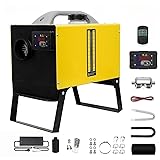
- Dual Power Supply Coverage: Sunster diesel heater is equipped with 2 wiring options (12/24V DC and 110-240V AC), which can automatically switch between vehicle and household power sources. Enjoy comfortable heating anytime in scenes such as cars, RVs, trucks, tractors, garages, cabins, outdoor camping
- Easy Installation&Efficient Heating: The 8 kW diesel heater is designed specifically for camping and outdoor exploration. The built-in combustion system of the heater maintains a stable output temperature of 46.4-96.8 ° F (8-36 ° C). Sandblasting aluminum heat exchangers can efficiently conduct heat, allowing RVs, boats, or engine rooms to quickly heat up and provide long-lasting comfort
- Low Fuel Consumption: Our portable diesel heater has a power of 8kw and a heating efficiency of ≥ 90%. The fuel consumption is only 0.11-0.48L/H, achieving rapid heating and continuous heating. Equipped with advanced mufflers and fuel pumps, the noise level during operation is ≤ 75dB, making it possible to enjoy warmth and tranquility all night long for both vehicles and camping
- Comes with base bracket: Our heater Equipped with a 140mm base bracket,Easier installation and to prevent the common issue of exhaust gas blockages, ensuring uninterrupted warmth.
- Multiple Protection: The diesel heater is equipped with multiple protections against overheating ≥ 270 ℃, short circuit, overvoltage, reverse connection, etc. It also features intelligent constant temperature, timed and voice broadcast real-time warning. It is recommended to install it professionally and discharge exhaust gas externally, ensuring peace of mind for vehicle and boat camping day and night
Quick Specs
- Power output: 1-8kW adjustable (realistically 5-6kW max)
- Fuel consumption: 0.11-0.48 litres/hour
- Voltage: 12V/24V/110-240V multi-voltage
- Dimensions: All-in-one unit with carry handle
- Weight: Approximately 8kg
- Fuel tank: 5 litres built-in
- Key feature: APP control with auto start-stop and ventilation mode
- Warranty: Seller dependent, typically 12 months
The Sunster claims to fame is decent app integration at Chinese heater prices. While most budget heaters have terrible apps (if they have apps at all), the Sunster’s app actually works reasonably well for remote control and monitoring. It’s ranked ninth because the app feature is genuinely useful, even though you’re still buying budget Chinese quality with all the associated risks.
I haven’t used this exact model personally, but several vanlife friends have fitted Sunster heaters and report the app is surprisingly functional. You can start/stop the heater, adjust temperature and power, set timer schedules, and monitor fuel levels via smartphone. Range is Bluetooth-based (not WiFi), so you need to be within 10-20 metres, but that’s fine for warming the van from the pub or pre-heating before bed.
The multi-voltage capability (12V/24V/110-240V) is interesting – you can run it from vehicle battery, or plug it into mains power if you’re on hookup or using a workshop. This flexibility makes it useful beyond just van installation. The automatic start-stop and ventilation mode are nice features that work via the app or controller.
Build quality is standard Chinese budget – plastic case, thin metal components, adequate wiring. The 5-litre integrated tank is smaller than some competitors (the ShockFlo has 10L), so you’ll need to refill more frequently if running all night. At low power (1-2kW) you’ll get 8-10 hours from a tank. At higher power you might only get 4-5 hours.
The all-in-one design with carry handle makes this portable – good for workshop use, temporary camping setups, or moving between vehicles. Installation is straightforward: mount the unit, run exhaust and intake pipes, connect power, fill with diesel, pair the app, done. Allow 2-3 hours for first-time installation.
Performance is typical Chinese heater – it produces heat, often noisily, and reliability is uncertain. The app adds genuine value if you like being able to control things from your phone. The auto start-stop based on temperature sensing is useful for maintaining comfort without wasting fuel. The ventilation mode (blower without combustion) can help air out the van in summer.
Components are standard Chinese heater parts – expect the usual potential issues with glow plugs, fuel pumps, and controllers. The app adds another failure point (Bluetooth module), but so far reports suggest it’s relatively stable. Parts are cheap and widely available if things break.
The Good
- Decent app control – Better than most budget heaters, actually functional
- Multi-voltage capability – Run from 12V, 24V, or mains power (with adapter)
- Auto start-stop feature – Temperature-based automation works well
- Ventilation mode – Summer air circulation without heat
- Portable design – Carry handle for moving between locations
- All-in-one simplicity – Everything integrated for easier installation
- Reasonable price – £185-235 for app control is decent value
The Bad
- Small 5L tank – Need more frequent refills than 10L competitors
- Chinese quality lottery – Standard reliability concerns
- Noisy operation – Fuel pump and combustion audible
- Bluetooth range limited – Need to be relatively close (10-20m max)
- App adds complexity – One more thing that can fail or need troubleshooting
- Vague specifications – Real-world power output probably lower than claimed
Best For
- Tech-enthusiast buyers – People who enjoy app control and automation
- Multi-purpose use – Workshop, garage, tent, and vehicle heating
- People wanting timer schedules – Pre-heat van before waking or arriving
- Budget buyers who want modern features without premium prices
- Portable applications – Moving between locations or temporary setups
Not For
- Reliability-focused buyers – Chinese lottery quality isn’t for everyone
- Long-duration running – 5L tank limits overnight use at higher power
- Non-technical users – App pairing and setup requires basic tech skills
- Professional installations – Too many potential issues for customer vehicles
- People without smartphones – The app is the main selling point
Real-World Example
Sophie fitted a Sunster in her Vivaro because she liked the idea of app control – she could warm the van from the climbing wall or pub before heading back on cold nights. The app works well enough, though Bluetooth connection occasionally drops and needs re-pairing. The heater itself has been reliable through one winter so far. The small 5L tank is annoying – she needs to refill every 2-3 days with regular use. The auto start-stop feature works nicely for maintaining 17-18°C overnight without waking her. For £195 she’s satisfied, though she wishes the tank was bigger. She says if it lasts two winters she’ll be happy, and if not she’ll upgrade to something premium.
10. maXpeedingrods 2KW — Smallest Budget Option

- 【Bluetooth App—Intelligent & Facilitation】— Downloads “Booyood” App, which enables you to remotely control the heater via Bluetooth App and with LCD panel and remote controller, you can preheat or defrost the outdoor vehicle by remote controller or panel in advance.
- 【Upgraded Accessories】—Copper wire harness, thicker and tougher quiet tubing, nylon wire harness, washable fuel pump, thickened air pipes, 304 stainless steel exhaust pipe, All of above accessories of the diesel heater have been upgraded to improve product performance. and added oil extractor, installation kit and gloves.
- 【Easy to Operate】—Easy to install , remove and maintain. The diesel heater can be used for truck, boat, car trailer, motorhomes, touring car, camper vans, caravans and so on.
- 【Automatic Altitude Compensation】—In plateau mode, the heater can work at altitudes up to 16,000 feet, maintaining constant temperature without intervention and help you keep peace of mind.
- 【Certifications】—With E-mark and CE certification, the diesel heater can be installed in the car in full compliance, legally registered without any worries.
Quick Specs
- Power output: 0.5-2kW adjustable
- Fuel consumption: 0.1-0.25 litres/hour
- Voltage: 12V/24V
- Dimensions: Smaller unit, easier to fit in tight spaces
- Weight: Approximately 5-6kg
- External fuel tank required (usually included)
- Warranty: 12 months from seller
The maXpeedingrods 2KW rounds out our top 10 as the best small-output budget option. It’s here because sometimes you genuinely only need 2kW – maybe you have a small van, excellent insulation, or mild climate use. At £130-165 it’s cheaper than most alternatives, and maXpeedingrods has slightly better quality control than completely anonymous Chinese sellers.
This is the smaller sibling of the 8KW model ranked fifth. It’s fundamentally the same technology, just less power. For many VW Transporters, Ford Transit Connects, or small campervans, 2kW is actually sufficient. More power isn’t better if it means the heater constantly cycles on and off because the space heats too quickly.
I helped install one of these in a friend’s T4 with decent insulation. The 2kW output is perfect for her – heats the van to comfortable temperature in 20-30 minutes, then runs efficiently on low power to maintain warmth. She’s had zero issues in 18 months of weekend use. The smaller unit fits easily under the passenger seat, taking up less valuable storage space than larger heaters.
Build quality is Chinese budget standard – adequate components, thin materials, everything built to a price. The controller is basic (LCD panel plus optional remote), but it functions well enough. The fuel pump is audible but not horrendously loud. Installation is straightforward with the usual caveat that instructions are poorly translated.
The genuine 2kW output means fuel consumption is excellent – at low power you’re using maybe 0.12-0.15 litres per hour, so a 10L tank lasts ages. This makes it particularly good for weekend warriors who aren’t heating 24/7. Running costs are minimal – a full weekend might use 3-4 litres at most.
Reliability follows the usual Chinese heater pattern – some units last years, others fail quickly. Common issues are glow plug failures and fuel pump problems, both cheap and easy to fix if you’re moderately handy. The Facebook groups and YouTube tutorials cover everything you need to troubleshoot.
The downside to 2kW is you’re limited in what you can heat. Large vans, poor insulation, or extreme cold will overwhelm this unit. If you’re full-timing in winter Scotland, you need more power. But for weekend camping in autumn/spring, or as a shoulder-season heater, it’s absolutely fine.
The Good
- Cheapest genuine 2kW option – £130-165 is excellent value
- Perfect for small vans – VW T4/T5, Vivaro, Transit Connect, etc
- Excellent fuel economy – Low power means minimal diesel consumption
- Compact size – Fits in tight spaces under seats or in lockers
- Quick heating for small spaces – 2kW is adequate for well-insulated vans
- maXpeedingrods support – Better than anonymous Chinese sellers
- Complete kit – Tank, controller, pipes, fittings all included
The Bad
- Only 2kW – Insufficient for large vans or poor insulation
- Chinese quality – Standard reliability lottery
- Basic controller – LCD panel is functional but dated
- Noisy pump – Audible clicking during operation
- No app control – Bluetooth version not available in 2kW
- Thin exhaust – Will rust over time if exposed
- Limited parts availability – Smaller 2kW components less common than 5-8kW parts
Best For
- Small vans – Perfect for VW Transporter-sized vehicles
- Well-insulated builds – Where 2kW is adequate
- Weekend campers – Occasional use where reliability matters less
- Tight budgets – Cheapest way to add diesel heating
- Mild climate use – Autumn/spring camping rather than deep winter
Not For
- Large vans – You need 5kW+ for big spaces
- Full-time winter living – Insufficient power for prolonged cold
- Poorly insulated vans – Heat loss will exceed 2kW output
- Professional installations – Quality concerns make this unsuitable
- People who need reliability – Chinese gamble not worth it for primary heat
Real-World Example
Emma has a VW T4 with excellent insulation (Celotex everywhere, thermal curtains, insulated floor). She fitted a maXpeedingrods 2KW for weekend camping. It heats her small van perfectly – she sets it to 16°C before bed, and it maintains temperature all night using about 1-1.5 litres of diesel. The pump noise bothered her initially, but she got used to it. After 18 months it’s still working fine. She only camps autumn through spring (not deep winter), so the 2kW output is adequate. If she was full-timing in Scotland she’d need more power, but for her use case this £140 heater has been brilliant value.
The Overall Winner: Webasto Air Top 2000 STC
- Heater kit includes Webasto Air Top 2000 STC diesel with temperature controller rheostat
- All electrical harnesses and connections
- Please note – this version Air Top 2000 STC heater is NOT compatible with high Altitude compensation kit – please see our RV specific heater kit
Why it wins:
After testing, using, installing, and troubleshooting seven different diesel heaters over the last few years years, the Webasto Air Top 2000 STC is what I’d recommend to anyone who can afford it. Yes, it’s expensive. Yes, you can heat a van for a quarter of the price with a Chinese unit. But here’s what you’re actually buying:
Reliability. It works. Every single time. At 2AM when you’re freezing. In Scotland when it’s -8°C. After sitting unused for three months. You turn it on, it fires up, it heats. This isn’t exciting until you’ve experienced a £150 heater failing at midnight in the Lake District, and you’re spending the next hour troubleshooting with numb fingers by headtorch.
Longevity. These are designed for 10-15 years of regular use. When you calculate cost-per-year, suddenly £1,000 over a decade is £100/year. If you replace a £200 Chinese heater every three years, you’re spending similar money but with all the hassle of repeated installations and ongoing anxiety about reliability.
Support. UK distributors answer phones. Parts are available same-day in many cities. Installation guides are professional. Error codes actually mean something. Compare this to emailing Chinese sellers and waiting weeks for responses in broken English.
The Webasto isn’t perfect – the controller is dated, professional installation is recommended, and the price makes your eyes water initially. But it’s the heater I’d fit in my own van, which tells you everything.
When to choose something else:
- Limited budget: Autoterm Air 2D gives you 85% of the performance for half the price (£525-625)
- Large van: You need the Eberspacher D4 4kW version for big spaces (£1,625-1,870)
- Experimental first van: Go cheap with Triclicks or maXpeedingrods (£140-280) and upgrade later
- App control enthusiast: Sunster or maXpeedingrods Bluetooth versions (£185-280)
Buyer’s Guide: Choosing Your Diesel Heater
Step 1: Calculate Your Power Requirements
2kW heaters are sufficient for:
- Small vans (VW T4/T5, Ford Transit Connect, Vivaro, Vito)
- Well-insulated spaces
- Weekend camping in mild climates
- Vehicles up to approximately 12 cubic metres
4-5kW heaters work for:
- Medium to large panel vans (VW Transporter LWB, Transit Custom high roof)
- Moderate insulation or mild winter use
- Full-time living in average climates
- Vehicles 12-20 cubic metres
8kW heaters (really 5-6kW actual) needed for:
- Large vans and motorhomes (Sprinter LWB high-roof, Ducato-based vehicles)
- Poor insulation
- Extreme cold climates
- Vehicles over 20 cubic metres
Formula: Multiply your van’s internal volume (length × width × height in metres) by 60-80 watts per cubic metre with good insulation, or 100-120 watts with poor insulation.
Example: A VW Transporter T5 is roughly 2m × 1.7m × 1.4m = 4.76 cubic metres. With good insulation: 4.76 × 70 = 333 watts minimum. A 2kW (2,000 watt) heater is more than adequate.
Step 2: Budget Reality Check
Under £200: Chinese heaters only. Accept reliability concerns and potential hassle. Budget an extra £50-100 for replacement parts over 2-3 years.
£200-£600: Chinese heaters at the top end, or Autoterm Air 2D. The Autoterm is the smart choice here – proper European quality for reasonable money.
£600-£1,200: Premium territory. Webasto Air Top 2000 or Eberspacher Airtronic D2. Worth it if you’re full-timing or keeping the van long-term.
£1,200+: Large-capacity premium units (Eberspacher D4) or premium Webasto systems. Only necessary for large vehicles.
Don’t forget installation costs:
- DIY: Budget £50-100 for additional parts (hose clips, sealant, extra ducting, etc)
- Professional: £300-600 depending on complexity and location
- Add £150-250 if you need a fuel standpipe fitted to main tank
Step 3: Noise Tolerance Assessment
If you’re a light sleeper or share the van with someone who is:
- Premium brands only (Webasto, Eberspacher) – they’re genuinely quieter
- Mount heater as far from sleeping area as possible – under driver seat rather than under bed
- Budget for quality exhaust silencer – cheap ones are louder
If noise doesn’t bother you:
- Chinese heaters are fine – You’ll get used to the fuel pump clicking
- Save the money for better insulation or other upgrades
Step 4: Technical Skill Level
Beginner DIYer:
- Consider professional installation for any premium brand
- All-in-one Chinese units (maXpeedingrods, GEARLASSO, Sunster) are easier
- Allow 6-8 hours for first installation
- Join Facebook groups BEFORE starting (50,000 members for support)
Experienced DIYer:
- Any heater is manageable with patience
- Premium brands have better instructions
- Budget 3-5 hours for installation
- Have troubleshooting tools ready (multimeter, spare fuses)
Professional:
- Premium brands every time – easier to warrant your work
- Avoid Chinese units in customer vehicles – reliability issues reflect on you
- Budget 2-3 hours for typical installation
Step 5: New vs Used Considerations
Brand new Chinese heater: £140-280
Used Webasto on eBay: £300-600 (ex-commercial vehicles)
Refurbished Eberspacher: £400-700 (specialists like ButlerTechnik)
My advice: A used premium brand from a reputable seller often beats a new Chinese unit. You get German quality and reliability, someone else paid the depreciation, and parts are still available. Just ensure it’s been serviced and comes with some warranty.
Installation Tips
Mounting Location
Under passenger seat (most common):
- Easy access to 12V supply
- Out of living space
- Good for small to medium heaters
- Can be noisy for passengers
Rear storage locker:
- Keeps noise away from sleeping area
- More complex wiring run
- Good for larger heaters
- Easier exhaust routing
External (under van):
- Keeps heat and noise outside living space
- Requires weatherproof housing
- More complex installation
- Risk of road debris damage
- Popular in Australia, less common in UK (for good reason – gets wet)
Don’t:
- Mount anywhere you’ll sleep directly above/beside (noise)
- Put it where you’ll kick it getting in/out
- Install without vibration isolation (rubber mounts essential)
Exhaust Routing
Critical safety points:
- NEVER route exhaust into enclosed spaces
- Exit minimum 300mm from any window/vent/door
- Point exhaust downward to prevent rain ingress
- Use proper stainless steel pipe – cheap stuff rusts instantly in UK weather
- Fit a silencer/muffler – you’ll thank me when it’s not screaming on startup
Common mistakes:
- Exhaust too close to plastic trim (melts)
- Insufficient lagging where exhaust passes through van body (fire risk)
- Exhaust pointed upward (fills with rain, heater won’t start)
- Too many bends (reduces efficiency, increases carbon buildup)
Air Intake
- Fresh air from outside is essential – don’t recirculate interior air
- Keep intake as straight as possible
- Fit a proper air filter (comes with kits, but check it monthly)
- Route away from exhaust outlet (obvious but people still get this wrong)
- Consider a pre-filter if you’re parking in dusty conditions
Fuel System
Separate tank vs main tank:
Separate tank (easier):
- 5-10L plastic tank in secure location
- No modification to vehicle required
- Portable if you want to move heater
- Need to remember to refill it
Main tank (better long-term):
- Tap into vehicle diesel supply
- Never forget to refill
- Requires proper standpipe installation
- Potential warranty implications
Both approaches work. I use a separate 10L tank because:
- Easy to move heater between vehicles if needed
- No risk of running out of fuel for the engine
- Can use red diesel (agricultural) if you’re off-road camping (wink wink, technically illegal for road use but nobody’s checking your heater tank)
Electrical
Battery drain is real:
- Startup draws 10-14 amps for 60-90 seconds
- Running draws 0.5-3 amps depending on heater and fan speed
- 8-hour night at 1.5 amps = 12Ah from your leisure battery
My setup:
- Dedicated fuse (15A for small heaters, 20A for large)
- Fused at both ends (battery and heater)
- 16mm² cable for main supply
- Kill switch easily accessible
- Battery voltage monitoring essential
The “Purge” Function
Chinese heaters need purging the fuel lines before first use (and after running out of fuel):
- Hold specific button combination (check your manual)
- Pump runs for 2-3 minutes pushing air out
- Don’t skip this or it won’t start
- Premium brands self-purge (one less thing to remember)
Common Problems & Solutions
Problem: Heater Won’t Start – Error Code E-08 or F-08
Causes:
- Most common: Glow plug failure (£10-15 part, 10-minute fix)
- Air in fuel lines (purge required)
- Low voltage (battery too flat)
- Blocked fuel filter
Fixes:
- Check battery voltage (needs 12V+, won’t start below 11.5V)
- Purge fuel system
- Replace glow plug (unscrew old one, screw in new one, takes 10 minutes)
- Change fuel filter (£3-5 part)
Problem: Heater Starts Then Shuts Down After 60 Seconds
Causes:
- Blocked exhaust (check for carbon buildup or blockage)
- Insufficient combustion air (check air intake filter)
- Faulty temperature sensor
- Incorrect installation (exhaust back pressure)
Fixes:
- Remove exhaust pipe and check for carbon deposits
- Clean or replace air filter
- Ensure exhaust has no kinks or excessive bends
- Check exhaust exits freely (not blocked by mud/snow)
Problem: Excessive Noise – Louder Than Normal
Causes:
- Fuel pump wearing out (common on Chinese units after 12-18 months)
- Loose mounting brackets (vibration)
- Exhaust leak
- Blocked air intake causing combustion strain
Fixes:
- Tighten mounting bolts, add rubber isolation
- Check exhaust connections for leaks (seal with high-temp exhaust paste)
- Clean air filter
- If fuel pump noisy, replacement is £15-25 on eBay (15-minute job)
Problem: Smells Like Diesel Inside Van
Causes:
- Leak in fuel lines (seriously dangerous)
- Exhaust leak
- Overfilled fuel tank venting
- Spillage during refilling
Fixes:
- Check all fuel line connections immediately
- Pressure test fuel system (or pay someone to – this is important)
- Check exhaust connections, seal any leaks
- If you can’t find source, STOP using heater until you do
Problem: Heater Runs But Van Doesn’t Get Warm
Causes:
- Blocked or kinked ducting
- Heater running on too low power
- Massive heat loss (poor insulation/drafts)
- Cold air leaking into duct system
Fixes:
- Check ducting is straight and not collapsed
- Increase power setting
- Seal air leaks around doors, windows, roof vents
- Add insulation where you can
- Check warm air outlet isn’t blocked or buried under stuff
Problem: Excessive Fuel Consumption
Causes:
- Heater running higher power than necessary
- Damaged or worn heater components
- Poor combustion (clogged burner)
- Cold air leaks forcing heater to work harder
Fixes:
- Lower power setting once van is warm
- Service heater (clean burn chamber – do this annually)
- Improve van insulation
- Seal drafts and air leaks
Safety Considerations (Actually Important, Not Just Liability Waffle)
Carbon Monoxide is Real
Diesel heaters produce CO. If your exhaust leaks into the living space, you could die. This isn’t paranoid nonsense:
Essential safety:
- CO detector mandatory (£15-20 on Amazon, test it monthly)
- Mount detector near sleeping area, low down (CO sinks)
- Exhaust MUST exit van completely, away from windows/vents
- Inspect exhaust regularly for rust, holes, loose joints
- Never run heater if you smell diesel/exhaust inside van
True story: Mate’s heater developed an exhaust leak. CO detector went off at 3AM. He’d have slept through dying without it. £15 detector saved his life. Buy one.
Fire Risk Management
Diesel heaters get hot. The exhaust pipe reaches 300-400°C. Respect this:
Fire prevention:
- Keep exhaust 100mm+ from all plastic, wood, fabric
- Use proper high-temperature lagging where exhaust passes through walls
- Don’t store anything flammable near heater or exhaust
- Mount on non-flammable surface (metal plate common)
- Fire extinguisher mandatory in van (separate requirement, but seriously)
Fuel System Safety
Diesel is less explosive than petrol, but it’s still flammable:
Safe fuel handling:
- Secure tank properly (imagine emergency braking or crash)
- Route fuel lines away from hot exhausts
- Use proper fuel hose (not random hardware store pipe)
- No fuel connections inside sleeping area if possible
- Check for leaks regularly (smell, visual inspection)
- Have emergency shutoff accessible
Ventilation
Even with perfect exhaust system, you need fresh air:
Why ventilation matters:
- Heater consumes oxygen (not from room if installed correctly, but you still breathe)
- Prevents condensation buildup
- Dilutes any minor exhaust leaks
- Just generally healthier
My ventilation:
- Roof vent cracked open 10mm minimum when heater running
- Additional window vent if staying static for days
- Never seal van 100% airtight while heating
Legal Considerations (UK Specific)
Insurance:
- Inform insurance company of modification (they might not care, but tell them)
- Premium brands with ECE certification easier to insure
- Chinese heaters without certification might void insurance technically
MOT:
- Heater installation must be safe and secure
- Exhaust must not leak
- Fuel system must be properly installed
- Professional installation helps pass MOT if questioned
Gas Safe / Certification:
- Diesel heaters aren’t gas appliances, so no Gas Safe required
- However, any cowboy can fit one badly
- Consider paying professional for peace of mind on first install
Real Running Costs: Full Breakdown
Let’s get specific about what heating actually costs over time:
Scenario 1: Weekend Warrior (October to March, 25 nights/year)
Webasto Air Top 2000 STC:
- Initial cost: £1,000
- Installation (DIY): £75 (extra parts)
- Diesel per night (8 hours × 0.15L/h): 1.2L = £2.16
- Annual running: 25 nights × £2.16 = £54
- 5-year total: £1,075 + £270 diesel = £1,345
- Cost per night over 5 years: £10.76
maXpeedingrods 8KW Bluetooth:
- Initial cost: £250
- Installation (DIY): £50
- Diesel per night (higher consumption): 1.8L = £3.24
- Annual running: £81
- Replacement parts (estimated): £50 over 5 years
- 5-year total: £300 + £405 diesel + £50 parts = £755
- Cost per night over 5 years: £6.04
Weekend warrior verdict: Chinese wins on pure cost, but do you want reliability worries?
Scenario 2: Full-Timer (7 months/year, 210 nights)
Webasto Air Top 2000 STC:
- Initial cost: £1,000
- Professional installation: £450
- Annual diesel: 210 × £2.16 = £453.60
- Service (annual DIY): £15
- 5-year total: £1,450 + £2,268 diesel + £75 servicing = £3,793
- Cost per night over 5 years: £3.61
Autoterm Air 2D:
- Initial cost: £575
- Professional installation: £350
- Annual diesel: 210 × £2.30 = £483 (slightly higher consumption)
- Service (annual DIY): £15
- 5-year total: £925 + £2,415 diesel + £75 servicing = £3,415
- Cost per night over 5 years: £3.25
maXpeedingrods 8KW:
- Initial cost: £250
- Professional installation: £300 (less if DIY)
- Annual diesel: 210 × £3.24 = £680.40 (higher consumption)
- Parts replacement (fuel pump year 2, glow plug year 3): £50
- Replacement heater year 4 (likely): £250
- 5-year total: £550 + £800 (install × 2) + £3,402 diesel + £50 parts = £4,802
- Cost per night over 5 years: £4.57
Full-timer verdict: Premium brands win decisively. The reliability and longevity offset higher initial cost.
Scenario 3: Part-Timer (4 months/year, 120 nights)
Autoterm Air 2D (sweet spot):
- Initial cost: £575
- Installation (confident DIY): £75
- Annual diesel: 120 × £2.30 = £276
- Service (every 2 years): £15
- 5-year total: £650 + £1,380 diesel + £45 servicing = £2,075
- Cost per night over 5 years: £3.46
Part-timer verdict: Autoterm Air 2D is the smart money for regular but not full-time use.
Frequently Asked Questions
Can I run my diesel heater while driving?
Yes, absolutely. In fact it’s excellent for demisting windscreens and staying warm in uninsulated vans. Most people wire them so they only run when ignition is on, or to leisure battery for static camping. Just ensure adequate battery capacity for startup draw.
How long does a 10L tank last?
Depends on power setting, but rough guide:
- Low power (1-1.5kW): 40-50 hours
- Medium (2-3kW): 20-25 hours
- High (4-5kW): 10-15 hours
Most people run on low after initial warm-up, so a 10L tank lasts 3-5 nights of typical use.
Will it drain my leisure battery?
Depends on your battery capacity and solar/alternator charging:
- Startup: 10-14 amps for 60-90 seconds
- Running: 0.5-3 amps depending on fan speed
- 8-hour night: approximately 10-15Ah total
A 100Ah leisure battery can handle this easily if it’s in reasonable condition. Add solar panels or drive regularly to recharge.
Can I heat my van while wild camping?
Yes – that’s literally what these are designed for. Just be considerate:
- Position exhaust outlet away from neighboring campers
- Chinese heaters can be noisy on startup (30-60 seconds of whooshing and combustion noise)
- Premium brands are quieter but still audible outside van
- Morning startup might wake nearby campers
What about altitude? I’m touring Scotland / Alps / Norway
Premium brands and Autoterm self-adjust for altitude up to 1,500-3,000m depending on model. Chinese heaters claim auto-adjustment but it’s less reliable. Above 1,500m you may see efficiency drop or sooting with cheap heaters. For serious mountain touring, invest in altitude-compensating models.
Do I need special diesel?
No. Regular road diesel from petrol stations works perfectly. Some people use red diesel (agricultural/off-road) in separate tanks for cost savings, but this is technically illegal for road vehicles in the UK even if you’re only heating. Biodiesel (B20 or higher) may cause issues with seals in cheaper heaters – stick to regular diesel.
How often do I need to service it?
Premium brands (Webasto/Eberspacher):
- Annual service recommended
- Clean burn chamber, check glow plug, inspect fuel system
- Takes 20-30 minutes DIY or £80-120 professional
Chinese heaters:
- Service every 6-12 months or when performance drops
- More frequent glow plug replacement likely
- Same basic service procedure
Skip servicing and you’ll get carbon buildup, reduced efficiency, potential failures.
What happens if I run out of fuel?
Heater shuts down with error code. You’ll need to:
- Refill tank
- Purge air from fuel lines (hold button combination, pump runs for 2-3 minutes)
- Restart
Premium brands are more forgiving and may self-purge. Chinese heaters often need manual purging or they’ll keep showing error codes.
Can I fit this myself or do I need a professional?
DIY is possible if you’re confident with:
- Drilling holes in your van (exhaust/intake)
- Basic 12V wiring (fuses, crimping, wire routing)
- Fuel system plumbing
- Following instructions (or YouTube videos for Chinese heaters)
Get professional help if:
- First time doing van modifications
- Nervous about drilling/cutting your van
- Want insurance-approved installation certificate
- Premium brand requiring warranty-valid installation
Most DIY installers report 4-6 hours for first installation, 2-3 hours for subsequent ones.
What about warranty if I fit it myself?
Premium brands: Usually require professional installation for warranty validity. DIY installation may void it. Check before buying.
Chinese heaters: Warranty is minimal anyway (12 months from seller), and DIY installation is assumed. You’re mostly relying on cheap replacement parts.
Insurance: DIY installation won’t affect insurance as long as it’s safe and secure. Poor installation that causes problems will absolutely affect any claim though.
Which brand is most reliable?
- Webasto – Legendary reliability, 10-15 year lifespan expected
- Eberspacher – Equal to Webasto, maybe marginally louder
- Autoterm – Very good reliability, 5-10 years expected
- Chinese brands – Complete lottery, might last 2-10 years, usually need parts/repairs within 2 years
Can I use this to heat water as well?
These are air heaters only. For combined heating + hot water you want:
- Webasto Combi system (air + water heating)
- Eberspacher Hydronic (air + water + engine pre-heat)
- Separate water heater
Combined systems cost £1,500-3,000+ but eliminate need for separate water heater.
Final Thoughts
Right. After 9,000+ words, here’s what actually matters:
If you have the money: Buy a Webasto Air Top 2000 STC or Eberspacher Airtronic D2. You’ll never regret it. The reliability, longevity, and peace of mind are worth every penny.
If you’re on a normal budget: The Autoterm Air 2D is the smart choice. Proper European quality, legal certification, reasonable price. This is where sensible people land.
If you’re skint: Get a Chinese heater (maXpeedingrods, Triclicks, whatever’s in stock on Amazon). Go in with eyes open – it might be brilliant, might be rubbish, probably somewhere in between. Budget £50-100 for replacement parts and accept you’ll be doing some tinkering.
Whatever you buy:
- Fit a CO detector (mandatory, non-negotiable)
- Get professional installation if you’re uncertain
- Service it annually
- Don’t cheap out on exhaust components (fire risk)
- Join the Chinese diesel heater Facebook group if you buy Chinese (50k members = invaluable support)
I’ve been through budget Chinese heaters that failed, mid-range units that were okay, and finally landed on a Webasto that just works. If I had my time again, I’d have bought the Webasto first and saved myself three installations and two years of occasional heating anxiety.
But if I was broke and converting my first van? I’d absolutely buy a £150 Chinese heater, learn how they work, fix it when it breaks, and upgrade to premium when I had money. There’s no wrong answer here, only wrong expectations.
Stay warm out there.
Affiliate Disclosure
This article contains affiliate links to Amazon UK and other retailers. If you purchase through these links, I may earn a small commission at no extra cost to you. This helps keep TheFeralWay running, pay for diesel (ironically), and allows me to keep testing gear and writing honest reviews.
If a heater is shit, I’ll tell you it’s shit, regardless of whether it has an affiliate program.