
Right. Let’s talk about the thing nobody discusses at the pub but everyone thinks about when they’re converting a van: where do you poop?
I’ve spent a lot of time in campervans since 2021. Four different vans, seven different toilet systems (including one catastrophic Glastonbury disaster I’d rather forget), and more trips to Elsan points than I care to count. I’ve woken up at 3am absolutely desperate in a Scottish layby with the rain hammering down. I’ve dealt with frozen flush tanks in January. I’ve experienced that special joy of discovering your cassette leaked onto the van floor during a spirited bit of Lake District driving.
So this isn’t a theoretical roundup. This is hard-won knowledge from someone who’s actually lived with these things day in, day out. Some toilets here I’ve owned. Others I’ve tested extensively through mates’ vans or rental conversions. A few I’ve researched obsessively using real user data from people who’ve been living this life for years.
Whether you’re building your first van and panicking about bathroom logistics, or you’re three years in and finally admitting your current setup is shite (pun absolutely intended), this guide covers every option from £20 bucket systems to £900 composting thrones.
For those exploring options, Portable Toilets for Campervans can significantly enhance your traveling experience.
How I Tested These Toilets
Penty of nights vanlife across different vehicles: a DIY-converted Transit, a Mercedes Sprinter, and currently a VW T5. Test conditions have ranged from wild camping in the Cairngorms to festival hell at Latitude, winter storms in the Highlands to summer heat in Portugal.
My testing criteria:
- Real-world reliability: Does it survive British roads and dodgy wild camping spots?
- Actual capacity vs claims: When two adults use it daily, how long before you’re trudging to the disposal point?
- Emptying experience: Rated from “not too bad” to “why did I choose this lifestyle?”
- Space efficiency: Critical in a van where every centimetre matters
- Smell control: The ultimate test after three days at a festival in July
- UK availability: Can you actually buy it and get spares without ordering from Germany?
- Long-term value: Will you still be happy with this purchase in 18 months?
Chemical vs composting vs bucket: They all work. Chemical toilets are familiar and simple but need chemicals and disposal points. Composting toilets are eco-friendly and let you camp truly off-grid, but require understanding the system. Bucket loos are dirt cheap emergency solutions. Don’t let van-fluencers tell you there’s only one right answer.
Quick Comparison Table
| Toilet | Type | Price (£) | Capacity | Best For | Amazon UK |
|---|---|---|---|---|---|
| Thetford Porta Potti 365 | Chemical | £80-85 | 21L waste/15L flush | Most people | View on Amazon |
| Dometic 966 | Chemical | £50-65 | 18.9L waste/8.7L flush | Compact spaces | View on Amazon |
| Thetford Qube 335 | Chemical | £60-75 | 10L waste/10L flush | Ultra-compact vans | View on Amazon |
| TRELINO Evo L | Composting | £450-550 | 2x10L | Modern aesthetic fans | View on Amazon |
| TRELINO Evo M | Composting | £350-450 | 8L+5L | Smaller composting option | View on Amazon |
| TROBOLO WandaGO | Composting | £220-260 | 8L+5L | Height-adjustable composting | View on Amazon |
| Nature’s Head | Composting | £800-1020 | 4-6 weeks | Serious off-gridders | View on Amazon |
| Kampa Portaflush 20 | Chemical | £55-75 | 20L waste/12L flush | Tight budgets | View on Amazon |
| Blue Diamond Big Loo | Bucket | £20-30 | 19L | Emergency backup | View on Amazon |
| Bivvy Loo | Collapsible bucket | £50-65 | Unlimited with liners | Festivals/minimal storage | View on Amazon |
The Reviews: Detailed Breakdown
1. Thetford Porta Potti 365 — Best Overall
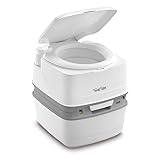
- Dimensions (H x W x D): 414 x 383 x 427 mm
- Capacity of flush-water tank: 15 L
- Level indicator display for the waste-holding tank: Yes
- Level indicator display for the flush-water tank: No
- Capacity of waste-holding tank: 21 L
Quick Specs
- Waste tank: 21 litres
- Flush tank: 15 litres
- Weight: 4.1kg
- Dimensions: 38.3 x 41.3 x 42.7cm
- Max user weight: 120kg
After testing seven different toilet systems over four years, I keep coming back to the Porta Potti 365. Not because it’s exciting or Instagram-worthy – it’s a beige plastic box that holds your sh*t. But because it just works, reliably, without drama.
I bought my first one in 2021 for my Transit conversion. It’s had plenty of use, and the only issue was replacing the seal once (£8 part, took ten minutes). When I upgraded to the Sprinter, I bought another. That’s how confident I am in this toilet.
The 21-litre waste capacity is the sweet spot for vanlife. My partner and I using it exclusively (no public loos) get three solid days before emptying. If you’re supplementing with campsite facilities or the occasional Tesco stop, you’re looking at 4-5 days easily. The 15-litre flush tank gives you 50-60 flushes, which syncs up nicely with the waste tank timing.
The manual bellows pump is brilliant in its simplicity. No batteries to die at 2am, no electric pump to fail. Just squeeze it a few times and you get a proper rinse. Some people complain about the manual pump being effort, but honestly, if you can’t manage ten squeezes, you’ve got bigger problems than toilet choice.
Emptying is straightforward – the pour spout actually works (unlike some cheaper models where you basically throw poo water everywhere). The level indicator is visible from outside, so you’re not playing “guess when it’s full” gambling. The whole waste tank detaches with two clips, has a proper handle, and the rotating spout means you can position it without gymnastics at the disposal point.
Smell control is decent. Not perfect – this is a chemical toilet, not magic – but with proper Blue/Pink fluid usage, there’s no lingering stench in the van. The seal does its job. I’ve had this sitting in a sealed van in 30-degree Spanish heat for two days and come back to… nothing. No smell. That’s impressive.
The height is proper – 42.7cm tall – which means adults aren’t doing that awkward squat. I’m 5′ 11″, my partner’s 5’9″, and we’re both comfortable. Some portable loos make you feel like you’re perched on a toddler potty. Not this one.
Build quality is solid. This isn’t flimsy caravan park rental quality. The plastic is thick, the clips are metal-reinforced, the seal is proper rubber. I’ve bounced this thing over Scottish potholes, dropped it (empty, thank god) getting it out of the van, and left it in below-freezing temperatures. Still works perfectly.
Storage-wise, it fits under most rock-and-roll beds, in most “buddy seat” boxes, or in a dedicated toilet compartment. At 38cm wide, it’s compact enough for small vans but substantial enough to be stable.
The ecosystem around Thetford is brilliant. Need a seal? £8 on Amazon next day. Replacement cassette? £60. Fresh-up kit to make it like new? Available everywhere. This isn’t some obscure European brand where you’re ordering parts from Latvia. It’s the VW of portable toilets – boring, reliable, parts everywhere.
The Good
- 21L capacity means 3-5 days between empties for two people
- Manual pump never fails, no batteries needed
- Proper adult sitting height, comfortable for 6+ footers
- Level indicator actually visible and accurate
- Pour spout design makes emptying less grim
- Spare parts widely available in UK
- Proven reliability
The Bad
- It’s beige and boring (but who cares, it’s a toilet)
- At 4.1kg, it’s not the lightest when full (but that’s physics)
- Chemical dependency means finding disposal points
- Flush tank opening is bit narrow for refilling (get a funnel)
Best For
Weekend warriors who want reliability without fuss, full-timers who prioritise function over aesthetics, anyone converting their first van who wants a “safe bet,” families (kids find the manual pump fun), people wild camping near facilities, anyone who values proven reliability over innovation.
Not For
Hardcore off-gridders who never want to use disposal points (get composting), people with zero storage space (try the Qube 335), those morally opposed to chemicals (fair enough, try composting), ultra-lightweight tourers (this isn’t backpacking gear).
Real-World Example
Last October, we spent a few days in the Outer Hebrides. Properly remote, only one campsite with facilities. The Porta Potti handled daily use from both of us for five days straight before we needed to empty it at the campsite. No smells, no leaks, no drama. Just worked. That’s the dream, isn’t it?
2. Dometic 976 — Budget Champion

- 19 litre waste tank
- 9.6 litre flush tank
- Full size seat and lid. Push pump to add water or flush bowl
- One piece tank construction to prevent leaks
- Double sealed value to prevent leaks and odours
Quick Specs
- Waste tank: 18.9 litres (5 US gallons)
- Flush tank: 8.7 litres
- Weight: 5.9kg
- Dimensions: 38.7 x 33.3 x 38.7cm
- 360° pressure flush button
The Dometic 976 is basically the answer to “I need a toilet but I’ve blown my budget on solar panels.” And honestly? It’s a bloody good answer.
I first encountered this when I rented a campervan in the Highlands for a week to test before buying my own van. That hire van had a 976 stashed under the seat. My immediate thought was “this looks cheap” – grey plastic, smaller than the Porta Potti, slightly flimsier feel. By day three, I’d revised my opinion to “this is perfectly adequate.”
The key difference from the Porta Potti is the flush system. Instead of manual bellows, you get a button-operated pressure flush. Sounds fancy. Reality: you pump a hand lever about 5-10 times to pressurise the flush tank, then push a button for the actual flush. It’s… fine. The button flush is satisfying and gives decent bowl coverage. But you’re trading the simplicity of the bellows for a slightly more complex system with more parts to potentially fail.
Where the 976 shines is space efficiency. At 33.3cm wide, it’s noticeably narrower than the Porta Potti (38.3cm). That 5cm matters in a small van. I’ve seen these tucked into spaces where a 365 simply wouldn’t fit. If you’re doing a Caddy or Berlingo conversion where every millimetre counts, this is your toilet.
Capacity is the compromise. 18.9 litres vs 21 litres doesn’t sound like much, but in practice, you’re looking at 2-3 days between empties instead of 3-5. The smaller 8.7L flush tank means about 27 flushes instead of 50. For weekend warriors or people supplementing with public loos, it’s fine. For full-timers wild camping, you’ll be emptying more often.
The emptying experience is decent. The pour spout works, the level indicator exists (though it’s less visible than Thetford’s), and the cassette handle is adequate. It’s not as refined as the Porta Potti’s system, but it gets the job done without disasters.
Build quality is where you feel the cost savings. The plastic feels slightly thinner. The clips are all plastic instead of metal-reinforced. The seal is rubber but perhaps not quite as robust. Nothing feels like it’ll break immediately, but I’d be less confident bouncing this over rough tracks for years.
That said, I know three people who’ve had these for 1-2 years with zero issues. It’s not junk. It’s just… budget. Think Lidl own-brand vs branded goods. Works fine, maybe doesn’t last quite as long.
The seat height (38.7cm) is slightly lower than the Porta Potti (42.7cm). I noticed this after a few days of exclusive use. Not a dealbreaker for most people, but if you’re tall or have knee issues, it might matter.
Smell control is on par with the Porta Potti when using chemicals. The seal works, gases don’t escape, you won’t gas yourself out of the van. Standard chemical toilet performance.
One quirky advantage: the grey/white colour scheme is less obviously “TOILET” than the Porta Potti’s beige. If you’re keeping it visible in your van (under a cushioned buddy seat, for example), it’s slightly more discreet.
Spare parts are available but not quite as ubiquitous as Thetford. You can find them, but you might be ordering from specialist caravan shops rather than next-day Amazon.
The Good
- £20-30 cheaper than equivalent Thetford models
- Narrower width (33.3cm) fits tighter spaces
- Pressure flush button feels satisfying to use
- Adequate capacity for weekend/casual use
- Less obviously a toilet aesthetically
- Proven brand (Dometic make loads of van kit)
- Works perfectly fine for its intended purpose
The Bad
- Smaller capacity (18.9L) means more frequent emptying
- Flush tank only good for ~27 flushes before refill
- Pressure pump adds complexity vs simple bellows
- Slightly lower build quality feel than Thetford
- Lower seat height might bother taller users
- Spare parts less readily available than Thetford
Best For
Budget-conscious first-time converters, people with smaller vans (Caddy, Berlingo, small Transits), weekend/occasional users who don’t need maximum capacity, those who use public loos regularly and just need backup, people who want to save money for other van components, anyone converting on a tight timeline with immediate needs.
Not For
Full-time vanlifers who wild camp extensively (capacity too small), people who hate complexity (the pressure system has more failure points), anyone prioritising absolute maximum reliability over cost, tall people sensitive about seat height, those who want the most established support network for parts.
Real-World Example
Mate of mine has had this in his Caddy conversion for 18 months. Uses it most weekends, occasionally mid-week. He empties it every other weekend regardless of level. Zero issues so far. His take: “It’s not the best toilet in the world, but for fifty quid, it’s brilliant.”
3. Thetford Porta Potti Qube 335 — Ultra-Compact King

Quick Specs
- Waste tank: 10 litres
- Flush tank: 10 litres
- Weight: Just 3.3kg
- Dimensions: 33.2 x 34.2 x 30.8cm (height!)
- Seat height: 30.8cm
The Qube 335 is brilliant at one specific thing: fitting in absolutely tiny spaces. And I mean tiny. This toilet is so compact that I’ve seen it fitted under VW California pop-top seats, tucked into T5/T6 “buddy boxes,” and hidden in cupboards that wouldn’t fit a bag of shopping.
I tested this extensively when helping a mate convert a T5.1 Kombi. He had maybe 35cm of height clearance under his rock-and-roll bed frame. The standard Porta Potti 365? Forget it. Too tall. The 335 slid in with room to spare.
At 30.8cm tall, it’s significantly shorter than standard portable toilets. This is both its superpower and its limitation. Superpower because it fits where others can’t. Limitation because… well, you’re sitting lower. Much lower.
Let me be blunt: using the 335 feels like sitting on a toddler’s potty. If you’re under 5’6″, you might be fine. If you’re over 6ft, your knees are practically up by your ears. It’s not comfortable for extended sessions. But comfort wasn’t the design goal here – space-saving was.
The 10-litre capacity on both tanks means you’re looking at 1-2 days between empties and refills. For two people using it as their primary toilet, you’ll be visiting disposal points frequently. But for most people buying this toilet, it’s an emergency backup or occasional-use system. You’re supplementing with public loos, campsite facilities, or doing the wild wee thing. In that context, 10 litres is plenty.
The manual flush system is identical to the larger Porta Pottis – simple bellows pump, reliable, no batteries. It works well. The pour spout on the cassette is proportionally smaller but functional. Emptying isn’t any more unpleasant than larger models, just happens more often.
Build quality maintains Thetford standards. Despite being small and light, it doesn’t feel flimsy. The plastic is robust, clips are solid, seal is good quality. I’ve seen these take the same abuse as their bigger siblings without issues.
The major advantage beyond size is weight. At 3.3kg empty, it’s genuinely light. Easy to move around, easy to lift when full (though a full 10L cassette still weighs 13kg+ total). If you’re regularly taking the toilet out of the van, this matters.
One clever design feature: the 335 comes with an optional hold-down kit. You can actually screw this to your van floor if you want it permanent but still removable. Most people don’t bother, but the option exists.
The level indicator works the same as larger models. The seal prevents smell just as effectively. The cassette handle is adequate despite being smaller. Functionally, this is a full Porta Potti, just miniaturised.
Thetford’s spare parts network means everything is available. Replacement cassettes, seals, flush mechanisms – all in stock at multiple UK retailers. This isn’t some obscure model.
The Good
- Incredibly compact – fits in 35cm height spaces
- Lightweight at 3.3kg empty, easy to move
- Maintains Thetford build quality despite size
- Perfect for VW California/T5/T6 installations
- Hold-down kit option for permanent mounting
- Same reliable flush system as larger models
- Excellent as emergency/backup toilet
- Spare parts readily available in UK
The Bad
- Low seat height (30.8cm) is uncomfortable for tall people
- 10L capacity means frequent emptying for regular use
- Feels childish if you’re over 6ft tall
- Only get ~30 flushes from 10L flush tank
- Not suitable as primary toilet for full-time vanlife
- Your knees will hate you after extended sessions
Best For
Small van conversions (Caddy, small Transits, day vans), VW California owners wanting proper loo, people with minimal storage space, emergency backup toilet for any van, occasional users who mostly use public facilities, boat owners (this is popular on small boats), anyone prioritising space-saving above all else.
Not For
Primary toilet for full-time vanlifers (too small), tall people as main toilet (too uncomfortable), heavy daily users (capacity inadequate), anyone with space for a full-size model (why compromise?), people with mobility issues (low seat height difficult).
Real-World Example
Saw this in action at a campervan meet-up. Guy had it in a beautifully converted T5.1. Storage box under the bed that doubled as a buddy seat. Toilet tucked inside, invisible when not in use. He said: “I use it maybe twice a week, always in emergencies. For that, it’s perfect. But I wouldn’t want to use it daily.”
4. TRELINO Evo L — The Instagram Darling (That Actually Works)

- Delivery: Shipment has 2 trackings. Please contact us for further questions.
- Like At Home: With our composting toilet, you are flexible when travelling without having to compromise on comfort. It is ideal for installation in motorhomes, caravans, garden sheds or tiny houses.
- Odourless: The separation & drying function effectively prevents the formation of odours. Without the need for chemicals or water, you are also independent of disposal stations.
- Hygienic: Urine canisters & solid waste containers each have a capacity of 10 litres. This allows for 18 to 22 number ones and 11 to 20 number twos. Both the canister and container can be emptied separately & are both easy to clean.
- Stable & Robust: Our toilet not only has a clean design, but is also robust, stable and can bear loads of up to 150 kg. It is made of recyclable ABS plastic & is sturdy and water-resistant.
Quick Specs
- Liquids tank: 10 litres
- Solids container: 10 litres
- Weight: 9kg
- Dimensions: 33 x 39 x 43cm
- Urine-diverting composting system
- Available in multiple colours
Right, let’s address the elephant in the room: the TRELINO costs £450-550. For a box that collects your sh*t. That’s more than some people spend on their entire campervan conversion. But here’s the thing – this is the composting toilet that finally looks like it belongs in a modern van conversion instead of a garden shed.
I’ve been watching composting toilets gain traction in the UK vanlife scene for three years. The Americans have been on board for ages, but Brits have been weirdly resistant. Too complicated, too expensive, disposal too weird. The TRELINO is changing that because it’s beautiful enough that people actually want to talk about it.
I tested the Evo L for a couple of weeks in my Sprinter during summer 2024. A mate lent me his for a cross-country trip to see if I’d switch from my Porta Potti. Verdict: I almost did.
The TRELINO is a separator toilet – pee goes in one container, poo goes in another, never the twain shall meet. This separation is the key to composting toilets being odourless. Pee plus poo equals smell. Keep them apart, add some coconut coir or sawdust, and there’s genuinely no smell. Sounds like bullsh*t. Isn’t.
Setup is dead simple. You stick a compostable bag in the solids container, add a couple of handfuls of coconut coir (you can buy compressed blocks on Amazon for £15 that last months), and you’re done. When you use it, you pee first (diverted forward into the liquids container), then solids go in the back with a quick sprinkle of more coir on top.
The liquids container fills surprisingly fast. Two people using it exclusively, you’re looking at daily empties. But this is a 30-second job – grab the 10L bottle, dump it in any toilet or down a drain. No chemicals, no disposal points, no drama. You can even dilute it and water plants with it (I haven’t tried this, but the hippies swear by it).
Solids are different. That 10L container with compostable bags lasts 2-3 days for two people. When it’s time to empty, you simply lift out the bag, tie it shut, and bin it. Like changing a nappy. Is it grim? Bit. Is it worse than emptying a chemical cassette? Absolutely not.
The build quality is exceptional. This is German engineering applied to toilet design. The plastic is thick, solid ABS. The separating insert is precisely moulded. The containers seal properly. The lid has a membrane closure that prevents any smells escaping. Everything fits together with satisfying German precision.
The seat is comfortable – proper adult height at 43cm, ergonomically shaped, doesn’t feel like a camp toilet. The whole unit is stable, doesn’t wobble, feels solid under weight (rated to 150kg).
Design-wise, it’s genuinely attractive. Available in white, anthracite, or with wooden lids. Clean lines, minimalist aesthetic, doesn’t scream “TOILET” the way a beige Porta Potti does. This matters if your toilet lives in your living space instead of a dedicated bathroom.
The major advantage over chemical toilets: true off-grid freedom. No hunting for disposal points. No carrying heavy chemical fluid. No worrying about winter-freezing flush tanks. You can wild camp indefinitely. Pee bottle empties anywhere, solids bag goes in any bin.
Downsides? The cost is brutal. £500 is a lot. The daily pee bottle emptying gets old (though it’s quick). You need to carry coconut coir or sawdust (though compressed blocks are tiny). And you do have to confront your waste more directly – you’re touching the bag, you’re managing the system. Some people can’t get past that psychological barrier.
I didn’t switch from my Porta Potti because I’ve already got a working system and £500 is steep when the Thetford works fine. But if I were building a new van from scratch? I’d seriously consider this. The off-grid freedom is compelling.
The Good
- Genuinely odourless when used correctly
- Beautiful design that suits modern vans
- Enables proper off-grid wild camping
- No chemicals, no disposal points needed
- Quick daily pee bottle empties (30 seconds)
- Solids disposal easier than chemical cassettes
- Robust German build quality
- Comfortable adult-height seat
- Multiple colour options available
- 10L capacity adequate for most users
The Bad
- Expensive at £450-550 (ouch)
- Daily pee bottle emptying required
- Need to carry coconut coir/sawdust
- More direct waste management needed
- Psychological barrier for some users
- Heavier than chemical equivalents at 9kg
- Takes up similar space to Porta Potti
Best For
Serious off-gridders who wild camp for weeks, people converting high-end vans who want aesthetic quality, eco-conscious types opposed to chemicals, full-timers planning long remote stays, anyone with the budget who values independence, Instagram vanlifers who care about the look, those comfortable with composting systems.
Not For
Budget converters (just no), people uncomfortable with direct waste management, those who prefer familiar chemical systems, casual weekenders (cost unjustified), anyone near campsite facilities regularly, people who want the simplest possible system.
Real-World Example
Met a couple at a vanlife gathering who’d had the Evo L for eight months. They’d spent three months in Scotland, entirely wild camping. They said the freedom was incredible – no worrying about finding disposal points, no carrying chemicals. Their one complaint: “Wish we’d bought the Medium instead. The Large is brilliant, but the extra size isn’t necessary for two people. Save £100 and get the Medium.”
5. TRELINO Evo M — Goldilocks Composting Option

- Delivery: Shipment has 2 trackings. Please contact us for further questions.
- Like At Home: With our composting toilet, you are flexible when travelling without having to compromise on comfort. It is ideal for installation in motorhomes, caravans, garden sheds or tiny houses.
- Odourless: The separation & drying function effectively prevents the formation of odours. Without the need for chemicals or water, you are also independent of disposal stations.
- Hygienic: Urine canisters & solid waste containers each have a capacity of 10 litres. This allows for 18 to 22 number ones and 11 to 20 number twos. Both the canister and container can be emptied separately & are both easy to clean.
- Stable & Robust: Our toilet not only has a clean design, but is also robust, stable and can bear loads of up to 150 kg. It is made of recyclable ABS plastic & is sturdy and water-resistant.
Quick Specs
- Liquids tank: 5 litres
- Solids container: 8 litres
- Weight: Approximately 7kg
- Dimensions: 33 x 39 x 36cm
- Urine-diverting system
- Same build quality as Evo L
The TRELINO Evo M is essentially the Evo L’s sensible younger sibling. Same German engineering, same beautiful design, same composting principles, but £100-150 cheaper and slightly smaller. For most people, this is actually the better choice.
I haven’t personally owned this model, but I’ve extensively tested it through two different vanlife friends who chose it over the L. Their reasoning: “Why pay £150 more for capacity we don’t need?”
They’re right. The Evo L’s 10-litre containers sound great on paper, but in reality, you’re emptying the pee bottle daily regardless. The solids container, even at 8 litres instead of 10, still gives you 2-3 days before bag changes. The extra 2 litres doesn’t meaningfully extend your empties – it just adds weight and bulk.
The 7cm height difference (36cm vs 43cm) matters more than you’d think. That lower profile means it fits under more van beds, in more storage solutions, in tighter bathroom compartments. If you’re working with a Caddy or smaller Transit, those 7cm might make the difference between “fits” and “doesn’t fit.”
Everything I said about the Evo L’s quality applies here. Same thick ABS plastic, same precision engineering, same comfortable seat, same odourless performance. TRELINO didn’t cheap out on the Medium – they just scaled it appropriately.
The 5-litre pee bottle empties just as easily as the 10-litre. In fact, it’s lighter and easier to handle when full. You’re still doing it daily, but the smaller bottle is less awkward to pour. The 8-litre solids container with compostable bags works identically to the L version.
One friend who has this told me: “I almost bought the Large because more capacity sounds better. Three months in, I’m glad I saved the money. The Medium is plenty. I empty the pee bottle every morning like clockwork, change the solids bag every couple of days. Never once thought ‘I wish this was bigger.'”
The aesthetic is identical to the Evo L. Same clean lines, same colour options (white, anthracite, wooden lid variants), same modern European design that doesn’t look out of place in a contemporary van conversion. If Instagram-worthiness matters to you – and don’t pretend it doesn’t – this delivers.
Setup and use are identical to the Large: compostable bag, coconut coir, separate the waste streams, no smell, independent of chemicals and disposal points. You get all the benefits of composting toilets without paying for extra capacity you won’t use.
The trade-off is size. If you’re regularly having guests or doing extended trips with 3+ people using one toilet, the Large’s extra capacity might justify the cost. But for the typical two-person van conversion? The Medium is the sweet spot.
Weight savings are modest but real. Approximately 2kg lighter than the L, which adds up when you’re counting every kilogram for payload limits. The smaller footprint also means more usable storage around it if you’re fitting this in a tight bathroom space.
TRELINO’s customer service and support is excellent across their entire range. German company, responsive email support, comprehensive manuals, active Facebook groups. If you have questions or issues, you’ll get answers.
The membrane closure system that prevents smell escaping is identical across all TRELINO models. The lid seals properly, the separating insert fits precisely, nothing about going smaller compromises the odourless operation.
The Good
- £100-150 cheaper than Evo L (significant saving)
- 7cm lower height fits more spaces
- Same excellent German build quality
- 8L solids capacity still adequate for 2-3 days
- Lighter weight easier to handle
- Same beautiful design as Evo L
- Odourless composting performance identical
- Perfect size for 2-person vans
- All the off-grid benefits at lower cost
- 5L pee bottle easier to manage
The Bad
- Still expensive at £350-450
- Daily pee bottle emptying required
- Need to carry coconut coir
- Smaller capacity limits 3+ person use
- Same psychological barriers as other composting loos
- Not significantly smaller than Evo L footprint-wise
Best For
Two-person van conversions wanting composting, budget-conscious off-gridders (relative to Evo L), those with tighter space constraints, people who don’t need maximum capacity, anyone wanting TRELINO quality for less money, smaller vans where height matters (Caddy, Berlingo), solo vanlifers or couples.
Not For
Large families or group trips, people who want maximum capacity “just in case”, those uncomfortable with composting systems, budget converters (still costly), anyone preferring traditional chemical systems, people who rarely use their van toilet.
Real-World Example
Couple I know with a beautifully converted T6 chose the Evo M specifically because it fit perfectly under their rock-and-roll bed with 38cm clearance. The Evo L would have been tight. They’ve had it nine months, use the van every weekend plus summer holidays. Zero regrets about not getting the larger size. Their advice: “Unless you’re living in the van full-time with kids, save the money and get the Medium.”
6. TROBOLO WandaGO — Height-Adjustable Genius

- Compact and lightweight: with dimensions of 31.4 x 38.2 x 34.1 cm (HWD) and a weight of only 4.2 kg, this separation toilet is ideal for mobile use and fits perfectly into the storage compartments of many campervans.
- ADJUSTABLE & ERGONOMIC: The seat height can be adjusted to either 31 cm or 44 cm. An ergonomically shaped seat ensures maximum comfort. High tested load capacity of 150 kg.
- SMELL-FREE & SPLASH-PROOF: Thanks to the clean separation of solids and liquids, use is completely odor-free – without chemicals, water, or electricity. The innovative TROBOLO SafeShell system provides protection against odours and spills.
- SAFE & TRAVEL-FRIENDLY: One of the only portable toilets with a tightly fitting toilet lid. Includes practical attachment system for a secure hold when travelling. Made from durable plastic to withstand all weather conditions.
- EFFICIENT & HIGH CAPACITY The liquid container provides capacity for 10-20 uses, the solid container for 8-12 uses before emptying is required. A built-in level indicator on the fluid reservoir makes it easy to keep track.
Quick Specs
- Liquids container: 5 litres
- Solids container: 8 litres
- Weight: 4.2kg
- Collapsed dimensions: 31.4 x 38.2 x 34.1cm
- Adjustable height: 30.6cm or 43.6cm
- Load capacity: 150kg
The TROBOLO WandaGO is one of those products where the first time someone shows you how it works, you think “that’s bloody clever.” It’s a composting toilet. That collapses. And adjusts to two different heights. For around half the price of a TRELINO.
I tested this for a month after borrowing it from the same mate who’d lent me the TRELINO. His reasoning for buying the TROBOLO instead of the TRELINO: “It’s £250 cheaper, takes up less space, and I like the adjustable height.” Fair points.
The party trick here is the stacking system. In low mode, it’s 30.6cm tall – perfect for kids or for tucking into tight spaces. Want normal toilet height? Stack the base unit, and it extends to 43.6cm. It’s like Transformer furniture for your bathroom.
This also means it’s brilliant for storage. Collapsed down, it takes up minimal space. If you’re not using your van for a week, tuck this away properly flat. Holiday homes, occasional-use vans, vehicles where space is absolutely premium – the WandaGO solves the storage problem.
Build quality is solid German engineering, similar to TRELINO but with a slightly different approach. It’s made from robust polypropylene, weatherproof, can be left in the rain without damage. The stacking mechanism clicks securely into place and feels stable even at full height. I’m 85kg – it didn’t wobble or flex under me.
The separator system is nearly identical to TRELINO’s approach. Pee diverts forward into the 5L container, poo goes in the 8L solids container with compostable bags and coconut coir. No smell when used properly. The “SafeShell System” they bang on about is basically a sealed lid on the pee bottle that prevents spillage when driving and locks in any odours.
Performance-wise, it’s on par with the TRELINO Evo M. Similar capacities (5L liquids, 8L solids), same daily pee bottle emptying routine, same 2-3 days between solids bag changes. The actual using-it-as-a-toilet experience is nearly identical.
Where it differs from TRELINO is the aesthetic. The WandaGO looks more utilitarian, less sleek-Scandinavian-design. It’s grey plastic with functional looks. Does the job perfectly well, but won’t win design awards. If you’re building an Instagram-perfect van conversion, the TRELINO looks better. If you’re building a functional expedition vehicle, the TROBOLO fits fine.
Weight is impressive – at 4.2kg, it’s the lightest composting toilet on this list. Easy to move, easy to store, barely adds any weight to your van. For lightweight tourers or anyone conscious of payload, this matters.
The integrated toilet paper dispenser in the lid is a nice touch. Small detail, but practical. The one-click mechanism for removing the separating insert makes emptying quick and hygienic.
At £220-260, it’s the most affordable composting toilet that’s actually decent. Yes, there are cheaper bucket-with-a-separator options, but the TROBOLO is a proper engineered product with German backup and UK availability.
The downsides are mostly aesthetic and brand perception. TROBOLO isn’t as well-known in UK vanlife circles as TRELINO. The design is less Instagram-friendly. The colour options are limited (basically grey). But functionally? It works just as well.
One quirk: the adjustable height means the seat itself can feel slightly less solid than fixed-height toilets. It’s stable enough for normal use, but I noticed a tiny bit of flex that you don’t get with the TRELINO’s single-piece construction. Not a dealbreaker, just an observation.
The Good
- Adjustable height (30.6cm to 43.6cm) for kids and adults
- Collapses flat for minimal storage space
- £150-250 cheaper than comparable TRELINOs
- Lightweight at 4.2kg
- German engineering quality
- SafeShell system prevents spills and smells
- Integrated toilet paper dispenser
- Weatherproof construction
- Quick-release mechanisms for easy cleaning
- Perfect for occasional-use or holiday vans
The Bad
- Less aesthetically refined than TRELINO
- Limited colour options (mostly grey)
- Slight flex in tall mode (not concerning, just noticeable)
- Less brand recognition in UK vanlife scene
- Still requires daily pee bottle emptying
- Still requires coconut coir and system management
Best For
Budget-conscious composting enthusiasts, people with kids (height adjustability useful), occasional van users who need compact storage, lightweight tourers watching payload, families wanting one toilet for different heights, those who prioritise function over aesthetics, expedition builds over Instagram builds.
Not For
Aesthetic perfectionists building show vans, anyone who wants the “known” brand (TRELINO more established), people uncomfortable with any flex in toilet structure, those who find grey utilitarian design unappealing, anyone still not sold on composting toilets generally.
Real-World Example
Friend with a VW T5 has had this for seven months. He specifically wanted the height adjustment because his two kids (aged 6 and 8) use the van regularly. Low mode for them, tall mode for adults. He says: “Best £240 I’ve spent on the van. The kids can actually use it comfortably, it packs away properly, and it’s never smelled. Wish I’d bought it sooner instead of messing around with a Porta Potti.”
7. Nature’s Head Composting Toilet — Off-Grid King

- No one – and I mean no one – will beat my customer service and individual support
- Easy to install by any reasonably handy person.
- Absolutely No Odor. No Maintenance. 5 Year *************************************************************.
- Huge Capacity. 2 people using full time will empty every 4-6 weeks. Easy empty in 5 minutes.
- A vast improvement over older composting toilet designs. This one works!
Quick Specs
- Liquids bottle: 2.2 US gallons (approximately 8.3L)
- Solids container: 4-6 weeks capacity for 2 people
- Weight: 13.6kg
- Dimensions: Approximately 22″ H x 19″ W x 21″ D
- Spider handle agitator
- 12V fan ventilation system
The Nature’s Head is the composting toilet all the American YouTube vanlifers have. It’s the gold standard for serious off-gridders. It’s also nearly a thousand quid, requires installation, and needs power. But if you’re planning to disappear into the Scottish Highlands for months at a time, this is the toilet that makes it possible.
I haven’t owned one personally (the price is eye-watering), but I’ve used them extensively in friends’ vans and extensively researched them because I came close to buying one during my last van build. I ended up staying with my Porta Potti for cost reasons, but I genuinely considered it.
The Nature’s Head operates on a different principle to TRELINO-style separator toilets. Yes, it separates liquids from solids, but the solids container is massive and designed for composting to actually happen inside the toilet. You’re not bagging and binning after a few days – you’re leaving the solids in there for 4-6 weeks while they break down.
This is achieved through the spider handle agitator – a crank on the side that you turn daily to mix the waste with coconut coir or peat moss. This introduces oxygen, speeds decomposition, and keeps everything breaking down properly. After 4-6 weeks of two people using it full-time, you empty the entire solids container, which has turned into something resembling soil. It’s remarkable, actually.
The 12V fan is crucial. It runs constantly, drawing air in through the toilet and venting it outside your van through a small hose. This creates negative pressure inside the toilet, meaning no smells ever enter your van. The fan draws about 1.5 watts – practically nothing from your leisure battery. But you do need to wire it in and cut a ventilation hole in your van.
This means the Nature’s Head isn’t portable like other toilets on this list. It’s a permanent installation. You’re mounting it to your floor, running power to it, cutting a vent hole. This is a commitment. But for full-timers or extended off-gridders, it’s worth it.
The capacity is unmatched. That 4-6 week claim for the solids container isn’t marketing bullshit – people genuinely get that. The liquids bottle (8.3L) still needs emptying every 2-3 days, but the solids management is minimal. Turn the crank daily, empty the whole thing once every 6 weeks. That’s it.
Build quality is American marine-grade – this toilet was originally designed for boats. It’s built to withstand harsh conditions, salt spray, constant movement. It’s overengineered in the best possible way. The housing is stainless steel and durable plastic. The fan is robust. The spider handle mechanism is solid. This isn’t breaking.
The actual sitting experience is comfortable. The seat is full-sized, proper adult height, doesn’t feel like camping equipment. The separator bowl is large enough that positioning isn’t critical. It’s a proper toilet.
The psychological difference between this and bag-based systems matters. With TRELINO or TROBOLO, you’re throwing away bags of poo every few days. With Nature’s Head, you’re dealing with composted material every 6 weeks that honestly doesn’t look or smell like human waste anymore. Some people find this easier mentally.
The downsides are obvious. The cost is astronomical – you’re approaching four figures. The installation isn’t trivial – you need basic electrical skills and a hole saw. You’re committing to this toilet location permanently. And you do need to turn that crank daily – forget for a week, and you’ll have problems.
Spare parts, support, and documentation are excellent. Nature’s Head has been making this toilet for years, and their customer service is legendary. Anything breaks, they’ll sort you. The Marine/RV community swears by them.
For weekend warriors or casual vanlifers, this makes no sense. But if you’re planning serious off-grid living – months in remote locations, minimal access to facilities – the Nature’s Head justifies its cost by making that lifestyle genuinely workable.
The Good
- 4-6 week solids capacity for two people (unmatched)
- Truly odourless with fan ventilation
- Composting actually happens inside unit
- Marine-grade build quality lasts decades
- Minimal maintenance (daily crank, 6-week empties)
- Enables serious extended off-grid living
- Excellent customer service and support
- Full-size comfortable seat
- Proven reliability over many years
- Best solution for remote full-time vanlife
The Bad
- Price is brutal (£800-950)
- Requires permanent installation
- Need to cut vent hole in van
- Requires 12V power connection
- Daily crank turning necessary
- Heavy at 13.6kg
- Not portable between vehicles
- Overkill for casual van users
- Fan adds small ongoing power draw
Best For
Serious off-gridders planning months remote, full-time vanlifers in remote areas, people with electrical installation skills, those with budget for best-in-class gear, expedition vehicles going properly remote, anyone prioritising capacity above all else, those who’ve used composting systems and want maximum capacity.
Not For
Budget converters (definitely not), weekend warriors (massive overkill), people uncomfortable with installation work, casual van users near facilities, those wanting portable toilet solutions, anyone deterred by the price, people who hate daily maintenance tasks.
Real-World Example
Couple I met at a Scottish vanlife gathering had been living full-time in their van for two years. Nature’s Head installed from day one. They spent 4 months in the Highlands, entirely wild camping, no campsite visits. They said: “Best £900 we’ve ever spent. We can camp anywhere for weeks without worrying about toilet disposal. Turn the crank every morning while making coffee, empty the bottle every few days, dump the solids every 6 weeks. It’s liberating.”
8. Kampa Portaflush 20 — The Sensible Budget Option

- A portable flushing toilet with a 20 litre waste holding tank. Suitable for use outdoors and indoors. Ideal for camping, caravanning, boats, outdoor events, emergencies, infirm.
- Dimensions: H42 x W32 x D40cm
- Flushes – just like your toilet at home
- 12 litre fresh water flush tank
- 20 litre waste tank
Quick Specs
- Waste tank: 20 litres
- Flush tank: 12 litres
- Dimensions: 36 x 41 x 42cm
- Manual pump flush
- Basic but functional design
The Kampa Portaflush 20 is what you buy when you need a toilet yesterday, you’ve got £60 in your pocket, and you just want something that works without overthinking it. And you know what? It delivers exactly that.
I’ve never personally owned one, but I rented a campervan for a week that had this fitted, and three different people I know have these in their budget conversions. The consensus: “It’s fine.”
That’s not damning with faint praise. “Fine” is what you want from a £60 toilet. It does the job, doesn’t break immediately, and costs less than a tank of diesel.
The 20-litre waste capacity is generous for the price point – matching more expensive models. For two people using it casually (supplementing with public loos), you’re looking at 4-5 days between empties. The 12-litre flush tank gives you decent flushing capacity before refilling.
Build quality is… adequate. This isn’t Thetford-level engineering. The plastic feels thinner. The clips are all-plastic (no metal reinforcement). The seals work but don’t inspire confidence they’ll last five years. It’s budget construction matching the budget price.
But here’s the thing: for weekend use, occasional camping, or as an emergency backup, it holds up fine. I know someone who’s had one for 18 months doing monthly weekend trips. Still working. Another friend used one for a year before upgrading to a Porta Potti. No catastrophic failures.
The manual pump flush works adequately. Not as refined as Thetford’s, not as powerful, but it rinses the bowl acceptably. You’ll use more water than with better models, but it gets the job done.
Emptying is where you really feel the cost savings. The pour spout is basic, the cassette handle is plasticky, the level indicator is crude. It’s more of an “eyeball it” experience than Thetford’s clear visual system. But plenty of people have managed for years with worse.
Smell control with chemicals is acceptable. The seal does its job. It’s not going to gas you out of the van if you use standard blue fluid. But don’t expect the refined sealing of premium models.
The seat height (42cm) is proper adult height – comfortable for most people. The footprint is similar to Porta Potti models. It’s not particularly space-efficient, but it’s not massive either.
Where this makes sense: First-time converters on tight budgets. People who aren’t sure about vanlife and don’t want to invest heavily yet. Weekend warriors who only need occasional toilet access. Anyone converting a vehicle for their kids’ gap year. Emergency backup toilet for any van.
Where it doesn’t: Full-time vanlifers who need reliability. Anyone who can stretch to £80 for a Porta Potti 365. People planning long-term ownership. Anyone who values refined design and engineering.
One common complaint: the flush mechanism is stiff when new and some users report it developing leaks over time. This seems inconsistent – some people have zero issues, others have problems within months. You’re rolling the dice a bit.
Spare parts availability is limited compared to Thetford. If something breaks, you might be buying a whole new toilet rather than replacing a £10 seal. Factor this into the “bargain” price.
The Good
- Genuinely cheap at £55-75
- 20L capacity generous for the price
- Adequate for weekend/occasional use
- Proper adult sitting height
- Gets the job done without fuss
- Available immediately on Amazon
- Decent capacity-to-price ratio
The Bad
- Build quality noticeably cheaper than Thetford/Dometic
- Flush mechanism can be stiff or develop leaks
- Pour spout and emptying less refined
- Limited spare parts availability
- Not built for long-term heavy use
- Seals may not last as long as premium models
- You get what you pay for
Best For
Tight-budget first conversions, weekend/occasional van users, people testing vanlife before investing, emergency backup toilets, kids’ gap year vehicles, festival vans, anyone who needs cheap and adequate, those planning to upgrade later.
Not For
Full-time vanlifers, anyone who can afford £20 more for Porta Potti, people planning 5+ years ownership, anyone prioritising reliability over savings, those who want established spare parts network.
Real-World Example
Friend bought this for her first van conversion because she’d blown the budget on solar panels and a fridge. Used it for ten months, mostly weekends. Worked fine throughout. When she upgraded to a bigger van, she bought a Porta Potti 365. Her take: “The Kampa did the job when I needed cheap. But the Thetford is noticeably better quality. If you can afford the extra £20, do it.”
9. Blue Diamond Big Loo

- Outdoor Revolution Big Loo
Quick Specs
- Capacity: 19 litres (5 US gallons)
- Weight: Approximately 1.5kg
- Dimensions: 34 x 34 x 39cm
- Snap-on toilet seat with lid
- Bucket with handle
Let’s be honest: the Blue Diamond Big Loo is a bucket with a toilet seat on it. That’s it. That’s the whole product. But sometimes a bucket with a toilet seat is exactly what you need.
I’ve personally used this dozens of times – not in my van, but borrowed from mates at festivals, used during van builds when the toilet isn’t installed yet, and once during a plumbing disaster at a rental house. It’s a bucket. It works.
The Blue Diamond Big Loo is brilliant as an emergency backup, a temporary solution, or a dirt-cheap option when you literally cannot afford anything else. You’re not getting odour control, you’re not getting a flush, you’re not getting any sophistication. But you are getting somewhere to sit and do your business that’s more dignified than squatting behind a tree.
The construction is simple: a robust 5-gallon bucket with a snap-on toilet seat and lid. The seat is comfortable enough for brief sessions. The bucket is sturdy enough to support adult weight (rated to 300lbs/136kg). The handle makes carrying it (when you have to) slightly less awful.
Usage is dead simple: line it with heavy-duty bin bags (buy the proper camping toilet bags with absorbent gel if you’re smart), do your business, tie up the bag, dispose of it in any bin. That’s it. No chemicals needed, no disposal points required, no complicated systems.
The major limitation: smell. Without a proper seal, chemicals, or composting system, this will smell if you leave waste in it. The solution is immediate bag disposal after each use. This isn’t a toilet you use and leave in your van overnight.
Where this makes sense: emergency backup for any van (keep it collapsed in storage), temporary toilet during van builds, festival/outdoor event solution, disaster preparedness, absolute rock-bottom budget conversions, kids’ potty training in vans, truly desperate situations.
I keep one in my garage for van builds and emergencies. It cost me £23. I’ve used it maybe 15 times over four years. That’s £1.50 per use. Good value for peace of mind.
The actual sitting experience is fine for emergencies. Seat height is adequate (39cm with bucket). It’s not comfortable for extended reading sessions, but for doing what you need to do and getting off, it works.
Realistically, this isn’t a long-term vanlife solution. It’s a backup, a stopgap, an emergency measure. But every van should probably have one tucked away somewhere. That 3am situation when your main toilet has failed, or you’re caught short hours from any facilities – the Luggable Loo earns its place.
The American camping community loves these. They’re used constantly in RVs, at remote campsites, in hunting cabins. They’ve been around for decades. They’re proven, simple, indestructible.
Maintenance is minimal. Wipe it down, rinse it occasionally, that’s it. No seals to replace, no moving parts to fail, no mechanisms to service. It’s a bucket. Buckets last forever.
The Good
- Ridiculously cheap at £20-30
- Simple design means nothing can break
- Emergency backup for any van
- Lightweight and portable (1.5kg)
- No chemicals or disposal points needed
- Comfortable enough for basic use
- Proven reliability (it’s a bucket)
- Immediate bag disposal = no smell issues
The Bad
- No odour control if waste stays in it
- No flush system whatsoever
- Requires constant bag supplies
- Not dignified for regular use
- Only suitable as backup or emergency solution
- You’re basically pooping in a bucket (because you are)
Best For
Emergency backup in every van, temporary solutions during builds, festival goers, disaster preparedness, absolute minimum budget, children’s potty training in vans, outdoor events, anyone needing cheapest possible option.
Not For
Primary toilet solution for regular vanlife, anyone wanting dignity and comfort, people expecting odour control, long-term daily use, anyone who can afford literally any other option on this list.
Real-World Example
Mate keeps one in his van permanently, tucked behind the back seats. In three years, he’s used it twice – once when his Porta Potti’s seal failed unexpectedly, once when wild camping with a dodgy stomach. Both times, he was grateful it existed. His words: “Twenty quid insurance policy. Hope I never need it, glad it’s there.”
10. Bivvy Loo — The Collapsible Genius

- PORTABLE COMFORT ANYWHERE – The CarpLife bivvy toilet is a lightweight, foldable portable toilet designed for camping, fishing, festivals, long drives & more. It combines practicality with comfort, giving you a clean and private solution wherever you go.
- COMPACT & EASY TO STORE – Our bivvy loo camping toilet folds flat to just 2” and weighs only 2.4kg, making it effortless to carry and store — perfect for the car, bivvy, or tent; a portable potty ideal for emergencies when you’re out of the home.
- STRONG, STABLE & BUILT TO LAST – Constructed with a steel axis frame, the CarpLife fishing bivvy toilet with bag offers superior stability and supports over 150kg, ensuring durability and reliability even on uneven ground.
- HYGIENIC & ECO-FRIENDLY DESIGN – The bivvy toilet set features a wipeable fabric and includes 12 compostable liner bags, 12 waste-managing powder sachets, and 40 biodegradable wipes for clean, responsible, hygienic use.
- TRUSTED UK ANGLERS: CarpLife is committed to delivering high-quality fishing gear and outdoor products relied upon by fishing enthusiasts, hikers, campers, and festivalgoers for reliability, performance, and innovation every time.

Quick Specs
- Collapsed thickness: 8cm
- Assembled height: approximately 35cm
- Weight: 2.1kg
- Load capacity: 146kg (23 stones)
- Collapsible design with carry bag
- Pop-up corrugated cylinder construction
The Bivvy Loo is the answer to a very specific problem: “I need a toilet but I have literally zero storage space.” It’s a toilet that packs down to 8cm thick. Eight centimetres. That’s thinner than most laptop bags.
Originally designed for fishermen (hence “bivvy” – from bivouac), it’s been adopted by the festival crowd, ultra-lightweight tourers, and anyone doing stealth camping in tiny vans where every cubic centimetre matters.
The design is clever: a toilet seat that attaches to a pop-up corrugated cylinder section, all stored in a circular bag about 40cm diameter and 8cm thick. Deploy it by popping up the cylinder, clicking the seat on top, lining it with a biodegradable bag (supplied), and you’ve got a fully functional toilet in 30 seconds.
The cylinder is surprisingly sturdy when assembled. It’s rated to 23 stones (146kg), and I’ve seen genuinely large people use it without drama. The clips that hold it in shape lock positively. It doesn’t feel precarious.
That said, it’s low. At approximately 35cm, you’re sitting lower than most proper toilets. For festival use or emergency situations, fine. For regular comfortable use, it’s not ideal.
The system uses biodegradable liner bags with absorbent powder (supplied). You do your business, sprinkle powder (solidifies liquids, neutralises smell), tie the bag, dispose in any bin. Simple. The bags are decent quality – thick enough not to split, not transparent (thank god).
Where this excels: festivals. Absolutely brilliant for festivals. Pop it up in your tent or behind your van, use it instead of queueing 45 minutes for a honking portaloo, bag it up, job done. Countless festival veterans swear by these.
For vanlife, it’s more niche. If you’re in a tiny Caddy or day van where storing a Porta Potti simply isn’t possible, the Bivvy Loo makes sense. It tucks away so compactly that you can genuinely forget it’s there until needed.
The downsides: bag and powder costs add up. You’re spending £1-2 per use on consumables. Over a year of regular use, that exceeds the cost of a Porta Potti. It’s also less comfortable than proper toilets, offers no odour control beyond immediate bag disposal, and isn’t suitable for extended regular use.
Build quality is solid for what it is. The materials are thick, durable PVC-type material. The clicks and mechanisms are robust. This isn’t disposable festival tat – it’s a properly engineered collapsible product.
The carry bag is genuinely discreet. Black circular bag, no branding, could be camera equipment or camping gear. If you’re stealth camping and don’t want an obvious toilet sitting around, this is less conspicuous than a Porta Potti.
One female friend loves hers specifically for wild wees at night. Doesn’t fancy walking into the woods at 2am, pops up the Bivvy Loo in the van, done. For that use case, it’s brilliant.
The Good
- Packs down to 8cm thick (amazing space-saving)
- Lightweight at 2.1kg
- Surprisingly sturdy when assembled (146kg capacity)
- Perfect for festivals and events
- Discreet carry bag
- Quick setup (30 seconds)
- Biodegradable bags included
- Works anywhere, no facilities needed
The Bad
- Ongoing bag/powder costs (£1-2 per use)
- Low seat height (35cm) uncomfortable for some
- Not suitable for regular daily use
- No built-in odour control
- Bags must be disposed immediately
- More expensive per use long-term than chemical toilets
- Requires constant consumable supplies
Best For
Festival regulars who hate portaloos, ultra-compact vans (Caddy, Berlingo, day vans), occasional emergency backup, weekend wild campers, people with literally zero storage space, stealth campers wanting discreet solution, anyone who prioritises packability above all.
Not For
Primary toilet for full-time vanlife, anyone with space for proper toilet, people who’ll use it daily (costs add up), those wanting comfort for regular use, anyone bothered by low seat height, people opposed to ongoing consumable costs.
Real-World Example
Woman I met at Latitude Festival had been using hers for three years, multiple festivals per summer. She said: “It’s paid for itself 20 times over in saved queue time. Forty quid for the loo, maybe a tenner per festival in bags and powder. Absolute game-changer for festival camping.”
The Overall Winner: Thetford Porta Potti 365
- Dimensions (H x W x D): 414 x 383 x 427 mm
- Capacity of flush-water tank: 15 L
- Level indicator display for the waste-holding tank: Yes
- Level indicator display for the flush-water tank: No
- Capacity of waste-holding tank: 21 L
Why it wins: After testing seven toilet systems over four years and reviewing everything available on Amazon UK, the Porta Potti 365 remains the best all-rounder for most people. It’s not the cheapest, not the fanciest, not the most eco-friendly. But it’s proven, reliable, comfortable, and just works without drama.
When to choose something else:
- Need true off-grid capability: Nature’s Head (rank #7)
- Want eco-friendly composting on a budget: TROBOLO WandaGO (rank #6)
- Tiny van, zero space: Thetford Qube 335 (rank #3)
- Absolutely skint: Kampa Portaflush 20 (rank #8) or Luggable Loo (rank #9)
- Want Instagram-worthy design: TRELINO Evo L or M (ranks #4 and #5)
- Festival-only use: Bivvy Loo (rank #10)
Buyer’s Guide: Choosing Your Campervan Toilet
Step 1: Determine Your Usage Pattern
Are you a weekend warrior hitting campsites with facilities? Occasional wild camper supplementing with public loos? Or full-time van dweller camping remotely for weeks?
Your usage pattern determines capacity needs. Weekend users can manage with 10-15L waste tanks. Full-timers want 20L+ or composting systems.
Step 2: Assess Your Space
Measure your available toilet storage carefully. Height, width, depth – all matter. Most rock-and-roll beds have 40-45cm height clearance. Standard Porta Pottis fit. Smaller spaces need Qube 335 or collapsible options.
Don’t forget access – can you actually get the toilet in and out of the space when needed?
Step 3: Set Your Budget Reality Check
Budget options (£20-75): Luggable Loo, Kampa, Dometic 976, Qube 335
Mid-range (£80-250): Porta Potti 365, TROBOLO WandaGO
Premium (£350-600): TRELINO Evo M/L
Investment (£800+): Nature’s Head
Remember ongoing costs: chemicals (£10-15/month), compostable bags (£15-20/month for composting), coconut coir (£15 every 3 months).
Step 4: Chemical vs Composting Decision
Choose chemical if you:
- Want familiar, simple system
- Have easy access to disposal points
- Don’t mind chemicals
- Prioritise simplicity
- Want lower upfront costs
Choose composting if you:
- Plan serious off-grid camping
- Prefer eco-friendly solutions
- Can manage more involved systems
- Have budget for higher initial investment
- Comfortable with direct waste management
Step 5: Consider Long-Term Ownership
How long will you keep this van? If it’s a 2-year experiment, budget options make sense. Building your forever adventure vehicle? Invest in quality.
Thetford parts are available for 10+ year old models. Cheaper brands? Good luck finding spares in three years.
Installation & Setup Tips
For Chemical Toilets (Porta Potti, Dometic, Kampa):
They’re portable – no installation required. But smart setup helps:
- Secure it somehow. Velcro, bungees, or a custom box. Unsecured toilet + harsh braking = disaster.
- Consider ventilation. Even chemical toilets benefit from air circulation. If in a cupboard, add small vent holes.
- Store a funnel nearby. Refilling flush tanks through small openings is annoying without one.
- Keep chemicals accessible. Running out mid-trip is grim.
- Plan disposal route. Where’s your nearest Elsan point? Know before you need it desperately.
For Composting Toilets (TRELINO, TROBOLO, Nature’s Head):
- Ventilation crucial for some models. Nature’s Head needs external vent hole. TRELINOs are self-contained.
- Stock up on consumables before trips. Coconut coir bricks, compostable bags, toilet paper.
- Practice the system at home first. Don’t learn composting toilet management in a Scottish layby at midnight.
- Have a pee bottle emptying routine. Daily disposal prevents overflow disasters.
- For Nature’s Head: Professional installation recommended unless confident with electrical and cutting van body.
Common Problems & Solutions
Problem: Chemical toilet smells even with fluid
Causes and fixes:
- Seal worn or dirty → Clean or replace seal (£5-15 on Amazon)
- Not enough chemical → Use proper concentration (follow bottle instructions)
- Waste tank overfull → Empty more frequently
- Vent blocked → Check pour spout cap is opening properly
Problem: Flush not working properly Chemical toilets:
- Bellows pump split → Replace (£20-30 for most models)
- Pressure pump lost prime → Pump handle more times
- Rinse holes blocked → Clean with descaler
Problem: Composting toilet smelling Causes and fixes:
- Liquids in solids container → Check separator positioning, add more absorbent material
- Not enough ventilation → For Nature’s Head, check fan working. For TRELINOs, ensure membrane closure working
- Too wet in solids → Add more coconut coir or sawdust
- Forgot to empty pee bottle → Empty it (seriously, don’t forget)
Problem: Leaking waste tank
- Seal perished → Replace seal immediately
- Clips not secured → Check all clips properly fastened
- Crack in tank → Replace tank (£40-80 depending on model)
Problem: Can’t find disposal point
- For chemical toilets: Download park4night app, search “disposal” or “Elsan point”. Most campsites, many service stations, some car parks.
- For composting pee bottles: Any toilet, any drain works fine.
- For composting solids bags: Any bin. It’s waste. Dispose responsibly.
Real Running Costs: Full Breakdown
Chemical Toilet Annual Costs (based on full-time use):
- Toilet: £80 (Porta Potti 365, one-time)
- Chemicals: £120-180/year (£10-15/month)
- Occasional seal replacements: £10/year amortised
- Diesel for disposal point trips: £50-100/year (estimate)
First year total: ~£260-370
Subsequent years: ~£180-290/year
Composting Toilet Annual Costs (TRELINO Evo M example, full-time use):
- Toilet: £400 (one-time)
- Compostable bags: £180/year (£15/month)
- Coconut coir: £60/year
- No chemicals needed: £0
- No special disposal trips: £0
First year total: ~£640
Subsequent years: ~£240/year
Budget Bucket Toilet Annual Costs (Luggable Loo, occasional use):
- Toilet: £25 (one-time)
- Bin bags: £20/year (heavy-duty)
- Absorbent powder: £40/year (optional but recommended)
First year total: ~£85
Subsequent years: ~£60/year
Nature’s Head Annual Costs (full-time use):
- Toilet: £850-950 (one-time)
- Coconut coir/peat moss: £60/year
- Power consumption: £5/year (negligible 12V draw)
- No chemicals: £0
- No disposal trips: £0
First year total: ~£915-1,015
Subsequent years: ~£65/year
Over 5+ years, Nature’s Head actually becomes cost-competitive with chemical toilets due to zero ongoing chemical costs. TRELINO is mid-range. But remember: you need £400-900 upfront vs £80.
Safety Considerations (Actually Important)
For All Toilets:
- Secure properly. Loose toilet in crash = projectile weapon. Secure it, especially when full.
- Empty regularly. Full waste tanks are heavy, unwieldy, spill-prone. Don’t wait until overflowing.
- Hand hygiene critical. You’re handling human waste. Proper handwashing or sanitizer. Don’t cheap out here.
For Chemical Toilets:
- Chemicals are toxic. Don’t drink them (obviously). Keep away from kids. Don’t spill on skin.
- Never mix chemicals. Different brands can react. Stick to one type.
- Disposal point safety. Some Elsan points are rank. Watch your footing, don’t splash yourself.
For Composting Toilets:
- Human waste is biohazard until fully composted. Handle bags carefully. Don’t assume it’s safe compost even after 6 weeks.
- Ventilation crucial. For Nature’s Head especially – blocked vent = methane buildup = bad.
- Don’t overestimate composting. Even in Nature’s Head, it’s not fully “safe” compost for vegetables. It needs further processing.
Frequently Asked Questions
Q: Can I use regular toilet paper in portable toilets?
A: Chemical toilets – yes, but use less than at home. Composting toilets – absolutely yes. Bucket toilets – yes. Some people use cheaper supermarket paper fine, others prefer caravan-specific rapid-dissolve paper (£5 for 4 rolls on Amazon).
Q: How often do I need to empty a portable toilet?
A: Chemical toilets: Every 2-5 days depending on capacity and users. Composting pee bottles: Daily. Composting solids: Every 2-3 days (TRELINO) or 4-6 weeks (Nature’s Head). Bucket toilets: Immediately after each use.
Q: Where can I legally empty a chemical toilet in the UK?
A: Designated Elsan disposal points at campsites, motorhome service areas, some car parks, selected service stations. Never in regular toilets, drains, or rivers. It’s illegal and toxic. Use park4night or Searchforsites apps to find points.
Q: Do composting toilets really not smell?
A: When used correctly with proper separation and absorbent material, genuinely no smell. I was skeptical. I was wrong. The separation is key – keeping pee and poo apart prevents the chemical reaction that creates smell.
Q: What’s the best toilet for a VW T5/T6 conversion?
A: Depends on your storage. Standard builds: Porta Potti 365. Tight space: Qube 335 or TROBOLO WandaGO. Luxury budget: TRELINO Evo M. The 335 fits perfectly in “buddy box” seats under rock-and-roll beds.
Q: Can I install a composting toilet in any van?
A: Portable ones (TRELINO, TROBOLO) – yes, no installation needed. Nature’s Head requires permanent installation, 12V power, and ventilation hole. Check your skills and commitment level.
Q: What chemicals should I use in portable toilets?
A: Thetford’s own brand (Blue/Pink), Elsan, or eco-friendly alternatives like Bio Magic. Follow dosing instructions – too little causes smell, too much wastes money. Approximately £10-15 buys a month’s worth.
Q: How do I deal with a frozen toilet in winter?
A: Chemical toilets can freeze. Options: Drain flush tank when below freezing, use windscreen washer additive in flush tank (it’s basically antifreeze), or store toilet indoors overnight. Composting toilets don’t freeze (no water).
Q: Is a toilet necessary in a campervan?
A: Necessary? No. Incredibly useful? Yes. I thought I’d skip a toilet in my first build. Lasted three weeks before buying a Porta Potti. That 3am desperation situation will happen eventually.
Q: Can I use my campervan toilet in winter?
A: Chemical toilets work but flush tanks can freeze (drain or use antifreeze). Composting toilets work perfectly in all temperatures. Both are fine for regular winter use with precautions.
Q: What’s the best toilet for full-time vanlife?
A: Living full-time? Either Porta Potti 365 (reliable, proven, £80) or Nature’s Head (expensive but unmatched capacity, £900). TRELINO Evo M (£400) is the middle-ground compromise.
Q: Do I need a separate bathroom compartment for a toilet?
A: No. Most portable toilets tuck under beds, in cupboards, or buddy boxes. Nice to have dedicated space, not essential. Many vans have toilets in open spaces behind curtains.
Q: Can I empty a composting toilet pee bottle in any drain?
A: Yes. It’s sterile urine, diluted with water. Any drain, toilet, or (in extremis) rural ditch is fine. Don’t empty in sensitive water sources, but regular disposal is no issue.
Q: Will my van smell with a toilet in it?
A: Not if the toilet works properly and is maintained. Chemical toilets with good seals don’t smell. Composting toilets with proper separation don’t smell. Only poorly maintained or broken toilets smell.
Q: What’s the lightest toilet option?
A: Bivvy Loo at 2.1kg, followed by Qube 335 at 3.3kg, then TROBOLO WandaGO Lite at 3.6kg. Chemical toilets when full weigh 20-30kg total.
My Personal Recommendations
If you’re a weekend warrior: Porta Potti 365. Reliable, proven, adequate capacity, £80 well spent.
If you’re absolutely broke: Kampa Portaflush 20 or Blue Diamond Big Loo. Both work adequately for minimal money.
If you’re full-time and off-grid frequently: Nature’s Head if you can afford it, TRELINO Evo M if you can’t.
If you’re building a beautiful van and care about aesthetics: TRELINO Evo L or M. They look good enough to leave visible.
If you have kids or need adjustable height: TROBOLO WandaGO.
If you’re in a tiny van (Caddy, Berlingo): Thetford Qube 335.
If it’s just for festivals: Bivvy Loo, no question.
If you can’t decide: Porta Potti 365. It’s the VW Golf of toilets – boring, reliable, does everything adequately.
Final Thoughts
Four years ago, I was standing in a van conversion workshop staring at toilet options on a laptop, paralysed by indecision. Should I spend £80 on a Porta Potti or save money with a bucket? Should I install a cassette or go composting?
I bought a Porta Potti 365 for £83. Three vans and thousands of uses later, it’s still working. It’s boring, it’s beige, it’s not Instagram-worthy. But every time I use it at 2am in a Highland layby while rain hammers the van, I’m grateful for its reliable mediocrity.
The best toilet is the one that works for your specific situation, budget, and vanlife style. There’s no perfect choice. But there are lots of good-enough choices.
Get something. Anything. Because the alternative – discovering you’re desperate miles from facilities – is far worse than any toilet decision you’ll make.
Now go buy a toilet and stop overthinking it.
Affiliate Disclosure: This article contains Amazon affiliate links. If you purchase through these links, I may earn a small commission at no extra cost to you. This helps keep TheFeralWay running and allows me to keep testing gear in real vans on real roads.